

Contents
Founded and established by Swami Dayanand, Arya Samaj Mandir in Delhi is situated on Hanuman Road in Janakpuri. Unlike other Hindu temples, this shrine is a simple structure with plain walls with few posters of Swamiji pasted here and there. The temple was established only to provide a common roof to those who want to learn about the Vedas. There are no idols in the shrine and all one can hear is the melodious chanting of the mantras. The immense peace and the opportunity to learn about the ancient text make this place ever so special.
Introduction & Spiritual Essence
The Arya Samaj Mandir in Janakpuri, Delhi, stands as a testament to the monotheistic interpretation of Vedic scriptures. Unlike traditional Hindu temples that focus on the darshan (viewing) of a physical deity (Murti), this Mandir is dedicated to the formless aspect of the Divine, represented by the element of Fire (Agni) during the sacred Havan (Yajna). The primary deity here is the Nirakar Ishwar (Formless God), and the central spiritual practice is the chanting of the Vedas.
Phalaśruti: The Benefits of Visiting
Devotees visit this Mandir not to seek boons from an idol, but to purify the mind and soul through the vibrations of Vedic Mantras. According to the teachings of Swami Dayanand Saraswati, the founder of the Arya Samaj movement in 1875, the benefits of visiting include:
- Mental Clarity: The resonant chanting of the Vedas is believed to cleanse the intellect.
- Ancestral Peace (Pitra Shanti): Performing the Havan here is considered highly effective for nullifying negative karma and offering peace to ancestors.
- Social Harmony: The Mandir serves as a hub for Vedic learning, promoting equality and removal of superstitions.
Historical Origins & Scriptural Legend
While the Arya Samaj Mandir in Janakpuri is a modern establishment catering to the residents of Delhi, its lineage traces back to the late 19th century.
The Vision of Swami Dayanand
The temple follows the tenets of Swami Dayanand Saraswati, who revitalized Hinduism by asserting the Vedas as the ultimate authority. According to temple records and the broader history of the Samaj, the movement began with the goal of “Back to the Vedas.”
Local Context and Establishment
Tradition holds that the Mandir on Hanuman Road was established to serve the growing Vedic community in West Delhi. Unlike historical temples built by dynasties, this Mandir was built through community efforts to preserve the Sanatana Dharma in its purest form, strictly adhering to the Karma and Rebirth theories without the influence of Puranic idolatry.
Architectural Marvels
The architecture of the Arya Samaj Mandir is a deliberate departure from the ornate designs of Nagara or Dravida styles.
Simplicity and Vastu
- Idol-Free Sanctum: The Garbhagriha (sanctum) is open and usually houses a Yajna Kunda (fire pit) rather than a statue. This aligns with the Vedic dictum that God is omnipresent and formless.
- Material: The structure utilizes plain walls and glass, emphasizing transparency and light—core tenets of Vedic philosophy.
- Vastu Compliance: The temple is oriented to ensure the Yajna (fire ritual) faces the correct direction (typically East) to align with solar energies.
Notable Elements
The Mandap (hall) is spacious to accommodate congregational chanting. The posters of Swami Dayanand provide a visual anchor for devotion, guiding the devotee toward the guru-shishya parampara (teacher-student lineage).
Darshan & Ritual Logistics
The schedule at Arya Samaj Mandir revolves around the Sandhya (evening) prayers and the Havan.
Daily Timings (2026 Schedule)
| Session | Time | Activity |
|---|---|---|
| Morning | 06:00 AM – 07:30 AM | Mangala Aarti & Vedic Path |
| Afternoon | 11:00 AM – 12:00 PM | Mid-day Reading of Vedas |
| Evening (Main) | 06:30 PM – 08:00 PM | Sandhya Aarti & Havan (Fire Ritual) |
Key Sevas & Booking
Unlike commercial temples, services here are often community-driven. However, specific Yajnas can be sponsored.
- Shanti Havan: Performed for peace and prosperity.
- Weddings (Vivaha): The Mandir is famous for conducting Vedic marriages without dowry or idol worship.
- Online Booking: While many rituals are conducted on a first-come basis, sponsored Yajnas can be booked via the local temple administration or designated phone lines (check the contact section below).
2026 Festival Dates (Specific to Arya Samaj)
- 17th January 2026 (Sunday): Swami Dayanand Saraswati Jayanti – Special Vedic discourses.
- 20th March 2026: Holi – Celebrated as a festival of colors and brotherhood.
- 13th April 2026: Vedic New Year (Samvat 2083) – Major Havan event.
Photo Gallery





Practical Visitor Guidance
Visiting an Arya Samaj Mandir requires adherence to specific protocols that differ slightly from traditional temples.
Rules and Etiquette
- Dress Code: Modest clothing is mandatory. Western attire (shorts/tank tops) is discouraged; traditional Indian wear or formal trousers/shirts are preferred.
- Photography: Allowed in the outer hall but strictly prohibited during the Aarti and inside the sanctum.
- Mobile Phones: Must be switched to silent mode. Lockers are generally not available, so travel light.
Crowd Management & Seasonal Advice
- Best Hours: The evening Sandhya Aarti (6:30 PM) is the most serene time to witness the Vedic chanting.
- Summer (May-June): Delhi heat can be intense. Carry a water bottle, though the Mandir hall provides a cool, shaded environment.
- Winter (Dec-Jan): Mornings are foggy; evening prayers are highly atmospheric and comfortable.
Pilgrimage Connectivity
The Mandir is located in the heart of West Delhi, making it highly accessible.
How to Reach
- Nearest Metro: Janak Puri West Station (Blue Line), Gate No. 2. It is a 5-minute walk or a short auto-rickshaw ride.
- Nearest Airport: Indira Gandhi International Airport (DEL) – Terminal 3 is approximately 30 minutes by car via the NH-48.
- Road Access: The Mandir is located off Rohtak Road, easily accessible from NH-48 (Delhi-Jaipur Highway).
Nearby Sacred Sites
Expand your pilgrimage circuit by visiting these nearby landmarks:
- Durga Temple (Kakrarola, Najafgarh): A historic temple dedicated to Goddess Durga, 20 minutes away.
- Lakshmi Narayan Mandir (Patel Nagar): A traditional temple complex, 15 minutes away.
- Sri Hanuman Mandir (Janakpuri): Located near the District Centre, known for its large Hanuman idol.
Frequently Asked Questions (FAQs)
1. Is there a VIP darshan entry at Arya Samaj Mandir?
No. Arya Samaj operates on the principle of equality. There is no VIP entry or paid darshan lines. All devotees are treated equally, regardless of status or wealth.
2. Can non-Hindus visit Arya Samaj Mandir?
Arya Samaj welcomes everyone regardless of caste, creed, or nationality. The focus is on Vedic wisdom, which is open to all humanity. However, non-Hindus are usually requested to respect the sanctity of the rituals but are allowed to observe.
3. Is there an entry fee?
No, there is no entry fee. However, donations are welcome to support the maintenance and Vedic education programs.
4. What is the difference between a Pooja and a Havan here?
A Pooja usually involves offering flowers/fruits to a deity, whereas a Havan (Yajna) involves offering oblations into the sacred fire while chanting mantras. In Arya Samaj, Havan is the primary method of worship.
5. Can I host a Vedic wedding here?
Yes, the Mandir is one of the most popular venues in Delhi for Vedic marriages. You must book in advance and ensure the ceremony complies with Arya Samaj rituals (e.g., no dowry, no idol worship).
Recent Posts

माता शेरावाली के द्वार जो भी जाता है – Lyrics & Meaning
माता शेरावाली के द्वार जो भी जाता है – A Prayer to Maa Sherawali Origin & Spiritual Essence Why This Bhajan Resonates Devotees turn to this bhajan in times of fear or uncertainty—its promise that no one leaves Maa’s…

मार लेना सपणी उबार लेणा भवरा – Lyrics & Meaning
मार लेना सपणी उबार लेणा भवरा – A Prayer to the Divine Beloved Origin & Spiritual Essence Why This Bhajan Resonates Devotees chant this in moments of deep vulnerability—its cry of “मार लेना सपणी, उबार लेणा भवरा” is the…

हमें श्याम सुंदर भरोसा तुम्हारा – Lyrics & Meaning
हमें श्याम सुंदर भरोसा तुम्हारा – A Prayer to Shyam Sundar Origin & Spiritual Essence Why This Bhajan Resonates Devotees chant this when feeling alone—its refrain ‘de do sahara’ is the soul’s cry for divine support. Lyrics in Hindi…

Mere Satguru Ne Di Thi Davai Lyrics in Hindi & Meaning
Mere Satguru Ne Di Thi Davai: Invoking the Guru’s Liberating Wisdom This soul-stirring bhajan venerates the Satguru (True Spiritual Master) as the divine physician who dispenses the only remedy for life’s deepest sufferings. Composed by Sant Karmaveer Tufani, it…

Janm Diyo Thari Maa Dukh Dekhiyo Lyrics in Hindi & Meaning
जन्म दियो थारी माँ दुख देखियो (Maa’s Grief Upon Birthing You) This soul-stirring Chetavani Bhajan (admonitory hymn) is addressed to the Divine Mother (Maa) – a call for repentance when children forget their filial duties in the dark age…
Bhadi Sabha Mein Thane Manaun Lyrics in Hindi & Meaning
Bhadi Sabha Mein Thane Manaun: Invoking the Spear-Wielding Mother Mata Bhawani (श्री ज्वाला भवानी), the fiery manifestation of Shakti worshipped as the Protector of Dharma in Her Dhaulagarh sanctum. Origin & Spiritual Essence Composed in Rajasthani folk tradition by…
श्याम सुन्दरवा छोटे छोटे कनुवा Lyrics & Meaning
श्याम सुन्दरवा छोटे छोटे कनुवा (Shyam Sundarva Chhote Chhote Kanuva) is a heartfelt invocation to Lord Krishna in his most enchanting form—Shyam Sundar (the dark, beautiful one). This bhajan is a plea for the divine child Kanha to grace…
Maat Meri Chintapurni Lyrics in Hindi & Meaning
Maat Meri Chintapurni is a heartfelt devotional prayer dedicated to Maa Chintapurni, a form of the Divine Mother. She is revered as the remover of worries and the granter of wishes, especially venerated in the Himalayan region of Himachal…
थारी रे नदियां का ढावा पे खीची राजा Lyrics & Meaning
खीची राजा का अद्भुत युद्ध: एक शौर्य गाथा यह भजन एक पौराणिक या ऐतिहासिक शूरवीर राजा की वीरता का वर्णन करता है, जो प्रायः गुजराती लोक संस्कृति में लोककथाओं का हिस्सा है। इसकी रचना दुर्गेश कटारा ने की है…
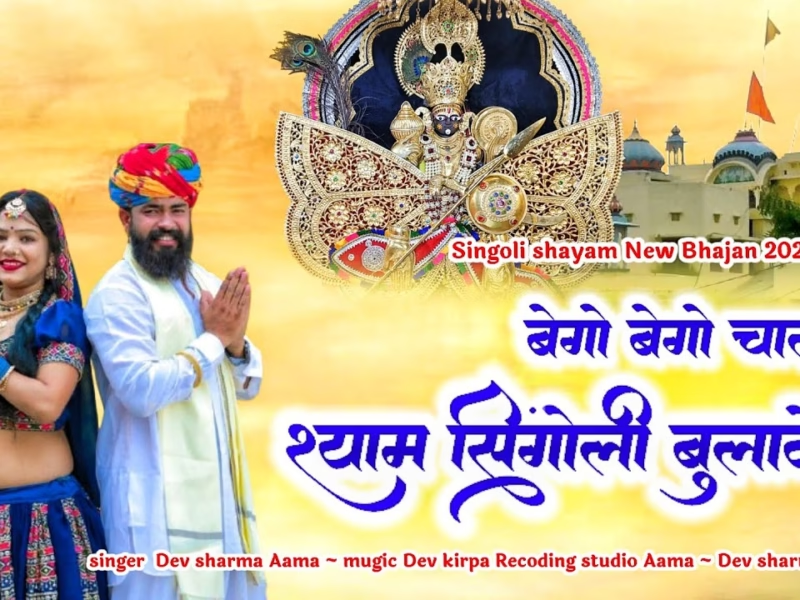
बेगो बेगो चाल श्याम सिंगोली बुलावे रे Lyrics in Hindi & Meaning
Bhajan Title & Deity This bhajan, बेगो बेगो चाल श्याम सिंगोली बुलावे रे, is dedicated to Lord Shyam, a revered form of Lord Krishna. Origin & Spiritual Essence The composer of this bhajan is not specified, but it is…