
Contents
Introduction & Spiritual Essence
The Ayya Vaikundar Temple, Athalavilai, Kanyakumari, stands as a profound beacon for followers of Ayyavazhi (The Way of Ayya), a distinct spiritual tradition that emerged in the 19th century in Southern Tamil Nadu. This sacred site is dedicated to Ayya Vaikundar, revered as the earthly manifestation of Ekam (The Supreme Being) and Vishnu’s final incarnation, Narayana, who descended to Earth to establish Dharma Yukam (an era of righteousness).
Unlike traditional Hindu pantheons, Ayya Vaikundar is worshipped here as the singular deity who unifies the cosmic elements. Athalavilai is particularly significant as it is situated near the Vaikundapathi (The Path to the Celestial Abode) and is steeped in the oral histories of the Tamil March (Kaattu Padai). The temple acts as a spiritual anchor for devotees seeking liberation from the cycle of birth and death.
Phalaśruti: Why Devotees Visit
According to the Arul Pa (Sacred Hymns) and the preaching of the Ayyavazhi faith, visiting this temple and offering sincere prayers is believed to yield profound spiritual benefits:
- Removal of Social Stigma: It is traditionally believed that sincere worship here washes away the effects of Kalani (the cosmic illusion of suffering and social inequalities).
- Ancestral Liberation: Devotees perform rites to aid the liberation of their ancestors, believing that Ayya Vaikundar’s grace provides a direct path to Vaikundam for the departed souls.
- Sanctification of Self: The temple environment, located in the serene landscape of Kanyakumari, is considered a Sidhaval (a place of spiritual merit) for self-realization.
Historical Origins & Scriptural Legend
The history of the Ayya Vaikundar Temple in Athalavilai is inextricably linked to the life and times of Ayya Vaikundar (1796–1851). While many Ayyavazhi worship centers (Nizhal Thangals) were built posthumously by followers, Athalavilai is associated with the formative years of the faith.
Historical Context and Builders
Tradition holds that the early worship structures in Athalavilai were established by close disciples of Ayya Vaikundar during the mid-19th century. Following the Samadhi of Ayya Vaikundar at Swamithoppe (30 km from Athalavilai), the temple’s prominence grew as a satellite site of devotion. Although specific dynastic records (such as Travancore or Nayak rulers) are less documented for this specific structure compared to ancient Hindu temples, the administration is currently managed by the Ayya Vaikundar Nizhal Thangal Trust, preserving the sanctity of the site.
Scriptural Legend: The Vaikundapathi
The Ekam, or the Singular Reality, chose Ayya Vaikundar to manifest in the earthly domain to destroy the prevailing Kali (darkness of injustice). According to the Arul Nool (a foundational text of Ayyavazhi), the deity was found floating in a closed box (*Panthal*) on the sea, emerging at the shores of Tiruchendur. Athalavilai is located along the spiritual trajectory connecting these sacred coastal regions.
Legend states that Ayya Vaikundar absorbed the sins of the people, transforming them through a process of purification known as the Arul Paattu. The Athalavilai temple serves as a physical testimony to this era, where the deity is said to have decreed the end of the Yugas and the beginning of a unified existence.
Architectural Marvels
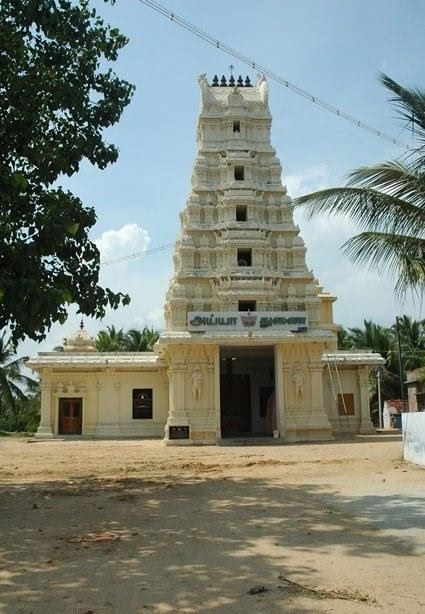
The temple architecture follows the Dravidian style, yet with distinct variations that reflect the unique tenets of Ayyavazhi theology. It is not designed to house a multitude of deities, but rather to focus the devotee’s gaze solely upon the central figure of Ayya Vaikundar.
Vastu Shastra and Layout
The temple complex is oriented to receive the rising sun, symbolizing the dawn of Dharma Yukam. Unlike traditional Shiva or Vishnu temples, the Gopuram (gateway tower) is relatively modest, emphasizing humility and accessibility over grandeur. The primary sanctum (Garbhagriha) is elevated slightly, allowing the deity to be viewed from the main Mandapam (hall).
Notable Features
- The Sanctum (Sanctum Sanctorum): The idol of Ayya Vaikundar is distinct. He is depicted seated in a lotus position, often with the right hand gesturing towards the devotee and the left hand resting on the thigh, symbolizing protection and acceptance.
- Mandapas: The pillared hall features sculptures depicting scenes from the Akilathirattu Ammanai (the primary scripture). These include the narratives of the Pancha Sakthi and the defeat of the Kali demon.
- Pradakshina Pathway: The circumambulatory path around the sanctum is designed to be wide, allowing for collective chanting of hymns.
Darshan & Ritual Logistics
Devotees visiting the Ayya Vaikundar Temple in Athalavilai follow a distinct ritualistic calendar, centered around the reading of the Akilathirattu Ammanai. Below are the operational details for 2026.
Daily Timings
Note: Temple timings are subject to change during festival periods. Devotees are advised to check local notices before travel.
| Session | Opening Time | Closing Time | Special Rituals |
|---|---|---|---|
| Morning | 06:00 AM | 12:00 PM | Ekantha Sevai (Silent Prayer) |
| Afternoon | 04:00 PM | 08:00 PM | Sahastra Deepa Aarti |
Key Sevas & Online Booking
While Ayyavazhi tradition emphasizes spontaneous devotion, offerings are accepted to maintain the temple’s operations.
- Arul Paattu (Chanting): A collective reading of the scripture. No prior booking is required; participation is open to all devotees during the Morning session.
- Annadhanam (Food Offering): Free meals are served daily. Devotees can sponsor meals via the temple office.
- Online Seva Booking: Currently, specific online booking for Athalavilai temple is not centralized. Devotees are advised to contact the Ayya Vaikundar Nizhal Thangal Trust office or check the Arunadhi (administrative office) upon arrival.
2026 Major Festival Dates
- Pathi Nesu Festival: April 14, 2026 (Tuesday) – A major event celebrating the divine manifestation.
- Ayya Vaikundar Jayanthi: June 2, 2026 (Monday) – Celebrated with special Prasna Gaveshana (divine inquiry).
- Vaikunda Ekadasi: December 30, 2026 (Tuesday) – Though primarily associated with Swamithoppe, special pujas are held here.
Practical Visitor Guidance
Athalavilai offers a peaceful spiritual environment. To ensure a respectful visit, please adhere to the following guidelines.
Code of Conduct & Dress Code
- Dress Code: Traditional attire is recommended. Men should wear dhotis or pants with a shirt; women should wear saree, salwar kameez, or full-length skirts. Avoid casual shorts or beachwear.
- Photography: Photography inside the sanctum sanctorum is strictly prohibited. Photography is permitted in the outer prakarams (courtyards) with discretion.
- Mobile Phones: Phones should be switched to silent mode. While not mandatory, using lockers is advised to maintain the sanctity of the darshan.
Crowd Management & Best Time to Visit
- Best Hours: The ideal time for darshan is between 07:00 AM and 09:00 AM or 05:00 PM to 06:00 PM. Post-lunch hours (12 PM – 4 PM) are generally quiet.
- Seasonal Advice:
- Summer (May – July): Kanyakumari experiences high humidity. Carry a water bottle, umbrella, and wear cotton clothing. The temple trust often provides butter-milk.
- Monsoon (October – November): Light rain showers are common. The pathways can be slippery; wear sandals with good grip.
- Winter (December – January): This is the pleasant season, though crowded due to holiday pilgrims. Arrive early.
Accessibility
The temple is single-story (ground level), making it wheelchair accessible. Ramps are available at the main entrance, and the sanctum area is paved flat.
Pilgrimage Connectivity
How to Reach
Ayya Vaikundar Temple is located in Athalavilai, approximately 12 km from Nagercoil and 20 km from Kanyakumari.
- By Air: The nearest airport is Trivandrum International Airport (TRV) in Kerala, located about 85 km away (approx. 2 hours by car via NH66).
- By Rail: The nearest major railway junction is Nagercoil Junction (NCJ), well-connected to Chennai and Mumbai. From there, local taxis and buses are available to Athalavilai.
- By Road: The temple is accessible via the Madurai – Kanyakumari Road (NH38) and Aralvaimozhi Road. Regular state-run buses ply between Nagercoil and Athalavilai.
Nearby Sacred Sites
To extend your pilgrimage journey, consider visiting these nearby locations within the Kanyakumari district:
- Swamithoppe Pathi: Located about 30 km away, this is the primary religious headquarters of the Ayyavazhi faith and the resting place of Ayya Vaikundar.
- Kanyakumari Amman Temple: The famous temple at the southernmost tip of India, dedicated to Devi Kanya Kumari (20 km from Athalavilai).
- Sucheendram Temple (Sivagiri): Famous for its architectural grandeur and ancient sculptures, located roughly 14 km from Athalavilai.
Frequently Asked Questions (FAQ)
1. Is there a VIP darshan entry at Ayya Vaikundar Temple?
No, Ayyavazhi tradition emphasizes equality and rejects caste distinctions. There are no separate VIP or privileged queues. All devotees stand in a single line for darshan, reflecting the spiritual equality taught by Ayya Vaikundar.
2. What is the significance of ‘Panthal’ in the temple context?
The ‘Panthal’ refers to the closed box or tent in which Ayya Vaikundar was discovered floating in the sea near Tiruchendur. It symbolizes the divine mystery and the protection of the divine essence. While Athalavilai may not house the original Panthal, the architecture often references this symbol.
3. Are non-Ayyavazhi devotees allowed inside?
Yes, the temple is open to people of all faiths and backgrounds. The teachings of Ayya Vaikundar promote universal brotherhood, and visitors are welcome to participate in the prayers and receive blessings.
4. Where can I get the holy text ‘Akilathirattu Ammanai’?
Copies of the scripture are available at the temple office (Arunadhi) and from the trusts in Swamithoppe. Many temples also distribute printed copies for free or at a nominal cost.
5. Is accommodation available near the temple?
Basic guest houses and lodges are available in nearby towns like Nagercoil and Kanyakumari. In Athalavilai itself, options are limited to small private lodges. It is recommended to book accommodation in Nagercoil or Kanyakumari in advance during festival seasons.
Photo Gallery

Official Address & Contact
For specific inquiries regarding rituals or timings, you may contact the temple management directly.
Temple Address: Ayya Vaikundar Temple, Athalavilai, Kanyakumari District, Tamil Nadu, India.
Recent Posts

ओ सांवरे तूने ही मुझको संभाला – Lyrics & Meaning
ओ सांवरे तूने ही मुझको संभाला – A Prayer to Shyam Origin & Spiritual Essence Why This Bhajan Resonates Devotees chant this when overwhelmed by life’s storms—the refrain ‘तूने ही मुझको संभाला’ is the soul’s sigh of relief: “You…

कथा ये है महाराज मेरे की – Lyrics & Meaning
कथा ये है महाराज मेरे की छत्रपति संभाजी महाराज – A Prayer to Chhatrapati Sambhaji Maharaj Origin & Spiritual Essence Why This Bhajan Resonates Devotees chant this when their spirit feels tested—its powerful refrain “महाराज मेरे” is a soul’s…

Rigveda Samhita Yathartha Anuvada (ऋग्वेद संहिता यथार्थ अनुवाद) – Complete Set with Anvayartha & Hindi/English Translation
The Rigveda is the oldest surviving scripture of humanity and the foundational text of Sanātana Dharma. For serious students, scholars, UPSC aspirants studying ancient Indian history, Sanskrit learners, and spiritual seekers, a precise and grammatically structured translation is indispensable.…

आना भी अकेला है जाना भी अकेला है – Lyrics & Meaning | BharatTemples
आना भी अकेला है जाना भी अकेला है – A Prayer to the Divine Witness Origin & Spiritual Essence Why This Bhajan Resonates Devotees turn to this bhajan in moments of deep reflection—when life’s attachments begin to ache. The…

माता शेरावाली के द्वार जो भी जाता है – Lyrics & Meaning
माता शेरावाली के द्वार जो भी जाता है – A Prayer to Maa Sherawali Origin & Spiritual Essence Why This Bhajan Resonates Devotees turn to this bhajan in times of fear or uncertainty—its promise that no one leaves Maa’s…

मार लेना सपणी उबार लेणा भवरा – Lyrics & Meaning
मार लेना सपणी उबार लेणा भवरा – A Prayer to the Divine Beloved Origin & Spiritual Essence Why This Bhajan Resonates Devotees chant this in moments of deep vulnerability—its cry of “मार लेना सपणी, उबार लेणा भवरा” is the…

हमें श्याम सुंदर भरोसा तुम्हारा – Lyrics & Meaning
हमें श्याम सुंदर भरोसा तुम्हारा – A Prayer to Shyam Sundar Origin & Spiritual Essence Why This Bhajan Resonates Devotees chant this when feeling alone—its refrain ‘de do sahara’ is the soul’s cry for divine support. Lyrics in Hindi…

Mere Satguru Ne Di Thi Davai Lyrics in Hindi & Meaning
Mere Satguru Ne Di Thi Davai: Invoking the Guru’s Liberating Wisdom This soul-stirring bhajan venerates the Satguru (True Spiritual Master) as the divine physician who dispenses the only remedy for life’s deepest sufferings. Composed by Sant Karmaveer Tufani, it…

Janm Diyo Thari Maa Dukh Dekhiyo Lyrics in Hindi & Meaning
जन्म दियो थारी माँ दुख देखियो (Maa’s Grief Upon Birthing You) This soul-stirring Chetavani Bhajan (admonitory hymn) is addressed to the Divine Mother (Maa) – a call for repentance when children forget their filial duties in the dark age…
Bhadi Sabha Mein Thane Manaun Lyrics in Hindi & Meaning
Bhadi Sabha Mein Thane Manaun: Invoking the Spear-Wielding Mother Mata Bhawani (श्री ज्वाला भवानी), the fiery manifestation of Shakti worshipped as the Protector of Dharma in Her Dhaulagarh sanctum. Origin & Spiritual Essence Composed in Rajasthani folk tradition by…