
Contents
- 1 Definitive Pilgrimage Guide: Azhwar Swamy Temple, Cheramangalam
- 1.1 1. Introduction & Spiritual Essence
- 1.2 2. Historical Origins & Scriptural Legend
- 1.3 3. Architectural Marvels
- 1.4 4. Darshan & Ritual Logistics (2026 Update)
- 1.5 5. Practical Visitor Guidance
- 1.6 6. Pilgrimage Connectivity
- 1.7 7. Frequently Asked Questions (FAQs)
- 1.8 Photo Gallery
- 1.9 Architecture
- 1.10 Legend / Local stories
- 1.11 How to Reach
- 1.12 Contact Details
Definitive Pilgrimage Guide: Azhwar Swamy Temple, Cheramangalam
1. Introduction & Spiritual Essence
Nestled in the serene landscape of Kanyakumari District, the Azhwar Swamy Temple in Cheramangalam stands as a bastion of devotion to Lord Vishnu. While often referred to simply as the “Cheramangalam Temple,” it is specifically dedicated to an Azhwar—one of the twelve poet-saints of South India who composed the Divya Prabandham, the collected hymns of the Alvars.
Deity and Form:
The primary deity is revered as Azhwar Swamy, a form of Lord Vishnu. In the Dravidian tradition, these temples are often classified as Divya Desams (holy abodes). The murti (idol) is likely a swayambhu (self-manifested) or a consecrated stone image, adorned with the Shankha (conch) and Chakra (discus), embodying the attribute of protection.
Phalaśruti (Spiritual Benefits): Devotees visit this temple seeking blessings for Moksha (liberation) and Mangalya (auspiciousness in married life). According to temple lore and oral tradition, worshipping the Azhwar here is believed to cleanse ancestral karma, allowing the devotee to break free from the cycle of samsara. It is particularly significant for those seeking relief from planetary afflictions, as the Azhwars are considered to possess immense spiritual potency.
2. Historical Origins & Scriptural Legend
Chronology and Patronage:
While specific epigraphic details from Cheramangalam are currently being cataloged by the Tamil Nadu Archaeology Department, the architectural style suggests a lineage spanning several centuries. Many temples in the Kanyakumari region, which was historically part of the Travancore princely state, were revitalized during the reign of Marthanda Varma I (18th century), who is credited with consolidating the region’s temple networks. The structure likely underwent significant renovations during this period, preserving the ancient Dravidian sanctum.
Scriptural & Oral Legends:
According to the Periya Puranam and the Divya Prabandham, the Azhwars were incarnations of specific divine weapons (Ayudhas) of Lord Vishnu. Tradition holds that this specific location in Cheramangalam was blessed by the footfalls of these itinerant saints. Legend dictates that the land here is saturated with the Bhakti Rasa (the aesthetic flavor of devotion) of the Alvars, making the soil itself sacred. Local lore suggests that the temple tank was once the site of celestial phenomena where the Garuda (eagle mount of Vishnu) descended to pay homage to the deity.
3. Architectural Marvels
The Azhwar Swamy Temple is a quintessential example of the Dravidian style of architecture, characterized by its massive gateway towers (Gopurams) and concentric enclosures.
Vastu Shastra Elements:
The temple is oriented according to Vastu principles, facing East, allowing the first rays of the rising sun to illuminate the sanctum sanctorum (Garbhagriha)—a practice symbolizing the dispelling of ignorance.
- The Sanctum (Garbhagriha): The innermost shrine houses the Azhwar Swamy murti. The walls are likely adorned with intricate stone carvings depicting scenes from the Bhagavata Purana.
- Mandapas (Halls): The temple features a Maha Mandapa (main hall) and a Ardha Mandapa, used for religious discourses and musical performances during festivals. The ceiling is often supported by monolithic pillars carved with mythical beasts like Yali (lion-elephant hybrid).
- Gopuram: The temple tower (Vimana) is a defining feature of the Dravidian style, rising in tiers, capped by a Stupi (finial) covered in gold.
Note: While this specific temple may not hold a UNESCO or ASI heritage tag, it is maintained by the Hindu Religious and Charitable Endowments (HR&CE) Department of Tamil Nadu, preserving traditional worship protocols.
4. Darshan & Ritual Logistics (2026 Update)
To ensure a seamless spiritual experience, devotees are encouraged to check the calendar for specific festival timings. Below are the tentative daily schedules and major 2026 festival dates.
Daily Timings
| Session | Timing | Rituals |
|---|---|---|
| Morning | 06:00 AM – 12:00 PM | Thiruvabhishekam, Archana |
| Afternoon | 12:00 PM – 04:30 PM | Temple Rest/Removal of Nivedhanam |
| Evening | 04:30 PM – 08:00 PM | Deeparadhana, Palliyarai Pooja |
Key Sevas & Online Booking
Devotees can book specific rituals to enhance their connection with the deity.
- Abhishekam: Performed with holy water, milk, and sandalwood paste. Best conducted on Ekadashi.
- Archana: Recitation of the 108 sacred names of Vishnu/Azhwar.
- Tirukalyana Utsavam: The celestial wedding ceremony of the deity.
Booking: Most local temples in Kanyakumari are integrating with the Tamil Nadu HR&CE online portal. Devotees should visit temple.tamilnadutourism.org or the specific HR&CE section to book darshan slots for 2026.
2026 Major Festivals
- Vaikunta Ekadashi: January 10, 2026 (High importance for Vishnu temples).
- Brahmotsavam: Tentatively May 15 – May 22, 2026 (Check local panchangam).
- Garuda Sevai: Celebrated during the month of Panguni (March-April).
5. Practical Visitor Guidance
Visiting a Dravidian temple involves adherence to specific protocols to maintain the sanctity of the space.
- Dress Code: Traditional attire is mandatory. Men must wear Dhoti or formal trousers with a shirt; women must wear Saree, Salwar Kameez, or full-length skirts. Shorts and sleeveless tops are strictly prohibited.
- Photography & Electronics: Photography is prohibited inside the Garbhagriha. Mobile phones should be silenced; lockers are available at the temple entrance (usually free of cost) for storing valuables.
- Crowd Management:
– Best Hours: Visit between 06:00 AM – 07:00 AM (post-puja) or after 06:00 PM to avoid crowds.
– Seasonal Advice: Kanyakumari can be humid. In May and June, carry water and a hand fan. Monsoons (October-November) bring heavy rains; carry an umbrella. - Accessibility: The inner sanctum involves steps. Wheelchair access is available for the outer courtyard but limited within the temple car.
6. Pilgrimage Connectivity
Cheramangalam is well-connected within the southern tip of India, making it a key stop on a Kanyakumari pilgrimage circuit.
How to Reach
- By Air: The nearest airport is Trivandrum International Airport (TRV) in Thiruvananthapuram, Kerala, located approximately 78 km away (approx. 2 hours drive).
- By Rail: The nearest railway junction is Eraniel (ERL), just 7 km away. Major trains halt at Nagercoil Junction (NCJ) (19 km) which connects to Chennai, Bengaluru, and Mumbai.
- By Road: The temple is accessible via the Manavalakurichi Road. It is 500 meters from the Cheramangalam Sivan Kovil Bus Stop. The nearest National Highway is NH-66 (formerly NH-47).
Nearby Sacred Sites (Pilgrimage Circuit)
- Cheramangalam Shivan Temple: Located very near (approx. 500m), dedicated to Lord Shiva. Visiting both deities in the same visit completes a harmonious Shaiva-Vaishnava balance.
- St. Mary’s Basilica, Thingal Nagar: An ancient Christian pilgrimage site 4 km away, reflecting Kanyakumari’s unique religious syncretism.
- Ugrathara Temple (Muttom): Located 7 km away, known for its fierce form of Shiva.
7. Frequently Asked Questions (FAQs)
1. Is there a VIP Darshan entry at Azhwar Swamy Temple?
For most local temples in Kanyakumari, there is no specific “VIP” ticket. However, devotees with pre-booked Sevas (like Abhishekam) generally get priority entry during the designated ritual times.
2. What is the best time of year to visit for the festival?
The most vibrant period is during Panguni Uthiram (March-April) or Vaikunta Ekadashi (January). The weather is pleasant, and the temple is decorated with flowers and lights.
3. Is the temple open during Eclipse periods?
Traditionally, Vishnu temples remain open during solar eclipses, but the sanctum is closed for specific periods. It is advisable to check with the temple office 24 hours prior if a major eclipse is predicted.
4. Are foreigners allowed inside?
Yes, the temple is open to all devotees regardless of nationality, provided they adhere to the dress code and photography rules.
5. Where can we find authentic Prasadam (offering)?
Prasadam is typically distributed after morning and evening darshans. For a more elaborate meal, the Annadanam hall (if available) serves vegetarian food. Local eateries in Nagercoil (19km away) offer traditional Tamil meals.
Photo Gallery
Architecture
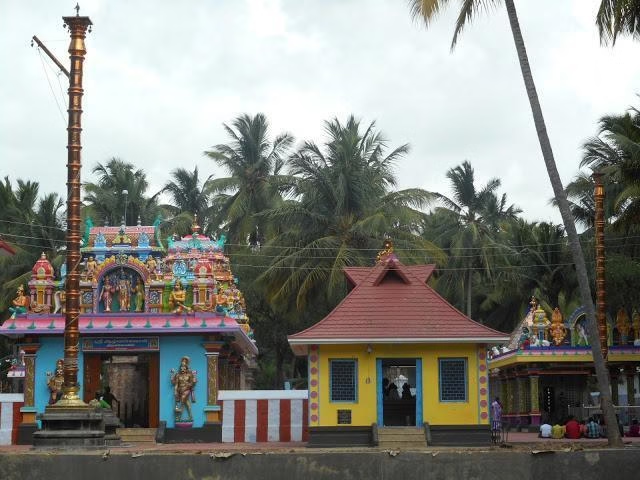
The architectural layout follows the Agama Shastra. The Vimanam (roof over sanctum) is of the Dravidian ‘Kuta’ type. The exterior walls feature ‘Tiruvazhi’ (panels) depicting stories from the Puranas. The use of laterite stone and lime mortar is typical of the region’s construction techniques.
Legend / Local stories
Local elders recount the story of a woodcutter who discovered the idol while chopping wood. Every time he tried to cut the tree, milk would flow from it. Upon investigation, the divine form of Azhwar Swamy appeared, blessing the land. A temple was subsequently constructed at that very spot.
How to Reach
Azhwar Swamy Temple is a Hindu Temple dedicated to Lord Vishnu located at Cheramangalam Village in Kanyakumari District of Tamilnadu. The Temple is located very near Cheramangalam Shivan Temple and on Thingal Nagar to Manavalakurichi Road. The Temple is located at about 500 meters from Cheramangalam Sivan Kovil Bus Stop, 4 Kms from Thingal Nagar, 7 Kms from Eraniel, 3 Kms from Manavalakurichi, 7 Kms from Muttom, 19 Kms from Nagercoil, 33 Kms from Kanyakumari and 78 Kms from Thiruvananthapuram. Nearest Railway Station is located at Eraniel and Nearest Airport is located at Thiruvananthapuram.
Contact Details
Official Address:
Azhwar Swamy Temple
Cheramangalam, Kanyakumari District
Tamil Nadu, India
Note: For specific queries, contact the local temple office or the Kanyakumari HR&CE division.
Recent Posts

ओ सांवरे तूने ही मुझको संभाला – Lyrics & Meaning
ओ सांवरे तूने ही मुझको संभाला – A Prayer to Shyam Origin & Spiritual Essence Why This Bhajan Resonates Devotees chant this when overwhelmed by life’s storms—the refrain ‘तूने ही मुझको संभाला’ is the soul’s sigh of relief: “You…

कथा ये है महाराज मेरे की – Lyrics & Meaning
कथा ये है महाराज मेरे की छत्रपति संभाजी महाराज – A Prayer to Chhatrapati Sambhaji Maharaj Origin & Spiritual Essence Why This Bhajan Resonates Devotees chant this when their spirit feels tested—its powerful refrain “महाराज मेरे” is a soul’s…

Rigveda Samhita Yathartha Anuvada (ऋग्वेद संहिता यथार्थ अनुवाद) – Complete Set with Anvayartha & Hindi/English Translation
The Rigveda is the oldest surviving scripture of humanity and the foundational text of Sanātana Dharma. For serious students, scholars, UPSC aspirants studying ancient Indian history, Sanskrit learners, and spiritual seekers, a precise and grammatically structured translation is indispensable.…

आना भी अकेला है जाना भी अकेला है – Lyrics & Meaning | BharatTemples
आना भी अकेला है जाना भी अकेला है – A Prayer to the Divine Witness Origin & Spiritual Essence Why This Bhajan Resonates Devotees turn to this bhajan in moments of deep reflection—when life’s attachments begin to ache. The…

माता शेरावाली के द्वार जो भी जाता है – Lyrics & Meaning
माता शेरावाली के द्वार जो भी जाता है – A Prayer to Maa Sherawali Origin & Spiritual Essence Why This Bhajan Resonates Devotees turn to this bhajan in times of fear or uncertainty—its promise that no one leaves Maa’s…

मार लेना सपणी उबार लेणा भवरा – Lyrics & Meaning
मार लेना सपणी उबार लेणा भवरा – A Prayer to the Divine Beloved Origin & Spiritual Essence Why This Bhajan Resonates Devotees chant this in moments of deep vulnerability—its cry of “मार लेना सपणी, उबार लेणा भवरा” is the…

हमें श्याम सुंदर भरोसा तुम्हारा – Lyrics & Meaning
हमें श्याम सुंदर भरोसा तुम्हारा – A Prayer to Shyam Sundar Origin & Spiritual Essence Why This Bhajan Resonates Devotees chant this when feeling alone—its refrain ‘de do sahara’ is the soul’s cry for divine support. Lyrics in Hindi…

Mere Satguru Ne Di Thi Davai Lyrics in Hindi & Meaning
Mere Satguru Ne Di Thi Davai: Invoking the Guru’s Liberating Wisdom This soul-stirring bhajan venerates the Satguru (True Spiritual Master) as the divine physician who dispenses the only remedy for life’s deepest sufferings. Composed by Sant Karmaveer Tufani, it…

Janm Diyo Thari Maa Dukh Dekhiyo Lyrics in Hindi & Meaning
जन्म दियो थारी माँ दुख देखियो (Maa’s Grief Upon Birthing You) This soul-stirring Chetavani Bhajan (admonitory hymn) is addressed to the Divine Mother (Maa) – a call for repentance when children forget their filial duties in the dark age…
Bhadi Sabha Mein Thane Manaun Lyrics in Hindi & Meaning
Bhadi Sabha Mein Thane Manaun: Invoking the Spear-Wielding Mother Mata Bhawani (श्री ज्वाला भवानी), the fiery manifestation of Shakti worshipped as the Protector of Dharma in Her Dhaulagarh sanctum. Origin & Spiritual Essence Composed in Rajasthani folk tradition by…