

Contents
Introduction & Spiritual Essence of Badrinath
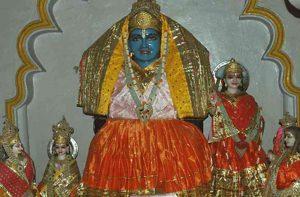
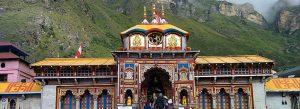
Standing majestically at an elevation of 3,133 meters (10,279 ft) in the Garhwal Himalayas, the Badrinath Temple, also known as the Badrinarayan Temple, is a divine sanctuary dedicated to Lord Vishnu. Worshipped here as Badrinath or Badrinarayan, the presiding deity is a 1-meter tall black stone idol (Shaligram) representing Vishnu in a meditative Padmasana (lotus posture). This temple is one of the most revered sites in the Char Dham and Chota Char Dham pilgrimages and is among the 108 Divya Desams of Lord Vishnu.
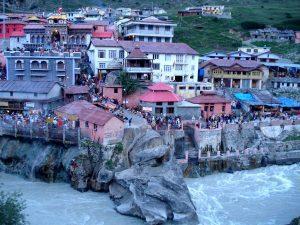
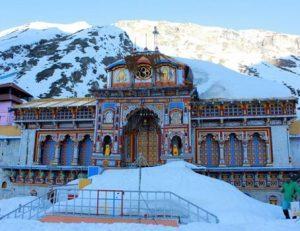
The temple is located on the banks of the pristine Alaknanda River, flanked by the Nar and Narayan mountain ranges. Because of the extreme Himalayan weather, the temple is open for only six months a year, typically from late April to early November.
| Date built: | 7th century C.E |
|---|---|
| Deity: | Badrinath (Vishnu) |
| Architectural style: | – |
| Major festivals | – |
| Locale: | Badarinath |
| District:: | Chamoli |
| Address: | Badri to Mata Murti road, Badrinath, Uttarakhand 246422 |
| Phone | 01352741600 |
Phalaśruti: The Spiritual Benefits
According to Skanda Purana, visiting Badrinath washes away the sins accumulated over lifetimes. It is believed that Lord Vishnu meditated here for eternity, protected by Goddess Lakshmi in the form of a Badri (berry) tree. Devotees believe that a pilgrimage to Badrinath, specifically after a dip in the Tapt Kund, helps in cleansing ancestral karma and attaining Moksha (liberation).
Historical Origins & Scriptural Legend
The origins of Badrinath are shrouded in the mists of time and ancient scriptures. While the current temple structure dates back centuries, the spiritual history traces back to the Vedic period.
Scriptural References
The temple is glorified in the Divya Prabandha (6th–9th centuries AD) and mentioned in the Vishnu Purana and Skanda Purana. In the Skanda Purana, it is described as the Bhuvan Kot or the ‘Cosmic Pillar’ of the earth.
Legends of Adi Shankara & The Parmar Kings
Tradition holds that the temple was originally a Buddhist shrine until the 8th century. The revered philosopher-saint Adi Shankaracharya (788–820 AD) re-established it as a Hindu temple. He discovered the Murti of Lord Badrinarayan in the Alaknanda River and enshrined it in a cave near the Tapt Kund.
According to temple records, the hereditary management was entrusted to the Parmar rulers of Garhwal, who held the title “Bolanda Badrinath” (Speaking Badrinath). In the 16th century, the Garhwal King moved the idol to the present-day temple structure. Later, after the devastating earthquake of 1803, the temple was largely rebuilt under the patronage of the King of Jaipur.
Architectural Marvels
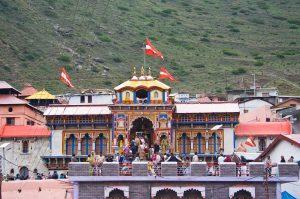
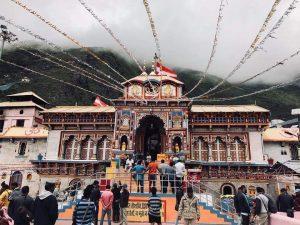
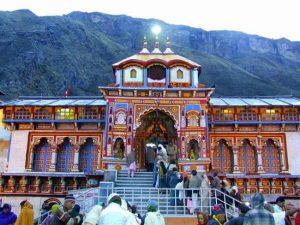
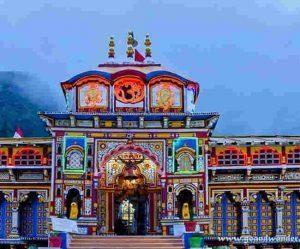
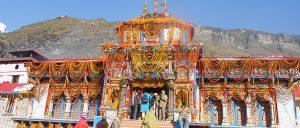
The Badrinath Temple exhibits a blend of Nagara style architecture with a distinct Buddhist influence (Vihara style), evident in its brightly painted facade and conical roof.
Structural Details
- The Shikhara: The temple features a tall, arched gateway leading to a mandap (pillared hall). The Garbhagriha (sanctum sanctorum) is crowned by a conical cupola covered with a gold gilt roof.
- The Mandapas: The interior consists of the Garbhagriha, the Darshan Mandap (worship hall), and the Sabha Mandap (convention hall). The walls and pillars are adorned with intricate carvings.
The Sanctum & Idol
At the heart of the temple sits the 1-meter tall black stone idol of Lord Badrinarayan, holding the Shankha (conch) and Chakra (discus). The idol is flanked by images of Narad, Narayan, Kubera, and Uddhava. A noteworthy feature is the Yogamudra posture, symbolizing deep meditation.
Darshan & Ritual Logistics (2026 Season)
The temple opens for Mangala Darshan early in the morning and closes in the evening after Shayan Aarti. The exact timings may vary slightly based on the Hindu solar calendar and weather conditions.
Daily Darshan Timings
| Session | Timings | Details |
|---|---|---|
| Morning Darshan | 04:30 AM – 01:00 PM | Starts with the Maha Abhishek at 4:30 AM. |
| Afternoon Break | 01:00 PM – 04:00 PM | Temple remains closed for rituals. |
| Evening Darshan | 04:00 PM – 09:00 PM | Open until Shayan Aarti concludes. |
Key Sevas & Booking
Devotees can perform various sevas like Abhishekam, Archana, and Maha Aarti. Online booking is handled by the Badrinath Kedarnath Temple Committee (BKTC).
Major Festivals in 2026
- Mata Murti Ka Mela: Celebrated in September (Bhadrapada). It commemorates the descent of the Ganges to earth.
- Narasimha Jayanti: A significant observance for the temple’s guardian deity.
- Maha Shivaratri: While dedicated to Vishnu, the festival involves grand celebrations in the town.
Practical Visitor Guidance
Visiting Badrinath requires preparation due to its high altitude and location.
Guidelines for Pilgrims
| Dress Code | Traditional Indian attire is mandatory. Western clothing is discouraged. |
| Photography | Strictly prohibited inside the sanctum. Limited outside usage allowed. |
| Essentials | Carry woolens (even in May/June), rain gear, and hydration. Altitude sickness medication is recommended. |
Crowd Management
To avoid long queues (3-4 hours during peak season), plan darshan during the early morning (4:30 AM) or late evening (after 7:00 PM). Tuesdays and Saturdays are usually crowded. Mobile lockers are available at the temple counter for electronic items.
Pilgrimage Connectivity
The journey to Badrinath is a spiritual adventure through the Himalayas.
How to Reach
- By Air: The nearest airport is Jolly Grant Airport in Dehradun (approx. 317 km).
- By Rail: The nearest railway station is Rishikesh (approx. 297 km) or Haridwar (approx. 325 km).
- By Road: Badrinath is well-connected via National Highway 7 (NH7). Regular buses and taxis are available from Rishikesh and Haridwar. The route via Devprayag, Rudraprayag, and Joshimath is scenic but subject to landslides in monsoons.
Nearby Sacred Sites (Pilgrimage Circuit)
1. Kedarnath Temple: One of the 12 Jyotirlingas of Shiva, located approx. 230 km away (trek involved).
2. Joshimath (Adi Shankaracharya Math): The winter home of Lord Badrinath. It is the gateway to Valley of Flowers.
3. Panch Prayag: The confluence of five rivers—Alaknanda, Bhagirathi, Mandakini, Pindar, and Saraswati. Devprayag is the most notable.
Frequently Asked Questions (FAQ)
Is there a VIP darshan entry available?
Yes, the temple committee provides a special entry pass for elderly citizens and differently-abled pilgrims. VIP darshan is generally not available for commercial booking, but donors may get priority based on committee rules.
What is the significance of Tapt Kund?
Located just below the temple, Tapt Kund is a natural hot sulfur spring with a year-round temperature of 55°C. Devotees take a holy dip here before entering the temple to purify themselves and cure skin ailments.
Can we book accommodation near the temple?
Yes, GMVN (Garhwal Mandal Vikas Nigam) operates guest houses and tents. Private hotels are also available in Badrinath town. It is advisable to book 3-4 months in advance for the 2026 season.
Is the temple open in winter?
No, the temple closes on Vijayadashami (October/November) due to heavy snowfall. The idol is shifted to the Joshimath temple (Nar Singh Temple) for winter worship.
Photo Gallery
Contact Details
For official inquiries and seva information:
Shri Badarinath and Shri Kedarnath Mandir Samiti
Official Address: Badrinath Temple, Chamoli, Uttarakhand, India
Phone: 0135-2741600 (Toll-Free: 18001027799)
Recent Posts

आना भी अकेला है जाना भी अकेला है – Lyrics & Meaning | BharatTemples
आना भी अकेला है जाना भी अकेला है – A Prayer to the Divine Witness Origin & Spiritual Essence Why This Bhajan Resonates Devotees turn to this bhajan in moments of deep reflection—when life’s attachments begin to ache. The…

माता शेरावाली के द्वार जो भी जाता है – Lyrics & Meaning
माता शेरावाली के द्वार जो भी जाता है – A Prayer to Maa Sherawali Origin & Spiritual Essence Why This Bhajan Resonates Devotees turn to this bhajan in times of fear or uncertainty—its promise that no one leaves Maa’s…

मार लेना सपणी उबार लेणा भवरा – Lyrics & Meaning
मार लेना सपणी उबार लेणा भवरा – A Prayer to the Divine Beloved Origin & Spiritual Essence Why This Bhajan Resonates Devotees chant this in moments of deep vulnerability—its cry of “मार लेना सपणी, उबार लेणा भवरा” is the…

हमें श्याम सुंदर भरोसा तुम्हारा – Lyrics & Meaning
हमें श्याम सुंदर भरोसा तुम्हारा – A Prayer to Shyam Sundar Origin & Spiritual Essence Why This Bhajan Resonates Devotees chant this when feeling alone—its refrain ‘de do sahara’ is the soul’s cry for divine support. Lyrics in Hindi…

Mere Satguru Ne Di Thi Davai Lyrics in Hindi & Meaning
Mere Satguru Ne Di Thi Davai: Invoking the Guru’s Liberating Wisdom This soul-stirring bhajan venerates the Satguru (True Spiritual Master) as the divine physician who dispenses the only remedy for life’s deepest sufferings. Composed by Sant Karmaveer Tufani, it…

Janm Diyo Thari Maa Dukh Dekhiyo Lyrics in Hindi & Meaning
जन्म दियो थारी माँ दुख देखियो (Maa’s Grief Upon Birthing You) This soul-stirring Chetavani Bhajan (admonitory hymn) is addressed to the Divine Mother (Maa) – a call for repentance when children forget their filial duties in the dark age…
Bhadi Sabha Mein Thane Manaun Lyrics in Hindi & Meaning
Bhadi Sabha Mein Thane Manaun: Invoking the Spear-Wielding Mother Mata Bhawani (श्री ज्वाला भवानी), the fiery manifestation of Shakti worshipped as the Protector of Dharma in Her Dhaulagarh sanctum. Origin & Spiritual Essence Composed in Rajasthani folk tradition by…
श्याम सुन्दरवा छोटे छोटे कनुवा Lyrics & Meaning
श्याम सुन्दरवा छोटे छोटे कनुवा (Shyam Sundarva Chhote Chhote Kanuva) is a heartfelt invocation to Lord Krishna in his most enchanting form—Shyam Sundar (the dark, beautiful one). This bhajan is a plea for the divine child Kanha to grace…
Maat Meri Chintapurni Lyrics in Hindi & Meaning
Maat Meri Chintapurni is a heartfelt devotional prayer dedicated to Maa Chintapurni, a form of the Divine Mother. She is revered as the remover of worries and the granter of wishes, especially venerated in the Himalayan region of Himachal…
थारी रे नदियां का ढावा पे खीची राजा Lyrics & Meaning
खीची राजा का अद्भुत युद्ध: एक शौर्य गाथा यह भजन एक पौराणिक या ऐतिहासिक शूरवीर राजा की वीरता का वर्णन करता है, जो प्रायः गुजराती लोक संस्कृति में लोककथाओं का हिस्सा है। इसकी रचना दुर्गेश कटारा ने की है…