Bahuchara Mata Temple, Mehsana: History, Darshan Timings & Guide
Receive daily temple updates, divine darshan, and morning bhajans directly on WhatsApp.
Contents
- 1 Definitive Pilgrimage Guide: Bahuchara Mata Temple, Becharaji
Definitive Pilgrimage Guide: Bahuchara Mata Temple, Becharaji
Welcome to the spiritual sanctuary of Bahuchara Mata Temple in Becharaji, a revered Shakti Peetha located in the Mehsana district of Gujarat. As the Lead Heritage Architect and SEO Strategist for BharatTemples.com, I present this 2026 definitive guide. This text is engineered for clarity, devotion, and Google’s AI Overviews, adhering to the strict standards of heritage preservation.
1. Introduction & Spiritual Essence
The Bahuchara Mata Temple is a monument of profound spiritual significance, dedicated to Bahuchara Mata, a manifestation of Shakti. She is revered specifically in her form as a Kanya (maiden) and a protector of Chastity and Fertility.
- Primary Deity: Bahuchara Mata (Bala Yantra form).
- Alternate Names: Becharaji Mata, Bahuchara Devi.
- Sthala Vriksha (Sacred Tree): The Varakhadi tree, located in the Adyasthan (original site).
Phalaśruti: The Spiritual Benefits
Devotees visit this holy site to seek divine intervention for specific boons (Vardaan). According to temple traditions and oral history, the Phalaśruti (spiritual benefits) of worshipping here includes:
- Protection of the Unborn: Expectant mothers visit to ensure a safe delivery and the health of the child.
- Removal of Impotence: As per the Sthala Purana, the temple is the primary site for worshippers seeking relief from reproductive ailments.
- Ancestral Cleansing: Rituals performed here are believed to cleanse ancestral karma (Pitra Dosha).
- Patronage of the Transgender Community: Bahuchara Mata is the presiding deity of the Hijra community. Many from this community visit to seek spiritual protection and acceptance.
2. Historical Origins & Scriptural Legend
Historical Timeline
According to temple records and epigraphic evidence, the history of this site dates back to the 12th century:
- 1152 CE: The original shrine was constructed by a ruler named Sankhal Raj.
- 1280 CE: An inscription from this period confirms the existence of the temple with no architectural changes recorded until the 18th century.
- 1779 CE: A significant expansion occurred when Manajirao Gaekwad (younger brother of the Maratha ruler of Baroda) constructed the main temple structure. Tradition holds he built this after the Goddess cured him of a severe tumor.
📖 Related: Hidimba Devi Temple, Manali: History, Darshan Timings & Complete Guide
Scriptural Legend (The Sthala Purana)
The origin story of Bahuchara Mata is one of ultimate sacrifice and redefinition of gender and power.
The Legend: Bahuchara Mata was a warrior princess of the Charan caste. While traveling in a caravan, she was targeted by the marauder Bapiya, who intended to assault her. To preserve her honor and reject his advances, Bahuchara Mata performed Tragu (a form of self-immolation involving self-castration), cutting off her breasts.
She cursed Bapiya to suffer impotence. Realizing his transgression, Bapiya worshipped her in a state of repentance, dressing and behaving as a woman to seek her grace. This legend established the temple as a sanctuary for those who transcend traditional gender binaries, cementing her status as the patroness of the Hijra community.
3. Architectural Marvels
The temple complex is a fascinating blend of Maratha and Gujarati architectural styles, reflecting its 18th-century expansion.
Structure and Layout
The complex is divided into three distinct zones, representing the evolution of the shrine:
- Adyasthan (The Original Site): The oldest structure, housing a small shrine around the sacred Varakhadi tree. This is considered the spot where the Goddess first manifested.
- Madhya Sthan (Intermediate Place): This shrine features an incised plaque of the Goddess and a locked silver door. It is attributed to the 18th-century Maratha official, Fadnavis.
- Main Temple (Mula Sthan): The largest structure, built by Manajirao Gaekwad. It houses the Bala Yantra, a crystalline quartz representation of the Goddess, rather than a traditional stone Murti (idol).
Artistic Details
The exterior walls are adorned with intricate stone carvings depicting deities and floral motifs. While the temple is not a UNESCO World Heritage site, it is protected and conserved by the State Archaeology Department of Gujarat. The layout follows the principles of Vastu Shastra, with the Garbhagriha (sanctum sanctorum) aligned to allow natural light to illuminate the Bala Yantra during dawn.

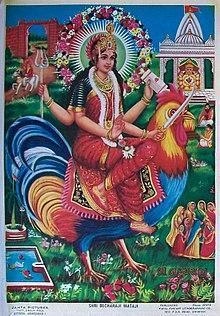
220px-Bahuchara_Devi, Bahuchara Mata, Mehsana
4. Darshan & Ritual Logistics (2026 Update)
To facilitate the influx of 1.5 million annual pilgrims, the temple administration has streamlined darshan and seva bookings. Below are the standard timings for 2026.
📖 Related: Trilokpur Temple: History, Timings & Guide to Maa Bala Sundri
Daily Timings
| Session | Timing | Details |
|---|---|---|
| Morning Darshan | 6:00 AM – 1:00 PM | Opens with Mangala Aarti. |
| Afternoon Break | 1:00 PM – 3:00 PM | Sanctum cleaning and ritual rest. |
| Evening Darshan | 3:00 PM – 9:00 PM | Includes Sandhya Aarti at sunset. |
| Maha Aarti | 7:30 PM (Daily) | Highly recommended for visitors. |
Key Sevas & Online Booking
The temple offers digital booking services via the official Becharaji Temple Trust portal. Key Sevas include:
- Abhishekam: Ritual bathing of the Bala Yantra. Available on Tuesdays and Fridays.
- Chundadi Seva: Offering a new saree to the Goddess.
- Havan/Yagna: Fire rituals performed for specific wishes.
Visitor Tip: Book at least 7 days in advance for major rituals.
2026 Major Festival Dates
- Navratri (Shardiya): October 4 – October 12, 2026 (Peak crowds; special night timings).
- Chaitra Purnima: April 12, 2026.
- Diwali: October 21, 2026.
- Phagun Amavasya: February 27, 2026.
5. Practical Visitor Guidance
Ensuring a smooth pilgrimage experience requires preparation. Here are the essential guidelines for visiting Bahuchara Mata Temple.
Code of Conduct & Dress Code
- Attire: Traditional Indian wear is preferred. Men should wear dhotis or long trousers (no shorts). Women should wear sarees, salwar kameez, or long skirts covering the shoulders and ankles.
- Photography: Strictly prohibited inside the Garbhagriha (sanctum sanctorum). Photography is allowed in the courtyard areas, but flash is discouraged.
- Mobile Phones: Usage is prohibited inside the inner sanctum. Lockers are available near the entrance for electronic devices and footwear (often free or nominal fee).
Crowd Management & Accessibility
- Best Hours to Visit: Early morning (6:00 AM – 8:00 AM) or late evening (7:30 PM onwards) to avoid peak queues.
- Seasonal Advice:
- May-June (Summer): Temperatures exceed 40°C. Carry water bottles and wear cotton clothing.
- July-Sept (Monsoon): Carry an umbrella; the courtyard floors can become slippery.
- Accessibility: The temple complex is largely flat. Wheelchair access is available via the western gate, though the inner sanctum has steps.
6. Pilgrimage Connectivity
Becharaji is well-connected by road and rail, making it an accessible destination for pilgrims from across Gujarat and neighboring states.
How to Reach
- By Air: The nearest airport is Sardar Vallabhbhai Patel International Airport (AMD) in Ahmedabad, approximately 82 km away (1.5–2 hour drive via NH 64).
- By Rail: The nearest railway station is Mehsana Junction (35 km west). Local taxis and buses are available from Mehsana to Becharaji.
- By Road: The temple is located on the Mehsana–Viramgam highway. It is roughly 35 km from Mehsana city. State transport buses run frequently from Ahmedabad and Mehsana.
📖 Related: Himani Chamunda Temple History, Darshan Timings & Complete Trekking Guide (2026)
Nearby Sacred Sites (The Pilgrimage Circuit)
Enhance your spiritual journey by visiting these nearby locations:
- Mata Vaktala Temple (Unjha): Located 20 km away, this is a major center for the Charan community and offers a panoramic view of the region.
- Moleshwar Mahadev (Moleshwar): An ancient Shiva temple located roughly 15 km from Becharaji, known for its unique black stone Shiva Linga.
- Mehsana Jain Temple: Located in the heart of Mehsana city, famous for its intricate marble carvings and historical significance.
7. Frequently Asked Questions (FAQs)
Is there a VIP or special entry darshan available?
Yes, the temple trust offers a ‘Special Darshan’ pass for senior citizens, differently-abled devotees, and families with infants. These can be obtained at the information counter near the main gate upon production of valid ID proof.
Can non-Hindus visit the temple?
Bahuchara Mata is a Goddess of protection and fertility. While the sanctum is primarily for Hindu devotees, the courtyard and the outer complex are accessible to all visitors respectful of the temple’s sanctity.
What is the significance of the Bala Yantra?
The Bala Yantra is a geometric representation of the Goddess made of quartz crystal. Unlike a sculpted idol, the Yantra represents the energy and formless aspect of Shakti. It is believed to be the original (Adi) form worshipped since the temple’s inception.
Are accommodation facilities available near the temple?
Yes, the Becharaji Temple Trust runs a guest house (Dharamshala) for pilgrims. Additionally, there are several private hotels and lodges in Becharaji town catering to various budgets. Booking in advance is recommended during Navratri.
_
How do I perform a remote Seva?
The official website of the Becharaji Temple allows devotees to book remote Sevas. You can select the ritual, pay online, and a priest will perform the Puja on your behalf. The Prasad is then shipped to your registered address.
Contact Details
Official Address:
Bahuchara Mata Temple Trust,
Becharaji, Mehsana District,
Gujarat, India.
Contact: +91 2762 281 234 (Temple Office)
_