

Contents
Introduction & Spiritual Essence
Baladevjew Temple, situated in the historic town of Ichhapur, Kendrapara, Odisha, stands as a monumental beacon of devotion to Lord Balarama (Baladeva), the elder brother of Lord Jagannath. Known locally as Siddha Baladev Jew, this shrine is the spiritual heart of the Tulasi Kshetra. Unlike many Vaishnava temples where Balarama plays a secondary role, here he presides as the Presiding Deity (Moola Murthi), with Lord Jagannath and Devi Subhadra enshrined alongside him on the Ratna Sinhasan (Jeweled Throne).
Phalaśruti (Spiritual Benefits):
Devotees flock to this temple for spiritual purification and ancestral blessings. According to the Tulasi Kshetra Mahatmya, a visit to this temple cleanses Pitru Dosha (ancestral karmic debt) and grants the supreme blessing of Moksha (liberation). The presence of the self-manifested (Swayambhu) idol of Balarama is believed to bestow immense strength and stability upon the devotee.
Historical Origins & Scriptural Legend
The Legend of Kandarasura
The Sthala Purana (local oral tradition) recounts the victory of Lord Balarama over the demon king Kandarasura. The demon, ruling the region surrounding the ancient Lalitagiri hills, terrorized the locals. Lord Balarama engaged him in a fierce duel, eventually slaying him.
It is believed that the Ichhapur region is the exact site where the demon fell. The name Kendrapara is etymologically linked to the Kandara Padi (the trunk of the demon Kandara). The scattered parts of the demon’s body gave rise to various sacred sites, including Asureswar and Kamar Khandi.
The Discovery of the Deity
The temple’s history pivots on the discovery of the deity. Tradition holds that during the Kali Yuga, the original deity was hidden in the waters of the Madhusagar (now known as the Gobari River). It was resurfaced by Gopal Siddha Das, a devout cowherd boy, near the Siddha Sarobar tank. Since then, the deity is revered as Siddha Baladev Jew.
Construction Timeline
The current architectural edifice was constructed in 1761 AD during the Maratha regime in Odisha. Janoji, a prominent Maratha chief, commissioned the grand structure. The temple was built to resemble the architectural magnificence of the Jagannath Temple, Puri, establishing Kendrapara as a major pilgrimage center.
Architectural Marvels
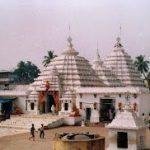
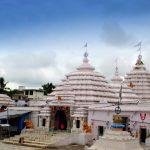
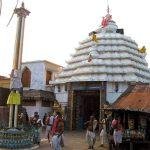
The Baladevjew Temple is a masterpiece of Kalinga Architecture (an Odishan style that shares traits with both Nagara and Dravida schools).
- Scale & Layout: The temple complex spans 2 acres. The main temple (Sri Mandir) stands 75 feet high and 40 feet wide, fortified by a 14-meter-high boundary wall.
- Structural Components: The temple is composed of four primary sections:
- Sri Mandir (Sanctum Sanctorum): Houses the 4.5-foot stone idol of Lord Balarama along with the wooden idols of Jagannath and Subhadra.
- Natya Mandir (Dance Hall): Used for ritualistic performances and Bhagavata Mela events.
- Bhoga Mandap (Offering Hall): Where the Maha Bhoga (consecrated food) is prepared and distributed.
- Mukhashala (Front Verandah): The entrance viewing area.
- Notable Shrines: The complex houses over a dozen subsidiary shrines, including the Laxmi Mandira, Nabagraha Mandir, Sidheswar Mahadev, and the Tulasi Temple.
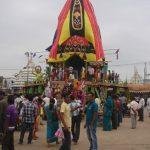
- Brahma Taladhwaja Ratha: The temple chariot is a marvel of woodworking engineering. Unlike the Puri chariot, which is rebuilt yearly, parts of this chariot are preserved and refurbished, making it one of the largest functional wooden chariots in the world.
Darshan & Ritual Logistics
Visitors are encouraged to check the official temple schedule for specific timings during festivals. Below are the standard daily operating hours.
| Session | Timing |
|---|---|
| Morning Darshan | 6:00 AM – 1:00 PM |
| Evening Darshan | 4:00 PM – 9:00 PM |
| Temple Closed | 1:00 PM – 4:00 PM |
| Special Seva (Abhishekam) | 6:00 AM – 7:00 AM |
Key Sevas and Booking
Devotees can participate in several rituals. Online Seva Booking is currently operational via the official Odisha Temple Administration portals or directly at the temple counter.
- Abhishekam: Ritual bathing of the deity (performed on the 1st, 5th, and 11th day of the bright fortnight).
- Archana: Chanting of the 108 names of Lord Balarama.
- Maha Bhoga: Offering of traditional Odia cuisine.
2026 Festival Calendar
- Navaratri (Durga Puja): October 15 – October 23, 2026
- Baladevjew Birthday (Biranchi): October 24, 2026
- Janmashtami: August 14, 2026
- Car Festival (Ratha Yatra): This is the major festival celebrated on the 2nd day of the bright fortnight in the month of Asadha (June/July 2026). The chariot Brahma Taladhwaja departs for the Gundicha Yatra.
Photo Gallery
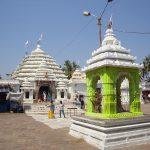
Explore the visual splendor of the temple architecture and festivities.
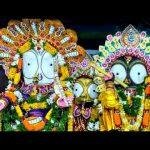
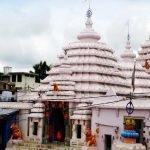
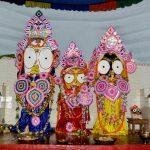
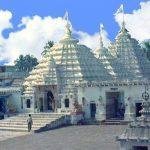
Practical Visitor Guidance
- Dress Code: Traditional attire is mandatory. Men must wear Dhoti and Patta (upper cloth); women should wear Saree or Salwar Kameez. Western attire is strictly prohibited.
- Photography & Mobiles: Photography is prohibited inside the main Sanctum Sanctorum. Mobile phones and electronic devices must be deposited at the free locker facility located near the temple entrance.
- Accessibility: The temple complex has stone steps. Elderly visitors and differently-abled devotees are allowed specific vehicle access up to the outer gate upon request.
- Crowd Management:
– Best Hours: 7:00 AM to 9:00 AM is ideal for a peaceful Darshan.
– Seasonal Advice: Kendrapara can be humid in May and June. Carry a water bottle (clean, plastic-free) and use the Anand Bazar for fresh coconut water.
Pilgrimage Connectivity
How to Reach Baladevjew Temple
The temple is located in Ichhapur, which is approximately 12 km from the district headquarters of Kendrapara.
- By Air: The nearest airport is Biju Patnaik International Airport, Bhubaneswar, approximately 105 km away.
- By Rail: The nearest railway station is Kendrapara Road (also known as Harishankar), about 32 km from the temple. Local taxis and buses are available.
- By Road: Located on the Kendrapara-Cuttack Road (NH 16 connectivity via Cuttack). Regular bus services operate from Bhubaneswar, Cuttack, and Paradip.
Nearby Sacred Sites
Enhance your pilgrimage by visiting these nearby spiritual centers:
- Baladevjew Temple, Ichhapur: The primary destination (covered above).
- Gopalpur (Gaa: Located near the Gobari river, known for ancient Shiva temples linked to the Kandarasura legend.
- Lalitagiri Buddhist Complex: An ancient Buddhist site with stupas and monasteries, located about 40 km away. It signifies the region’s historical religious syncretism.
Frequently Asked Questions (FAQ)
1. What is the primary deity of Baladevjew Temple?
The primary deity is Lord Balarama (Baladeva). Uniquely, Lord Jagannath and Goddess Subhadra are also worshipped alongside him on the same Ratna Sinhasan (Jeweled Throne).
2. Is there a VIP darshan entry available?
The temple administration prioritizes the general darshan line. However, special passes for Abhishekam or Archana can be purchased, which allow closer access to the deity. VIP darshan is generally restricted to dignitaries, but devotees can avail of Sheba (Service) tickets for an easier viewing experience.
3. How is the Baladevjew Ratha Yatra different from Puri?
The Brahma Taladhwaja Ratha of Baladevjew is unique because it is not completely dismantled after the festival. The wooden structure is partially renewed each year, making it distinct from the Puri chariots which are entirely rebuilt using new wood.
4. Are non-Hindus allowed inside the temple?
Like most traditional Hindu temples in Odisha, entry is generally restricted to Hindus. The temple follows the rituals of the Jagannath cult.
5. What is the significance of the Tulasi plant in this temple?
The temple is located in the Tulasi Kshetra. It is believed that Lord Balarama married Tulasi (the demon Kandarasura’s daughter) here. A dedicated temple for Goddess Tulasi stands within the complex, symbolizing this divine union.
Recent Posts

Shri Kaamkoteeshwar Mandir, Varanasi – History & Significance
In the heart of Kashi, the eternal city of Lord Shiva, where the Ganges flows with celestial grace, stands the Shri Kaamkoteeshwar Mandir. This sacred Sannidhi is not merely a temple but a profound spiritual bridge between the Northern…

ओ सांवरे तूने ही मुझको संभाला – Lyrics & Meaning
ओ सांवरे तूने ही मुझको संभाला – A Prayer to Shyam Origin & Spiritual Essence Why This Bhajan Resonates Devotees chant this when overwhelmed by life’s storms—the refrain ‘तूने ही मुझको संभाला’ is the soul’s sigh of relief: “You…

कथा ये है महाराज मेरे की – Lyrics & Meaning
कथा ये है महाराज मेरे की छत्रपति संभाजी महाराज – A Prayer to Chhatrapati Sambhaji Maharaj Origin & Spiritual Essence Why This Bhajan Resonates Devotees chant this when their spirit feels tested—its powerful refrain “महाराज मेरे” is a soul’s…

Rigveda Samhita Yathartha Anuvada (ऋग्वेद संहिता यथार्थ अनुवाद) – Complete Set with Anvayartha & Hindi/English Translation
The Rigveda is the oldest surviving scripture of humanity and the foundational text of Sanātana Dharma. For serious students, scholars, UPSC aspirants studying ancient Indian history, Sanskrit learners, and spiritual seekers, a precise and grammatically structured translation is indispensable.…

आना भी अकेला है जाना भी अकेला है – Lyrics & Meaning | BharatTemples
आना भी अकेला है जाना भी अकेला है – A Prayer to the Divine Witness Origin & Spiritual Essence Why This Bhajan Resonates Devotees turn to this bhajan in moments of deep reflection—when life’s attachments begin to ache. The…

माता शेरावाली के द्वार जो भी जाता है – Lyrics & Meaning
माता शेरावाली के द्वार जो भी जाता है – A Prayer to Maa Sherawali Origin & Spiritual Essence Why This Bhajan Resonates Devotees turn to this bhajan in times of fear or uncertainty—its promise that no one leaves Maa’s…

मार लेना सपणी उबार लेणा भवरा – Lyrics & Meaning
मार लेना सपणी उबार लेणा भवरा – A Prayer to the Divine Beloved Origin & Spiritual Essence Why This Bhajan Resonates Devotees chant this in moments of deep vulnerability—its cry of “मार लेना सपणी, उबार लेणा भवरा” is the…

हमें श्याम सुंदर भरोसा तुम्हारा – Lyrics & Meaning
हमें श्याम सुंदर भरोसा तुम्हारा – A Prayer to Shyam Sundar Origin & Spiritual Essence Why This Bhajan Resonates Devotees chant this when feeling alone—its refrain ‘de do sahara’ is the soul’s cry for divine support. Lyrics in Hindi…

Mere Satguru Ne Di Thi Davai Lyrics in Hindi & Meaning
Mere Satguru Ne Di Thi Davai: Invoking the Guru’s Liberating Wisdom This soul-stirring bhajan venerates the Satguru (True Spiritual Master) as the divine physician who dispenses the only remedy for life’s deepest sufferings. Composed by Sant Karmaveer Tufani, it…

Janm Diyo Thari Maa Dukh Dekhiyo Lyrics in Hindi & Meaning
जन्म दियो थारी माँ दुख देखियो (Maa’s Grief Upon Birthing You) This soul-stirring Chetavani Bhajan (admonitory hymn) is addressed to the Divine Mother (Maa) – a call for repentance when children forget their filial duties in the dark age…