

Contents
Introduction & Spiritual Essence
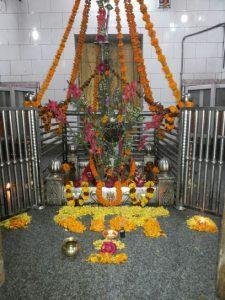
The Baleshwar Temple in Champawat, Uttarakhand, stands as a timeless testament to devotion and stone craftsmanship. Dedicated to Lord Shiva, the temple is locally revered as Baleshwar (The Lord of Strength). Unlike many modern shrines, this is an ancient Swayambhu (self-manifested) site where the spiritual energy feels palpable the moment one enters the sanctum.
Phalaśruti (Spiritual Benefits): Devotees believe that a pilgrimage to Baleshwar Temple aids in cleansing ancestral karma and removing obstacles in one’s path. It is said that Lord Shiva resides here in a benevolent form, granting the wishes of those who offer sincere prayers. The temple complex also houses shrines for Ratneshwar and Champawati Durga, creating a complete trinity of spiritual experiences.
Historical Origins & Scriptural Legend
The Chand Dynasty Legacy
According to temple records and archaeological evidence, the Baleshwar Temple was constructed between the 10th and 12th century AD. It was built by the mighty rulers of the Chand dynasty, who once ruled the Kumaon region. The temple stands in what was once the capital of the Chand kings, a city renowned for its artistic excellence and natural beauty.
Local Legends & Sthala Purana
Tradition holds that Champawat is the mythological land of Kurmanchal. Legend states that Lord Vishnu appeared here in the Kurma Avatar (tortoise form). This convergence of Vaishnavite and Shaivite legends makes the region unique. Furthermore, the temple is associated with Jim Corbett’s famous work, Man-Eaters of Kumaon, adding a historical narrative to its spiritual depth. The ASI (Archaeological Survey of India) took charge of this National Heritage Monument in 1952, preserving its ancient glory.
Architectural Marvels
Dravida Style & Stone Carving
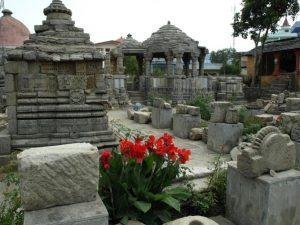
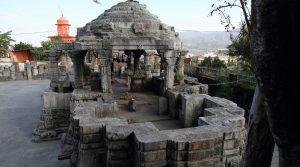
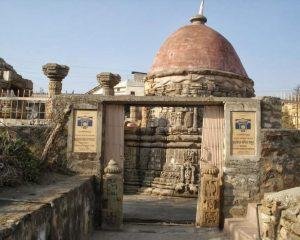
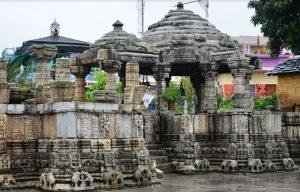
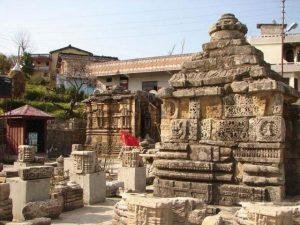
While the original content mentions South Indian influence, the Baleshwar Temple exhibits a fascinating blend of Kumaoni and Dravida architectural styles. The Shikhara (spire) rises gracefully, adorned with intricate carvings that depict local deities and mythological motifs.
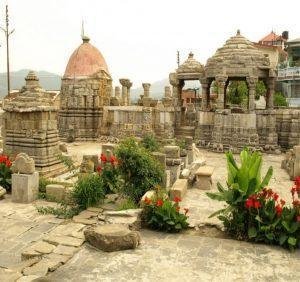
The Mandapa (hall) features ceilings with detailed sculptural work that has survived centuries of weather. The temple complex is an open-air museum of stone art, featuring the main sanctum of Baleshwar and subsidiary shrines dedicated to Ratneshwar and Champawati Durga.
Note: The temple is protected by the ASI and is a listed National Heritage Monument.
Darshan & Ritual Logistics
Daily Timings
The temple follows a traditional schedule. It is advisable to check locally for seasonal variations, especially during winter when daylight hours are shorter.
| Session | Timings |
|---|---|
| Morning Darshan | 06:00 AM – 12:00 PM |
| Break (Rest) | 12:00 PM – 04:00 PM |
| Evening Darshan | 04:00 PM – 08:00 PM |
| Shivratri / Special Days | Open 24 Hours |
Seva & Online Booking
While standard Abhishekam (ritual bathing of the deity) and Archana (reciting names) are performed daily, pilgrims can book special pujas. For the year 2026, key festival dates include:
- Maha Shivratri: February 26, 2026
- Makar Sankranti: January 14, 2026
- Navratri (Chaitra): March 30 – April 7, 2026
Online Seva Booking: For specific sevas, visit the official Uttarakhand Tourism portal or inquire at the temple counter upon arrival. Current infrastructure supports limited online bookings via the state government’s religious tourism portal.
Practical Visitor Guidance
Rules & Etiquette
- Dress Code: Traditional attire is preferred. Men should wear dhoti/kurta or trousers and shirts; women should wear saree/salwar kameez. Avoid shorts or sleeveless tops.
- Photography: Strictly prohibited inside the inner sanctum (Garbhagriha). Photography is allowed in the outer courtyard.
- Mobile/Electronics: Lockers are available near the entrance. Please silence phones during darshan.
- Accessibility: The temple has stone steps. While there is no elevator, assistance is available for elderly devotees.
Crowd Management
The best time to visit is early morning (6:00 AM – 8:00 AM) to avoid crowds. During the summer months (May-June), Champawat can get warm; carry a water bottle and wear light cotton clothes. Monsoons (July-August) bring lush greenery but slippery pathways—exercise caution.
Pilgrimage Connectivity
How to Reach
By Road: Champawat is well connected via National Highway 9. The nearest major transit hub is Haldwani. From Delhi, the distance is approximately 455 km. The route via Haldwani and Bhowali is scenic but involves hilly terrain.
By Rail: The nearest broad gauge railway stations are Tanakpur (approx. 75 km) and Kathgodam (approx. 85 km). From these stations, taxis and buses are readily available to Champawat.
By Air: The closest airport is Pantnagar Airport (PGH), located about 160 km away. Taxis can be hired from the airport to reach the temple.
Nearby Sacred Sites
To complete your pilgrimage circuit, consider visiting:
- Adi Kailash (Parvati Sarovar): A sacred mountain lake located in the district.
- Devidhura Temple: Famous for the Bagwal festival, located roughly 45 km from Champawat.
- Kranteshwar Mahadev: A temple situated on a hilltop offering panoramic views.
Frequently Asked Questions (FAQ)
1. Is there a VIP darshan entry?
There is no separate VIP entry gate at Baleshwar Temple. Darshan is general and open to all, though during peak festivals, passes may be issued by the temple committee for smoother access.
2. What is the historical significance of the temple?
The temple dates back to the 10th-12th century AD and was built by the Chand rulers. It represents the architectural transition period in Kumaon and is protected by the ASI.
3. Are there accommodation facilities nearby?
Yes, Champawat town offers several GMVN (Garhwal Mandal Vikas Nigam) guest houses and private hotels. It is advisable to book in advance during festival seasons.
4. Can we perform Shradh rituals here?
Yes, Baleshwar Temple is a potent site for ancestral rites. Many pilgrims visit specifically for Pinda Daan and Shradh ceremonies.
5. What is the weather like in Champawat?
Champawat has a moderate climate. Summers are pleasant (Max 30°C), while winters can be cold (Min 5°C) with occasional snowfall in higher altitudes nearby.
Contact Details
Official Address:
Baleshwar Temple, Champawat District,
Uttarakhand, India – 262523
Recent Posts

आना भी अकेला है जाना भी अकेला है – Lyrics & Meaning | BharatTemples
आना भी अकेला है जाना भी अकेला है – A Prayer to the Divine Witness Origin & Spiritual Essence Why This Bhajan Resonates Devotees turn to this bhajan in moments of deep reflection—when life’s attachments begin to ache. The…

माता शेरावाली के द्वार जो भी जाता है – Lyrics & Meaning
माता शेरावाली के द्वार जो भी जाता है – A Prayer to Maa Sherawali Origin & Spiritual Essence Why This Bhajan Resonates Devotees turn to this bhajan in times of fear or uncertainty—its promise that no one leaves Maa’s…

मार लेना सपणी उबार लेणा भवरा – Lyrics & Meaning
मार लेना सपणी उबार लेणा भवरा – A Prayer to the Divine Beloved Origin & Spiritual Essence Why This Bhajan Resonates Devotees chant this in moments of deep vulnerability—its cry of “मार लेना सपणी, उबार लेणा भवरा” is the…

हमें श्याम सुंदर भरोसा तुम्हारा – Lyrics & Meaning
हमें श्याम सुंदर भरोसा तुम्हारा – A Prayer to Shyam Sundar Origin & Spiritual Essence Why This Bhajan Resonates Devotees chant this when feeling alone—its refrain ‘de do sahara’ is the soul’s cry for divine support. Lyrics in Hindi…

Mere Satguru Ne Di Thi Davai Lyrics in Hindi & Meaning
Mere Satguru Ne Di Thi Davai: Invoking the Guru’s Liberating Wisdom This soul-stirring bhajan venerates the Satguru (True Spiritual Master) as the divine physician who dispenses the only remedy for life’s deepest sufferings. Composed by Sant Karmaveer Tufani, it…

Janm Diyo Thari Maa Dukh Dekhiyo Lyrics in Hindi & Meaning
जन्म दियो थारी माँ दुख देखियो (Maa’s Grief Upon Birthing You) This soul-stirring Chetavani Bhajan (admonitory hymn) is addressed to the Divine Mother (Maa) – a call for repentance when children forget their filial duties in the dark age…
Bhadi Sabha Mein Thane Manaun Lyrics in Hindi & Meaning
Bhadi Sabha Mein Thane Manaun: Invoking the Spear-Wielding Mother Mata Bhawani (श्री ज्वाला भवानी), the fiery manifestation of Shakti worshipped as the Protector of Dharma in Her Dhaulagarh sanctum. Origin & Spiritual Essence Composed in Rajasthani folk tradition by…
श्याम सुन्दरवा छोटे छोटे कनुवा Lyrics & Meaning
श्याम सुन्दरवा छोटे छोटे कनुवा (Shyam Sundarva Chhote Chhote Kanuva) is a heartfelt invocation to Lord Krishna in his most enchanting form—Shyam Sundar (the dark, beautiful one). This bhajan is a plea for the divine child Kanha to grace…
Maat Meri Chintapurni Lyrics in Hindi & Meaning
Maat Meri Chintapurni is a heartfelt devotional prayer dedicated to Maa Chintapurni, a form of the Divine Mother. She is revered as the remover of worries and the granter of wishes, especially venerated in the Himalayan region of Himachal…
थारी रे नदियां का ढावा पे खीची राजा Lyrics & Meaning
खीची राजा का अद्भुत युद्ध: एक शौर्य गाथा यह भजन एक पौराणिक या ऐतिहासिक शूरवीर राजा की वीरता का वर्णन करता है, जो प्रायः गुजराती लोक संस्कृति में लोककथाओं का हिस्सा है। इसकी रचना दुर्गेश कटारा ने की है…