
Contents
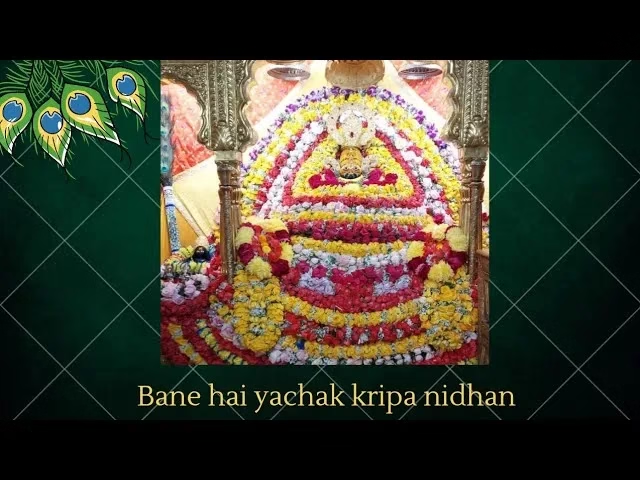
Immerse yourself in the divine vibrations of the बने है याचक कृपानिधान (Bane Hai Yachak Kripa Nidhan) bhajan. This soul-stirring devotional song narrates the legendary sacrifice of Barbareek (also known as Shyam), the mighty warrior-grandson of Pandava Bhima, and his profound interaction with Lord Krishna. It is a testament to ultimate devotion, the power of surrender, and the eternal grace of the Lord.
At BharatTemples.com, we present this sacred bhajan to help you connect with the spiritual essence of Mahabharata and the divine leela of Shri Krishna.
Bhajan Title and Deity
Bhajan Name: Bane Hai Yachak Kripa Nidhan (बने है याचक कृपानिधान)
Deity: Shri Krishna (Vishnu Avatar) and Barbareek (Shyam Baba)
Language: Hindi
This bhajan falls under the category of Shringara Bhakti and Veera Rasa (Heroic sentiment), celebrating the valor of Barbareek and the compassionate nature of Lord Krishna.
Origin and Spiritual Significance
The lyrics derive their power from the folklore surrounding the Mahabharata. Before the great war of Kurukshetra began, Lord Krishna, acting as a charioteer for Arjuna, sought to understand the strength of the opposing armies. He encountered Barbareek, the grandson of Bhima and Maurvi. Barbareek was a peerless warrior who had vowed to fight for the side that was losing, possessing three arrows (Teen Baan) that could destroy the entire army in a fraction of a second.
Krishna, knowing that the war could not proceed with such a powerful warrior alive, disguised himself as a Brahmin (Yachak – one who asks/begs) and requested Barbareek for his head (Shish Daan) as alms. The song describes this pivotal moment where Barbareek, recognizing the divine truth, joyfully offers his head to the Lord.
Before his sacrifice, Barbareek expressed a desire to witness the war. Krishna granted him the boon to watch the battle from a hilltop (often associated with the Neelkanth Mahadev temple near Kurukshetra). Thus, Barbareek became the eternal witness, and his head is still worshipped in Khatu Shyam temples across India today.
Full Lyrics in Hindi
तर्ज: कन्हैया ले चल परली।
बने है याचक कृपानिधान,
मांग रहे है बर्बरीक से,
आज शीश का दान।।
समर भूमि की प्यास बुझाओ,
निज मस्तक की भेंट चढ़ाओ,
सब वीरो में नाम कमाओ,
हे योद्धा बलवान,
बने हैं याचक कृपानिधान।।
हंसे वीर धन्य घड़ी ये आई,
याचक बनकर खड़े कन्हाई,
एक तमन्ना थी यदुराई,
देखु युद्ध महान,
बने हैं याचक कृपानिधान।।
बोले कृष्ण ये वचन हमारा,
अमर रहेगा शीश तुम्हारा,
पूजेगा तुझको जग सारा,
कलयुग के दरम्यान,
बने हैं याचक कृपानिधान।।
हँसते हँसते शीश दिया है,
हरि ने गिरी पर धरा दिया है,
सारा तांडव देख लिया है,
देकर पूरा ध्यान,
बने हैं याचक कृपानिधान।।
महाभारत का हाल सुनाया,
श्याम नाम वरदान में पाया,
जो कोई इसके दर पे आया,
मिली उसे मुस्कान,
बने हैं याचक कृपानिधान।।
English Transliteration
Magaj: Kanhaiya Le Chal Parli
Bane hai yachak kripa nidhan,
Maang rahe hain Barbareek se,
Aaj sheesh ka daan.
Samar bhoomi ki pyaas bujhao,
Nij mastak ki bhed chadhao,
Sab veeron mein naam kamao,
He yoddha balwaan,
Bane hain yachak kripa nidhan.
Hanse veer dhanya ghati ye aayi,
Yachak banke khade Kanhai,
Ek tamanna thi Yudhraai,
Dekhu yuddh mahaan,
Bane hain yachak kripa nidhan.
Bole Krishna ye vachan hamara,
Amar rahega sheesh tumhara,
Poojega tujhko jag saara,
Kalyug ke darmyaan,
Bane hain yachak kripa nidhan.
Haste haste sheesh diya hai,
Hari ne giri par dhara diya hai,
Saara taandav dekh liya hai,
Deke poora dhyaan,
Bane hain yachak kripa nidhan.
Mahabharat ka haal sunaya,
Shyam naam varadan mein paya,
Jo koi iske dar pe aaya,
Mili uske muskaan,
Bane hain yachak kripa nidhan.
Verse by Verse Meaning
Meaning of the Mukhda (Chorus):
“Bane hai yachak kripa nidhan, maang rahe hain Barbareek se, aaj sheesh ka daan.”
The Lord of Mercy (Krishna) has disguised himself as a beggar (Yachak). Today, he is asking Barbareek for the donation of his head.
First Stanza:
The song pleads to quench the thirst of the battlefield (by offering a sacrifice). It asks the brave warrior to offer his head as a tribute so that he may earn eternal fame among all heroes.
Second Stanza:
Barbareek smiles, feeling blessed that the divine moment has arrived. Lord Krishna (Kanhaiya) stands before him as a seeker. Barbareek had one wish: to witness the great war of the Kurus (Yudh), and he happily prepares to sacrifice his life for it.
Third Stanza:
Krishna speaks and promises that his head will remain immortal. The entire world will worship him in the age of Kalyug. This is the prophecy of Khatu Shyam, stating that whoever remembers him will be blessed.
Fourth Stanza:
Barbareek laughs and gives his head. Lord Krishna places it on the ground (often said to be on the peak of a mountain). Barbareek witnesses the entire cosmic dance (Tandav) of the war with full focus and attention.
Fifth Stanza:
The song summarizes the Mahabharata. Barbareek received the boon of the “Shyam” name. The verse concludes by saying that anyone who comes to his door (the door of Shyam Baba) receives a smile (blessings/grace) in return.
Video Visualization
Visualizing the sacrifice of Barbareek brings the lyrics to life. We have embedded a popular devotional video rendition below. Watching this will help you connect deeply with the emotions of the Mahabharata era and the sacrifice of the greatest devotee.
बने है याचक कृपानिधान भजन Video
Listen and watch this beautiful bhajan to feel the divine presence.
When and How to Chant
To derive the maximum spiritual benefit from this bhajan, consider the following practices:
Ideal Time:
* Pradosh Kaal (Twilight): The time just before sunset is considered highly auspicious for prayers related to Shyam.
* Tuesdays and Saturdays: Dedicated to Lord Hanuman and Shani, these days are spiritually significant for chanting Barbareek’s mantra.
* Ekadashi: Any Ekadashi is excellent for devotional listening.
Method of Chanting:
* Sit facing North or East.
* Close your eyes and visualize Lord Krishna standing before you.
* Chant the chorus with full emotion, imagining the surrender of Barbareek.
* If possible, offer a simple flower or sweets (Prasad) while listening.
Cultural Notes and Festivals
Barbareek to Shyam Baba:
After his sacrifice, Barbareek was blessed with the name “Shyam” (the dark one, synonymous with Krishna) and is worshipped as a form of Vishnu/Krishna himself.
Khatu Shyam Jaat:
This bhajan is extremely popular during the annual Khatu Shyam Jaat (Mela), held in Khatu, Rajasthan. Millions of devotees sing songs of Barbareek during this fair.
Regional Popularity:
This song is a staple in the Bhajans of North India (UP, Rajasthan, Haryana, Punjab). It is often recited during family gatherings or religious ceremonies (Satsangs) to invoke courage and devotion.
Frequently Asked Questions (FAQs)
Q1: Is this bhajan based on a specific scripture?
A: While it is a folk/devotional composition, it is deeply rooted in the events described in the epic Mahabharata and popular legends regarding Barbareek.
Q2: Who is the singer of this famous version?
A: This bhajan has been sung by many renowned artists like Anup Jalota, Narendra Chanchal, and Anuradha Paudwal. The embedded video above features a classic rendition loved by devotees.
Q3: What is the significance of “Teen Baan” mentioned in the story?
A: Barbareek possessed three arrows. The first identified the enemy, the second marked the targets, and the third would destroy them all in seconds. The presence of these arrows is why he had to be sacrificed before the war began.
For more devotional content, explore our Bhajans Library and find peace in the divine name.
Browse all bhajans by Sanjay MittalRecent Posts

ओ सांवरे तूने ही मुझको संभाला – Lyrics & Meaning
ओ सांवरे तूने ही मुझको संभाला – A Prayer to Shyam Origin & Spiritual Essence Why This Bhajan Resonates Devotees chant this when overwhelmed by life’s storms—the refrain ‘तूने ही मुझको संभाला’ is the soul’s sigh of relief: “You…

कथा ये है महाराज मेरे की – Lyrics & Meaning
कथा ये है महाराज मेरे की छत्रपति संभाजी महाराज – A Prayer to Chhatrapati Sambhaji Maharaj Origin & Spiritual Essence Why This Bhajan Resonates Devotees chant this when their spirit feels tested—its powerful refrain “महाराज मेरे” is a soul’s…

Rigveda Samhita Yathartha Anuvada (ऋग्वेद संहिता यथार्थ अनुवाद) – Complete Set with Anvayartha & Hindi/English Translation
The Rigveda is the oldest surviving scripture of humanity and the foundational text of Sanātana Dharma. For serious students, scholars, UPSC aspirants studying ancient Indian history, Sanskrit learners, and spiritual seekers, a precise and grammatically structured translation is indispensable.…

आना भी अकेला है जाना भी अकेला है – Lyrics & Meaning | BharatTemples
आना भी अकेला है जाना भी अकेला है – A Prayer to the Divine Witness Origin & Spiritual Essence Why This Bhajan Resonates Devotees turn to this bhajan in moments of deep reflection—when life’s attachments begin to ache. The…

माता शेरावाली के द्वार जो भी जाता है – Lyrics & Meaning
माता शेरावाली के द्वार जो भी जाता है – A Prayer to Maa Sherawali Origin & Spiritual Essence Why This Bhajan Resonates Devotees turn to this bhajan in times of fear or uncertainty—its promise that no one leaves Maa’s…

मार लेना सपणी उबार लेणा भवरा – Lyrics & Meaning
मार लेना सपणी उबार लेणा भवरा – A Prayer to the Divine Beloved Origin & Spiritual Essence Why This Bhajan Resonates Devotees chant this in moments of deep vulnerability—its cry of “मार लेना सपणी, उबार लेणा भवरा” is the…

हमें श्याम सुंदर भरोसा तुम्हारा – Lyrics & Meaning
हमें श्याम सुंदर भरोसा तुम्हारा – A Prayer to Shyam Sundar Origin & Spiritual Essence Why This Bhajan Resonates Devotees chant this when feeling alone—its refrain ‘de do sahara’ is the soul’s cry for divine support. Lyrics in Hindi…

Mere Satguru Ne Di Thi Davai Lyrics in Hindi & Meaning
Mere Satguru Ne Di Thi Davai: Invoking the Guru’s Liberating Wisdom This soul-stirring bhajan venerates the Satguru (True Spiritual Master) as the divine physician who dispenses the only remedy for life’s deepest sufferings. Composed by Sant Karmaveer Tufani, it…

Janm Diyo Thari Maa Dukh Dekhiyo Lyrics in Hindi & Meaning
जन्म दियो थारी माँ दुख देखियो (Maa’s Grief Upon Birthing You) This soul-stirring Chetavani Bhajan (admonitory hymn) is addressed to the Divine Mother (Maa) – a call for repentance when children forget their filial duties in the dark age…
Bhadi Sabha Mein Thane Manaun Lyrics in Hindi & Meaning
Bhadi Sabha Mein Thane Manaun: Invoking the Spear-Wielding Mother Mata Bhawani (श्री ज्वाला भवानी), the fiery manifestation of Shakti worshipped as the Protector of Dharma in Her Dhaulagarh sanctum. Origin & Spiritual Essence Composed in Rajasthani folk tradition by…