
Contents
- 1 Bhadra Kaliyamman Temple: The Definitive Pilgrimage Guide to Thiruvalangadu
- 1.1 1. Introduction & Spiritual Essence
- 1.2 2. Historical Origins & Scriptural Legend
- 1.3 3. Architectural Marvels
- 1.4 4. Darshan & Ritual Logistics (2026 Updates)
- 1.5 5. Practical Visitor Guidance
- 1.6 6. Pilgrimage Connectivity
- 1.7 7. Frequently Asked Questions (FAQs)
- 1.7.1 Is there a VIP Darshan entry available at Bhadra Kaliyamman Temple?
- 1.7.2 Can we carry electronic items inside?
- 1.7.3 Is the temple accessible for senior citizens and physically challenged devotees?
- 1.7.4 Are there accommodation facilities nearby?
- 1.7.5 What is the significance of the bells around the deity’s ankles?
Bhadra Kaliyamman Temple: The Definitive Pilgrimage Guide to Thiruvalangadu
In the sacred soil of Thiruvallur district, where the echoes of ancient *Nada Yoga* still reverberate, stands the Bhadra Kaliyamman Temple. Far more than a shrine of worship, this temple is a celestial stage where the divine drama of the Thiruvalangadu Vadaranyeswarar Temple reaches its zenith. This guide serves as your spiritual and logistical map to the abode of the fierce yet benevolent Goddess Bhadrakali, revered here as the cosmic dancer who witnessed the absolute supremacy of Lord Shiva.
1. Introduction & Spiritual Essence
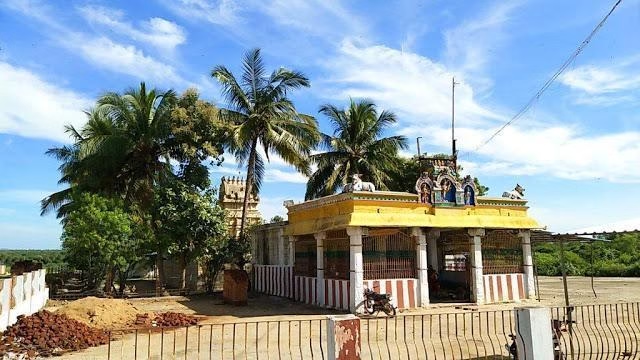
The Bhadra Kaliyamman Temple, located in Thiruvalangadu, Thiruvallur, is dedicated to Goddess Bhadrakali (a benign form of Shakti). While the main complex of Vadaranyeswarar Temple houses the Utsava Murti of the Goddess, this independent temple houses the powerful Moolavar (presiding deity).
Phalaśruti: The Benefit of Visit
According to temple records and oral tradition, visiting the Bhadra Kaliyamman Temple offers specific spiritual benefits:
- Resolution of Rahu-Ketu Dosha: As the Goddess faced the Nataraja (the cosmic dancer) and lost, devotees believe that worshipping her here neutralizes the malefic effects of planetary afflictions related to the throat and speech.
- Cleansing Ancestral Karma: The specific legend associated with this site relates to the destruction of negative ancestral energies.
- Celestial Wisdom: Just as Kali gazed upward at Shiva’s feet touching the clouds, devotees gain the perspective to rise above earthly troubles and seek higher consciousness.
2. Historical Origins & Scriptural Legend
The Legend of the Dance
The origin of the temple is deeply rooted in the Puranas. Tradition holds that Goddess Bhadrakali, confident in her martial prowess, challenged Lord Shiva (Nataraja) to a dance competition (Tandavam vs. Lasyam). Shiva accepted, but as the dance intensified, He lifted His left leg. It was a move that signified the Urdhva Tandava (cosmic dance transcending space), which was physically impossible for the Goddess to counter.
Defeated in her pride but graced by Shiva’s divine presence, Kali remained rooted to the spot, gazing upward in awe at the foot of Shiva that had touched the clouds. It is said that after this event, she stayed in this temple. Lord Shiva bestowed a specific boon: “The Kaliyamman should be worshiped before Lord Shiva.” Therefore, in the ritual order of the Thiruvalangadu complex, the Goddess is always invoked prior to the Lord.
Architectural Timeline
While the precise date of origin is lost in antiquity, the temple’s architecture suggests roots in the Pallava era, later expanded significantly during the reign of the Cholas. The inscriptions found within the premises reference endowments made by Chola kings, solidifying its historical significance.
3. Architectural Marvels
The temple is a textbook example of Dravidian Architecture (Kovil style), adhering to the strict principles of Shilpa Shastra and Vastu Shastra.
The Sanctum Sanctorum (Garbhagriha)
The Bhadra Kaliyamman Temple features a unique Vimana (tower) built in the typical Dravidian tiered style. The sanctum is dimly lit, emphasizing the fierce yet serene nature of the deity.
The Murti (Idol)
The focal point of the temple is the Swayambhu Murti (self-manifested or ancient stone idol) of Goddess Bhadrakali. Key features include:
- Material: Carved from a single block of granite.
- Posture: The feet are firmly planted on the base, signifying stability.
- The Bells: Sculptural bells are depicted around the ankles, a distinct mark of the Nataraja contest legend.
- Gaze: The face is turned upwards (Urdhva Drishti), fixed on the feet of Shiva (likely the Somaskandar or Nataraja form located in the main Vadaranyeswarar complex).
Status
The temple is a protected heritage site under the Archaeological Survey of India (ASI) due to its proximity and association with the Thiruvalangadu Vadaranyeswarar Temple, which is classified as a “Big Temple” and a Site of National Importance.
4. Darshan & Ritual Logistics (2026 Updates)
To ensure a seamless spiritual experience, we have compiled the daily schedule and 2026 festival dates. Note: These timings are based on standard Panchangam for 2026 and temple customs; always verify locally before travel.
Daily Timings
| Session | Timing | Activity |
|---|---|---|
| Morning | 6:00 AM – 8:00 AM | Temple Opening, Suprabhatam & Daily Abhishekam |
| Morning | 8:00 AM – 12:00 PM | Special Archana & Individual Darshan |
| Midday | 12:00 PM – 4:30 PM | Closed (Temple cleaning & Priest Rest) |
| Evening | 4:30 PM – 8:00 PM | Evening Darshan, Deepa Aradhanai |
| Night | 8:00 PM | Closing Rites (Palliyarai Puja) |
Key Sevas & Booking
- Abhishekam: Performed with milk, honey, and turmeric. Best days: Tuesday and Friday.
- Ammahaiyar Archana: A special offering invoking the Goddess with 108 names.
- Online Seva Booking: While the specific standalone portal for Bhadra Kaliyamman is managed by the local trust, major sevas (Abhishekam) for the Thiruvalangadu complex can often be booked via the Tamil Nadu HR&CE (Hindu Religious and Charitable Endowments) official portal (tamilnadutemples.org).
2026 Major Festivals
- Navarathri: October 2026. The temple is elaborately decorated; special Garba/Devi dance programs are held.
- Karthigai Deepam: November 2026. A massive lamp lighting ceremony symbolizing the destruction of darkness.
- Aadi Perukku: July 2026. Rituals performed near water bodies to honor ancestors.
- Maha Shivaratri: February/March 2026. Although primarily for Vadaranyeswarar, Bhadrakali is worshipped as the consort who witnessed the divine dance.
5. Practical Visitor Guidance
Code of Conduct & Dress Code
- Attire: Traditional Indian dress is mandatory. Men: Dhoti/Full trousers and shirt. Women: Saree, Salwar Kameez, or traditional skirt/blouse.
- Photography: Strictly prohibited inside the sanctum sanctorum. Photography of the outer Prakaram (corridor) is permitted for personal use but prohibited during active rituals.
- Mobile Lockers: There are no automated lockers at the standalone Bhadra Kaliyamman shrine. However, since it is located just 100 meters from the larger Vadaranyeswarar Temple complex, visitors can utilize the secure luggage counters available there.
Crowd Management & Best Hours
Best Time to Visit: Tuesday and Friday mornings (6:00 AM – 7:30 AM) witness minimal crowds and the first Darshanam of the day. Weekend evenings (5:00 PM – 6:00 PM) can get crowded due to local devotees.
Seasonal Advice:
- Summer (May-June): Temperatures in Thiruvallur exceed 40°C. Carry ample water and a head covering. The stone flooring heats up significantly.
- Monsoon (Oct-Nov): Humidity is high. While pleasant, heavy rains can sometimes affect the narrow approach roads.
6. Pilgrimage Connectivity
How to Reach
The Bhadra Kaliyamman Temple is located in Thiruvalangadu, approximately 66 km from Chennai.
- By Road: Accessible via NH 205 (Chennai-Avadi-Thiruvallur-Renigunta route). From Narayanapuram Koot road, take a detour of about 6 km to reach the temple town. Private buses and share autos ply regularly from Thiruvallur bus stand.
- By Train: The nearest railhead is Thiruvalangadu Railway Station (penultimate stop before Arakkonam on the Chennai-Arakkonam route). Share autos are available for the 5 km ride to the temple.
- By Air: Chennai International Airport (MAA) is the nearest airport, approximately 65 km away.
Nearby Sacred Sites (Pilgrimage Circuit)
Thiruvalangadu is a spiritual hub. To maximize your pilgrimage, combine your visit with:
- Vadaranyeswarar Temple (100 meters): The primary Paadal Petra Sthalam. The main shrine dedicated to Lord Shiva.
- Saatchi Boodeshwarar Temple (1 km): Dedicated to Lord Shiva as the witness of truth.
- Tazuvikuzandheswarar Temple (2 km): Another ancient Shiva temple in the immediate vicinity.
- Thiruthani Murugan Temple (27 km): One of the Six Abodes (Arupadaiveedu) of Lord Murugan, located nearby.
7. Frequently Asked Questions (FAQs)
Is there a VIP Darshan entry available at Bhadra Kaliyamman Temple?
As a standalone shrine, the concept of VIP entry is less formalized than in larger complexes. However, performing a Special Archana allows for closer access to the deity during crowded hours.
Can we carry electronic items inside?
Mobile phones are permitted but must be on silent mode. Cameras and video recording equipment are strictly banned inside the sanctum. It is advisable to deposit valuables at the Vadaranyeswarar Temple locker facility before walking to the Kali shrine.
Is the temple accessible for senior citizens and physically challenged devotees?
The temple is an ancient structure with steps leading to the sanctum. While the outer corridors are level, the inner sanctum requires climbing steps. Wheelchair accessibility is limited. Early morning visits are recommended for ease of movement.
Are there accommodation facilities nearby?
There are limited private lodges in Thiruvalangadu. For better amenities, devotees prefer staying in Thiruvallur (18 km) or Kanchipuram (43 km), both of which have numerous hotels and choultries managed by the HR&CE.
What is the significance of the bells around the deity’s ankles?
The bells represent the rhythmic movement of the dance. Sculpting them on the idol is a visual narrative of the legend where Goddess Bhadrakali challenged Lord Shiva’s cosmic dance, highlighting her martial prowess and artistic grace.

Recent Posts

ओ सांवरे तूने ही मुझको संभाला – Lyrics & Meaning
ओ सांवरे तूने ही मुझको संभाला – A Prayer to Shyam Origin & Spiritual Essence Why This Bhajan Resonates Devotees chant this when overwhelmed by life’s storms—the refrain ‘तूने ही मुझको संभाला’ is the soul’s sigh of relief: “You…

कथा ये है महाराज मेरे की – Lyrics & Meaning
कथा ये है महाराज मेरे की छत्रपति संभाजी महाराज – A Prayer to Chhatrapati Sambhaji Maharaj Origin & Spiritual Essence Why This Bhajan Resonates Devotees chant this when their spirit feels tested—its powerful refrain “महाराज मेरे” is a soul’s…

Rigveda Samhita Yathartha Anuvada (ऋग्वेद संहिता यथार्थ अनुवाद) – Complete Set with Anvayartha & Hindi/English Translation
The Rigveda is the oldest surviving scripture of humanity and the foundational text of Sanātana Dharma. For serious students, scholars, UPSC aspirants studying ancient Indian history, Sanskrit learners, and spiritual seekers, a precise and grammatically structured translation is indispensable.…

आना भी अकेला है जाना भी अकेला है – Lyrics & Meaning | BharatTemples
आना भी अकेला है जाना भी अकेला है – A Prayer to the Divine Witness Origin & Spiritual Essence Why This Bhajan Resonates Devotees turn to this bhajan in moments of deep reflection—when life’s attachments begin to ache. The…

माता शेरावाली के द्वार जो भी जाता है – Lyrics & Meaning
माता शेरावाली के द्वार जो भी जाता है – A Prayer to Maa Sherawali Origin & Spiritual Essence Why This Bhajan Resonates Devotees turn to this bhajan in times of fear or uncertainty—its promise that no one leaves Maa’s…

मार लेना सपणी उबार लेणा भवरा – Lyrics & Meaning
मार लेना सपणी उबार लेणा भवरा – A Prayer to the Divine Beloved Origin & Spiritual Essence Why This Bhajan Resonates Devotees chant this in moments of deep vulnerability—its cry of “मार लेना सपणी, उबार लेणा भवरा” is the…

हमें श्याम सुंदर भरोसा तुम्हारा – Lyrics & Meaning
हमें श्याम सुंदर भरोसा तुम्हारा – A Prayer to Shyam Sundar Origin & Spiritual Essence Why This Bhajan Resonates Devotees chant this when feeling alone—its refrain ‘de do sahara’ is the soul’s cry for divine support. Lyrics in Hindi…

Mere Satguru Ne Di Thi Davai Lyrics in Hindi & Meaning
Mere Satguru Ne Di Thi Davai: Invoking the Guru’s Liberating Wisdom This soul-stirring bhajan venerates the Satguru (True Spiritual Master) as the divine physician who dispenses the only remedy for life’s deepest sufferings. Composed by Sant Karmaveer Tufani, it…

Janm Diyo Thari Maa Dukh Dekhiyo Lyrics in Hindi & Meaning
जन्म दियो थारी माँ दुख देखियो (Maa’s Grief Upon Birthing You) This soul-stirring Chetavani Bhajan (admonitory hymn) is addressed to the Divine Mother (Maa) – a call for repentance when children forget their filial duties in the dark age…
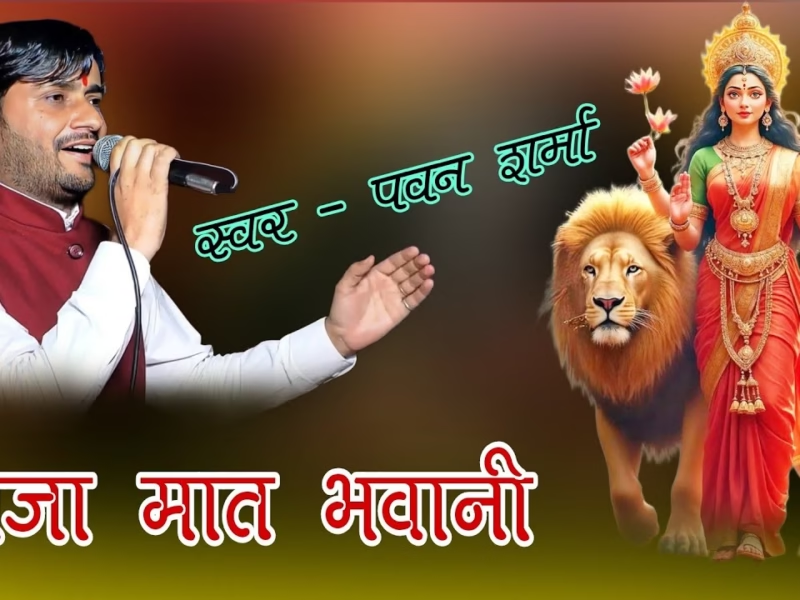
Bhadi Sabha Mein Thane Manaun Lyrics in Hindi & Meaning
Bhadi Sabha Mein Thane Manaun: Invoking the Spear-Wielding Mother Mata Bhawani (श्री ज्वाला भवानी), the fiery manifestation of Shakti worshipped as the Protector of Dharma in Her Dhaulagarh sanctum. Origin & Spiritual Essence Composed in Rajasthani folk tradition by…