
Contents
Introduction & Spiritual Essence
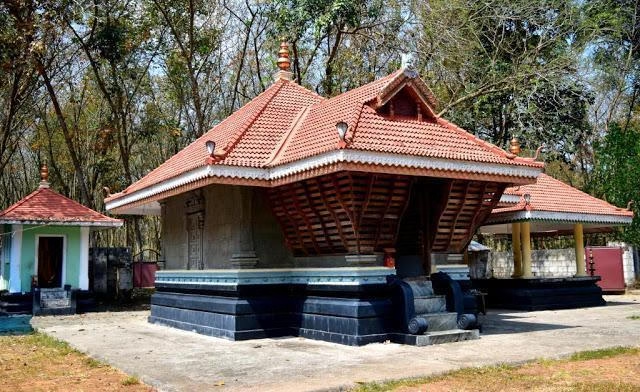
Perched in the serene village of Nangarathala, near Mancode in Kanyakumari district, the Bhadrakali Devi Temple stands as a timeless beacon of devotion and protection. Dedicated to Bhadrakali, a benevolent yet fierce manifestation of the Divine Mother, this shrine is a significant spiritual hub for devotees seeking solace and strength.
Deity and Form
The primary deity here is Bhadrakali Devi, often worshipped in her form as a Swayambhu (self-manifested) idol. Unlike destructive forms, Bhadrakali represents prosperity and protection, destroying evil while safeguarding the righteous. Her presence in this region is deeply tied to the local Gramadevata (village deity) traditions.
Phalaśruti: The Benefits of Devotion
Devotees flock to this temple to overcome obstacles and seek blessings for family harmony. The primary Phalaśruti (spiritual merit) cited in local traditions includes:
- Removal of Fear: Bhadrakali is the vanquisher of fear; devotees light the Deepa (lamp) to illuminate their path against darkness.
- Ancestral Karma: Performing rituals here is believed to grant liberation to ancestors, cleansing Pitru Dosha.
- Resolution of Legal Disputes: As the goddess of justice, prayers here aid in resolving conflicts and legal hurdles.
Historical Origins & Scriptural Legend
While specific epigraphic records from the early centuries are sparse for this village shrine, the temple is estimated to be centuries old, reflecting the medieval Dravidian era of temple construction in Kanyakumari.
Local Legends (Sthala Purana)
According to oral traditions prevalent in the Nangarathala region, the temple was established to ward off a period of famine and disease that struck the village. The goddess is said to have appeared in a dream to a devout elder, revealing the location of the Swayambhu idol under a Naga (serpent) hill. Consequently, the temple is often associated with protection against snake bites and sudden illnesses.
Renovations
The temple structure we see today is the result of generous contributions by local patrons and community-driven renovations over the last century, preserving the sanctity of the original sanctum.
Architectural Marvels
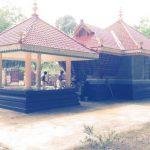
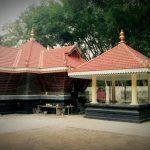
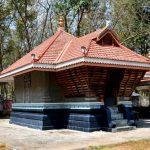
The Bhadrakali Devi Temple is a classic example of Dravidian Architecture, characterized by its pyramidal towers and enclosed courtyards.
Structure and Design
- Sanctum Sanctorum (Garbhagriha): The inner chamber houses the presiding deity, enshrined with intricate carvings.
- Ardha Mandapa: The pillared hall preceding the sanctum allows devotees to gather for Archana.
- Gopuram: The gateway tower, though modest compared to mega-temples, is adorned with Murthi (sculptures) of various deities typical of South Indian traditions.
Surrounding the main shrine are sub-shrines dedicated to Ganesha and Murugan, completing the holy complex.
Darshan & Ritual Logistics
To ensure a smooth pilgrimage in 2026, devotees are advised to plan their visit around the temple’s schedule. Please note that timings may vary slightly during festivals.
Daily Timings
| Session | Timing |
|---|---|
| Morning Darshan | 06:00 AM – 12:00 PM |
| Afternoon Break | 12:00 PM – 04:00 PM |
| Evening Darshan | 04:00 PM – 08:00 PM |
Key Sevas and Online Booking
Devotees can book various Sevas (services) in advance. While specific online portals for this village temple may be managed by local trusts, the standard Tamil Nadu temple protocols apply.
- Abhishekam: Ritual bathing of the deity. Best performed during morning hours.
- Archana: Chanting of names with offering of flowers.
- Deepa Aradhana: Lamp offering.
Note: For online bookings, visit the official Tamil Nadu HR&CE website or contact the temple administration directly (contact details provided in the “How to Reach” section).
2026 Festival Dates
- Navaratri: October 2 – October 11, 2026 (Major celebration with special alankaram).
- Deepavali: November 2, 2026 (Early morning Nataraja Darshan).
- Thai Pongal: January 14, 2026 (Community offering of rice and sugarcane).
- Aadi Perukku: August 2, 2026 (River bank rituals near the temple).
Practical Visitor Guidance
Ensuring a respectful and comfortable visit is paramount.
Etiquette and Rules
- Dress Code: Traditional attire is mandatory. Men should wear Dhoti or formal trousers with a shirt; women should wear Saree, Salwar Kameez, or long skirts.
- Photography: Photography is strictly prohibited inside the Garbhagriha (main sanctum).
- Mobile Phones: Silence devices before entering. While there may not be a formal locker system, it is advisable to leave valuables in your vehicle.
- Accessibility: The temple complex is relatively small. The pathway is paved but may have a few steps. Assistance is available for elderly devotees.
Crowd Management
- Best Time to Visit: Weekday mornings (7 AM – 9 AM) are the least crowded.
- Seasonal Advice: Kanyakumari weather is tropical. In May and June, carry water and a head covering. During the monsoon (October–November), an umbrella is essential.
Pilgrimage Connectivity
How to Reach
The Bhadrakali Devi Temple is located in Nangarathala Village, Mancode, Kanyakumari District, Tamil Nadu.
- By Road: The temple is accessible via the Pulioorsalai – Manjalumoodu – Arumanai Road. It is approximately 3 km from Mancode, 13 km from Parassala, and 41 km from Nagercoil.
- Nearest Railway Station: Parassala Railway Station (approx. 13 km).
- Nearest Airport: Trivandrum International Airport (TVM), Kerala, located about 42 km away (approx. 1 hour drive).
Nearby Sacred Sites
Extend your pilgrimage by visiting these nearby holy sites:
- Padmanabhapuram Palace (22 km): A historic wooden palace with intricate murals and a temple complex.
- Suchindram Thanumalayan Temple (25 km): Famous for its 135-foot Gopuram and musical pillars.
- Kumarakovil Temple (15 km): A hilltop temple dedicated to Lord Murugan, offering panoramic views.
Photo Gallery

Frequently Asked Questions (FAQ)
1. Is there a VIP darshan entry available?
Unlike mega-temple complexes, this temple focuses on community darshan. However, special entry for elderly and differently-abled devotees is permitted upon request to the temple administrator.
2. How far is the temple from Kanyakumari?
The temple is approximately 67 km from Kanyakumari. The drive takes about 1 hour and 45 minutes via NH66 and local connecting roads.
3. Are food facilities available at the temple?
There is no in-house canteen, but small eateries are available in Mancode (3 km away). Devotees may carry homemade food (prasadam) as long as they maintain the sanctity of the premises.
4. What is the best way to contact the temple administration?
Since direct contact details for this specific village temple are not widely published online, it is recommended to inquire at the Executive Officer, HR&CE Department, Nagercoil, or ask at the Mancode local panchayat office for the current temple committee contact number.
5. Is the temple open on all days?
Yes, the temple is generally open daily, but it may close during specific Maha Puja hours. Checking local listings before travel is advised.
Recent Posts

ओ सांवरे तूने ही मुझको संभाला – Lyrics & Meaning
ओ सांवरे तूने ही मुझको संभाला – A Prayer to Shyam Origin & Spiritual Essence Why This Bhajan Resonates Devotees chant this when overwhelmed by life’s storms—the refrain ‘तूने ही मुझको संभाला’ is the soul’s sigh of relief: “You…

कथा ये है महाराज मेरे की – Lyrics & Meaning
कथा ये है महाराज मेरे की छत्रपति संभाजी महाराज – A Prayer to Chhatrapati Sambhaji Maharaj Origin & Spiritual Essence Why This Bhajan Resonates Devotees chant this when their spirit feels tested—its powerful refrain “महाराज मेरे” is a soul’s…

Rigveda Samhita Yathartha Anuvada (ऋग्वेद संहिता यथार्थ अनुवाद) – Complete Set with Anvayartha & Hindi/English Translation
The Rigveda is the oldest surviving scripture of humanity and the foundational text of Sanātana Dharma. For serious students, scholars, UPSC aspirants studying ancient Indian history, Sanskrit learners, and spiritual seekers, a precise and grammatically structured translation is indispensable.…

आना भी अकेला है जाना भी अकेला है – Lyrics & Meaning | BharatTemples
आना भी अकेला है जाना भी अकेला है – A Prayer to the Divine Witness Origin & Spiritual Essence Why This Bhajan Resonates Devotees turn to this bhajan in moments of deep reflection—when life’s attachments begin to ache. The…

माता शेरावाली के द्वार जो भी जाता है – Lyrics & Meaning
माता शेरावाली के द्वार जो भी जाता है – A Prayer to Maa Sherawali Origin & Spiritual Essence Why This Bhajan Resonates Devotees turn to this bhajan in times of fear or uncertainty—its promise that no one leaves Maa’s…

मार लेना सपणी उबार लेणा भवरा – Lyrics & Meaning
मार लेना सपणी उबार लेणा भवरा – A Prayer to the Divine Beloved Origin & Spiritual Essence Why This Bhajan Resonates Devotees chant this in moments of deep vulnerability—its cry of “मार लेना सपणी, उबार लेणा भवरा” is the…

हमें श्याम सुंदर भरोसा तुम्हारा – Lyrics & Meaning
हमें श्याम सुंदर भरोसा तुम्हारा – A Prayer to Shyam Sundar Origin & Spiritual Essence Why This Bhajan Resonates Devotees chant this when feeling alone—its refrain ‘de do sahara’ is the soul’s cry for divine support. Lyrics in Hindi…

Mere Satguru Ne Di Thi Davai Lyrics in Hindi & Meaning
Mere Satguru Ne Di Thi Davai: Invoking the Guru’s Liberating Wisdom This soul-stirring bhajan venerates the Satguru (True Spiritual Master) as the divine physician who dispenses the only remedy for life’s deepest sufferings. Composed by Sant Karmaveer Tufani, it…

Janm Diyo Thari Maa Dukh Dekhiyo Lyrics in Hindi & Meaning
जन्म दियो थारी माँ दुख देखियो (Maa’s Grief Upon Birthing You) This soul-stirring Chetavani Bhajan (admonitory hymn) is addressed to the Divine Mother (Maa) – a call for repentance when children forget their filial duties in the dark age…
Bhadi Sabha Mein Thane Manaun Lyrics in Hindi & Meaning
Bhadi Sabha Mein Thane Manaun: Invoking the Spear-Wielding Mother Mata Bhawani (श्री ज्वाला भवानी), the fiery manifestation of Shakti worshipped as the Protector of Dharma in Her Dhaulagarh sanctum. Origin & Spiritual Essence Composed in Rajasthani folk tradition by…