
Contents
Introduction & Spiritual Essence
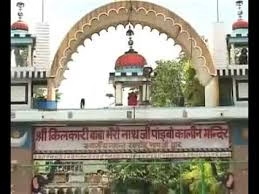
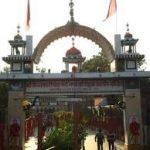
The Sri Kilkari Bhairav Temple, popularly known as Bhairon Temple, is a sanctuary of ancient power nestled in the backyard of the historic Purana Qila (Old Fort) in Pragati Maidan. This temple is not merely a structure of stone but a living testament to the tantric and agamic traditions of Sanatan Dharma. It is believed to be one of the oldest temples in Delhi, radiating a distinct spiritual energy that draws devotees from across the nation.
The primary deity here is Lord Bhairav, a fierce manifestation of Lord Shiva. He is the guardian of the cardinal directions and the destroyer of fear. The temple is unique in its Puja Vidhi (rituals); unlike other Shiva temples where milk and water are offered, here devotees offer alcohol (Sharab) and sweets to the deity. This practice is rooted in ancient tantric rituals where Bhairav is offered Panchamrit (a variation involving alcohol) to pacify his fierce aspect and seek his blessings for protection and removal of obstacles.
Phalaśruti (The Fruits of Visitation): Devotees visit this temple primarily to overcome fear, legal disputes, and malefic planetary influences, particularly those of Saturn (Shani). It is highly recommended for those seeking to cleanse ancestral karma and attain siddhis (spiritual powers). Legend holds that one of the Pandavas, Bhima, worshipped here to gain strength and attain boons.
Historical Origins & Scriptural Legend
The origins of the Bhairon Temple are shrouded in the mists of time, blending mythology with historical records. While the exact date of construction is debated, tradition holds that the temple was built by the Pandavas during their exile. Some scriptures suggest it dates back to the Mahabharata era, making it a “Manas Temple” (believed to be created by thought or divine will).
Historically, the structure we see today was significantly renovated in the 18th century, yet the sanctity of the site remains unchanged. The temple finds mention in various local folklore and folk songs of the Punjab region. The Sthala Purana (local legend) narrates that the Pandavas worshipped the Swayambhu (self-manifested) idol of Bhairav here to atone for the sins of the Kurukshetra war.
According to temple records and oral traditions, the water body adjacent to the temple, known as the Bhairon Kund, is considered as holy as the Ganges. It is believed that a dip in this kund prior to Darshan purifies the soul.
Architectural Marvels
The architecture of the Bhairon Temple is a fascinating blend of Nagara and local North Indian styles, set against the backdrop of the Mughal-era Purana Qila. While the temple complex is relatively compact compared to vast South Indian Dravida style temples, it possesses a unique verticality and intricate carvings typical of the Nagara style.
Key Architectural Elements:
- The Sanctum Sanctorum (Garbhagriha): The inner sanctum houses the Swayambhu idol of Lord Bhairav. The idol is adorned with silver jewelry and a trident (Trishul). The lighting within the sanctum is dim, enhancing the mystical atmosphere.
- The Mandapas: The temple features a main Mandapa (pillared hall) where devotees gather for collective prayers. The ceiling features traditional lotus motifs and carvings of deities.
- Doodhiya Bhairav Wing: A separate section of the temple is dedicated to Doodhiya Bhairav (Milk Bhairav). Here, the ritual offering is pure milk, symbolizing the soothing of Bhairav’s fierce nature.
- Kilkari Bhairav Wing: The main wing where the offering is alcohol. The architecture here is designed to facilitate the unique pouring ritual.
Although the temple does not currently hold an ASI or UNESCO listing, its historical proximity to Purana Qila (an ASI protected monument) makes it an integral part of the heritage walk of Old Delhi.
Darshan & Ritual Logistics (2026 Guide)
Visiting the Bhairon Temple requires an understanding of its specific timings and ritual procedures. The atmosphere shifts dramatically from the chaotic city outside to a serene spiritual zone within the temple premises.
Daily Darshan Timings
The temple operates on a schedule that aligns with Vedic timekeeping. Please note that timings may vary slightly on festival days.
| Session | Timings | Notes |
|---|---|---|
| Morning Darshan | 6:00 AM – 12:00 PM | Best time for Abhishekam |
| Afternoon Break | 12:00 PM – 4:00 PM | Temple remains closed |
| Evening Darshan | 4:00 PM – 9:00 PM | Includes Sandhya Aarti |
Key Sevas & Online Booking
To perform specific rituals, devotees can book through authorized channels. While specific portals vary by the managing committee, the following are standard procedures for 2026:
- Alcohol Offering (Sharab): Available at the temple counter. Devotees purchase a small pouch of liquor (usually country liquor or rum) to offer to the deity.
- Milk Abhishekam (Doodhiya Bhairav): Can be performed during morning hours. Tokens are issued at the entrance.
- Online Darshan Booking: For general entry, no booking is typically required. However, for special Shringar Darshan or large Maha Aarti events, check the official temple notice board or the “Delhi Tourism” portal.
2026 Festival Dates
- Maha Shivaratri: February 26, 2026 (Major celebrations, open all night).
- Kalashtami: Every lunar month, specifically Kartik Kalashtami (November 2026) is significant.
- Magh Purnima: February 12, 2026 (Special bathing in Bhairon Kund).
Practical Visitor Guidance
Because of the temple’s location in the diplomatic and administrative zone of Delhi (Chanakyapuri/Pragati Maidan), certain protocols are strictly enforced.
- Dress Code: Traditional Indian attire is preferred. Men should wear dhotis or full-length trousers; women should wear sarees or modest western clothing. Avoid shorts and sleeveless tops.
- Photography: Photography inside the sanctum sanctorum is strictly prohibited. However, photography is allowed in the outer courtyard.
- Mobile Lockers: Since alcohol offerings are involved, security is tight. Mobile phones and leather goods should be minimized. Small lockers are available near the entrance for a nominal fee.
- Crowd Management:
– Best Hours: Visit between 9:00 AM and 11:00 AM on weekdays to avoid weekend crowds.
– Seasonal Advice: Delhi summers (May-June) are scorching; carry a water bottle (plastic water bottles are usually allowed). Monsoon (July-September) brings humidity; light cotton clothes are recommended. - Accessibility: The temple has ramps for wheelchair access, though the inner sanctum requires stepping over a threshold.
Pilgrimage Connectivity
How to Reach Bhairon Temple
Located at Ramnagar, Chanakyapuri, the temple is well-connected by Delhi’s extensive transport network.
- By Metro: The nearest metro station is Pragati Maidan Metro Station (Blue Line). From Gate No. 2, it is a 10-minute walk. Alternatively, the Supreme Court Metro Station is also nearby.
- By Road: The temple is situated off the Mathura Road (NH-19). If driving, parking is available near the Delhi Zoo (National Zoological Park) or along the designated bays in Pragati Maidan.
- By Bus: The nearest bus stop is the Pragati Maidan Bus Terminal, serviced by DTC buses from ISBT Kashmiri Gate and Anand Vihar.
Nearby Sacred Sites
A pilgrimage to Bhairon Temple is often combined with a visit to the surrounding heritage complex:
- Purana Qila (Old Fort): Just steps away, this fort is believed to be the site of Indraprastha, the legendary capital of the Pandavas.
- Prachin Bhairon Temple (Nearby): A smaller, older shrine often confused with the main Kilkari Bhairav temple, located just to the south.
- Akshardham Temple: Located about 20 minutes away via the Nizamuddin Bridge, offering a contrast of modern but traditional architecture.
Frequently Asked Questions (FAQ)
1. Why is alcohol offered to Bhairav Ji?
In Vedic and Tantric traditions, Lord Bhairav is associated with the Panchamakara rituals. Offering alcohol is believed to satisfy the deity’s fierce nature and is considered a powerful remedy for removing obstacles and fear. It is a form of Prasadam (consecrated offering) here.
2. Is there a VIP Darshan entry?
No, the Bhairon Temple does not have a formal VIP entry system. Darshan is granted on a first-come, first-served basis. However, for large groups or specific Yatras, it is advisable to contact the temple management in advance.
3. Can I bring alcohol from home for the offering?
It is recommended to purchase the offering from the temple counters or authorized vendors nearby to ensure the ritual purity and adherence to local laws. Carrying open alcohol from outside is subject to local regulations.
4. What is the significance of Doodhiya Bhairav?
Doodhiya Bhairav represents the benevolent aspect of Lord Shiva. Offering milk here is believed to bring prosperity, health, and peace to the devotee’s household. It is particularly favored by families.
5. Is the temple open 24/7?
No, the temple is closed between 12:00 PM and 4:00 PM daily. On special occasions like Shivaratri, it remains open throughout the night.
Contact & Location Details
Address:
Ramnagar, Chanakyapuri, New Delhi, Delhi 110021
Landmark: Near Purana Qila (Old Fort) and the Delhi Zoo.
Contact (Temple Management): +91-11-XXXXX XXXX (Please note: Public contact numbers are often unavailable for this shrine; visiting in person is standard).
Recent Posts

आना भी अकेला है जाना भी अकेला है – Lyrics & Meaning | BharatTemples
आना भी अकेला है जाना भी अकेला है – A Prayer to the Divine Witness Origin & Spiritual Essence Why This Bhajan Resonates Devotees turn to this bhajan in moments of deep reflection—when life’s attachments begin to ache. The…

माता शेरावाली के द्वार जो भी जाता है – Lyrics & Meaning
माता शेरावाली के द्वार जो भी जाता है – A Prayer to Maa Sherawali Origin & Spiritual Essence Why This Bhajan Resonates Devotees turn to this bhajan in times of fear or uncertainty—its promise that no one leaves Maa’s…

मार लेना सपणी उबार लेणा भवरा – Lyrics & Meaning
मार लेना सपणी उबार लेणा भवरा – A Prayer to the Divine Beloved Origin & Spiritual Essence Why This Bhajan Resonates Devotees chant this in moments of deep vulnerability—its cry of “मार लेना सपणी, उबार लेणा भवरा” is the…

हमें श्याम सुंदर भरोसा तुम्हारा – Lyrics & Meaning
हमें श्याम सुंदर भरोसा तुम्हारा – A Prayer to Shyam Sundar Origin & Spiritual Essence Why This Bhajan Resonates Devotees chant this when feeling alone—its refrain ‘de do sahara’ is the soul’s cry for divine support. Lyrics in Hindi…

Mere Satguru Ne Di Thi Davai Lyrics in Hindi & Meaning
Mere Satguru Ne Di Thi Davai: Invoking the Guru’s Liberating Wisdom This soul-stirring bhajan venerates the Satguru (True Spiritual Master) as the divine physician who dispenses the only remedy for life’s deepest sufferings. Composed by Sant Karmaveer Tufani, it…

Janm Diyo Thari Maa Dukh Dekhiyo Lyrics in Hindi & Meaning
जन्म दियो थारी माँ दुख देखियो (Maa’s Grief Upon Birthing You) This soul-stirring Chetavani Bhajan (admonitory hymn) is addressed to the Divine Mother (Maa) – a call for repentance when children forget their filial duties in the dark age…
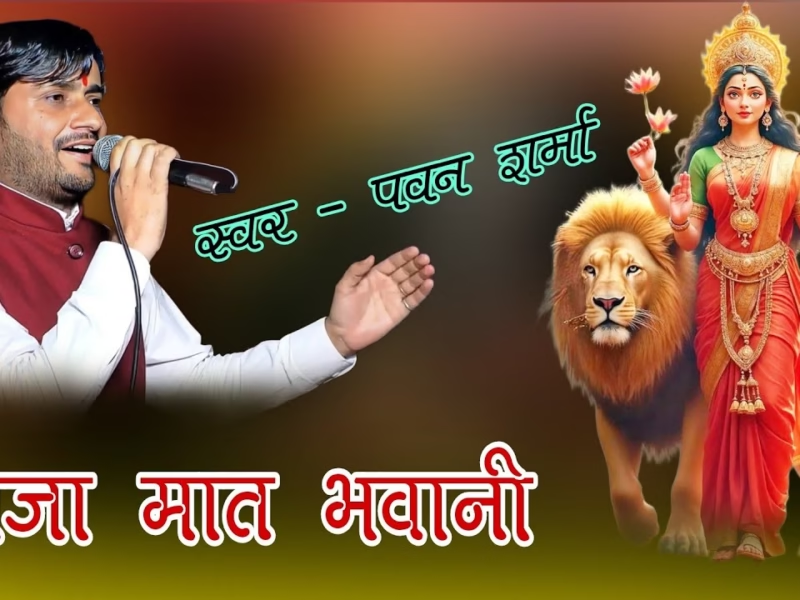
Bhadi Sabha Mein Thane Manaun Lyrics in Hindi & Meaning
Bhadi Sabha Mein Thane Manaun: Invoking the Spear-Wielding Mother Mata Bhawani (श्री ज्वाला भवानी), the fiery manifestation of Shakti worshipped as the Protector of Dharma in Her Dhaulagarh sanctum. Origin & Spiritual Essence Composed in Rajasthani folk tradition by…
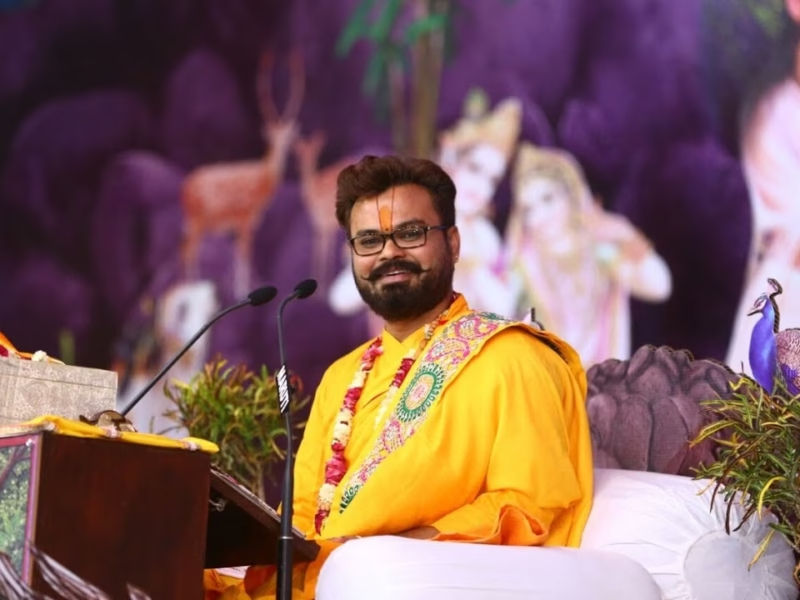
श्याम सुन्दरवा छोटे छोटे कनुवा Lyrics & Meaning
श्याम सुन्दरवा छोटे छोटे कनुवा (Shyam Sundarva Chhote Chhote Kanuva) is a heartfelt invocation to Lord Krishna in his most enchanting form—Shyam Sundar (the dark, beautiful one). This bhajan is a plea for the divine child Kanha to grace…
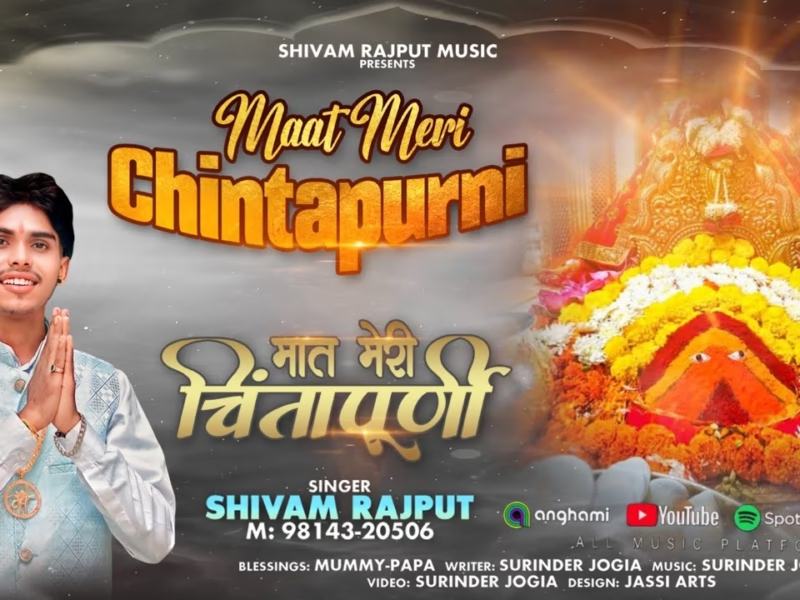
Maat Meri Chintapurni Lyrics in Hindi & Meaning
Maat Meri Chintapurni is a heartfelt devotional prayer dedicated to Maa Chintapurni, a form of the Divine Mother. She is revered as the remover of worries and the granter of wishes, especially venerated in the Himalayan region of Himachal…
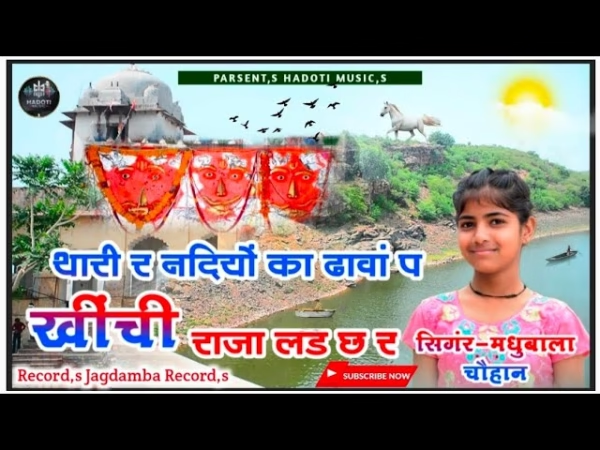
थारी रे नदियां का ढावा पे खीची राजा Lyrics & Meaning
खीची राजा का अद्भुत युद्ध: एक शौर्य गाथा यह भजन एक पौराणिक या ऐतिहासिक शूरवीर राजा की वीरता का वर्णन करता है, जो प्रायः गुजराती लोक संस्कृति में लोककथाओं का हिस्सा है। इसकी रचना दुर्गेश कटारा ने की है…