Bharati Matha Temple Bhubaneswar: History, Darshan Timings & Guide
Receive daily temple updates, divine darshan, and morning bhajans directly on WhatsApp.
Contents
- 1 Introduction & Spiritual Essence: The Convergence of Shiva and Vishnu
- 2 Historical Origins & Scriptural Legend
- 3 Architectural Marvels: The Kalinga Signature
- 4 Darshan & Ritual Logistics
- 5 Practical Visitor Guidance
- 6 Pilgrimage Connectivity
- 7 Frequently Asked Questions (FAQ)
Introduction & Spiritual Essence: The Convergence of Shiva and Vishnu
Bharati Matha Temple, located in the sacred Old Town of Bhubaneswar, Odisha, stands as a unique spiritual edifice. While primarily dedicated to the Hindu God Shiva, the temple houses the primary installation of Lord Vishnu in its sanctum sanctorum. This syncretism makes it a vital pilgrimage site for devotees of both sects (Shaivites and Vaishnavites), symbolizing the ultimate unity of the divine in the temple city of India.
Phalaśruti: The Boon of Visitation
Devotees flock to Bharati Matha seeking spiritual equilibrium. According to local traditions, the temple is believed to cleanse ancestral karma and remove planetary obstacles, particularly those associated with Budha (Mercury) and Jupiter. The unique presence of both Shiva and Vishnu allows for a comprehensive prayer cycle, promising harmony in household life and spiritual liberation (Moksha). As the site is historically linked to the artisans of the famed Lingaraja Temple, offering prayers here is said to invoke blessings for craftsmanship and skill.
Historical Origins & Scriptural Legend
The Bharati Matha is a testament to the grandeur of the Eastern Ganga dynasty and the Yajati Kesari lineage.
Dynasty and Construction
Construction Date: 11th Century AD (circa 11th–12th Century).
Builder: King Yajati Kesari, the same monarch who commissioned the magnificent Lingaraja Temple.
According to temple records and historical consensus, the Matha (monastery) was originally constructed to house the artisans and craftsmen brought from various parts of India to build the Lingaraja Temple. Once the temple was completed, the residence was consecrated as a holy site.
📖 Related: Jagannath Temple Puri: History, Timings & Complete Guide
The Sthala Purana: The Myth of Prathamasthami
A beloved local legend haunts the corridors of the Matha. Tradition holds that during the festival of Prathamasthami, the idol of Lord Lingaraja (Lord Shiva) travels in a ceremonial procession to visit his “Maternal Uncle” (Mama) at the Bharati Matha. This ritual underscores the deep mythological kinship between Lingaraja and the presiding deities of this Matha, reinforcing the temple’s status as a Gotra-sthana (ancestral seat).
Architectural Marvels: The Kalinga Signature
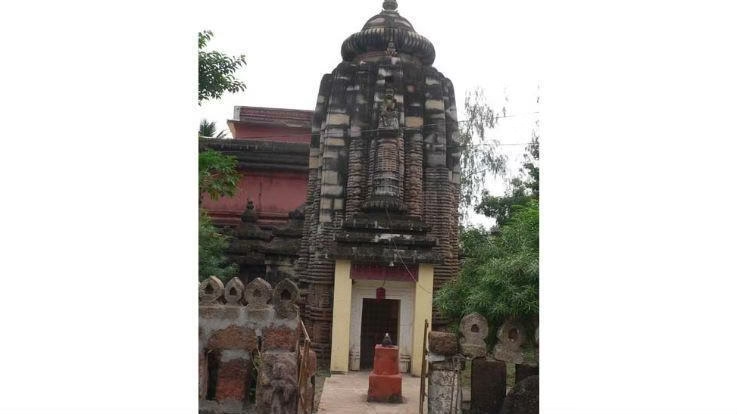
The Bharati Matha is a classic example of Kalinga Architecture, the regional style of Odisha that distinguishes itself from the Nagara or Dravida styles of North and South India.
Structural Layout and Design
• Orientation: The temple faces the West, a specific orientation aligned with Vastu Shastra principles for this particular shrine.
• Material: Built primarily using Coarse Grey Sandstone, which weathers gracefully over centuries.
• Dimensions: It is a three-storied structure standing at a height of 11.50 meters (approx. 26 meters including the plinth). The base (Pitha) is elevated by 1.50 meters featuring seven moldings (mouldings).
• Sanctum & Mandapa: The plan is square, occupying an area of 26 square meters. The sanctum (Garbhagriha) is preceded by a porch, with three living rooms adjoining the structure.
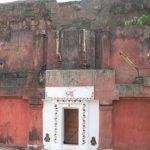
• Sculpture: Unlike the ornate Lingaraja, the Bharati Matha is architecturally simple with restrained decorations. The doorjamb measures 8.84 meters in length but remains unembellished, emphasizing austerity over grandeur.
Conservation Note: The Archaeological Survey of India (ASI) recognizes the historical significance of the Old Town cluster. While not a UNESCO World Heritage site itself, it falls within the buffer zone of the Lingaraja Temple conservation efforts. The monument is currently in a state requiring urgent restoration, as noted in recent heritage surveys.
Bharati_Matha_Temple_View, Bharati Matha Temple, Bhubaneswar, Odisha
bharati-matha-temple, Bharati Matha Temple, Bhubaneswar, Odisha
Darshan & Ritual Logistics
As a living Matha, the temple follows traditional timings. Devotees can participate in daily rituals and special Sevas.
Daily Darshan Timings (2026)
| Session | Timings | Activity |
|---|---|---|
| Morning | 06:00 AM – 12:00 PM | Mangala Alati, Abhishekam, Madhyahna Pooja |
| Evening | 04:00 PM – 09:00 PM | Sandhya Alati, Sahan Mela, Pakaala Bhoga |
| * Timings are subject to change during festivals and specific ritual cycles. | ||
📖 Related: Varahi Deula, Chaurasi Puri: History, Timings & Complete Guide
Key Sevas and Online Booking
While the Matha retains traditional booking methods for specific rituals, the integration of digital platforms for online seva booking is facilitated through the broader Shree Lingaraja Temple Administration for the Old Town complex.
Key Sevas Offered:
1. Abhishekam: Ritual bathing of the deities (Shiva Lingam and Vishnu).
2. Archana: Chanting of names (Sahasranama).
3. Maha Deepa: Evening lamp offering.
Booking Note: For current availability, devotees are advised to contact the Matha office directly via the provided contact details or check the Odisha Temple Portal for cluster bookings.
Important 2026 Festival Dates
- Maha Shivaratri: February 26, 2026 (Grand procession expected; Lingaraja visitation legend enacted).
- Chandana Yatra: May 2026 (Dates vary based on Odia calendar).
- Ratha Yatra (Car Festival): July 7, 2026 (While primarily Jagannath-centric, the Matha observes the festive spirit).
- Prathamasthami: November 15, 2026 (The key mythological date of Lingaraja’s visit to the Maternal Uncle).
Practical Visitor Guidance
Code of Conduct and Dress Code
• Dress Code: Traditional Indian attire is mandatory. Men should wear Dhoti or trousers with a shirt (avoid t-shirts). Women should wear Saree, Salwar Kameez, or traditional Odia attire. Western clothing is discouraged.
• Photography: Strictly prohibited inside the Sanctum Sanctorum. Photography within the Matha complex is allowed only with permission.
• Electronics: Mobile phones are permitted but must be switched to silent mode. Lockers are not available at the Matha specifically; it is advisable to carry minimal belongings.
• Accessibility: The Old Town area has narrow lanes. The temple features steps at the entrance, which may pose a challenge for those with limited mobility.
Crowd Management & Seasonal Advice
Bhubaneswar experiences high humidity and heat from March to June.
• Best Time to Visit: October to February (Winter) offers the most pleasant weather.
• Avoid: Mid-day in summer (12:00 PM – 3:00 PM) due to intense heat.
• Hydration: If visiting in May or June, carry a water bottle. Free water stations are limited outside the complex.
• Peak Hours: Sunday evenings and festival days see heavy footfall near Lingaraja Temple; plan an early morning visit to Bharati Matha (7:00 AM – 9:00 AM) for a serene experience.
Pilgrimage Connectivity
How to Reach
The Bharati Matha is situated in the heart of the Old Town, accessible via a network of traditional bazaars.
📖 Related: Sarala Temple, Jagatsinghpur: History, Darshan Timings & Guide (2026)
• By Air: The nearest airport is Biju Patnaik International Airport (BBI), approximately 4.5 km (15–20 minutes by taxi).
• By Rail: Bhubaneswar Railway Station (BBS) is the nearest major railhead, about 6 km away.
• By Road (NH/State Highway): The Matha is located near Bindu Sagar Temple and the Ratha Road. Access is via NH-16 (National Highway 16) entering the city, then navigating towards the Old Town via Janpath or Vani Vihar.
Nearby Sacred Sites (The Pilgrimage Circuit)
The Matha is located within a 1-kilometer radius of several architectural masterpieces:
- Lingaraja Temple (1.2 km): The primary deity of Bhubaneswar. Visiting Bharati Matha without seeing Lingaraja is considered incomplete.
- Mukteswar Temple (1.5 km): Famous for its stone archway (Torana) and intricate carvings, marking the transition point in Kalinga architecture.
- Raja Rani Temple (2.0 km): Known for its ornate sculptures and absence of a deity, representing the temple of love.
Frequently Asked Questions (FAQ)
Is there a VIP Darshan entry at Bharati Matha?
As a Matha rather than a major state-managed temple like Jagannath Puri, there is no formal VIP darshan system. However, the Mahanta (Head Priest) can grant special access for dignitaries or large groups upon prior request and donation to the Matha.
Is parking available near the temple?
Parking in the Old Town area is extremely limited due to narrow lanes. It is recommended to park near Bindu Sagar or Lingaraja Temple designated parking lots and walk the remaining distance (approx. 10-15 minutes).
Is there an entry fee?
There is no entry fee for general darshan. Donations for Sevas are voluntary and accepted at the counter.
Can non-Hindus visit the temple?
While the temple is open to all, the inner sanctum (Garbhagriha) is strictly accessible to Hindus. Non-Hindu visitors may view the architecture and outer courtyards but are requested to respect local customs.
What is the significance of the three stories?
The three-story structure represents the three primary Gunas (qualities): Sattva (purity), Rajas (passion), and Tamas (inertia). The Matha was designed to elevate the consciousness of the residing monks from the material to the spiritual plane.