Brahma Sarovar Kurukshetra: History, Darshan Timings & Complete Guide
Receive daily temple updates, divine darshan, and morning bhajans directly on WhatsApp.
Contents
- 1 1. Introduction & Spiritual Essence
- 2 2. Historical Origins & Scriptural Legend
- 3 3. Architectural Marvels
- 4 4. Darshan & Ritual Logistics
- 5 5. Practical Visitor Guidance
- 6 6. Pilgrimage Connectivity
- 7 7. Frequently Asked Questions (FAQs)
1. Introduction & Spiritual Essence
Brahma Sarovar is not merely a water tank; it is a sacred water body of immense antiquity, located in Thanesar, Kurukshetra, Haryana. Regarded as one of the largest and most serene sarovars in Asia, it holds a distinct place in Hindu theology and daily rituals. The name translates to the “Pool of Brahma,” the creator god.
The Divine Form and Identity
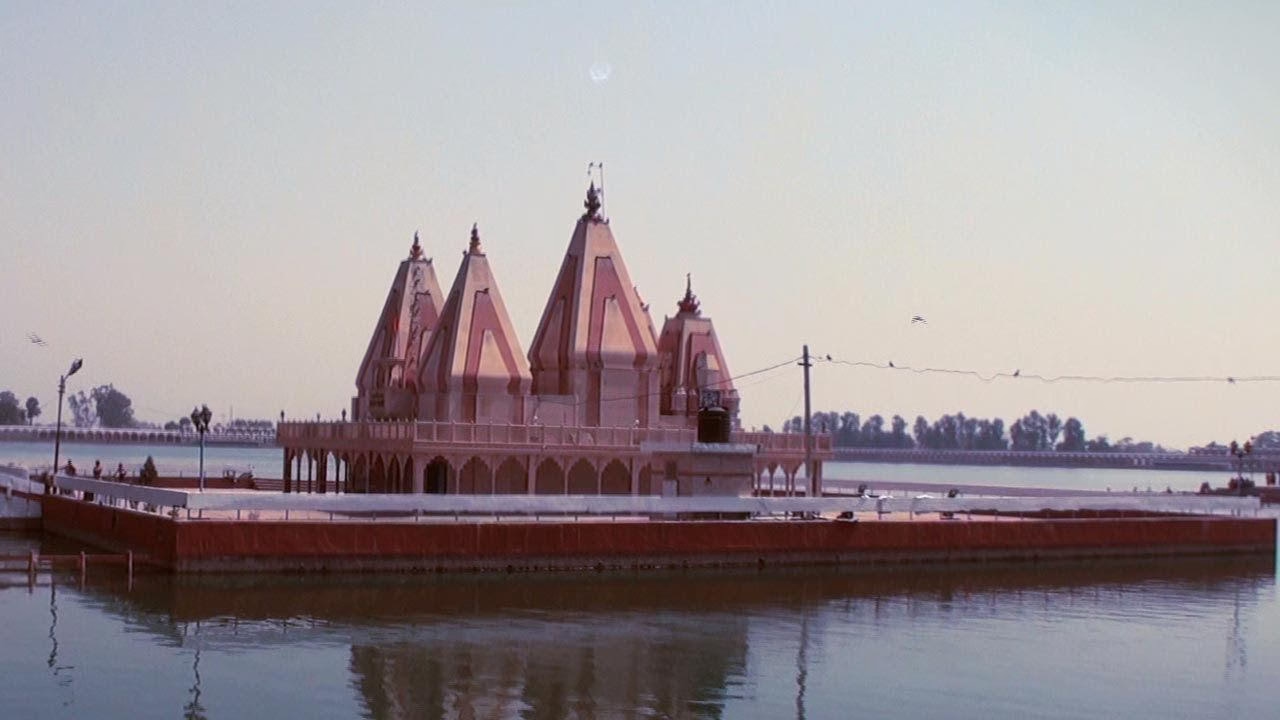
While the sarovar itself is the primary attraction, the complex houses several deities. The central shrine within the water is dedicated to Lord Shiva. A magnificent black stone chariot depicting Lord Krishna and Arjuna also stands within the premises. The Sarovar is considered a Swayambhu (self-manifested) site of spiritual energy, believed to be the point where Lord Brahma performed a grand Yajna.
Phalaśruti: Why Devotees Visit
Scriptural authority suggests that bathing in the Brahma Sarovar brings merit equivalent to performing an Ashvamedha Yajna (Horse Sacrifice). Specifically, devotees visit for:
- Ancestral Liberation (Pitra Dosh Nivaran): It is believed that waters here carry the capacity to cleanse generational karma.
- Purification: Physical and spiritual cleansing through ritual bathing.
- Gita Jayanti: Witnessing the grandeur of the Deep Daan ceremony, where thousands of earthen lamps float on the water.
📖 Related: Naina Devi Temple History & Darshan Timings: Complete Guide
2. Historical Origins & Scriptural Legend
The history of Brahma Sarovar predates recorded history, intertwined deeply with the epic Mahabharata and Puranic lore.
Mythological Significance
According to the Sthala Purana, Lord Brahma created the universe from this very land. It is said that the water body appeared during a cosmic event to aid his Yajna.
Tradition holds that the Pandavas visited this site during their exile. In the Mahabharata, Duryodhana is believed to have hidden himself underwater in this sarovar on the concluding day of the Kurukshetra war to evade capture.
Historical Records
The sarovar finds mention in the travelogues of the 11th-century Persian scholar Al-Biruni in his work Kitab-ul-Hind, highlighting its prominence even during ancient medieval times. While the current structures and ghats have been renovated and expanded over centuries by various rulers and the state government, the sanctity remains unchanged.
3. Architectural Marvels
The architecture of the Brahma Sarovar complex is a blend of ancient structural principles and modern aesthetic restoration.
The Water Body
The tank is rectangular, measuring approximately 3600 feet in length and 1500 feet in breadth. It is surrounded by high boundary walls and wide Chhatris (cenotaphs) that define the Haryana architectural style. The northern and southern sides feature massive Ghats constructed with stone masonry, allowing pilgrims to perform rituals at the water’s edge.
The Central Shrine
A dedicated Shiva Temple sits on an island within the Sarovar, accessible via a long, concrete bridge. This allows for a panoramic view of the water body. The black stone chariot sculpture is a notable artistic highlight, depicting the Geetopadesham between Krishna and Arjuna.
Landscape and Lighting
The complex is designed to maximize the spiritual experience during sunrise and sunset. The use of sandstone in the pavilions and walkways complements the water’s hue. While not a UNESCO site, it is a state-protected monument of significant heritage value.
4. Darshan & Ritual Logistics
Planning your visit to Brahma Sarovar requires understanding the daily rituals and seasonal events. Below are the general timings for 2026.
📖 Related: Manimahesh Kailash Temple: History, Darshan Timings & Complete Pilgrimage Guide
Daily Timings Table
| Activity | Timing | Notes |
|---|---|---|
| Opening | 05:00 AM | Early morning Brahma Muhurta is ideal for meditation. |
| Morning Aarti | 06:00 AM | Highly recommended for a serene experience. |
| Evening Aarti | 06:30 PM (Sunset) | Includes Deep Daan (floating lamps). |
| Closing | 09:00 PM | Winter timings may vary slightly. |
Key Sevas and 2026 Festivals
- Gita Jayanti: December 10, 2026. The entire Sarovar is illuminated with floating lamps (Deep Daan). Massive crowds gather; VIP passes are often required for the main ghat.
- Mahashivratri: February 26, 2026. Special Abhishekam is performed at the central Shiva temple.
- Kartik Purnima: November 2026 (Date TBD). Sacred bathing ritual.
Booking Sevas: While local priests manage on-site rituals, the Kurukshetra Development Board (KDB) has introduced online portals for specific events like the Gita Jayanti Deep Daan sponsorship and general donations. Search for the official “Kurukshetra Online Darshan” portal for 2026 updates.
5. Practical Visitor Guidance
To ensure a safe and respectful pilgrimage, please adhere to the following guidelines:
Code of Conduct
- Dress Code: Traditional Indian attire (Kurta-Pajama, Saree, Salwar Kameez) is recommended. Avoid shorts or sleeveless tops inside the temple premises.
- Photography: Allowed on the ghats but restricted inside the central Shiva temple. Drones are generally prohibited without prior permission from administration.
- Mobile Lockers: Coin-operated lockers are available near the entrance for electronic devices if you plan to take a holy dip.
- Accessibility: The main ghats have steps. There is a dedicated ramp for wheelchairs near the main entrance.
Crowd Management
Best Hours: 5:00 AM to 9:00 AM and after 7:00 PM (winter) to avoid the midday heat and crowds.
Seasonal Advice: In May and June, temperatures can rise above 40°C. Carry sufficient water and cover your head. Monsoon season (July-August) offers a cooler climate but check for water level warnings.
6. Pilgrimage Connectivity
How to Reach
Air: The nearest airport is Chandigarh International Airport (IXC), approximately 85 km away. Taxis and buses are readily available.
Rail: Kurukshetra Junction (KKDE) is the major railway station, located just 4-5 km from Brahma Sarovar. Auto-rickshaws and e-rickshaws can take you to the site in 15 minutes.
📖 Related: Baijnath Temple History and Darshan Timings: The Complete 2026 Pilgrimage Guide
Road: Kurukshetra is well-connected via National Highway 44 (Grand Trunk Road) and National Highway 344. Buses from Delhi, Ambala, and Chandigarh ply regularly.
Recommended Pilgrimage Circuit
Complete your spiritual journey by visiting these nearby sacred sites:
- Jyotisar: The birthplace of the Bhagavad Gita, located 8 km from Brahma Sarovar. Features the ancient Banyan tree and a chariot sculpture.
- Sannihit Sarovar: Located 7 km away, it is believed to be the meeting point of seven holy rivers and the resting place of Lord Vishnu.
- Bhishma Kund: Situated in the nearby town of Narkatari, where Bhishma Pitamah waited for the sunrise on the bed of arrows.
7. Frequently Asked Questions (FAQs)
1. Is there a VIP darshan entry available at Brahma Sarovar?
Generally, there is no formal VIP entry for the open ghats as it is a public water body. However, during major festivals like Gita Jayanti, special passes are issued by the District Administration for priority seating during the Aarti. You can apply for these online via the official Haryana Tourism portal.
2. Can I take a holy dip in Brahma Sarovar?
Yes, taking a dip (Snan) is permitted and encouraged, particularly in the designated bathing areas. The water is deep; swimming is prohibited, and safety guards are deployed. Changing rooms are available nearby.
3. Is photography allowed inside the Shiva temple in the middle?
No, photography is strictly prohibited inside the sanctum sanctorum of the central Shiva temple. Mobile phones should be kept on silent mode.
4. Are there accommodation facilities nearby?
Yes, Kurukshetra offers a range of accommodation. The Haryana Tourism Corporation runs the Panchkula Tourist Complex nearby, and there are numerous private hotels and Dharamshalas catering to pilgrims.
5. What is the significance of the black stone chariot?
The black stone chariot sculpture depicts the iconic conversation between Lord Krishna and Arjuna on the battlefield of Kurukshetra, as described in the Bhagavad Gita. It serves as a visual reminder of the scripture’s origin at this site.