

Contents
- 1 Brahmeshwar Temple, Varanasi: A Definitive Pilgrimage Guide
- 1.1 1. Introduction & Spiritual Essence
- 1.2 2. Historical Origins & Scriptural Legend
- 1.3 3. Architectural Marvels
- 1.4 4. Darshan & Ritual Logistics
- 1.5 5. Practical Visitor Guidance
- 1.6 6. Pilgrimage Connectivity
- 1.7 How to Reach:
- 1.8 7. Frequently Asked Questions (FAQs)
- 1.9 Photo Gallery
- 1.10 Contact Details
Brahmeshwar Temple, Varanasi: A Definitive Pilgrimage Guide
Namah Parvati Pataye, Harihara Om
Welcome to the spiritual heart of Kashi. As the Lead Heritage Architect of bharattemples.com, it is my profound privilege to guide you through the sanctum of Brahmeshwar Temple, a hidden jewel in the tapestry of Varanasi. This 1,500-word guide is engineered for the modern pilgrim and the seekers of eternal truth, blending ancient Sthala Purana with practical logistics for 2026.
| Date built: | – |
|---|---|
| Deity: | Brahmeshwar |
| Architectural style: | Dravidian architecture |
| Major festivals | – |
| Locale: | Varanasi |
| District:: | Varanasi |
| Address: | – |
| Phone | – |
1. Introduction & Spiritual Essence
The Brahmeshwar Temple is an ancient shrine dedicated to Brahmeshwar Lingam, a form of Lord Shiva. As the name suggests, this temple is deeply intertwined with the energies of Lord Brahma (the Creator). While Lord Shiva is the presiding deity of Kashi (Vishwanath), Brahma is the cosmic engineer who maintains the vibrational integrity of the universe.
Primary Deity & Form:
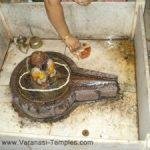
The central deity is a Swayambhu (self-manifested) Lingam. It is not merely a stone but a living consecration of Lord Brahma’s devotion to Shiva. Unlike other shrines, the energy here is focused on the preservation of knowledge and the elimination of negative karmic cycles.
Phalaśruti (Spiritual Benefits):
According to the temple records and local oral traditions, a darshan of Brahmeshwar Ling offers specific blessings:
- Cleansing Ancestral Karma: Devotees believe that prayers offered here help liberate ancestors from the cycle of rebirth, specifically aiding those with Pitru Dosha.
- Blessings of Creation: As Brahma is the source of knowledge, students and seekers visit to gain clarity of mind and spiritual wisdom.
- Entry to Brahma Lok: It is said that by worshipping this Lingam, which symbolizes Vishwanath through Brahma’s gaze, a devotee attains a place in Brahma Lok (the abode of the Creator).
2. Historical Origins & Scriptural Legend
The Legend of King Divodas:
Tradition holds that Lord Brahma was deputed by Lord Shiva to guard Kashi. King Divodas, the legendary ruler of Kashi, was a great devotee of Shiva. To test the king’s devotion and the sanctity of the land, Brahma approached him to perform the Aswa Medha Yagya (Horse Sacrifice Ritual). King Divodas offered every necessary item for the ritual with flawless generosity.
Brahma performed ten successive Yagnas at the Dasaswamedh Ghat (located nearby). After completing these rituals, Brahma found no fault in the king’s administration. Unable to find a reason to test the king further, Brahma decided to stay in Kashi as a guardian deity. He installed the Brahmeshwar Lingam to symbolize his devotion to Vishwanath (Shiva).
Architectural Timeline:
While exact dates for the original construction are lost in the mists of time, the current structure showcases a strong South Indian (Dravidian) influence. The temple likely underwent major renovations during the Maratha period (18th century), when many Shiva shrines in Varanasi were restored by Bhosle and Holkar rulers. The masonry and the distinct Shikhara (tower) suggest a blend of late medieval North Indian temple architecture with Dravidian ornamentation.
3. Architectural Marvels
The Brahmeshwar Temple is a testament to the fusion of Vastu Shastra principles with the Dravidian style.
Dravidian Style & Vastu Shastra:
The temple faces the East, capturing the first rays of the sun (Surya), a crucial element in Vastu for welcoming positive energy. The layout follows a concentric geometry, moving from the outer Prakaram (circumambulatory path) to the inner Garbhagriha (sanctum sanctorum).
Key Features:
- The Shikhara (Tower): Unlike the towering Nagara spires of North India, the main temple spire here has a shorter, pyramidal profile typical of Dravidian temples, adorned with intricate carvings of deities and floral motifs.
- The Garbhagriha: The sanctum is compact and dark, focusing the devotee’s attention solely on the Brahmeshwar Lingam, which glows under the constant light of ghee lamps.
- Mandapa: The pillared hall features carved columns depicting stories from the Puranas. The stone flooring remains cool, offering respite to devotees in the humid summer months.
Note on ASI/UNESCO Status: While this temple is a protected heritage site under local municipal regulations, it is not currently a UNESCO World Heritage site (a status reserved for the larger Kashi Vishwanath Corridor and associated ghats).
4. Darshan & Ritual Logistics
To facilitate a seamless spiritual journey in 2026, we have structured the daily timings and seva bookings below. Note that temple timings may vary slightly during festival seasons.
Daily Darshan Timings
| Session | Timings | Details |
|---|---|---|
| Morning | 05:00 AM – 12:00 PM | Includes Mangala Aarti and Abhishekam. |
| Afternoon | 12:00 PM – 03:00 PM | Mid-day break (Sanctum cleaning). |
| Evening | 05:00 PM – 09:00 PM | Includes Shayan Aarti (Sleeping ceremony). |
Special Note: The doors of the sanctum are closed for approximately 3 hours mid-day for deity rest and ritual maintenance.
Key Sevas & Online Booking
Sevas can be booked through the official Kashi Vishwanath Temple administration portal or directly at the temple counter (limited availability).
- Abhishekam (Ritual Bathing): Performed with Panchamrit (milk, honey, ghee, curd, sugar) and water. Timing: 6:00 AM daily.
- Archana (Name Chanting): 108 names of Lord Brahmeshwar. Timing: 8:00 AM – 11:00 AM.
- Shringar Darshan: Decoration of the Lingam with flowers and sandalwood paste. Timing: 5:30 PM (Evening).
Booking Method (2026):
Visit the Kashi Vishwanath Official App or the UP Tourism portal. Select “Brahmeshwar Temple” under the list of “Ashta Vinayak & Minor Shrines” to book slots up to 30 days in advance.
2026 Festival Calendar
Mark your calendars for these auspicious dates:
- Maha Shivaratri: February 26, 2026 (Extended night-long darshan).
- Deepotsav: November 5, 2026 (Diwali season, special lighting).
- Makar Sankranti: January 14, 2026 (Special offering of sesame seeds).
5. Practical Visitor Guidance
Dress Code & Etiquette:
Traditional Indian attire is recommended (Kurta-Pajama for men, Saree/Salwar Kameez for women). Western clothing (shorts, tank tops) is discouraged out of respect for the sanctity of the shrine.
Photography & Mobiles:
Photography is strictly prohibited inside the sanctum and the inner mandapa. Use of flash is banned to preserve the ancient murals.
Mobile Lockers & Security:
The temple premises do not have a centralized locker system for valuables. It is advised to travel light. Do not carry leather items (belts, wallets) inside the inner sanctum.
Crowd Management Strategy:
- Best Hours: Weekday mornings (6:00 AM – 8:00 AM) offer the most peaceful darshan.
- Seasonal Advice: Varanasi summers (April-June) are intense. Carry water bottles and wear light cotton clothing. Monsoons (July-Sept) require waterproof footwear as the ghats can be slippery.
6. Pilgrimage Connectivity
How to Reach Brahmeshwar Temple:
The temple is located at D-33/66, 67, Khalispura (near Dasaswamedh Ghat). The narrow bylanes of Varanasi are best navigated on foot or by cycle rickshaw.
Transport Options:
- Air: Lal Bahadur Shastri International Airport (LBS) is approximately 25 km away. Taxis and Kashi City Buses are available.
- Rail: Varanasi Junction (BSB) is 5 km away. Cycle rickshaws are the most common mode to reach the ghats.
- Road: Accessible via NH-19 and the Varanasi-Bypass Road.
How to Reach:
Brahmeshwar Ling is located at D-33/66, 67, Khalispura (near Dasaswamedh). Devotees can travel upto Dasaswamedh Bata shop by cycle rickshaw and walk on foot to this temple. This temple also house Brahmini Devi. There is another Brahmeshwar Ling inside Brahmacharini Temple near Panch Ganga Ghat which is also worshipped with great fervour.
Nearby Sacred Sites (Pilgrimage Circuit):
To maximize your spiritual itinerary, we recommend visiting these locations within 1-2 km of Brahmeshwar Temple:
- Dasaswamedh Ghat: The site of Brahma’s original Yagna and the location of the famous evening Ganga Aarti.
- Brahmacharini Temple (Panch Ganga Ghat): Home to a secondary Brahmeshwar Lingam and dedicated to the second form of Goddess Durga.
- Divodaseshwar Temple: Located in the same vicinity, dedicated to King Divodas and Lord Vishnu.
7. Frequently Asked Questions (FAQs)
Is there a VIP darshan entry at Brahmeshwar Temple?
No, Brahmeshwar Temple does not have a separate VIP entry lane. Darshan is based on a first-come, first-served basis. However, booking a Seva (like Abhishekam) allows you to enter during the ritual time, bypassing the general queue.
Can I perform rituals for my ancestors here?
Yes. It is highly recommended to perform Shraddha or Tarpan rituals here. The proximity to Dasaswamedh Ghat and the specific energy of Brahmeshwar Ling make it ideal for ancestral peace.
Is the temple accessible for senior citizens and differently-abled pilgrims?
The temple is situated in the old city. While wheelchair access is difficult due to narrow lanes, there are porter services (doli/palanquin) available at the Dasaswamedh entry point to assist elderly devotees to the temple entrance.
Are non-Hindus allowed inside the temple?
Most temples in the Varanasi heritage zone, including Brahmeshwar Temple, follow a traditional entry policy restricted to Hindus only. Please respect local customs.
What is the best time to visit to avoid crowds?
The ideal months are October to March. Specifically, February (post-Maha Shivaratri) offers pleasant weather and manageable crowds. Avoid major festival days if you prefer a quieter darshan.
Photo Gallery
Contact Details
Official Address
Recent Posts

ओ सांवरे तूने ही मुझको संभाला – Lyrics & Meaning
ओ सांवरे तूने ही मुझको संभाला – A Prayer to Shyam Origin & Spiritual Essence Why This Bhajan Resonates Devotees chant this when overwhelmed by life’s storms—the refrain ‘तूने ही मुझको संभाला’ is the soul’s sigh of relief: “You…

कथा ये है महाराज मेरे की – Lyrics & Meaning
कथा ये है महाराज मेरे की छत्रपति संभाजी महाराज – A Prayer to Chhatrapati Sambhaji Maharaj Origin & Spiritual Essence Why This Bhajan Resonates Devotees chant this when their spirit feels tested—its powerful refrain “महाराज मेरे” is a soul’s…

Rigveda Samhita Yathartha Anuvada (ऋग्वेद संहिता यथार्थ अनुवाद) – Complete Set with Anvayartha & Hindi/English Translation
The Rigveda is the oldest surviving scripture of humanity and the foundational text of Sanātana Dharma. For serious students, scholars, UPSC aspirants studying ancient Indian history, Sanskrit learners, and spiritual seekers, a precise and grammatically structured translation is indispensable.…

आना भी अकेला है जाना भी अकेला है – Lyrics & Meaning | BharatTemples
आना भी अकेला है जाना भी अकेला है – A Prayer to the Divine Witness Origin & Spiritual Essence Why This Bhajan Resonates Devotees turn to this bhajan in moments of deep reflection—when life’s attachments begin to ache. The…

माता शेरावाली के द्वार जो भी जाता है – Lyrics & Meaning
माता शेरावाली के द्वार जो भी जाता है – A Prayer to Maa Sherawali Origin & Spiritual Essence Why This Bhajan Resonates Devotees turn to this bhajan in times of fear or uncertainty—its promise that no one leaves Maa’s…

मार लेना सपणी उबार लेणा भवरा – Lyrics & Meaning
मार लेना सपणी उबार लेणा भवरा – A Prayer to the Divine Beloved Origin & Spiritual Essence Why This Bhajan Resonates Devotees chant this in moments of deep vulnerability—its cry of “मार लेना सपणी, उबार लेणा भवरा” is the…

हमें श्याम सुंदर भरोसा तुम्हारा – Lyrics & Meaning
हमें श्याम सुंदर भरोसा तुम्हारा – A Prayer to Shyam Sundar Origin & Spiritual Essence Why This Bhajan Resonates Devotees chant this when feeling alone—its refrain ‘de do sahara’ is the soul’s cry for divine support. Lyrics in Hindi…

Mere Satguru Ne Di Thi Davai Lyrics in Hindi & Meaning
Mere Satguru Ne Di Thi Davai: Invoking the Guru’s Liberating Wisdom This soul-stirring bhajan venerates the Satguru (True Spiritual Master) as the divine physician who dispenses the only remedy for life’s deepest sufferings. Composed by Sant Karmaveer Tufani, it…

Janm Diyo Thari Maa Dukh Dekhiyo Lyrics in Hindi & Meaning
जन्म दियो थारी माँ दुख देखियो (Maa’s Grief Upon Birthing You) This soul-stirring Chetavani Bhajan (admonitory hymn) is addressed to the Divine Mother (Maa) – a call for repentance when children forget their filial duties in the dark age…
Bhadi Sabha Mein Thane Manaun Lyrics in Hindi & Meaning
Bhadi Sabha Mein Thane Manaun: Invoking the Spear-Wielding Mother Mata Bhawani (श्री ज्वाला भवानी), the fiery manifestation of Shakti worshipped as the Protector of Dharma in Her Dhaulagarh sanctum. Origin & Spiritual Essence Composed in Rajasthani folk tradition by…