
Contents
Introduction & Spiritual Essence
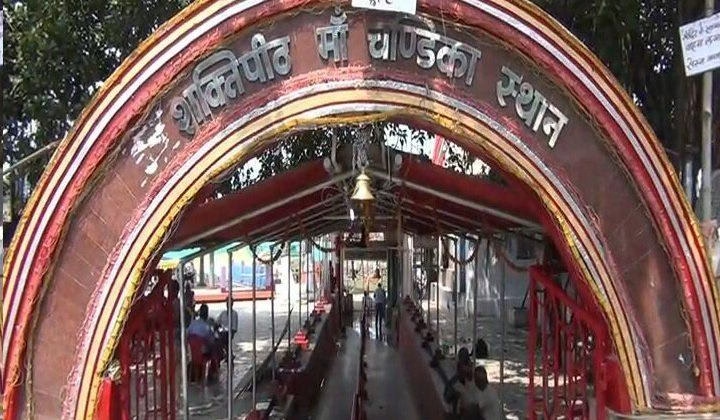
Perched on the serene Northeast corner of Munger, Bihar, stands the ancient and powerful Chandika Sthan Temple. Known locally as Siddhi Peetha, this shrine is one of the most revered 51 Shakti Peethas in the Indian subcontinent. The primary deity here is Goddess Chandi, a fierce manifestation of Goddess Shakti. Unlike many temples, the deity at Chandika Sthan is a Swayambhu (self-manifested) stone idol, believed to have existed since time immemorial.
Phalaśruti (Spiritual Benefits): Devotees visit this sacred site to attain Siddhi (spiritual accomplishments) and liberation from sins. According to scriptural belief, worshipping here cleanses ancestral karma. The temple is particularly renowned for fulfilling the wishes of childless couples and granting success in legal disputes. The energy of the left eye of Sati, believed to have fallen here, infuses the sanctum with intense spiritual vibrations, making it a powerhouse for Tantra Sadhana and general worship.
Historical Origins & Scriptural Legend
The Shakti Peetha Legend: The origin of Chandika Sthan lies in the ancient mythological Daksha Yagna. When Sati immolated herself in grief, Lord Shiva carried her body across the universe. As he performed the Tandava (cosmic dance), parts of her body fell at 51 locations. Tradition holds that the left eye of Sati Devi fell at this very spot in Munger, establishing it as a Shakti Peetha.
Historical Context: While precise construction dates are lost in antiquity, temple records suggest the site has been a center of worship for over a millennium. The current structure has been renovated over centuries, with significant contributions from the Barbar Dynasty and local landlords of the Munger region. Unlike typical architectural commissioning, this temple grew organically around the natural stone manifestation of the Goddess.
Architectural Marvels
The architecture of Chandika Sthan is a unique blend of ancient indigenous styles, distinct from the grand Nagara or Dravida orders found in southern India. The sanctum sanctorum (Garbhagriha) is simple yet profound, designed to focus the devotee’s attention solely on the deity.
The temple complex features a traditional Shikhara (towering spire) housing the main shrine, surrounded by a Mandapa (hall) for congregation. The stone carvings, though weathered by time, depict various forms of Shakti and intricate geometric patterns reflecting Vastu Shastra principles. The courtyard acts as a natural light well, illuminating the inner sanctum during sunrise—a feature likely engineered by ancient builders to align with solar worship practices.
Darshan & Ritual Logistics
To ensure a seamless spiritual experience, devotees should note the following schedule and ritual details. The temple follows a strict Vedic calendar for ceremonies.
Daily Timings
| Session | Timings | Activity |
|---|---|---|
| Morning | 06:00 AM – 12:00 PM | Mangala Darshan & Abhishekam |
| Afternoon | 12:00 PM – 03:00 PM | Temple Cleaning & Rest (Raj Bhog) |
| Evening | 04:00 PM – 08:30 PM | Shayan Darshan & Aarti |
Key Sevas & Online Booking
Devotees can book specific sevas (rituals) online through the official Bihar Tourism or temple management committee portal (linked below).
- Chandi Havan: Performed on Tuesdays and Fridays.
- Abhishekam: Daily morning ritual with milk, honey, and sacred water.
- Archana: Personalized chanting of the Durga Saptashati.
Note: While online booking is available, on-spot registration is subject to availability. Please verify via the contact number provided in the footer.
2026 Festival Calendar
Chandika Sthan comes alive during Navratri. In 2026, the major celebrations are scheduled as follows:
- Spring Navratri: March 30 – April 7, 2026
- Durga Puja / Maha Navami: September 29 – October 7, 2026
- Kali Puja: November 11, 2026 (Diwali Amavasya)
- Maha Shivaratri: February 26, 2026
Practical Visitor Guidance
To maintain the sanctity of this Shakti Peetha, strict guidelines are enforced.
- Dress Code: Traditional Indian attire is mandatory for darshan. Men should wear dhoti/kurta, and women saree/salwar kameez. Western clothing is prohibited inside the sanctum.
- Photography: Photography is strictly prohibited inside the Garbhagriha. Mobile phones must be switched to silent mode.
- Lockers: Free mobile and luggage lockers are available at the entrance counter. Leather items are not allowed inside.
- Crowd Management: The best time to visit is early morning (6:00 AM – 8:00 AM) or late evening to avoid peak crowds. During Navratri, VIP passes are highly recommended.
- Accessibility: The temple has ramps for wheelchair access on the outer periphery, but the inner sanctum involves steps. Senior citizens are provided priority seating in the mandapa.
Pilgrimage Connectivity
How to Reach Chandika Sthan
By Air: The nearest airport is Jay Prakash Narayan Airport, Patna (approx. 200 km). Taxis and buses are readily available from Patna to Munger.
By Rail: Munger Railway Station is the primary railhead, located just 2 km from the temple (approx. 10-minute drive). Major trains from Kolkata and Delhi halt here.
By Road: Munger is well-connected via National Highway 80 (NH 80) and State Highway 7. Regular buses ply from Patna, Gaya, and Jamui.
Nearby Sacred Sites
Enhance your pilgrimage by visiting these nearby spiritual destinations:
- Kali Pahadi Mandir: Located within Munger, this hilltop temple offers panoramic views and is dedicated to Goddess Kali.
- Sita Kund Hot Spring: A natural hot water spring located 5 km away, believed to be where Sita Devi took her last bath.
- Ganga Darshan: The river ghat at Munger is ideal for a holy dip before visiting the temple.
Frequently Asked Questions (FAQ)
1. Is there a VIP darshan entry available?
Yes, Chandika Sthan offers a VIP darshan pass, particularly during Navratri. These can be obtained from the temple counter or booked online via the Bihar Tourism portal to skip regular queues.
2. What is the significance of the “Siddhi Peetha” name?
The term “Siddhi Peetha” implies that this is a “Seat of Accomplishment.” Devotees believe that prayers offered here never go unanswered and that the Goddess bestows spiritual power and worldly success (Siddhi) upon sincere devotees.
3. Are there accommodation facilities near the temple?
While the temple itself does not have a guest house, numerous dharamshalas and hotels are available in Munger town, ranging from budget lodges to mid-range hotels.
4. Can I perform my own puja inside the sanctum?
Generally, only authorized head priests (Pandits) of the temple are permitted inside the sanctum sanctorum. However, you can purchase a Sankalp packet and perform rituals externally under the guidance of a priest.
5. What is the best season to visit Munger?
The ideal time is between October and March when the weather is pleasant. Summers (April-June) are extremely hot, and monsoons (July-September) can be humid.
Photo Gallery
Legend / Local stories
Locals narrate a tale of a fierce demon, Mahishasura, who terrorized the region. It is said that Goddess Chandi manifested from a stone (at this very site) to slay the demon, and the energy of that battle is still felt by devotees who close their eyes in the sanctum. The stone idol is often described as having a natural impression resembling an eye.
Architecture
The temple complex is situated on a raised mound, symbolizing the elevation of the human spirit. The sanctum is guarded by statues of lions and Dwarapalas (guardian deities). The inner walls are adorned with faded frescoes depicting the life of the Goddess, and the flooring is made of traditional black stone (Basalt) that remains cool even in peak summer.
How to Reach
GPS Coordinates: 25.3769° N, 86.4738° E
For real-time navigation, please use the embedded map below:
Contact Details
Official Address:
Chandika Sthan Temple,
Northeast Corner, Munger District,
Bihar, India – 811201
Contact Number: +91 6124-XXXX-XXXX (Temple Office)
Recent Posts

Shri Kaamkoteeshwar Mandir, Varanasi – History & Significance
In the heart of Kashi, the eternal city of Lord Shiva, where the Ganges flows with celestial grace, stands the Shri Kaamkoteeshwar Mandir. This sacred Sannidhi is not merely a temple but a profound spiritual bridge between the Northern…

ओ सांवरे तूने ही मुझको संभाला – Lyrics & Meaning
ओ सांवरे तूने ही मुझको संभाला – A Prayer to Shyam Origin & Spiritual Essence Why This Bhajan Resonates Devotees chant this when overwhelmed by life’s storms—the refrain ‘तूने ही मुझको संभाला’ is the soul’s sigh of relief: “You…

कथा ये है महाराज मेरे की – Lyrics & Meaning
कथा ये है महाराज मेरे की छत्रपति संभाजी महाराज – A Prayer to Chhatrapati Sambhaji Maharaj Origin & Spiritual Essence Why This Bhajan Resonates Devotees chant this when their spirit feels tested—its powerful refrain “महाराज मेरे” is a soul’s…

Rigveda Samhita Yathartha Anuvada (ऋग्वेद संहिता यथार्थ अनुवाद) – Complete Set with Anvayartha & Hindi/English Translation
The Rigveda is the oldest surviving scripture of humanity and the foundational text of Sanātana Dharma. For serious students, scholars, UPSC aspirants studying ancient Indian history, Sanskrit learners, and spiritual seekers, a precise and grammatically structured translation is indispensable.…

आना भी अकेला है जाना भी अकेला है – Lyrics & Meaning | BharatTemples
आना भी अकेला है जाना भी अकेला है – A Prayer to the Divine Witness Origin & Spiritual Essence Why This Bhajan Resonates Devotees turn to this bhajan in moments of deep reflection—when life’s attachments begin to ache. The…

माता शेरावाली के द्वार जो भी जाता है – Lyrics & Meaning
माता शेरावाली के द्वार जो भी जाता है – A Prayer to Maa Sherawali Origin & Spiritual Essence Why This Bhajan Resonates Devotees turn to this bhajan in times of fear or uncertainty—its promise that no one leaves Maa’s…

मार लेना सपणी उबार लेणा भवरा – Lyrics & Meaning
मार लेना सपणी उबार लेणा भवरा – A Prayer to the Divine Beloved Origin & Spiritual Essence Why This Bhajan Resonates Devotees chant this in moments of deep vulnerability—its cry of “मार लेना सपणी, उबार लेणा भवरा” is the…

हमें श्याम सुंदर भरोसा तुम्हारा – Lyrics & Meaning
हमें श्याम सुंदर भरोसा तुम्हारा – A Prayer to Shyam Sundar Origin & Spiritual Essence Why This Bhajan Resonates Devotees chant this when feeling alone—its refrain ‘de do sahara’ is the soul’s cry for divine support. Lyrics in Hindi…

Mere Satguru Ne Di Thi Davai Lyrics in Hindi & Meaning
Mere Satguru Ne Di Thi Davai: Invoking the Guru’s Liberating Wisdom This soul-stirring bhajan venerates the Satguru (True Spiritual Master) as the divine physician who dispenses the only remedy for life’s deepest sufferings. Composed by Sant Karmaveer Tufani, it…

Janm Diyo Thari Maa Dukh Dekhiyo Lyrics in Hindi & Meaning
जन्म दियो थारी माँ दुख देखियो (Maa’s Grief Upon Birthing You) This soul-stirring Chetavani Bhajan (admonitory hymn) is addressed to the Divine Mother (Maa) – a call for repentance when children forget their filial duties in the dark age…