
Contents
1. Introduction & Spiritual Essence
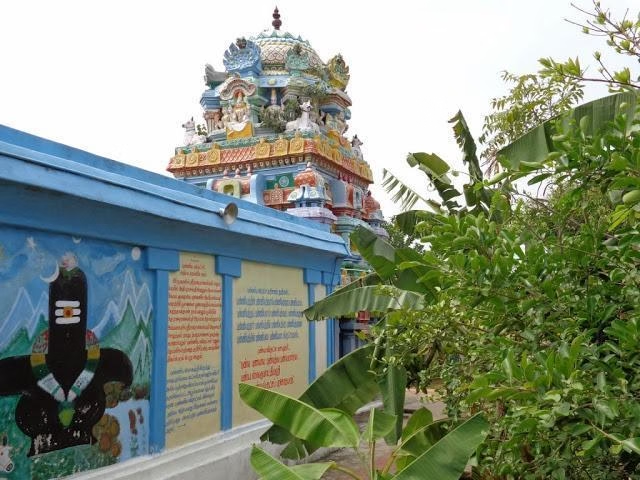
Nestled on the serene banks of the Kudamurutti River—a distributary of the sacred Cauvery—the Chandramouleeswarar Temple in Thazhamangai, Thanjavur, stands as a testament to divine resilience and cosmic energy. This ancient shrine, estimated to be over 1,300 years old, is dedicated to Lord Shiva in the form of Chandramouleeswarar (the One who wears the crescent moon) and his consort, Sri Raja Rajeswari.
Phalaśruti: Why Devotees Visit
The temple holds a unique spiritual magnetism. It is renowned as a powerful Parihara Sthalam (remedial shrine) specifically for eye-related ailments and for resolving domestic strife.
- Family Harmony: Devotees believe that steadfast worship here, particularly on Tuesdays and Fridays, bestows peace and tranquility within the household.
- Ancestral Karma: Rituals performed for ancestors are believed to liberate them from karmic debts.
- Cleansing the Mind: The temple is considered a “Mukthi Sthalam,” offering spiritual liberation to those who perform the Sandal Alankaram (anointment with sandalwood paste).
2. Historical Origins & Scriptural Legend
According to temple records and local inscriptions, this shrine dates back to the Pallava and Chola dynasties. During the Chola period, the village was known by the grand title: Nitha Vinotha Valanattu Kizhar Kutrathu Pavathayamangalam. Legend tells of a great flood during the reign of King Sundara Chozhan that washed away entire villages in the Thanjavur district. Miraculously, the structure of the Chandramouleeswarar Temple remained untouched by the destructive waters, a sign of its indestructible spiritual power.
Scriptural Legends & Sthala Purana
The Legend of Chandran (The Moon God):
It is said that Lord Chandran (the Moon) was afflicted by a curse from Daksha. To seek redemption, he performed intense penance at this location, which was then a dense forest of Thazha (Screw Pine) trees. Lord Shiva, pleased by his devotion, appeared and took the crescent moon onto his head, thus becoming Chandramouleeswarar.
The Sapta Matrika Connection:
This temple is one of the seven sacred shrines (Saptha Sthanams) surrounding the Pasupathi Koil region, dedicated to the Saptamatrikas (Seven Mothers). Specifically, this shrine is associated with Mahendri, the Shakti emanating from Indra. Tradition holds that on the sixth day of Navarathri (Sashti), Parasakthi visits this temple accompanied by Mahendri. This divine darshan is known as Moondram Pirai Darshnam.
The Connection to Rajaraja Chozhan:
History records that when Rajaraja Chozhan was building the monumental Brihadeeswarar Temple (Thanjavur Big Temple), he faced a significant hurdle in installing the massive Nandi (bull) statue. He sought the guidance of the sage Karuvurar, who visited this temple in Thazhamangai. The sage performed the Sandana Kaappu (sandalwood anointing). The pleased Lord intervened, allowing the Nandi installation at Thanjavur to proceed flawlessly. In gratitude, King Rajaraja made it a ritual to visit this temple on his birth star (Sadayam) every year to perform the Sandal Alankaram.
3. Architectural Marvels
While the temple is modest in scale, it is a classic example of early Tamil Temple Architecture (predominantly influenced by the Pallava style).
Key Structural Features
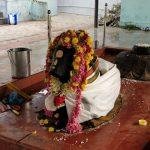
- Sanctum Sanctorum (Garbhagriha): Houses the Swayambhu (self-manifested) lingam of Chandramouleeswarar.
- Prakaram: The temple features a single Prakaram (circumambulatory pathway), creating an intimate spiritual atmosphere rather than a sprawling complex.
- Sculptures & Iconography: Despite its size, the inner sanctum features intricate carvings. Notably, there is no Dwaja Sthambam (flagpost) or a separate Koshtam (niche idols) on the outer walls, which is a unique architectural rarity.
- Nandhi: The dedicated Nandhi statue faces the sanctum directly, located just outside the inner sanctum gate, alongside the Balipeedam (altar for offerings).
4. Darshan & Ritual Logistics
The temple operates on a traditional schedule. Below is the daily timetable for 2026.
| Pooja / Darshan | Timings |
|---|---|
| Morning Opening | 06:00 AM |
| Ushankalam (Early Morning Ritual) | 06:00 AM – 07:30 AM |
| Closing (Noon) | 11:00 AM |
| Evening Opening | 04:00 PM |
| Arthajama Pooja (Night Closing) | 08:30 PM |
Key Sevas & 2026 Festivals
Currently, the temple relies on local administration (likely under the auspices of the Thanjavur Devaswom Board). Online booking may be limited; it is recommended to coordinate with the Gurukkal (priest) on-site.
- Moondram Pirai Darshnam: Occurs on the 6th day of Navarathri (Date: October 3, 2026). The Goddess is adorned with Thazhampoo (Screw Pine flower).
- Pradosham: The 13th lunar day of every month is significant for removing past sins.
- Sivalinga Abhishekam: Performed with milk, honey, and sandalwood paste (highly recommended for eye health).
- Sadayam Star Ritual: (Date: April 19, 2026) – The most auspicious day for Sandal Alankaram, linked to Rajaraja Chozhan’s patronage.
5. Practical Visitor Guidance
Code of Conduct & Dress Code
As this is an active place of worship, modesty is paramount. Traditional attire is required: Men (Veshti/White Dhoti and Shirt) and Women (Saree/Salwar Kameez). Western attire may not be permitted within the inner sanctum.
Photography & Electronics
- Photography: Generally allowed in the outer prakaram but prohibited inside the sanctum sanctorum.
- Mobile Phones: Keep phones on silent mode. There are no formal lockers, so electronic devices should be kept securely in handbags.
Crowd Management & Best Time to Visit
Thazhamangai is a quiet village compared to major temple towns. However, during Sivarathri and the Saptha Sthanam festival (Panguni), crowds swell.
Seasonal Advice:
• Summer (April – June): Temperatures in Thanjavur can exceed 38°C. Carry water and an umbrella.
• Monsoon (October – December): The Kudamurutti River may swell; carry rain gear.
Photo Gallery


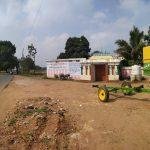



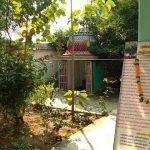

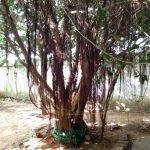
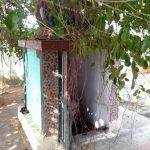
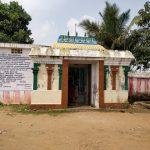
6. Pilgrimage Connectivity
The temple is strategically located on the Thanjavur–Kumbakonam route, making it accessible for a day-trip itinerary.
How to Reach
- By Air: The nearest airport is Trichy (Tiruchirappalli) International Airport (approx. 68 km / 1.5 hours).
- By Rail: Pasupathikoil Railway Station is the closest (3 km). Ayyampet Railway Station is another nearby option (4.5 km). For better connectivity, Kumbakonam (26 km) or Thanjavur (13 km) are major junctions.
- By Road: Located on NH 226A (Thanjavur – Papanasam Road). Bus services are frequent from Thanjavur and Kumbakonam to Pasupathikoil.
Nearby Sacred Sites (Pilgrimage Circuit)
To maximize your spiritual journey, visit these nearby shrines associated with the Saptha Matrika circuit:
- Pasupathi Koil (4 km): The main temple of the region dedicated to Lord Shiva as Pasupathinath.
- Aduthurai (15 km): Famous for the Mayuranathar Temple.
- Kumbakonam (26 km): Home to the Sarangapani Temple and Kumbeswarar Temple, essential stops in the Kaveri delta.
7. Frequently Asked Questions
1. Is there a VIP Darshan entry available?
Due to the temple’s rural nature and modest size, there is no formal VIP ticket system. However, arriving during the morning opening (6:00 AM) allows for a quick and peaceful darshan. During festivals, priority is given to those performing specific Sevas (offerings).
2. What is the significance of the “Thazhampoo” (Screw Pine flower) here?
The flower is deeply associated with the deity Mahendri worshipped here. Legend has it that screw pine trees (Thazha) once covered the region, giving it the name Thazhamangai. The flower is also used to treat eye ailments in local rituals.
3. Can I perform rituals for eye health?
Yes. For those suffering from eye afflictions, the traditional ritual involves grinding sandalwood paste and applying it to the Lord, while simultaneously offering Thazhampoo to the Goddess. This should be done on Sundays (right eye) or Mondays (left eye) while observing Mouna Vratham (silence).
4. Are there accommodation facilities in Thazhamangai?
Lodging options are limited within Thazhamangai itself. For comfortable stays with modern amenities, it is recommended to book accommodation in Thanjavur (13 km) or Kumbakonam (26 km).
5. Is the temple accessible for the elderly?
The temple has a single prakaram and is relatively compact. However, the flooring is traditional stone. Elderly visitors are advised to wear non-slip footwear. Wheelchair access to the inner sanctum may be difficult due to the high threshold steps.
Recent Posts

ओ सांवरे तूने ही मुझको संभाला – Lyrics & Meaning
ओ सांवरे तूने ही मुझको संभाला – A Prayer to Shyam Origin & Spiritual Essence Why This Bhajan Resonates Devotees chant this when overwhelmed by life’s storms—the refrain ‘तूने ही मुझको संभाला’ is the soul’s sigh of relief: “You…

कथा ये है महाराज मेरे की – Lyrics & Meaning
कथा ये है महाराज मेरे की छत्रपति संभाजी महाराज – A Prayer to Chhatrapati Sambhaji Maharaj Origin & Spiritual Essence Why This Bhajan Resonates Devotees chant this when their spirit feels tested—its powerful refrain “महाराज मेरे” is a soul’s…

Rigveda Samhita Yathartha Anuvada (ऋग्वेद संहिता यथार्थ अनुवाद) – Complete Set with Anvayartha & Hindi/English Translation
The Rigveda is the oldest surviving scripture of humanity and the foundational text of Sanātana Dharma. For serious students, scholars, UPSC aspirants studying ancient Indian history, Sanskrit learners, and spiritual seekers, a precise and grammatically structured translation is indispensable.…

आना भी अकेला है जाना भी अकेला है – Lyrics & Meaning | BharatTemples
आना भी अकेला है जाना भी अकेला है – A Prayer to the Divine Witness Origin & Spiritual Essence Why This Bhajan Resonates Devotees turn to this bhajan in moments of deep reflection—when life’s attachments begin to ache. The…

माता शेरावाली के द्वार जो भी जाता है – Lyrics & Meaning
माता शेरावाली के द्वार जो भी जाता है – A Prayer to Maa Sherawali Origin & Spiritual Essence Why This Bhajan Resonates Devotees turn to this bhajan in times of fear or uncertainty—its promise that no one leaves Maa’s…

मार लेना सपणी उबार लेणा भवरा – Lyrics & Meaning
मार लेना सपणी उबार लेणा भवरा – A Prayer to the Divine Beloved Origin & Spiritual Essence Why This Bhajan Resonates Devotees chant this in moments of deep vulnerability—its cry of “मार लेना सपणी, उबार लेणा भवरा” is the…

हमें श्याम सुंदर भरोसा तुम्हारा – Lyrics & Meaning
हमें श्याम सुंदर भरोसा तुम्हारा – A Prayer to Shyam Sundar Origin & Spiritual Essence Why This Bhajan Resonates Devotees chant this when feeling alone—its refrain ‘de do sahara’ is the soul’s cry for divine support. Lyrics in Hindi…

Mere Satguru Ne Di Thi Davai Lyrics in Hindi & Meaning
Mere Satguru Ne Di Thi Davai: Invoking the Guru’s Liberating Wisdom This soul-stirring bhajan venerates the Satguru (True Spiritual Master) as the divine physician who dispenses the only remedy for life’s deepest sufferings. Composed by Sant Karmaveer Tufani, it…

Janm Diyo Thari Maa Dukh Dekhiyo Lyrics in Hindi & Meaning
जन्म दियो थारी माँ दुख देखियो (Maa’s Grief Upon Birthing You) This soul-stirring Chetavani Bhajan (admonitory hymn) is addressed to the Divine Mother (Maa) – a call for repentance when children forget their filial duties in the dark age…
Bhadi Sabha Mein Thane Manaun Lyrics in Hindi & Meaning
Bhadi Sabha Mein Thane Manaun: Invoking the Spear-Wielding Mother Mata Bhawani (श्री ज्वाला भवानी), the fiery manifestation of Shakti worshipped as the Protector of Dharma in Her Dhaulagarh sanctum. Origin & Spiritual Essence Composed in Rajasthani folk tradition by…