
Contents
Introduction & Spiritual Essence
The Chennakesava Temple of Somanathapura stands as an eternal testament to the devotion of the Hoysala Empire. Located approximately 38 kilometers from Mysuru, this sacred Divya Kshetra (holy site) is dedicated to Lord Vishnu in his form as Chennakesava (literally “Beautiful Kesava”). While the central deity, a masterpiece of intricately carved soapstone, was lost to history due to invasions, the temple complex remains a living spiritual ecosystem. It is an architectural symphony where stone speaks of devotion.
Phalaśruti (Spiritual Benefits): For the devout, a pilgrimage to Somanathapura is not merely a sightseeing tour but a deep dive into Bhakti. According to temple lore and regional traditions, circumambulating the Jagati (raised platform) while observing the panels of the Ramayana, Mahabharata, and Bhagavata Purana is believed to cleanse past karma. Devotees visit specifically to attain Moksha (liberation) and to seek the blessings of Sri Venugopala and Sri Janardhana, the other two deities enshrined in the sanctums.
Historical Origins & Scriptural Legend
The history of the Chennakesava Temple is etched in stone and inscriptions. Tradition holds that the temple was conceived and executed under the patronage of Somanatha Dandanayaka, a general serving under the Hoysala King Narasimha III. The consecration of the temple took place in 1258 CE, marking the zenith of Hoysala temple construction.
According to historical records and inscriptions found on soapstone slabs at the temple entrance, the town of Somanathapura (literally “The Town of Somanatha”) was an Agrahara—a land grant given to Brahmins for scholarly and religious pursuits. Tradition holds that while the main shrine was built for Kesava, Somanatha also consecrated a Panchalinga temple nearby, dedicated to Lord Shiva, indicating the syncretic culture of the era. The temple has survived waves of destruction and restoration, most notably by the Vijayanagara Empire in the 16th century and later by the Mysore government in the early 20th century.
Architectural Marvels
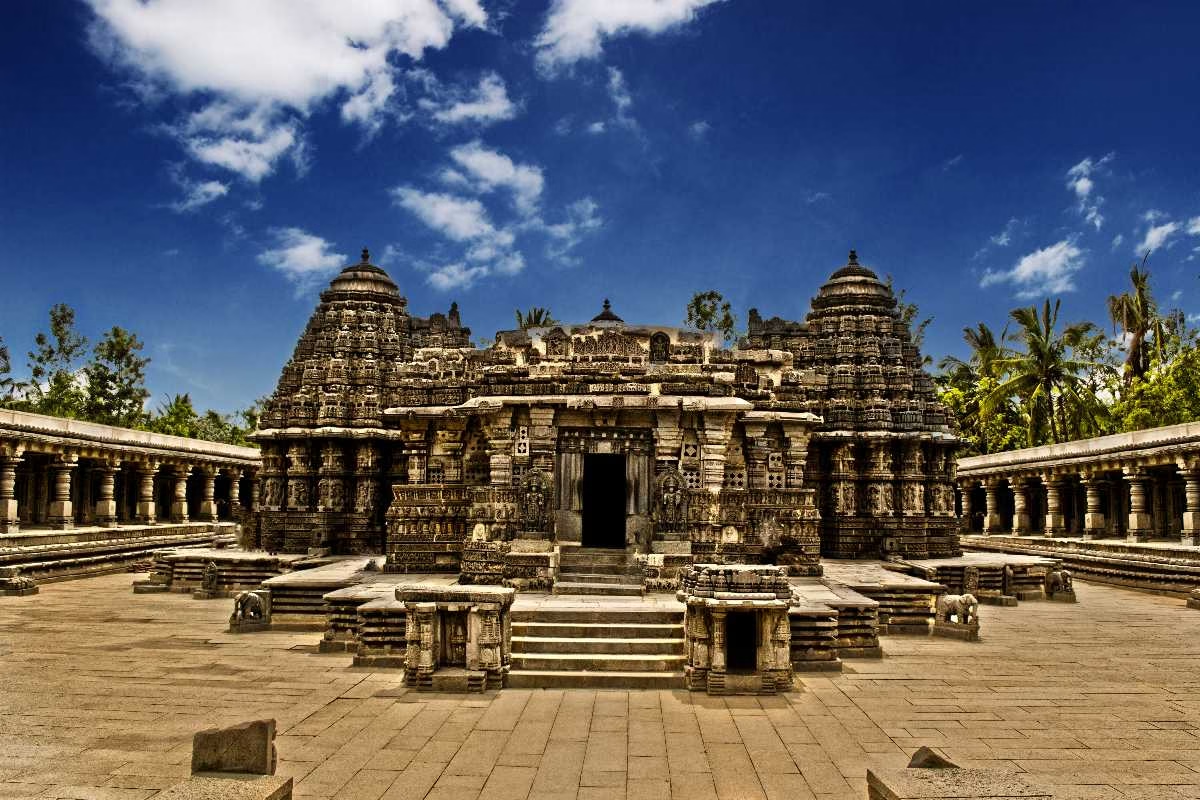
The Chennakesava Temple is a masterclass in Hoysala architecture, distinct for its precision and ornamentation. The temple is constructed on a raised star-shaped platform known as the Jagati, symbolizing the transition from the earthly plane to the divine.
The Star-Shaped Platform & Vastu
The Jagati is designed according to Vastu Shastra principles, following a star-shaped geometry with 29 distinct points. It serves as the Pradakshina Patha (circumambulation path). As devotees walk clockwise, they are meant to “read” the temple walls, which depict intricate friezes from Hindu epics.
The Three Sanctums (Garbha-Griha)
Unlike typical single-shrine temples, Chennakesava features three symmetrical sanctums set in a square matrix (89′ x 89′), oriented along the cardinal axes:
- Western Sanctum: Originally housed the 7-foot idol of Chennakesava, which is now missing.
- Northern Sanctum: Houses Sri Janardhana.
- Southern Sanctum: Houses Sri Venugopala.
Sculptural Details
The outer walls are divided into horizontal bands (friezes) showcasing:
- Basement Band: A procession of elephants, each with unique expressions.
- Horse Frieze: Depicting cavalry and occasional camels, showcasing Hoysala military might.
- Mythological Panels: Detailed narratives from the Ramayana, Mahabharata, and Bhagavata Purana.
| Date built: | 1258 |
|---|---|
| Deity: | – |
| Architectural style: | Hoysala architecture |
| Major festivals | – |
| Locale: | Somanathapura |
| District:: | Mysore |
| Address: | Somanathapura, Karnataka 571120 |
| Phone | 09739548639 |
The Chennakesava Temple, also referred to as Chennakeshava Temple, Keshava Temple or Kesava Temple, is a Vaishnava Hindu temple on the banks of River Kaveri at Somanathapura, Karnataka, India. The temple was consecrated in 1258 CE by Somanatha Dandanayaka, a general of the Hoysala King Narasimha III. It is located 38 kilometres (24 mi) east of Mysuru city.
The ornate temple is a model illustration of the Hoysala architecture. The temple is enclosed in a courtyard with a pillared corridor of small shrines (damaged). The main temple in the center is on a high star-shaped platform with three symmetrical sanctums (garbha-griha), set in a square matrix (89′ x 89′) oriented along the east-west and north-south axes.[3] The western sanctum was for a statue of Kesava (missing), the northern sanctum of Janardhana and the southern sanctum of Venugopala, all forms of Vishnu. The sanctums share a common community hall (sabha-mandapa) with many pillars. The outer walls, the inner walls, the pillars and the ceiling of the temple are intricately carved with theological iconography of Hinduism and display extensive friezes of Hindu texts such as the Ramayana (southern section), the Mahabharata (northern section) and the Bhagavata Purana (western section of the main temple).
The Chennakesava temple, states George Michell, represents the climax of the development in Hoysala temple style and yet is also unique in many ways.
Darshan & Ritual Logistics
Visitors are encouraged to check the latest schedules on the official Karnataka tourism portals or contact the temple trust directly, as timings may vary during festivals or local holidays.
Daily Timings
| Session | Timing |
|---|---|
| Morning Darshan | 09:00 AM – 01:00 PM |
| Afternoon Break | 01:00 PM – 05:00 PM |
| Evening Darshan | 05:00 PM – 08:30 PM |
Key Sevas & Booking
- Abhishekam: Performed on Ekadashi days and specific birthdays. Requires prior booking.
- Archana: Daily rituals performed at the sanctum. Can be booked at the temple counter.
- Online Seva Booking: The temple does not currently have a dedicated global portal for online bookings. However, for specific festival-related services, devotees can contact the temple administration office at 09739548639 or visit the official Karnataka Temple Tourism website.
2026 Festival Calendar (Major Events)
- January 14, 2026 (Makara Sankranti): Special Abhishekam and Alankara.
- February 15, 2026 (Vijaya Ekadashi): Evening procession and special sevas.
- August 15, 2026 (Narasimha Jayanti): Since the temple is linked to King Narasimha III, this is a significant annual celebration.
- October 2, 2026 (Gandhi Jayanti/Vijayadashami): Grand decorations and cultural programs by local artists.
The platform around the temple serves as the circumambulation passage.
Practical Visitor Guidance
To ensure a serene darshan experience, adhere to the following guidelines:
- Dress Code: Traditional Indian attire is preferred (dhoti/saree/kurtas). Modest clothing is strictly enforced.
- Photography & Mobiles: Photography is allowed in the outer courtyard and corridors but is strictly prohibited inside the sanctum sanctorum. Mobile lockers are available near the ticket counter for secure storage.
- Accessibility: The temple features a raised Jagati platform with steep steps, which may be challenging for elderly devotees. Wheelchair access is limited to the outer perimeter. Palanquins (Doli) are sometimes available for disabled devotees—please inquire at the administration office.
- Crowd Management: Weekends and holidays see significant footfall from Mysore and Bangalore.
- Best Time: Weekday mornings (9 AM – 11 AM) are ideal for peaceful darshan.
- Seasonal Advice: The summer months (March–May) are hot; carry a water bottle and wear light cottons. The monsoon (June–September) brings lush greenery to the Kaveri banks but may restrict outdoor photography.
Pilgrimage Connectivity
The temple is a crucial node in the “Hoysala Heritage Circuit.”
How to Reach
- By Air: The nearest airport is Kempegowda International Airport, Bangalore (approx. 180 km). Alternatively, Mysore Airport (approx. 50 km) is available for domestic flights.
- By Rail: The nearest major railway junction is Mysore Junction (MYS) (38 km). From there, hire a taxi or take a KSRTC bus to Somanathapura.
- By Road: The temple is located just off the NH 948 (Bangalore-Mysore Highway). It is a scenic 1.5-hour drive from Mysore city. Regular buses ply from Mysore (KSRTC) and Bangalore (Karnataka Sarige).
Nearby Sacred Sites
- Panchalinga Temple: Located within the same complex, dedicated to Lord Shiva.
- Srirangapatna (25 km): The historic island fortress featuring the Ranganathaswamy Temple and Tipu Sultan’s Summer Palace.
- Belur & Halebidu (60 km): The other two jewels of Hoysala architecture—Chennakesava Temple (Belur) and Hoysaleswara Temple (Halebidu). A combined 2-day trip is recommended.
A part of the inscription stone at Keshava temple entrance.
Frequently Asked Questions (FAQs)
1. Is there a VIP darshan entry?
Yes, the temple administration offers a special entry queue for senior citizens, differently-abled devotees, and VIPs. However, this is subject to availability and does not bypass the regular crowd during peak festivals.
2. Can I book the Chennakesava temple online seva from Bangalore?
Currently, there is no centralized online system for this specific temple for daily sevas. For special event bookings (like marriages or special abhishekam), you must contact the temple executive officer at 09739548639.
3. What is the entry fee for foreign tourists?
Entry to the temple complex is free for all devotees. However, a nominal fee (approx. INR 50) is charged for foreign tourists to visit the museum and archaeological section located within the complex.
4. Is non-vegetarian food allowed near the temple?
No. The Somanathapura complex is a strictly vegetarian zone. Alcohol and meat are prohibited. There are several hygienic vegetarian eateries (Khanavali) outside the temple serving local Karnataka cuisine.
5. What is the best time of year to visit Somanathapura?
Between October and March. The weather is pleasant, and the Kaveri river valley is at its scenic best. Avoid the peak summer months (April–May) due to high temperatures.
Photo Gallery
How to Reach:
Chennakesava Temple is in Somanathapura, which is near Mysore. You can get on a bus from Bangalore, Mysore and Srirangapatna. The month of October is the right time to visit this temple.
Contact Details
Official Address
Recent Posts

Shri Kaamkoteeshwar Mandir, Varanasi – History & Significance
In the heart of Kashi, the eternal city of Lord Shiva, where the Ganges flows with celestial grace, stands the Shri Kaamkoteeshwar Mandir. This sacred Sannidhi is not merely a temple but a profound spiritual bridge between the Northern…

ओ सांवरे तूने ही मुझको संभाला – Lyrics & Meaning
ओ सांवरे तूने ही मुझको संभाला – A Prayer to Shyam Origin & Spiritual Essence Why This Bhajan Resonates Devotees chant this when overwhelmed by life’s storms—the refrain ‘तूने ही मुझको संभाला’ is the soul’s sigh of relief: “You…

कथा ये है महाराज मेरे की – Lyrics & Meaning
कथा ये है महाराज मेरे की छत्रपति संभाजी महाराज – A Prayer to Chhatrapati Sambhaji Maharaj Origin & Spiritual Essence Why This Bhajan Resonates Devotees chant this when their spirit feels tested—its powerful refrain “महाराज मेरे” is a soul’s…

Rigveda Samhita Yathartha Anuvada (ऋग्वेद संहिता यथार्थ अनुवाद) – Complete Set with Anvayartha & Hindi/English Translation
The Rigveda is the oldest surviving scripture of humanity and the foundational text of Sanātana Dharma. For serious students, scholars, UPSC aspirants studying ancient Indian history, Sanskrit learners, and spiritual seekers, a precise and grammatically structured translation is indispensable.…

आना भी अकेला है जाना भी अकेला है – Lyrics & Meaning | BharatTemples
आना भी अकेला है जाना भी अकेला है – A Prayer to the Divine Witness Origin & Spiritual Essence Why This Bhajan Resonates Devotees turn to this bhajan in moments of deep reflection—when life’s attachments begin to ache. The…

माता शेरावाली के द्वार जो भी जाता है – Lyrics & Meaning
माता शेरावाली के द्वार जो भी जाता है – A Prayer to Maa Sherawali Origin & Spiritual Essence Why This Bhajan Resonates Devotees turn to this bhajan in times of fear or uncertainty—its promise that no one leaves Maa’s…

मार लेना सपणी उबार लेणा भवरा – Lyrics & Meaning
मार लेना सपणी उबार लेणा भवरा – A Prayer to the Divine Beloved Origin & Spiritual Essence Why This Bhajan Resonates Devotees chant this in moments of deep vulnerability—its cry of “मार लेना सपणी, उबार लेणा भवरा” is the…

हमें श्याम सुंदर भरोसा तुम्हारा – Lyrics & Meaning
हमें श्याम सुंदर भरोसा तुम्हारा – A Prayer to Shyam Sundar Origin & Spiritual Essence Why This Bhajan Resonates Devotees chant this when feeling alone—its refrain ‘de do sahara’ is the soul’s cry for divine support. Lyrics in Hindi…

Mere Satguru Ne Di Thi Davai Lyrics in Hindi & Meaning
Mere Satguru Ne Di Thi Davai: Invoking the Guru’s Liberating Wisdom This soul-stirring bhajan venerates the Satguru (True Spiritual Master) as the divine physician who dispenses the only remedy for life’s deepest sufferings. Composed by Sant Karmaveer Tufani, it…

Janm Diyo Thari Maa Dukh Dekhiyo Lyrics in Hindi & Meaning
जन्म दियो थारी माँ दुख देखियो (Maa’s Grief Upon Birthing You) This soul-stirring Chetavani Bhajan (admonitory hymn) is addressed to the Divine Mother (Maa) – a call for repentance when children forget their filial duties in the dark age…