

Contents
- 1 The Definitive Pilgrimage Guide: Shri Aadya Katyayani Shakti Peetham (Chhatarpur Temple)
The Definitive Pilgrimage Guide: Shri Aadya Katyayani Shakti Peetham (Chhatarpur Temple)
As the Lead Heritage Architect for BharatTemples.com, I present this guide to one of Delhi’s most magnificent spiritual complexes. Located in the serene locale of Mehrauli, Shri Aadya Katyayani Shakti Peetham is not merely a structure of stone and marble; it is a living energetic hub dedicated to Goddess Katyayani, the sixth manifestation of Maa Durga.
| Date built: | 1970 |
|---|---|
| Deity: | Katyayani,Navadurga |
| Architectural style: | – |
| Major festivals | Navratri |
| Locale: | Mehrauli, New Delhi |
| District:: | Mehrauli, New Delhi |
| Address: | Main Chhatarpur Rd, Block A1, Dr Ambedkar Colony, Chhattarpur, New Delhi, Delhi 110074 |
| Phone | 01126802360 |
1. Introduction & Spiritual Essence
The Shri Aadya Katyayani Shakti Peetham, popularly known as the Chhatarpur Temple, is a sprawling spiritual estate dedicated to Devi Katyayani. She is the warrior goddess, the daughter of Sage Katyayana, and the slayer of the demon Mahishasura. Unlike smaller shrines, this complex is a Shakti Peetham—a seat of primordial cosmic energy.
Phalaśruti: The Fruits of Visitation
Devotees flock to this temple seeking specific blessings:
- Overcoming Obstacles: As Katyayani is the fierce form of Shakti, she is worshipped to remove the “Mahishasura” of one’s life—be it procrastination, debt, or illness.
- Ancestral Karma: Rituals performed here are believed to bring peace to ancestors (Pitra Shanti), particularly during the Navratri seasons.
- Fulfillment of Desires: The temple premise houses a sacred tree where devotees tie Mauli (holy threads) to seal their vows and wishes with the Divine Mother.
2. Historical Origins & Scriptural Legend
While the architectural grandeur feels ancient, the temple’s modern history is a testament to devotional service.
The Vision of Baba Sant Nagpal Ji
According to temple records, the complex was established in 1974 by the revered Baba Sant Nagpal Ji. His vision was to create a sanctuary that mirrored the grandeur of ancient Shakti shrines. Baba Ji attained Mahasamadhi in 1998, and his Samadhi Sthal resides within the complex inside the Shiv-Gauri Nageshwar Mandir, adding a layer of sanctity to the site.
Scriptural Roots & Local Legends
Though built in the 20th century, the temple honors ancient traditions. The presiding deity, Katyayani, is described in the Devi Mahatmya and Markandeya Purana as the warrior form of the Goddess worshipped on the sixth day of Sharad Navratri. Local tradition holds that the energy of the land in Mehrauli, historically a site of yogic practices, aligns with the fierce yet benevolent nature of the Goddess.
3. Architectural Marvels
As an architectural guide, I must highlight the unique synthesis of styles present here. Before the construction of Akshardham (2005), Chhatarpur Temple was the largest in India and the second largest in the world.
Vastu & Style
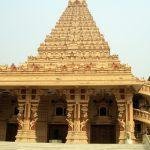
The complex spans over 60 acres and is constructed almost entirely from white marble. The dominant style is Vesara, a hybrid of the Northern Nagara and Southern Dravida styles. The intricate marble Jaali (lattice) work screens found throughout the complex are a defining feature, allowing light to filter in softly while maintaining the sanctity of the inner sanctum.
Complex Layout
The temple is divided into three distinct complexes:
- Main Sanctum: Houses the idol of Katyayani Devi, adorned with silver ornamentation.
- Shayan Kaksha (Bedroom): A unique chamber featuring a bed, dressing table, and furniture carved entirely from silver, depicting the nightly rest of the deity.
- Radha Krishna Shrine: Located above the Durga shrines, emphasizing the unity of Shakti (energy) and Bhagavan (consciousness).
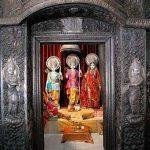
The complex also includes temples dedicated to Lord Rama, Lord Ganesha, and Lord Shiva, built in various traditional styles.
4. Darshan & Ritual Logistics (2026 Guide)
Managing a visit to a high-energy site like Chhatarpur Temple requires planning. Below are the standard timings and key rituals.
Daily Timings
| Session | Time |
|---|---|
| Morning Darshan | 06:00 AM – 10:00 AM |
| Mid-day Closure | 10:00 AM – 4:00 PM (Cleaning & Rest) |
| Evening Darshan | 04:00 PM – 09:00 PM |
| Aarti | 7:00 PM (Sandhya Aarti) |
Key Sevas & Online Booking
To perform specific rituals, advance booking is recommended via the official temple trust website or authorized portals.
- Abhishekam: Ritual bathing of the deity with milk, honey, and ghee (performed on Tuesdays and Fridays).
- Archana: Recitation of the 108 names of Katyayani.
- Sahasranamam: Recitation of 1,000 names (special appointment required).
Navratri is the most auspicious time to visit. The temple remains open 24 hours during these periods.
- Chaitra Navratri: March 30 – April 7, 2026 (Ram Navami on April 6).
- Sharad Navratri: September 22 – October 1, 2026 (Vijayadashami/Dussehra on October 2).
5. Practical Visitor Guidance
Dress Code & Etiquette
The temple administration enforces a strict dress code. Western attire (shorts, skirts above the knee) is prohibited. Visitors must wear traditional Indian attire (Saree, Salwar Kameez, Kurta-Pajama) or formal trousers/shirts. Modesty is paramount.
Photography & Security
- Mobile Phones: Allowed but photography of the inner sanctum is strictly prohibited.
- Lockers: Free mobile lockers are available at the entry gate. Large bags and leather items must be deposited.
- Accessibility: The complex is vast. Golf carts are available at the entrance for senior citizens and differently-abled visitors to reach the main shrine.
Crowd Management
Best Hours to Visit: The morning slot (6:00 AM – 7:30 AM) is least crowded and offers the most peaceful Darshan. Avoid weekends during the peak summer (May-June) and Navratri seasons unless you are prepared for heavy footfall.
Seasonal Advice: Delhi summers are harsh. Carry a water bottle (refill stations available) and a head covering. The marble floors reflect sunlight, so sunglasses are advised.
6. Pilgrimage Connectivity
How to Reach
- By Air: The nearest airport is Indira Gandhi International Airport (DEL), approximately 15-20 km away.
- By Metro: Take the Yellow Line to Qutub Minar Metro Station. From there, take an auto-rickshaw or e-rickshaw (approx. 5-10 mins) to the temple entrance. The station is about 2 km away.
- By Road: The temple is accessible via the Mehrauli-Gurgaon Road (part of NH-248A). It is roughly 4 km from the historical Qutub Minar complex.
Nearby Sacred Sites
Enhance your pilgrimage circuit by visiting these nearby sites:
- Qutub Minar Complex: A UNESCO World Heritage Site featuring the 73-meter tall minaret and the Iron Pillar.
- Jamali Kamali Mosque & Tomb: Located in Mehrauli Archaeological Park, known for its mystical legends.
- Sankat Mochan Hanuman Temple: Situated near Jhandewalan, a prominent center for Hanuman devotion.
Photo Gallery

7. Frequently Asked Questions (FAQ)
Is there a VIP or Special Darshan entry?
Yes, the temple trust offers a “Special Entry” pass for a nominal fee (typically ₹50-₹100) which allows you to bypass the general queue, especially during non-peak hours. During Navratri, VIP passes must be booked online well in advance.
What is the best time to visit Chhatarpur Temple?
The best time to visit is during Sharad Navratri (September/October) for the festive atmosphere. However, for a tranquil spiritual experience, visit on a Tuesday or Friday morning between 6 AM and 8 AM.
Is non-vegetarian food allowed near the temple?
No. As this is a sacred Hindu shrine, the entire vicinity is strictly vegetarian. Alcohol and non-vegetarian food are prohibited within the temple complex and the surrounding markets.
How far is Chhatarpur Temple from Qutub Minar?
The temple is approximately 4 kilometers (2.5 miles) from Qutub Minar, a 10-minute drive via Mehrauli-Gurgaon Road.
Contact Details
Official Address: Shri Aadya Katyayani Shakti Peetham, Main Chhatarpur Rd, Block A1, Dr Ambedkar Colony, Chhattarpur, New Delhi, Delhi 110074
Phone: 011-2680-2360
Recent Posts

Shri Kaamkoteeshwar Mandir, Varanasi – History & Significance
In the heart of Kashi, the eternal city of Lord Shiva, where the Ganges flows with celestial grace, stands the Shri Kaamkoteeshwar Mandir. This sacred Sannidhi is not merely a temple but a profound spiritual bridge between the Northern…

ओ सांवरे तूने ही मुझको संभाला – Lyrics & Meaning
ओ सांवरे तूने ही मुझको संभाला – A Prayer to Shyam Origin & Spiritual Essence Why This Bhajan Resonates Devotees chant this when overwhelmed by life’s storms—the refrain ‘तूने ही मुझको संभाला’ is the soul’s sigh of relief: “You…

कथा ये है महाराज मेरे की – Lyrics & Meaning
कथा ये है महाराज मेरे की छत्रपति संभाजी महाराज – A Prayer to Chhatrapati Sambhaji Maharaj Origin & Spiritual Essence Why This Bhajan Resonates Devotees chant this when their spirit feels tested—its powerful refrain “महाराज मेरे” is a soul’s…

Rigveda Samhita Yathartha Anuvada (ऋग्वेद संहिता यथार्थ अनुवाद) – Complete Set with Anvayartha & Hindi/English Translation
The Rigveda is the oldest surviving scripture of humanity and the foundational text of Sanātana Dharma. For serious students, scholars, UPSC aspirants studying ancient Indian history, Sanskrit learners, and spiritual seekers, a precise and grammatically structured translation is indispensable.…

आना भी अकेला है जाना भी अकेला है – Lyrics & Meaning | BharatTemples
आना भी अकेला है जाना भी अकेला है – A Prayer to the Divine Witness Origin & Spiritual Essence Why This Bhajan Resonates Devotees turn to this bhajan in moments of deep reflection—when life’s attachments begin to ache. The…

माता शेरावाली के द्वार जो भी जाता है – Lyrics & Meaning
माता शेरावाली के द्वार जो भी जाता है – A Prayer to Maa Sherawali Origin & Spiritual Essence Why This Bhajan Resonates Devotees turn to this bhajan in times of fear or uncertainty—its promise that no one leaves Maa’s…

मार लेना सपणी उबार लेणा भवरा – Lyrics & Meaning
मार लेना सपणी उबार लेणा भवरा – A Prayer to the Divine Beloved Origin & Spiritual Essence Why This Bhajan Resonates Devotees chant this in moments of deep vulnerability—its cry of “मार लेना सपणी, उबार लेणा भवरा” is the…

हमें श्याम सुंदर भरोसा तुम्हारा – Lyrics & Meaning
हमें श्याम सुंदर भरोसा तुम्हारा – A Prayer to Shyam Sundar Origin & Spiritual Essence Why This Bhajan Resonates Devotees chant this when feeling alone—its refrain ‘de do sahara’ is the soul’s cry for divine support. Lyrics in Hindi…

Mere Satguru Ne Di Thi Davai Lyrics in Hindi & Meaning
Mere Satguru Ne Di Thi Davai: Invoking the Guru’s Liberating Wisdom This soul-stirring bhajan venerates the Satguru (True Spiritual Master) as the divine physician who dispenses the only remedy for life’s deepest sufferings. Composed by Sant Karmaveer Tufani, it…

Janm Diyo Thari Maa Dukh Dekhiyo Lyrics in Hindi & Meaning
जन्म दियो थारी माँ दुख देखियो (Maa’s Grief Upon Birthing You) This soul-stirring Chetavani Bhajan (admonitory hymn) is addressed to the Divine Mother (Maa) – a call for repentance when children forget their filial duties in the dark age…