
Contents
- 1 Chitra Ghanta Vinayak Temple, Varanasi: A Complete Pilgrimage Guide
Chitra Ghanta Vinayak Temple, Varanasi: A Complete Pilgrimage Guide
Welcome to the spiritual heart of Kashi, where the divine protector stands guard at the entrance of the sacred Chowk. The Chitra Ghanta Vinayak Temple is not merely a structure of stone and mortar; it is a living testament to the eternal vigilance of Lord Ganesha over the ancient city of Varanasi. As you step into the narrow, winding lanes of Chowk, the resonance of temple bells and the scent of marigolds prepare you for a divine encounter with the “Guardian of Kashi.”
1. Introduction & Spiritual Essence
The presiding deity of this ancient shrine is Chitra Ghanta Vinayak, a unique manifestation of Lord Ganesha. The name Chitra refers to a painting or a bell, while Ghanta signifies a bell. In this form, Lord Ganesha is depicted adorned with a bell, signifying the auditory awakening of the devotee’s consciousness.
Why Devotees Visit: The Phalaśruti
According to ancient scriptures, visiting Chitra Ghanta Vinayak grants devotees the strength to overcome insurmountable obstacles. The primary spiritual benefit (Phalaśruti) associated with this temple is the protection from evil forces and negative energies. Devotees believe that offering prayers here:
- Cleanses Ancestral Karma: It is believed to wash away sins associated with the lineage, bringing peace to departed souls.
- Removes Planetary Obstacles: Specifically beneficial for those facing delays in marriage or career stagnation.
- Grants Clarity: The sound of the divine bell represents the cosmic sound (Nada), helping the mind focus on higher truths.
2. Historical Origins & Scriptural Legend
The Legend of the Guardian
The Sthala Purana (local legend) of Kashi states that Lord Vishwanath (Shiva) appointed a specific Ganesha at each of the 56 (panchashat) entrances of Kashi to protect his abode from unwanted disruptions. Chitra Ghanta Vinayak is the guardian of the Chowk entrance, the most vibrant commercial hub of ancient Varanasi.
Tradition holds that this temple dates back to the era when the Kashi Naresh (Kings of Varanasi) consolidated the city’s sacred geography. While specific dynastic records are sparse, oral history suggests the temple was reinforced during the Maratha period (18th century) to protect the sanctity of the Vishwanath corridor.
Scriptural References
While the temple’s exact construction date is not recorded in public archives, the deity is mentioned in the Kashi Khanda of the Skanda Purana. The text describes the installation of Vinayaka idols by Lord Shiva himself to guard the city.
3. Architectural Marvels
The temple showcases a blend of traditional Nagara style architecture with minor influences of the Bengali temple style due to historical patronage from the region.
Key Architectural Features
- The Shikhara (Spire): Though modest in height due to the constrained space of the narrow lane (gully), the shikhara is adorned with intricate carvings depicting various forms of Ganesha and floral motifs.
- Mandapa (Hall): The inner sanctum is approached through a small, pillared hall. The flooring is traditional stone, worn smooth by centuries of pilgrim footfalls.
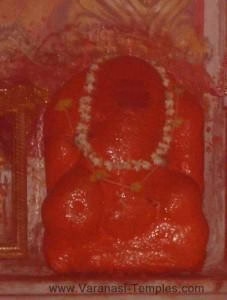
- The Deity: The idol of Chitra Ghanta Vinayak is relatively small but radiates a magnetic aura. The deity is depicted in a standing posture, holding a bell and a lotus, while his trunk is turned to the left.
Note: While not a UNESCO site, this temple is part of the heritage cluster protected by the Kashi Vishwanath Trust.
4. Darshan & Ritual Logistics (2026 Guide)
The temple operates on a flexible schedule, typical of the Kashi region, allowing for early morning and late evening darshans.
Daily Timings
| Session | Timing | Activity |
|---|---|---|
| Morning | 5:00 AM – 12:00 PM | Mangala Aarti & Darshan |
| Afternoon | 12:00 PM – 4:00 PM | Temple Closed (Rest Period) |
| Evening | 4:00 PM – 10:30 PM | Evening Aarti & Darshan |
Seva and Online Booking
For devotees unable to visit in person, the Kashi Vishwanath Temple Trust facilitates online bookings for Sevas at associated Ganesha shrines.
Popular Sevas:
• Modak Offering (Naivedyam)
• Chitra Ghanta Archana
• Sankalpa Pooja
Booking: Visit kashivishwanath.org for official 2026 bookings.
Major 2026 Festivals
- Varanasi Ganesha Chaturthi: Wednesday, September 2, 2026 (Grand processions in Chowk).
- Magh Mela: January 14, 2026 (Special early morning Aarti).
- Annakut/Deepawali: October 2026 (Temple decorated with thousands of lamps).
5. Practical Visitor Guidance
- Dress Code: Traditional attire is recommended. Men should wear dhoti/kurta or pants with a shirt; women should wear sarees or salwar kameez.
- Photography: Strictly prohibited inside the inner sanctum. Photography in the outer courtyard is subject to the priest’s discretion.
- Footwear: There is a designated shoe-keeping stall outside the temple (approx. ₹10-20 fee).
- Mobile Lockers: Due to the narrow lane, large bags are not allowed. Use the cloakroom facilities available at the Kashi Vishwanath police chowki (Main Gate 1) before entering the lane.
Crowd Management Strategy
Best Hours to Visit: 7:00 AM to 9:00 AM (Morning) or 8:00 PM to 10:00 PM (Evening). Avoid the 6:00 PM to 8:00 PM window on weekends and Tuesdays.
Seasonal Advice: Varanasi summers (May-June) are intense. Carry a water bottle and a handkerchief. Monsoons (July-August) make the stone steps slippery; exercise caution.
6. Pilgrimage Connectivity
How to Reach
- Nearest Airport: Lal Bahadur Shastri International Airport (LBS) – 25 km from the city center. Taxis and Metro services connect to Cantt station.
- Nearest Railway Station: Varanasi Junction (BSB) – 4 km away.
- Specific Route: Take an auto-rickshaw to Chowk Gate 1. From the main gate, the temple is a 10-minute walk through the bustling spice market. Use the map coordinates: 25.3167° N, 82.9522° E.
Nearby Sacred Sites (The Kashi Pilgrimage Circuit)
After seeking blessings from Chitra Ghanta Vinayak, continue your pilgrimage to these nearby shrines within a 500-meter radius:
- Kashi Vishwanath Temple (Jyotirlinga): The primary destination of Kashi, located just a short walk away.
- Sankat Mochan Hanuman Temple: Located 1.5 km away; it is believed that Chitra Ghanta protects the path leading to the Monkey Temple.
- Manikarnika Ghat: The holy cremation ground 10 minutes away, representing the gateway to liberation (Moksha).
7. Frequently Asked Questions (FAQs)
1. Is there a VIP Darshan entry at Chitra Ghanta Vinayak Temple?
Generally, no. The temple follows a community-oriented darshan system. However, during special festivals, the Kashi Vishwanath Trust issues special passes for senior citizens and differently-abled devotees.
2. What is the entry fee for the temple?
There is no fee for general darshan. However, donations for maintenance are voluntary and appreciated at the hundi located in the outer hall.
3. Can I carry food items inside the temple?
Prasad in the form of sweets (ladoos) or fruits is allowed but must be kept in a clean bag. No outside food is permitted inside the inner sanctum.
4. Is the temple accessible for senior citizens?
The temple is located in a narrow lane with uneven steps. It is moderately accessible. Rickshaws can only go up to the entrance; walking is required for the final 100 meters. Wheelchair access is not feasible due to the historic architecture.
5. What is the significance of the name ‘Chitra Ghanta’?
The name translates to ‘Bell of Art’ or ‘Painted Bell.’ It signifies the beautiful sound of wisdom that dispels the darkness of ignorance, acting as a shield against the evil energies of Kashi.
Recent Posts

ओ सांवरे तूने ही मुझको संभाला – Lyrics & Meaning
ओ सांवरे तूने ही मुझको संभाला – A Prayer to Shyam Origin & Spiritual Essence Why This Bhajan Resonates Devotees chant this when overwhelmed by life’s storms—the refrain ‘तूने ही मुझको संभाला’ is the soul’s sigh of relief: “You…

कथा ये है महाराज मेरे की – Lyrics & Meaning
कथा ये है महाराज मेरे की छत्रपति संभाजी महाराज – A Prayer to Chhatrapati Sambhaji Maharaj Origin & Spiritual Essence Why This Bhajan Resonates Devotees chant this when their spirit feels tested—its powerful refrain “महाराज मेरे” is a soul’s…

Rigveda Samhita Yathartha Anuvada (ऋग्वेद संहिता यथार्थ अनुवाद) – Complete Set with Anvayartha & Hindi/English Translation
The Rigveda is the oldest surviving scripture of humanity and the foundational text of Sanātana Dharma. For serious students, scholars, UPSC aspirants studying ancient Indian history, Sanskrit learners, and spiritual seekers, a precise and grammatically structured translation is indispensable.…

आना भी अकेला है जाना भी अकेला है – Lyrics & Meaning | BharatTemples
आना भी अकेला है जाना भी अकेला है – A Prayer to the Divine Witness Origin & Spiritual Essence Why This Bhajan Resonates Devotees turn to this bhajan in moments of deep reflection—when life’s attachments begin to ache. The…

माता शेरावाली के द्वार जो भी जाता है – Lyrics & Meaning
माता शेरावाली के द्वार जो भी जाता है – A Prayer to Maa Sherawali Origin & Spiritual Essence Why This Bhajan Resonates Devotees turn to this bhajan in times of fear or uncertainty—its promise that no one leaves Maa’s…

मार लेना सपणी उबार लेणा भवरा – Lyrics & Meaning
मार लेना सपणी उबार लेणा भवरा – A Prayer to the Divine Beloved Origin & Spiritual Essence Why This Bhajan Resonates Devotees chant this in moments of deep vulnerability—its cry of “मार लेना सपणी, उबार लेणा भवरा” is the…

हमें श्याम सुंदर भरोसा तुम्हारा – Lyrics & Meaning
हमें श्याम सुंदर भरोसा तुम्हारा – A Prayer to Shyam Sundar Origin & Spiritual Essence Why This Bhajan Resonates Devotees chant this when feeling alone—its refrain ‘de do sahara’ is the soul’s cry for divine support. Lyrics in Hindi…

Mere Satguru Ne Di Thi Davai Lyrics in Hindi & Meaning
Mere Satguru Ne Di Thi Davai: Invoking the Guru’s Liberating Wisdom This soul-stirring bhajan venerates the Satguru (True Spiritual Master) as the divine physician who dispenses the only remedy for life’s deepest sufferings. Composed by Sant Karmaveer Tufani, it…

Janm Diyo Thari Maa Dukh Dekhiyo Lyrics in Hindi & Meaning
जन्म दियो थारी माँ दुख देखियो (Maa’s Grief Upon Birthing You) This soul-stirring Chetavani Bhajan (admonitory hymn) is addressed to the Divine Mother (Maa) – a call for repentance when children forget their filial duties in the dark age…
Bhadi Sabha Mein Thane Manaun Lyrics in Hindi & Meaning
Bhadi Sabha Mein Thane Manaun: Invoking the Spear-Wielding Mother Mata Bhawani (श्री ज्वाला भवानी), the fiery manifestation of Shakti worshipped as the Protector of Dharma in Her Dhaulagarh sanctum. Origin & Spiritual Essence Composed in Rajasthani folk tradition by…