
Contents
Introduction & Spiritual Essence: The Tooth-Hand Ganesha
Amidst the labyrinthine alleys of Kashi (Varanasi), where spirituality permeates the very air, stands the ancient and revered Dant Hast Vinayak Temple. Dedicated to Lord Ganesha, the remover of obstacles, this shrine is distinct not only for its divine presence but for the specific manifestation of the deity.
Deity and Form
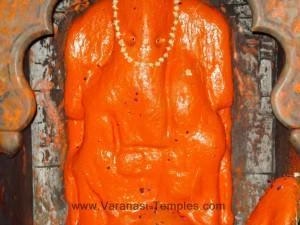
The primary deity here is Dant Hast Vinayak, a form of Lord Ganesha where the tusk (Dant) and the hand (Hast) hold immense significance. According to theological interpretations, this form represents the wisdom preserved in the tusk and the power of action in the hand. It is often associated with the Ganesha Purana, where he is regarded as the supreme protector of Kashi.
Phalaśruti: The Fruit of Visitation
Devotees flock to this shrine seeking specific blessings. The Phalaśruti (scriptural promise of benefits) associated with Dant Hast Vinayak is profound:
- Removal of Obstacles: It is believed that visiting this temple clears the path of difficulties in one’s personal and professional life.
- Protection of Kashi: Tradition holds that this Vinayak acts as a sentinel, protecting the holy city of Kashi from negative energies and evil influences.
- Resolution of Legal Matters: As the Lord of wisdom, he is particularly invoked by devotees entangled in legal disputes or bureaucratic delays.
Historical Origins & Scriptural Legend
While Varanasi is dotted with thousands of temples, the Dant Hast Vinayak holds a unique place in the city’s spiritual geography.
The Legend of Preservation
According to local oral tradition and the Kashi Khand of the Skanda Purana, Lord Ganesha assumed the form of Dant Hast Vinayak to protect the city from the demon king Gajasura. While the exact century of construction is difficult to pinpoint due to the antiquity of Kashi’s worship sites, the temple structure and the idol reflect a lineage of worship spanning centuries. Tradition holds that the idol is a Swayambhu (self-manifested) fossilized root structure, discovered by saints in ancient times.
Temple Records and Lineage
The current temple administration maintains records of the priestly lineage. The Tiwari family has been the custodian of the deity for generations. Unlike monumental structures built by dynasties, this temple evolved organically from a sacred spot in the bylanes of Lohatia, maintaining the intimate atmosphere of a household shrine.
Architectural Marvels
The architecture of Dant Hast Vinayak is a testament to the Nagara style prevalent in North India, adapted to the constraints of an urban setting.
Structural Elements
The temple features a tiered Shikhara (spire) that rises modestly above the surrounding houses. The sanctum sanctorum (Garbhagriha) is compact, designed to focus the devotee’s attention entirely on the central deity. The entrance is adorned with intricate carvings typical of the medieval period, featuring motifs of Yali and floral patterns.
The Deity
The murti of Dant Hast Vinayak is bathed in vermillion (sindoor) and is decorated with gold jewelry. The architectural layout follows the Vastu Shastra principles, aligning the sanctum with cardinal directions to harness positive cosmic energies. The inner walls feature remnants of ancient frescoes, though much has been plastered over time.
Darshan & Ritual Logistics
The temple follows a rigorous schedule, characteristic of ancient Kashi temples, beginning before dawn and concluding late at night.
Daily Timings
The temple remains open almost 24 hours, allowing devotees to visit at their convenience, though specific rituals mark the day.
| Ritual | Timing |
|---|---|
| Mangala Aarti (Early Morning) | 04:45 AM |
| Bhog (Midday Offering) | 10:30 AM |
| Shayan Aarti (Night Closing) | 10:30 PM |
| Special Aarti (Wednesday) | 11:30 PM |
Key Sevas and Online Booking
Currently, the temple administration (Priest: Shri Subhash Chandra Tiwari) handles most bookings directly. However, for convenience, services such as Abhishekam (ritual bathing of the deity) and Archana (recitation of names) can be arranged.
How to Book: While a dedicated online portal is in development for 2026, devotees are currently advised to contact the temple authorities via the provided phone numbers or book in person upon arrival.
2026 Major Festival Dates
Varanasi celebrates festivals with unique fervor. Mark your calendars for 2026:
- Varasiddhi Vinayaka Chaturthi: June 18, 2026 (The most auspicious day for Ganesha worship in Kashi).
- Angarki Chaturthi: October 15, 2026.
- Diwali/Sakat Chauth: November 5, 2026.
Practical Visitor Guidance
Visiting Dant Hast Vinayak requires preparation, as it is located in the dense, historic Lohatia area.
Rules and Etiquette
- Dress Code: Modest attire is mandatory. Traditional Indian wear is recommended.
- Photography: Strictly prohibited inside the sanctum. Photography of the exterior architecture is permitted.
- Mobiles & Lockers: The temple does not have large locker facilities. It is advisable to carry minimal valuables and keep phones on silent mode.
- Accessibility: Due to the narrow lanes of Lohatia, vehicles cannot reach the entrance. The site is accessible only on foot.
Crowd Management & Seasonal Advice
Best Hours: The best time for a peaceful darshan is immediately after the Mangala Aarti (5:00 AM – 7:00 AM) or late evening after 9:00 PM.
Seasonal Tip: Varanasi summers (May-June) are intense. Carry a water bottle and a handkerchief. During the monsoon (July-August), wear waterproof footwear as the lanes are prone to waterlogging.
Pilgrimage Connectivity
Dant Hast Vinayak is centrally located in Varanasi, making it accessible from all major transit points.
How to Reach
By Air: Lal Bahadur Shastri International Airport (LKO) is approximately 25 km away. A taxi or cab takes about 45-60 minutes to reach Lohatia.
By Rail: Varanasi Junction (BSB) is the nearest railway station, located about 7 km from the temple. Auto-rickshaws are readily available.
By Road: The temple is near Bara Ganesh Temple on the Lohatia route. From the main road, you must walk approximately 5-10 minutes through the market.
Nearby Sacred Sites (Pilgrimage Circuit)
To complete a spiritual day in Varanasi, consider visiting these nearby sites:
- Bara Ganesh Temple: Located just a few steps away, housing a massive Shiva Linga.
- Maa Durga Temple (Durga Kund): A 10-minute drive, famous for its red color and Nagara style architecture.
- Sankat Mochan Hanuman Temple: Located on the banks of the Assi River, famous for the worship of Lord Hanuman.
Frequently Asked Questions (FAQ)
1. What is the significance of the name “Dant Hast Vinayak”?
The name translates to “Tooth-Hand Ganesha.” It signifies the balance between intellect (symbolized by the tusk/teeth) and action (symbolized by the hand). It is a specific form revered in Kashi for removing stubborn obstacles.
2. Is there a VIP darshan entry available?
Due to the compact size of the temple and its urban location, there is no formal VIP entry system. All devotees queue together for darshan. However, approaching the priest for Archana tickets can provide priority access during non-peak hours.
3. Can I perform an Abhishekam myself?
Typically, only the resident priests perform the Abhishekam to maintain the sanctity and sequence of the ritual. However, you can sponsor the Abhishekam and witness it while the priest performs it.
4. Is the temple open 24 hours?
While the doors are rarely shut, the specific timings for Darshan are from 4:45 AM to 10:30 PM. Between 10:30 PM and 4:45 AM, access is restricted to essential rituals unless otherwise specified by the temple authorities.
5. Where can I park my vehicle?
Parking is not available directly outside the temple due to the narrow lanes. Visitors are advised to park at the designated parking areas near the main road (Lohatia Road) and walk to the temple (approx. 10 minutes).
Recent Posts

Shri Kaamkoteeshwar Mandir, Varanasi – History & Significance
In the heart of Kashi, the eternal city of Lord Shiva, where the Ganges flows with celestial grace, stands the Shri Kaamkoteeshwar Mandir. This sacred Sannidhi is not merely a temple but a profound spiritual bridge between the Northern…

ओ सांवरे तूने ही मुझको संभाला – Lyrics & Meaning
ओ सांवरे तूने ही मुझको संभाला – A Prayer to Shyam Origin & Spiritual Essence Why This Bhajan Resonates Devotees chant this when overwhelmed by life’s storms—the refrain ‘तूने ही मुझको संभाला’ is the soul’s sigh of relief: “You…

कथा ये है महाराज मेरे की – Lyrics & Meaning
कथा ये है महाराज मेरे की छत्रपति संभाजी महाराज – A Prayer to Chhatrapati Sambhaji Maharaj Origin & Spiritual Essence Why This Bhajan Resonates Devotees chant this when their spirit feels tested—its powerful refrain “महाराज मेरे” is a soul’s…

Rigveda Samhita Yathartha Anuvada (ऋग्वेद संहिता यथार्थ अनुवाद) – Complete Set with Anvayartha & Hindi/English Translation
The Rigveda is the oldest surviving scripture of humanity and the foundational text of Sanātana Dharma. For serious students, scholars, UPSC aspirants studying ancient Indian history, Sanskrit learners, and spiritual seekers, a precise and grammatically structured translation is indispensable.…

आना भी अकेला है जाना भी अकेला है – Lyrics & Meaning | BharatTemples
आना भी अकेला है जाना भी अकेला है – A Prayer to the Divine Witness Origin & Spiritual Essence Why This Bhajan Resonates Devotees turn to this bhajan in moments of deep reflection—when life’s attachments begin to ache. The…

माता शेरावाली के द्वार जो भी जाता है – Lyrics & Meaning
माता शेरावाली के द्वार जो भी जाता है – A Prayer to Maa Sherawali Origin & Spiritual Essence Why This Bhajan Resonates Devotees turn to this bhajan in times of fear or uncertainty—its promise that no one leaves Maa’s…

मार लेना सपणी उबार लेणा भवरा – Lyrics & Meaning
मार लेना सपणी उबार लेणा भवरा – A Prayer to the Divine Beloved Origin & Spiritual Essence Why This Bhajan Resonates Devotees chant this in moments of deep vulnerability—its cry of “मार लेना सपणी, उबार लेणा भवरा” is the…

हमें श्याम सुंदर भरोसा तुम्हारा – Lyrics & Meaning
हमें श्याम सुंदर भरोसा तुम्हारा – A Prayer to Shyam Sundar Origin & Spiritual Essence Why This Bhajan Resonates Devotees chant this when feeling alone—its refrain ‘de do sahara’ is the soul’s cry for divine support. Lyrics in Hindi…

Mere Satguru Ne Di Thi Davai Lyrics in Hindi & Meaning
Mere Satguru Ne Di Thi Davai: Invoking the Guru’s Liberating Wisdom This soul-stirring bhajan venerates the Satguru (True Spiritual Master) as the divine physician who dispenses the only remedy for life’s deepest sufferings. Composed by Sant Karmaveer Tufani, it…

Janm Diyo Thari Maa Dukh Dekhiyo Lyrics in Hindi & Meaning
जन्म दियो थारी माँ दुख देखियो (Maa’s Grief Upon Birthing You) This soul-stirring Chetavani Bhajan (admonitory hymn) is addressed to the Divine Mother (Maa) – a call for repentance when children forget their filial duties in the dark age…