
Contents
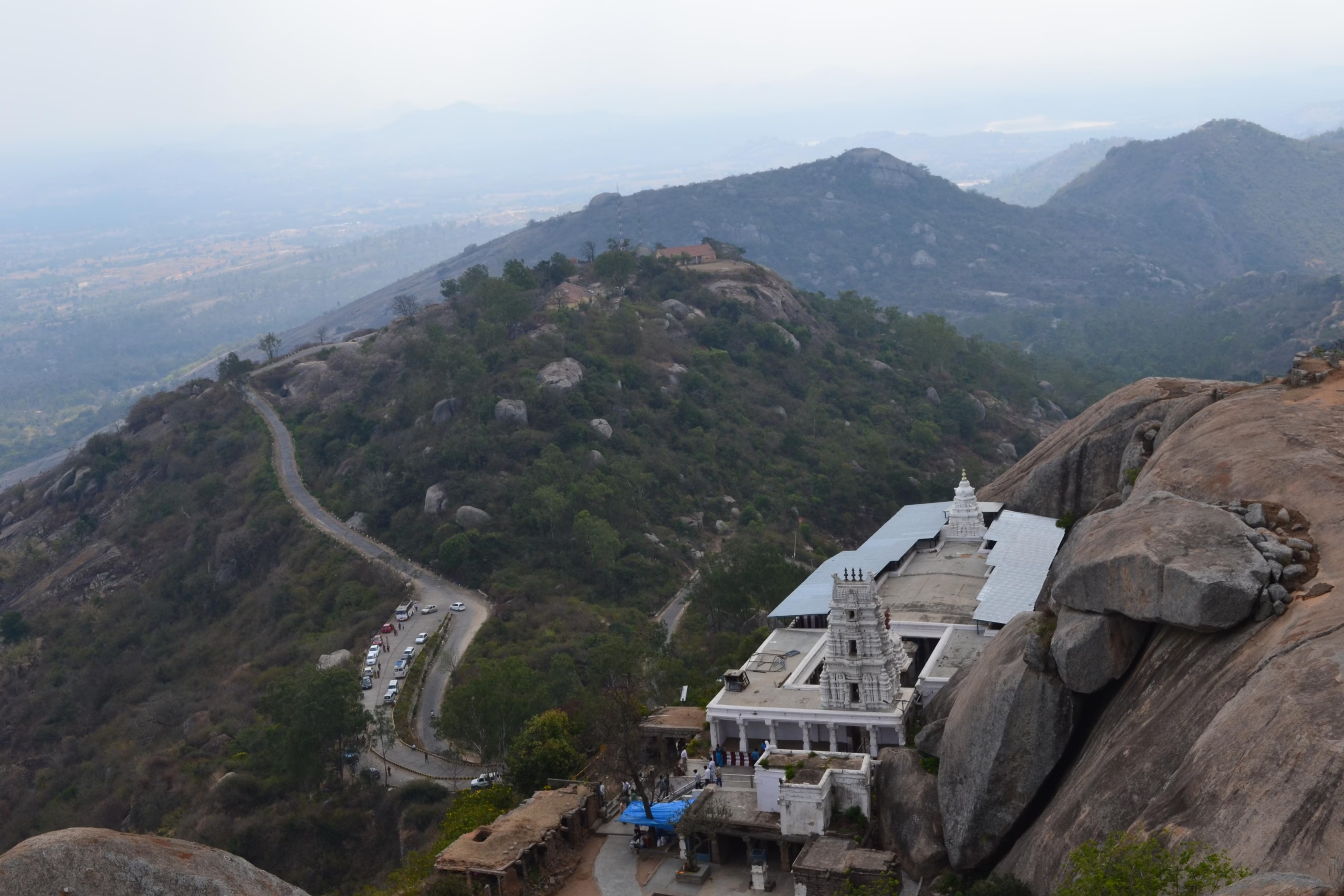
- 1 Devarayanadurga: The Sacred Hill of Narasimha Swamy
Devarayanadurga: The Sacred Hill of Narasimha Swamy
| Date built: | Originated in Dvapara Yuga; Current structure evolved over centuries |
|---|---|
| Deity: | Yoganarasimha & Bhoganarasimha (Incarnations of Vishnu) |
| Architectural style: | Dravidian (Hoysala influence) & Rock-cut |
| Major festivals: | Narasimha Jayanti, Brahmotsavam, Rama Navami |
| Locale: | Hill Station (1204 Metres Altitude) |
| District:: | Tumkuru |
| Address: | Devarayanadurga, Karnataka 572140 |
| Phone | 08162265455 |
1. Introduction & Spiritual Essence
Devarayanadurga, translating to “Fort of the Gods,” is a serene hill station located in the Tumkuru district of Karnataka. Perched at an altitude of 1,204 meters, this sacred geography is dominated by the presiding deity, Sri Narasimha Swamy, the fourth avatar of Lord Vishnu. The complex houses two primary manifestations of the deity: Yoganarasimha (the meditative form at the hilltop) and Bhoganarasimha (the relaxed form at the foothills).
Phalaśruti: The Fruits of Devotion
Why do devotees undertake this pilgrimage? According to temple lore and local belief, a visit to Devarayanadurga offers specific spiritual benefits:
- Protection from Evil: As Narasimha is the vanquisher of fear (Abhaya Varada), devotees visit to overcome fear and anxiety.
- Cleansing Ancestral Karma: Performing Abhishekam for Bhoganarasimha is believed to absolve ancestral sins and bring peace to departed souls.
- Removal of Doshas: Particularly for issues related to Kala Sarpa Dosha and planetary afflictions.
2. Historical Origins & Scriptural Legend
The history of Devarayanadurga is a blend of royal patronage and divine mythology.
Royal Patronage
Historically, the region was under the control of the Hoysala Empire, later becoming a stronghold of the Wodeyars of Mysore. The hill fort was captured by King Chikka Devaraja Wodeyar in the late 17th century after defeating a local chieftain named Jadaka. It was he who renamed the location from “Chikka Kallahalli Betta” to “Devarayanadurga.”
Scriptural Legend: The Sthala Purana
Tradition holds that the hill is a witness to events from the Ramayana.
According to the Sthala Purana, Lord Rama (in his avatar as Lord Vishnu) halted at this hill in search of Sita. In a moment of thirst, Rama shot an arrow into the ground, releasing a spring of water which is now known as Namada Chilume (The Spring of the Hillock). It is believed that Lord Rama’s footprint is still preserved in the rocks nearby.
3. Architectural Marvels
The temple complex showcases a fascinating blend of Dravidian architecture and rock-cut styles, reflecting the Hoysala influence in the intricate carvings.
The Twin Temples
The hill features three distinct elevations:
- Bhoganarasimha Temple (Base): Located at the foothills. The architecture here is more open, featuring a large Mandapa (hall). The presiding deity is Narasimha in a reclining posture.
- Laxmi Narasimha Temple (Mid-level): Situated on the first elevation, housing the consort, Goddess Lakshmi.
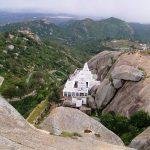
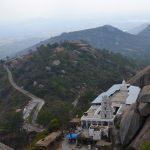
- Yoganarasimha Temple (Summit): Reached by a flight of steps carved into the rock. The deity here is in a seated, meditative yoga posture. The Shikhara (tower) above the sanctum is modest yet distinct, typical of later Vijayanagara influences.
Namada Chilume
A unique natural phenomenon within the complex is the perpetual spring that never dries up, regardless of the season. This is a prime example of the temple’s integration with natural topography.
4. Darshan & Ritual Logistics (2026 Guide)
For a seamless spiritual experience, planning your visit according to the temple timings is essential.
Daily Temple Timings
| Session | Timings |
|---|---|
| Morning Opening | 06:00 AM |
| Morning Abhishekam | 07:30 AM – 08:30 AM |
| Afternoon Closing | 12:30 PM |
| Evening Opening | 05:30 PM |
| Evening Darshan | 05:30 PM – 08:00 PM |
| Closing | 08:30 PM |
Key Sevas and Online Booking
To perform specific rituals, devotees can book the following Sevas. For 2026, bookings are managed via the official Tumkuru district temple trust portal.
- Abhishekam: Daily at 7:30 AM. Requires prior notice of 24 hours.
- Kumkuma Archana: Performed for Goddess Lakshmi.
- Narasimha Homa: Conducted on special Tuesdays and Fridays.
Online Booking: Visit the official Karnataka Temple Trust Portal to book sevas. Walk-in bookings are available at the counter near the Bhoganarasimha temple entrance.
2026 Festival Calendar
- Narasimha Jayanti: April 21, 2026 (High security and special protocols apply).
- Rama Navami: April 6, 2026 (Celebration at Namada Chilume).
- Brahmotsavam: November 2026 (Dates to be confirmed by the Panchangam).
5. Practical Visitor Guidance
Devarayanadurga is a hill station, and the weather can be unpredictable. Here is what you need to know:
- Dress Code: Traditional Indian attire is recommended. Men should wear Dhoti or formal trousers; women should wear Saree or Salwar Kameez. Avoid shorts and sleeveless tops.
- Photography & Mobiles: Photography is strictly prohibited inside the sanctum sanctorum. Mobile lockers are available at the entrance for a nominal fee.
- Crowd Management: Tuesdays and weekends witness heavy crowds. Best time to visit: 6:00 AM (opening) or after 6:00 PM in the evening.
- Seasonal Advice:
- May (Summer): The days are hot despite the altitude. Carry water and wear a hat.
- July-Sept (Monsoon): The forest is lush, but slippery. Leeches are common on the nature trails.
- Dec-Jan (Winter): Temperatures drop significantly. Carry a light jacket.
6. Pilgrimage Connectivity
Devarayanadurga is located approximately 65 km from Bangalore, making it an ideal one-day pilgrimage.
How to Reach
- By Road: Take NH 69 towards Tumkuru. From Tumkuru, take the highway towards Kyathsandra and then turn left towards Devarayanadurga. Buses are available from Tumkuru KSRTC stand.
- By Train: The nearest railway junction is Tumkuru Station (approx. 15 km). Taxis and autos are easily available from there.
- By Air: Kempegowda International Airport (BLR) is the nearest airport (approx. 75 km).
Nearby Sacred Sites (Pilgrimage Circuit)
- Shivaganga Tirtha: Located at the base of the hill, this natural spring is believed to be the source of the temple’s holy water.
- Kaidala Temple (Chikka Kaidala): Famous for the Chennakeshava Temple, a masterpiece of Hoysala architecture, located 5 km from Devarayanadurga.
- Sri Channakeshava Swamy Temple, Kaidala: Known as the “Kailasa of South India,” dedicated to Lord Shiva.
Photo Gallery
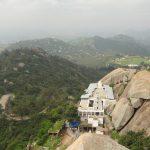
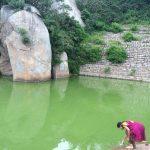
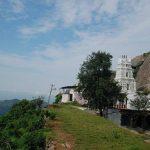
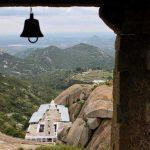
Frequently Asked Questions (FAQs)
1. Is there a VIP Darshan entry available at Devarayanadurga?
Yes, the temple trust provides a “Special Darshan” token system, especially during festivals. This is not a full VIP pass like in Tirupati but helps bypass the general queue for a nominal fee.
2. Are there accommodation facilities on the hill?
Primary accommodation is limited to the KSTDC guest house and a few private lodges in Kyathsandra (base of the hill). It is advisable to book these in advance during weekends.
3. Can we carry food inside the temple?
Packaged water and biscuits are allowed, but full meals are not permitted inside the sanctum. However, free Annadana (lunch) is provided by the temple trust on Sundays and special occasions near the Bhoganarasimha temple.
4. What is the difficulty level of the trek to Yoganarasimha?
Moderate. While there are cement steps for the majority of the ascent, the last 200 meters involve uneven rock steps. It is manageable for children and elderly devotees with assistance.
5. Is parking available?
Yes, a paid parking lot is available at the foothills. During peak season, vehicles may be stopped 1 km before the temple due to narrow roads, requiring a walk or an electric van ride.
Contact Details
Official Address:
Executive Officer,
Sri Narasimha Swamy Temple,
Devarayanadurga, Tumkuru Dist – 572140.
Phone: 08162265455
Recent Posts

ओ सांवरे तूने ही मुझको संभाला – Lyrics & Meaning
ओ सांवरे तूने ही मुझको संभाला – A Prayer to Shyam Origin & Spiritual Essence Why This Bhajan Resonates Devotees chant this when overwhelmed by life’s storms—the refrain ‘तूने ही मुझको संभाला’ is the soul’s sigh of relief: “You…

कथा ये है महाराज मेरे की – Lyrics & Meaning
कथा ये है महाराज मेरे की छत्रपति संभाजी महाराज – A Prayer to Chhatrapati Sambhaji Maharaj Origin & Spiritual Essence Why This Bhajan Resonates Devotees chant this when their spirit feels tested—its powerful refrain “महाराज मेरे” is a soul’s…

Rigveda Samhita Yathartha Anuvada (ऋग्वेद संहिता यथार्थ अनुवाद) – Complete Set with Anvayartha & Hindi/English Translation
The Rigveda is the oldest surviving scripture of humanity and the foundational text of Sanātana Dharma. For serious students, scholars, UPSC aspirants studying ancient Indian history, Sanskrit learners, and spiritual seekers, a precise and grammatically structured translation is indispensable.…

आना भी अकेला है जाना भी अकेला है – Lyrics & Meaning | BharatTemples
आना भी अकेला है जाना भी अकेला है – A Prayer to the Divine Witness Origin & Spiritual Essence Why This Bhajan Resonates Devotees turn to this bhajan in moments of deep reflection—when life’s attachments begin to ache. The…

माता शेरावाली के द्वार जो भी जाता है – Lyrics & Meaning
माता शेरावाली के द्वार जो भी जाता है – A Prayer to Maa Sherawali Origin & Spiritual Essence Why This Bhajan Resonates Devotees turn to this bhajan in times of fear or uncertainty—its promise that no one leaves Maa’s…

मार लेना सपणी उबार लेणा भवरा – Lyrics & Meaning
मार लेना सपणी उबार लेणा भवरा – A Prayer to the Divine Beloved Origin & Spiritual Essence Why This Bhajan Resonates Devotees chant this in moments of deep vulnerability—its cry of “मार लेना सपणी, उबार लेणा भवरा” is the…

हमें श्याम सुंदर भरोसा तुम्हारा – Lyrics & Meaning
हमें श्याम सुंदर भरोसा तुम्हारा – A Prayer to Shyam Sundar Origin & Spiritual Essence Why This Bhajan Resonates Devotees chant this when feeling alone—its refrain ‘de do sahara’ is the soul’s cry for divine support. Lyrics in Hindi…

Mere Satguru Ne Di Thi Davai Lyrics in Hindi & Meaning
Mere Satguru Ne Di Thi Davai: Invoking the Guru’s Liberating Wisdom This soul-stirring bhajan venerates the Satguru (True Spiritual Master) as the divine physician who dispenses the only remedy for life’s deepest sufferings. Composed by Sant Karmaveer Tufani, it…

Janm Diyo Thari Maa Dukh Dekhiyo Lyrics in Hindi & Meaning
जन्म दियो थारी माँ दुख देखियो (Maa’s Grief Upon Birthing You) This soul-stirring Chetavani Bhajan (admonitory hymn) is addressed to the Divine Mother (Maa) – a call for repentance when children forget their filial duties in the dark age…
Bhadi Sabha Mein Thane Manaun Lyrics in Hindi & Meaning
Bhadi Sabha Mein Thane Manaun: Invoking the Spear-Wielding Mother Mata Bhawani (श्री ज्वाला भवानी), the fiery manifestation of Shakti worshipped as the Protector of Dharma in Her Dhaulagarh sanctum. Origin & Spiritual Essence Composed in Rajasthani folk tradition by…