
Contents
- 1 Introduction & Spiritual Essence of Devi Karumariamman Temple, Thiruvallur
- 2 Historical Origins & Scriptural Legend
- 3 Architectural Marvels
- 4 Darshan & Ritual Logistics (2026 Guide)
- 5 Practical Visitor Guidance
- 6 Pilgrimage Connectivity
- 7 Frequently Asked Questions (FAQ)
- 8 Photo Gallery
- 9 How to Reach:
- 10 Address
- 11 Contact Details
Introduction & Spiritual Essence of Devi Karumariamman Temple, Thiruvallur
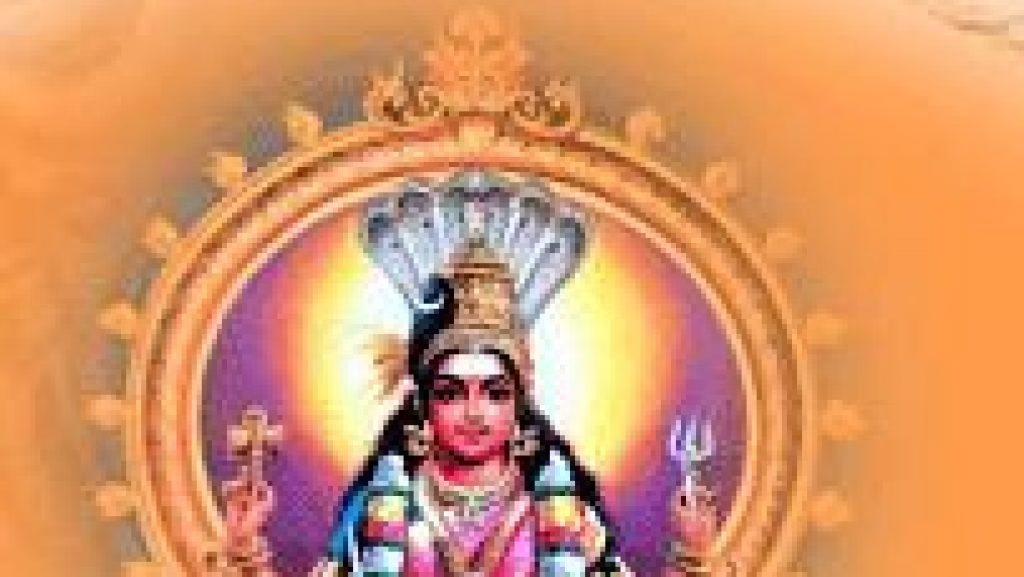
Nestled in the serene town of Thiruvallur, approximately 50 km from Chennai, lies the Devi Karumariamman Temple, a sanctuary of profound spiritual energy. The presiding deity, Karumariamman, is a form of Goddess Parvathi worshipped as the Mother of Universe.
The primary deity here is a Swayambhu (self-manifested) Murti radiating immense grace. Unlike regular stone idols, this form is believed to have emerged from the earth, embodying the primal energy of creation and protection. Devotees address her as Thiru Vallur Amman or Vadapathra Sayeeswarar (as the consort of Lord Shiva, whose shrine is adjacent).
Phalaśruti: The Benefits of Pilgrimage
According to ancient Puranas, a visit to this temple holds specific spiritual merits:
- Cleansing Ancestral Karma: Performing rituals here is believed to liberate ancestors from cyclical suffering, ensuring Shanthi (peace) for the Pithru lineage.
- Removal of Doshas: Devotees suffering from Naga Dosha (serpent afflictions) or Rahu-Ketu Dosha find solace here.
- Progress and Prosperity: It is said that offering prayers to the Sun God aspect of this temple (as per the legend) grants success in career and business ventures.
Historical Origins & Scriptural Legend
The history of Devi Karumariamman Temple in Thiruvallur is a blend of celestial mythology and documented history.
The Legend of the Sun God (Sthala Purana)
One of the most significant legends associated with this temple involves Surya (The Sun God). Tradition holds that Devi Karumariamman once appeared before the Sun God in the guise of an elderly nomadic woman to forecast his future. Unaware of her divine identity, the Sun God neglected her.
Immediate consequences followed: the Sun lost his brilliance, and darkness enveloped the universe. Realizing his grave mistake, the Sun God begged the Goddess for forgiveness. Devi Karumariamman pardoned him on the condition that he would celebrate Sundays in her honor and grant the privilege of his rays falling directly on her head twice a year.
Thus, Sunday is celebrated as the specific day of Karumariamman here. Devotees eagerly await the biannual event in the Tamil months of Panguni (March-April) and Purattasi (September-October), where the sun’s rays illuminate the sanctum sanctorum, blessing the deity.
Architectural & Dynastic History
While the legend is ancient, the temple structures reflect the architectural patronage of the Vijayanagara and later the Nayak dynasties (circa 16th–18th centuries), who popularized the construction of Rajagopurams and pillared mandapas. Inscriptions within the complex likely detail land grants and endowments made by local chieftains during these periods.
Architectural Marvels
The temple is a classic example of Dravidian Temple Architecture, characterized by towering gateways and elaborate sculptural detailing.
- The Rajagopuram: The towering entrance gateway (Rajagopuram) is a visual spectacle, adorned with intricate stucco figures of deities, mythological events, and floral motifs.
- The Sanctum (Garbhagriha): The inner sanctum houses the Swayambhu idol of Karumariamman, depicted in a standing posture with four hands holding sacred attributes.
- Vastu Shastra Alignment: The temple follows traditional Vastu principles, with the axis aligning perfectly to allow the Sun’s rays to strike the idol during the equinoxes in Panguni and Purattasi.
- Sub-Shrines: Dedicated shrines for Vadapathra Sayeeswarar (Lord Shiva), Ayyanar, Navagrahas, and Bhairava surround the main prakaram (corridor).
- Mandapas: The Deepa Stambam (lamp post) and the pillared hall (Thiruvilionthal Mandapam) showcase the craftsmanship of artisans, featuring carved scenes from the Puranas.
Darshan & Ritual Logistics (2026 Guide)
To ensure a seamless spiritual experience, we have compiled the daily schedule and key Seva details. Note that timings may vary slightly during festival seasons.
Daily Temple Timings
| Session | Timing |
|---|---|
| Morning Darshan | 06:00 AM – 12:00 PM |
| Mid-day Closure | 12:00 PM – 04:00 PM |
| Evening Darshan | 04:00 PM – 08:30 PM |
Key Sevas & Online Booking
Devotees can book the following Sevas (offerings) through the official temple portal (Tiruvallur Devasthanam).
- Abhishekam: Performed to the main deity with milk, honey, and turmeric. Best time: 07:00 AM.
- Archana: Recitation of the holy names (Theertha & Prasadam distribution included).
- Oddal & Anna Dhana: Charity meals offered to devotees.
- Rayalaseema Special Darshan: For devotees traveling from afar.
Booking Platform: Visit the official Tamil Nadu HR&CE website or the specific Tiruvallur Devasthanam portal for 2026 reservations.
2026 Major Festival Dates
- Aadi Perukku: August 2, 2026
- Navaratri (Dussehra): September 22 – October 1, 2026
- Karthigai Deepam: November 8, 2026
- Thai Poosam: January 12, 2026
- Panguni Uthiram (Key Solar Event): March 31, 2026 (Sun rays likely to fall on the idol).
Practical Visitor Guidance
To maintain the sanctity of the temple and ensure safety, please adhere to the following guidelines.
- Dress Code: Traditional attire is mandatory. Men should wear Dhoti or formal trousers with a shirt; women should wear Saree, Salwar Kameez, or half-saree. Western clothing (shorts, sleeveless tops) is strictly prohibited.
- Photography & Mobiles: Photography is prohibited inside the sanctum sanctorum. Mobile phones and cameras must be deposited at the free locker counters provided near the entrance.
- Accessibility: The temple has ramp facilities for wheelchairs and pushchairs up to the first prakaram, though the inner sanctum requires navigating a few steps.
- Crowd Management: Tuesdays, Fridays, and Sundays witness heavy crowds. Best time to visit: Weekday mornings (8 AM – 10 AM) or during the mid-day closure period for a quiet darshan.
Pilgrimage Connectivity
Thiruvallur is well-connected via rail and road, making it a popular pilgrimage stop.
How to Reach Devi Karumariamman Temple
- By Air: Chennai International Airport (MAA) is the nearest airport, approximately 50 km away (approx. 1.5 hours drive via NH16).
- By Train: Thiruvallur Railway Station is on the Chennai Central – Arakkonam line. Local suburban trains are available from Chennai Central and Egmore. Alternatively, take the train to Puttur (18 km) for connections from North India.
- By Road: Located on NH16 (Chennai – Kolkata Highway). Regular buses operate from Chennai (Mofussil Bus Terminus) and Kanchipuram. Driving via Poonamallee provides a scenic route.
Nearby Sacred Sites (Pilgrimage Circuit)
Extend your spiritual journey by visiting these nearby temples:
- Sholinghur Anjaneyar Temple (35 km): Famous for the 40-foot tall Hanuman idol and the Yoga Narasimhar shrine located atop a hill.
- Kanchipuram Kamakshi Amman Temple (45 km): One of the three Shakti Peethas, renowned for its gold-painted gopurams.
- Sri Kalahasteeswara Temple (75 km): A major Shiva temple (one of the Pancha Bhoota Stalas) dedicated to the element of Vayu (Wind).
Frequently Asked Questions (FAQ)
1. Is there a VIP or Special Entry Darshan available?
Yes, the temple administration offers a ‘Special Entry Darshan’ ticket (nominal fee) which allows devotees to bypass the general queue, especially during peak festival days like Navaratri and Panguni Uthiram.
2. Can I perform Abhishekam for my family?
Absolutely. Abhishekam can be performed daily. Devotees can book this online via the Tamil Nadu HR&CE portal or purchase tickets at the counter upon arrival. It is advisable to book at least 24 hours in advance for major festivals.
3. What are the accommodation options near the temple?
The temple manages a guest house (Choultry) near the complex offering clean rooms at subsidized rates. Additionally, private lodges and budget hotels are available in Thiruvallur town center, approximately 1 km from the temple.
4. Are there facilities for food and Prasadam?
Yes, the temple provides free mid-day meals (Anna Dhana) for all devotees between 12:00 PM and 2:00 PM. Devotees can also purchase ‘Kozhukattai’ (rice dumplings) and ‘Pongal’ as Prasadam at the counter near the sanctum.
5. When exactly do the Sun’s rays fall on the idol?
During the months of Panguni (March-April) and Purattasi (September-October). Specifically, on the days when the Sun transitions into the Medam and Kanni zodiac signs, the rays pass through the architectural openings to illuminate the Goddess’s head. The exact date varies slightly each year based on the solar calendar.
Photo Gallery
How to Reach:
By Air
Chennai Airport
By Train
There is enough bus facility from Chennai Central and Egmore Railway Stations.
By Road
There is enough bus facility to reach here.
Address
Devi Karumariamman Temple
Thiruvallur – 602 001
Tamil Nadu, India
Contact Details
Executive Officer
Devi Karumariamman Temple
Thiruvallur – 602 001
Phone: +91-44-2766-XXXX (Office)
Email: [office@tiruvallurdevasthanam.in]
Recent Posts

ओ सांवरे तूने ही मुझको संभाला – Lyrics & Meaning
ओ सांवरे तूने ही मुझको संभाला – A Prayer to Shyam Origin & Spiritual Essence Why This Bhajan Resonates Devotees chant this when overwhelmed by life’s storms—the refrain ‘तूने ही मुझको संभाला’ is the soul’s sigh of relief: “You…

कथा ये है महाराज मेरे की – Lyrics & Meaning
कथा ये है महाराज मेरे की छत्रपति संभाजी महाराज – A Prayer to Chhatrapati Sambhaji Maharaj Origin & Spiritual Essence Why This Bhajan Resonates Devotees chant this when their spirit feels tested—its powerful refrain “महाराज मेरे” is a soul’s…

Rigveda Samhita Yathartha Anuvada (ऋग्वेद संहिता यथार्थ अनुवाद) – Complete Set with Anvayartha & Hindi/English Translation
The Rigveda is the oldest surviving scripture of humanity and the foundational text of Sanātana Dharma. For serious students, scholars, UPSC aspirants studying ancient Indian history, Sanskrit learners, and spiritual seekers, a precise and grammatically structured translation is indispensable.…

आना भी अकेला है जाना भी अकेला है – Lyrics & Meaning | BharatTemples
आना भी अकेला है जाना भी अकेला है – A Prayer to the Divine Witness Origin & Spiritual Essence Why This Bhajan Resonates Devotees turn to this bhajan in moments of deep reflection—when life’s attachments begin to ache. The…

माता शेरावाली के द्वार जो भी जाता है – Lyrics & Meaning
माता शेरावाली के द्वार जो भी जाता है – A Prayer to Maa Sherawali Origin & Spiritual Essence Why This Bhajan Resonates Devotees turn to this bhajan in times of fear or uncertainty—its promise that no one leaves Maa’s…

मार लेना सपणी उबार लेणा भवरा – Lyrics & Meaning
मार लेना सपणी उबार लेणा भवरा – A Prayer to the Divine Beloved Origin & Spiritual Essence Why This Bhajan Resonates Devotees chant this in moments of deep vulnerability—its cry of “मार लेना सपणी, उबार लेणा भवरा” is the…

हमें श्याम सुंदर भरोसा तुम्हारा – Lyrics & Meaning
हमें श्याम सुंदर भरोसा तुम्हारा – A Prayer to Shyam Sundar Origin & Spiritual Essence Why This Bhajan Resonates Devotees chant this when feeling alone—its refrain ‘de do sahara’ is the soul’s cry for divine support. Lyrics in Hindi…

Mere Satguru Ne Di Thi Davai Lyrics in Hindi & Meaning
Mere Satguru Ne Di Thi Davai: Invoking the Guru’s Liberating Wisdom This soul-stirring bhajan venerates the Satguru (True Spiritual Master) as the divine physician who dispenses the only remedy for life’s deepest sufferings. Composed by Sant Karmaveer Tufani, it…

Janm Diyo Thari Maa Dukh Dekhiyo Lyrics in Hindi & Meaning
जन्म दियो थारी माँ दुख देखियो (Maa’s Grief Upon Birthing You) This soul-stirring Chetavani Bhajan (admonitory hymn) is addressed to the Divine Mother (Maa) – a call for repentance when children forget their filial duties in the dark age…
Bhadi Sabha Mein Thane Manaun Lyrics in Hindi & Meaning
Bhadi Sabha Mein Thane Manaun: Invoking the Spear-Wielding Mother Mata Bhawani (श्री ज्वाला भवानी), the fiery manifestation of Shakti worshipped as the Protector of Dharma in Her Dhaulagarh sanctum. Origin & Spiritual Essence Composed in Rajasthani folk tradition by…