
Contents
- 1 Introduction & Spiritual Essence
- 2 Historical Origins & Scriptural Legend
- 3 Architectural Marvels
- 4 Darshan & Ritual Logistics
- 5 Practical Visitor Guidance
- 6 Pilgrimage Connectivity
- 7 Frequently Asked Questions (FAQs)
- 7.1 1. Is there a VIP darshan entry at Devi Vaishini Temple?
- 7.2 2. What is the significance of the name “Devi Vaishini”?
- 7.3 3. Are there accommodation facilities available near the temple?
- 7.4 4. Is non-vegetarian food allowed in the temple premises?
- 7.5 5. How old is the Kalika Matha section of the temple?
Introduction & Spiritual Essence
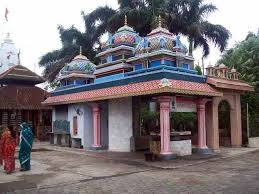
Rising majestically from the Malwa plateau of Madhya Pradesh, the Devi Vaishini Temple on Tekri Hill is a beacon of spiritual energy in the city of Dewas. This ancient shrine is a dual sanctum dedicated to two fierce yet benevolent forms of the Divine Mother—Devi Chamunda Tulja Bhavani and Kalika Matha. For devotees, this temple is not merely a stone structure but a living Shakti Peeth where the mountain itself is believed to embody the divine presence.
Phalaśruti (The Benefits): Why do pilgrims undertake the ascent to this hilltop temple? Tradition holds that the Devi Vaishini Temple history and darshan timings are intertwined with the cosmic cycle of protection. Devotees believe that sincere prayers here cleanses ancestral karma and offers protection from negative planetary influences. Specifically, offering prayers to Goddess Chamunda here is said to vanquish fear, while seeking blessings from Kalika Matha ensures family prosperity and spiritual awakening.
Historical Origins & Scriptural Legend
The history of Dewas is intrinsically linked to the name of the city itself. The etymology traces back to the Sanskrit sandhi of “Dev” (Deity) and “Vas” (Abode), signifying the “Abode of the Gods.” The hill is locally known as Tekri, standing as a silent witness to centuries of worship.
Scriptural References and Oral Traditions:
While the exact century of the temple’s construction is lost to the mists of time, oral legends suggest that the temple existed long before the rise of the Maratha Puar dynasty in the region. According to the Sthala Purana (local legend) of Dewas, the hill was the site where the ear (Karna) of Goddess Sati fell, making it a site of immense spiritual potency (though this is distinct from the main Sati Shakti Peethas).
Dynastic Influence:
Historically, the region of Malwa was ruled by the Puar (Pawar) Maratha clan starting in the early 18th century. The rulers of the Dewas Senior and Junior states were ardent devotees of the Goddess. The current structure of the temple, particularly the pathway and entrance, was developed and maintained under the patronage of the Puar dynasty, who viewed the Goddess as the royal protector of their dominion.
Architectural Marvels
The Devi Vaishini Temple is a prime example of the Malwa-Nagara style of temple architecture, blended with indigenous Vastu Shastra principles designed to harmonize with the natural elevation of the hill.
Key Architectural Elements:
1. The Sacred Geometry (Vastu): The temple is oriented towards the East, facing the rising sun. The ascent via the steps (cruciform path) aligns with the planetary positions, allowing the morning sun to illuminate the sanctum directly.
2. The Shikhara and Mandapa: The Shikhara (spire) is a marvel of stone carving, though simpler and more rugged than the ornate spires of Khajuraho, reflecting the martial and resilient spirit of the Maratha era. The temple complex features a pillared Mandapa (hall) that houses intricate sculptures of deities from the Hindu pantheon.
3. The Sculptures: The walls of the inner sanctum feature rock-cut carvings of Ganesha, Nandi, and various Mahavidyas. The central deity, a Swayambhu (self-manifested) idol of Goddess Chamunda in a seated posture, radiates an aura of fierce protection.
Darshan & Ritual Logistics
Planning your visit requires an understanding of the daily schedule and major festivals. The temple administration has streamlined the process for both local devotees and pilgrims traveling from afar.
Daily Darshan Timings
Please note the following timings for the Devi Vaishini Temple Dewas (Timings are subject to change during festivals).
| Session | Timing | Activity |
|---|---|---|
| Morning | 6:00 AM – 12:00 PM | Mangala Aarti & General Darshan |
| Afternoon | 12:00 PM – 4:00 PM | Temple Closed for Rituals |
| Evening | 4:00 PM – 9:00 PM | Sandhya Aarti & Darshan |
Seva (Rituals) & Online Booking
For those unable to visit in person, the temple trust facilitates digital seva.
- Abhishekam: The ritual bathing of the deity (usually performed with milk, honey, and ghee). Best time: 7:00 AM.
- Archana: Individual prayers offered in your name. Can be booked for specific intentions (health, prosperity).
- Online Booking: Visit the official temple portal or the Bharat Temples listing page to schedule your seva.
2026 Festival Calendar
Major festivals draw immense crowds. If you plan to visit in 2026, mark these dates:
- Navratri (Chaitra): April 1 – April 9, 2026 (Spring Festival of Renunciation).
- Navratri (Sharad): September 22 – October 1, 2026 (The primary festival; expect high crowd density).
- Diwali: October 21, 2026 (Special Maha Aarti).
- Shivaji Jayanti: February 19, 2026 (Celebrating the Maratha heritage of the temple caretakers).
Practical Visitor Guidance
To ensure a serene pilgrimage experience, please adhere to the following guidelines:
- Dress Code: Traditional attire is recommended. Men should wear dhoti or trousers, and women should wear saree or salwar kameez. Avoid shorts and sleeveless tops as a mark of respect.
- Photography & Mobiles: Photography is strictly prohibited inside the inner sanctum (Garbhagriha). Mobile phones must be kept on silent mode. Locker facilities are available near the entrance.
- Accessibility: The temple is situated on Tekri Hill. While vehicles can approach the base, the final ascent requires climbing stairs. It is not wheelchair accessible by standard means. Elderly visitors can request assistance from temple volunteers.
- Crowd Management:
– Best hours to visit: Weekday mornings between 7:00 AM and 9:00 AM.
– Seasonal Advice: During May and June, temperatures in Malwa can exceed 40°C. Carry a water bottle and cover your head. Winters (November–February) are ideal for visiting.
Pilgrimage Connectivity
Dewas is strategically located in the Malwa region, making it accessible via major transit hubs of Central India.
How to Reach Devi Vaishini Temple
- By Air: The nearest airport is Devi Ahilya Bai Holkar Airport (IDR) in Indore, approximately 33 km (1 hour drive) from Dewas.
- By Rail: Dewas Junction is a major railway station on the Delhi–Mumbai main line (Western Railway). It is well-connected to all major cities.
- By Road: Dewas lies on the NH 47 (National Highway 47) and the Mumbai–Agra Highway. It is 142 km from Bhopal and 35 km from the holy city of Ujjain.
Nearby Sacred Sites
Extend your pilgrimage to these nearby spiritual centers:
- Narayan Kuti Ashram: Located at the foothills of Tekri. This ashram is dedicated to Shri Vishnu Tirth Maharaj and offers a tranquil space for meditation.
- Ujjain (35 km): The ancient city of Mahakaleshwar Jyotirlinga and the Kumbh Mela site.
- Indore (33 km): Visit the Annapurna Temple and the Khajrana Ganesh Temple.
Frequently Asked Questions (FAQs)
1. Is there a VIP darshan entry at Devi Vaishini Temple?
Yes, the temple trust offers a “Quick Darshan” pass for elderly citizens and differently-abled devotees. VIP passes can be booked online or at the temple counter for a nominal donation fee.
2. What is the significance of the name “Devi Vaishini”?
“Vaishini” is a name associated with the potency of the Goddess, often linked to Lord Vishnu in the preservation of Dharma. It signifies the aspect of the Goddess that sustains life and order, distinct from her destructive form as Kali.
3. Are there accommodation facilities available near the temple?
While the temple itself does not have a guesthouse, the city of Dewas has numerous Dharamshalas and budget hotels. For luxury accommodation, Indore is the nearest option.
4. Is non-vegetarian food allowed in the temple premises?
No, the Devi Vaishini Temple is a strictly vegetarian and sattvic zone. Devotees are advised to consume only vegetarian food while in the vicinity of the temple.
5. How old is the Kalika Matha section of the temple?
While the structural renovations date back to the Maratha era, the Kalika Matha is considered ancient. Local historians suggest it has been a site of worship for over a thousand years, evolving from a cave shrine to the present structure.
Recent Posts

ओ सांवरे तूने ही मुझको संभाला – Lyrics & Meaning
ओ सांवरे तूने ही मुझको संभाला – A Prayer to Shyam Origin & Spiritual Essence Why This Bhajan Resonates Devotees chant this when overwhelmed by life’s storms—the refrain ‘तूने ही मुझको संभाला’ is the soul’s sigh of relief: “You…

कथा ये है महाराज मेरे की – Lyrics & Meaning
कथा ये है महाराज मेरे की छत्रपति संभाजी महाराज – A Prayer to Chhatrapati Sambhaji Maharaj Origin & Spiritual Essence Why This Bhajan Resonates Devotees chant this when their spirit feels tested—its powerful refrain “महाराज मेरे” is a soul’s…

Rigveda Samhita Yathartha Anuvada (ऋग्वेद संहिता यथार्थ अनुवाद) – Complete Set with Anvayartha & Hindi/English Translation
The Rigveda is the oldest surviving scripture of humanity and the foundational text of Sanātana Dharma. For serious students, scholars, UPSC aspirants studying ancient Indian history, Sanskrit learners, and spiritual seekers, a precise and grammatically structured translation is indispensable.…

आना भी अकेला है जाना भी अकेला है – Lyrics & Meaning | BharatTemples
आना भी अकेला है जाना भी अकेला है – A Prayer to the Divine Witness Origin & Spiritual Essence Why This Bhajan Resonates Devotees turn to this bhajan in moments of deep reflection—when life’s attachments begin to ache. The…

माता शेरावाली के द्वार जो भी जाता है – Lyrics & Meaning
माता शेरावाली के द्वार जो भी जाता है – A Prayer to Maa Sherawali Origin & Spiritual Essence Why This Bhajan Resonates Devotees turn to this bhajan in times of fear or uncertainty—its promise that no one leaves Maa’s…

मार लेना सपणी उबार लेणा भवरा – Lyrics & Meaning
मार लेना सपणी उबार लेणा भवरा – A Prayer to the Divine Beloved Origin & Spiritual Essence Why This Bhajan Resonates Devotees chant this in moments of deep vulnerability—its cry of “मार लेना सपणी, उबार लेणा भवरा” is the…

हमें श्याम सुंदर भरोसा तुम्हारा – Lyrics & Meaning
हमें श्याम सुंदर भरोसा तुम्हारा – A Prayer to Shyam Sundar Origin & Spiritual Essence Why This Bhajan Resonates Devotees chant this when feeling alone—its refrain ‘de do sahara’ is the soul’s cry for divine support. Lyrics in Hindi…

Mere Satguru Ne Di Thi Davai Lyrics in Hindi & Meaning
Mere Satguru Ne Di Thi Davai: Invoking the Guru’s Liberating Wisdom This soul-stirring bhajan venerates the Satguru (True Spiritual Master) as the divine physician who dispenses the only remedy for life’s deepest sufferings. Composed by Sant Karmaveer Tufani, it…

Janm Diyo Thari Maa Dukh Dekhiyo Lyrics in Hindi & Meaning
जन्म दियो थारी माँ दुख देखियो (Maa’s Grief Upon Birthing You) This soul-stirring Chetavani Bhajan (admonitory hymn) is addressed to the Divine Mother (Maa) – a call for repentance when children forget their filial duties in the dark age…
Bhadi Sabha Mein Thane Manaun Lyrics in Hindi & Meaning
Bhadi Sabha Mein Thane Manaun: Invoking the Spear-Wielding Mother Mata Bhawani (श्री ज्वाला भवानी), the fiery manifestation of Shakti worshipped as the Protector of Dharma in Her Dhaulagarh sanctum. Origin & Spiritual Essence Composed in Rajasthani folk tradition by…