
Contents
Introduction & Spiritual Essence of Dharakote Temple
The Dharakote Jagannath Temple in Ganjam, Odisha, stands as a profound testament to the region’s spiritual heritage and architectural grandeur. Dedicated primarily to Lord Jagannath (a form of Lord Vishnu/Krishna), the temple is often revered for its striking resemblance to the sanctified shrine of Puri. Here, the deity is worshipped as the “Lord of the Universe,” governing the rhythms of time and devotion.
Phalaśruti (Spiritual Benefits): Devotees believe that visiting Dharakote cleanses ancestral karma and brings familial harmony. The temple is particularly noted for fulfilling the wishes of childless couples and granting prosperity to those who perform circumambulation (Parikrama) around the sanctum. The presence of the eternal “Sati Chita” (the sacred flame mentioned in local legends) adds a layer of sanctity to the site, offering spiritual purification for those who witness it.
Historical Origins & Scriptural Legend
Builders & Era: While the Jagannath Temple itself is a focal point of devotion, the temple complex is historically intertwined with the Dharakote Maharaja Palace. The architectural roots trace back to the Bhanja dynasty rulers of the region. The current temple structure and the palace bear the imprints of the 18th century, specifically under the patronage of Raja Jaganath Singh (1788–1830).
The Legend of Sati Chita: According to oral tradition (Sthala Purana), Raja Jaganath Singh, returning from a hunt, noticed a divine light emanating from a humble hut. Inside, he discovered a holy man meditating before a sacred fire. The sage revealed that this was the exact spot where Rani Chandama Devi had committed Sati (immolation) following the Raja’s demise. Moved by this revelation, the Raja constructed a Math over the site. The descendants of the Dharakote royal family have zealously guarded this flame for centuries. This eternal fire, known as the Sati Chita, is tended to by the Head Priest (Mahant) at the Sathi Math, located within the temple complex.
Architectural Marvels
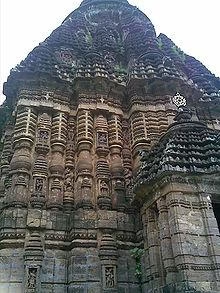
The Dharakote Temple exemplifies the Kalinga style of Odishan architecture, a regional variation of the Nagara style. The temple complex is designed according to Vastu Shastra principles, ensuring energy flow aligns with the cardinal directions.
- The Shikhara (Spire): The towering spire rises with a distinctive curvilinear profile, similar to the Puri temple, symbolizing the ascent of the soul toward the divine.
- The Mandapa: The temple features a sprawling Mukhya Mandapa (main hall) and a Natya Mandapa (dancing hall), adorned with intricate stone carvings depicting scenes from the Puranas.
- Palace Integration: The 600-year-old Maharaja Palace, situated adjacent to the temple, reflects a blend of traditional Odishan and colonial architectural influences. Though not a UNESCO site, the complex is a heritage jewel maintained by the royal descendants.
Darshan & Ritual Logistics
Visitors to Dharakote can participate in various sevas (rituals) and witness the grandeur of the temple’s daily and festive schedules.
Daily Timings (2026 Schedule)
The temple follows a strict daily routine to maintain ritual purity.
| Session | Timing | Rituals |
|---|---|---|
| Morning | 06:00 AM – 12:00 PM | Mangala Alati, Abhishekam, Gopalakala Aarti |
| Afternoon | 12:00 PM – 04:00 PM | Madhyahna Dhupa (Mid-day offering) |
| Evening | 04:00 PM – 08:00 PM | Sandhya Aarti, Dharana Bhoga, Pakaala Bhoga |
Key Sevas & Online Booking
Devotees can book specific sevas to enhance their pilgrimage experience. As of 2026, the temple administration supports digital bookings:
- Abhishekam: Ritual bathing of the deity with water, milk, and honey. Best performed on Ekadashi days.
- Archana: Recitation of names accompanied by offerings of flowers and fruits.
- Chandana Yatra: A special ritual during the summer months where the deity is smeared with cooling sandalwood paste.
Booking: To book online seva, visit the official temple administration website (managed by the Managing Committee) or inquire at the temple counter upon arrival. ID proof is mandatory for online bookings.
Major Festivals in 2026
The Ekadasi Cart Festival is the highlight of Dharakote. Unlike the Rath Yatra of Puri which uses massive chariots, this festival involves a cart pulled by devotees. It draws 40,000 to 70,000 pilgrims.
- Ekadasi Cart Festival: January 10, 2026 (Pausha Shukla Ekadashi) and December 30, 2026 (Margashirsha Shukla Ekadashi). The December event is particularly grand.
- Ratha Yatra (Car Festival): July 27, 2026 (Ashadha Shukla Dwitiya).
- Janmashtami: September 14, 2026 (Bhadrapada Krishna Ashtami).
Practical Visitor Guidance
To ensure a respectful and comfortable visit to Dharakote, please adhere to the following guidelines:
- Dress Code: Traditional Indian attire is highly recommended (Dhoti/Kurta for men, Saree/Salwar Kameez for women). Modest clothing is mandatory; western wear is generally discouraged inside the sanctum.
- Photography & Mobiles: Photography is prohibited inside the inner sanctum (Garbhagriha). Mobile phones should be kept silent; lockers are available near the entrance for storage.
- Accessibility: The temple has ramps for wheelchair access to the main Mandapa, though the inner sanctum involves steps.
- Crowd Management:
- Best Time: Early morning (6:00 AM – 7:00 AM) for a peaceful Darshan.
- Seasonal Advice: Visit during winter (November–February) for pleasant weather. During the summer months (May–June), carry water and an umbrella, as Odisha can be extremely humid.
- Festival Days: Expect heavy crowds on Ekadashi. Plan travel accordingly.
Pilgrimage Connectivity
Dharakote is well-connected to major hubs in Odisha, making it accessible for pilgrims.
How to Reach
- By Air: The nearest airport is Biju Patnaik International Airport (BBI) in Bhubaneswar, approximately 150 km away. Taxis and buses are available from the airport to Ganjam.
- By Rail: The nearest major railway station is Chatrapur (CAP), roughly 20 km away. Brahmapur (BAM) station, about 50 km away, offers more frequent connections to major cities like Bhubaneswar and Visakhapatnam.
- By Road: Dharakote is located on the Berhampur – Chhatrapur coastal road. It is approximately 40 km from Berhampur (Ganjam District Headquarters). Regular buses ply from Berhampur bus stand to Dharakote.
Nearby Sacred Sites (Pilgrimage Circuit)
Extend your spiritual journey by visiting these nearby landmarks:
- Ichhapurman Temples (Gopalpur): Located about 30 km away, these temples are dedicated to Lord Krishna and are famous for their terrace garden setting.
- Taratarini Temple (Purushottampur): Situated roughly 55 km away, this is one of the four major Shakti Peethas of Odisha, perched on a hilltop overlooking the Rushikulya River.
- Gopalpur-on-Sea: A serene beach destination just 35 km away, perfect for relaxing after a day of temple visits.
Frequently Asked Questions (FAQ)
1. Is there a VIP darshan entry at Dharakote Temple?
Currently, there is no formal VIP darshan system like in Puri. However, senior citizens and persons with disabilities are given priority entry. Donations to the temple trust may facilitate early access during peak festivals.
2. Where can I stay in Dharakote?
Accommodation options in Dharakote are limited to local guest houses. For better amenities, it is recommended to stay in Berhampur (Ganjam), which has a wide range of hotels and lodges.
3. What is the significance of the eternal flame?
The eternal flame (Sati Chita) represents the memory of Rani Chandama Devi’s self-sacrifice. It is believed that the energy of this flame has been preserved for centuries by the royal family’s priests, offering unique blessings.
4. Is non-vegetarian food allowed near the temple?
No. Dharakote is a religious center. The temple and its immediate vicinity are strictly vegetarian zones. Alcohol and meat are prohibited.
5. What is the best month to visit Dharakote?
The best month is January to witness the Ekadasi Cart Festival in pleasant weather, or December for the second leg of the festival and cool temperatures.
Recent Posts

Shri Kaamkoteeshwar Mandir, Varanasi – History & Significance
In the heart of Kashi, the eternal city of Lord Shiva, where the Ganges flows with celestial grace, stands the Shri Kaamkoteeshwar Mandir. This sacred Sannidhi is not merely a temple but a profound spiritual bridge between the Northern…

ओ सांवरे तूने ही मुझको संभाला – Lyrics & Meaning
ओ सांवरे तूने ही मुझको संभाला – A Prayer to Shyam Origin & Spiritual Essence Why This Bhajan Resonates Devotees chant this when overwhelmed by life’s storms—the refrain ‘तूने ही मुझको संभाला’ is the soul’s sigh of relief: “You…

कथा ये है महाराज मेरे की – Lyrics & Meaning
कथा ये है महाराज मेरे की छत्रपति संभाजी महाराज – A Prayer to Chhatrapati Sambhaji Maharaj Origin & Spiritual Essence Why This Bhajan Resonates Devotees chant this when their spirit feels tested—its powerful refrain “महाराज मेरे” is a soul’s…

Rigveda Samhita Yathartha Anuvada (ऋग्वेद संहिता यथार्थ अनुवाद) – Complete Set with Anvayartha & Hindi/English Translation
The Rigveda is the oldest surviving scripture of humanity and the foundational text of Sanātana Dharma. For serious students, scholars, UPSC aspirants studying ancient Indian history, Sanskrit learners, and spiritual seekers, a precise and grammatically structured translation is indispensable.…

आना भी अकेला है जाना भी अकेला है – Lyrics & Meaning | BharatTemples
आना भी अकेला है जाना भी अकेला है – A Prayer to the Divine Witness Origin & Spiritual Essence Why This Bhajan Resonates Devotees turn to this bhajan in moments of deep reflection—when life’s attachments begin to ache. The…

माता शेरावाली के द्वार जो भी जाता है – Lyrics & Meaning
माता शेरावाली के द्वार जो भी जाता है – A Prayer to Maa Sherawali Origin & Spiritual Essence Why This Bhajan Resonates Devotees turn to this bhajan in times of fear or uncertainty—its promise that no one leaves Maa’s…

मार लेना सपणी उबार लेणा भवरा – Lyrics & Meaning
मार लेना सपणी उबार लेणा भवरा – A Prayer to the Divine Beloved Origin & Spiritual Essence Why This Bhajan Resonates Devotees chant this in moments of deep vulnerability—its cry of “मार लेना सपणी, उबार लेणा भवरा” is the…

हमें श्याम सुंदर भरोसा तुम्हारा – Lyrics & Meaning
हमें श्याम सुंदर भरोसा तुम्हारा – A Prayer to Shyam Sundar Origin & Spiritual Essence Why This Bhajan Resonates Devotees chant this when feeling alone—its refrain ‘de do sahara’ is the soul’s cry for divine support. Lyrics in Hindi…

Mere Satguru Ne Di Thi Davai Lyrics in Hindi & Meaning
Mere Satguru Ne Di Thi Davai: Invoking the Guru’s Liberating Wisdom This soul-stirring bhajan venerates the Satguru (True Spiritual Master) as the divine physician who dispenses the only remedy for life’s deepest sufferings. Composed by Sant Karmaveer Tufani, it…

Janm Diyo Thari Maa Dukh Dekhiyo Lyrics in Hindi & Meaning
जन्म दियो थारी माँ दुख देखियो (Maa’s Grief Upon Birthing You) This soul-stirring Chetavani Bhajan (admonitory hymn) is addressed to the Divine Mother (Maa) – a call for repentance when children forget their filial duties in the dark age…