Dharmasastha Temple Kaithapuram: History, Timings & Darshan Guide
Receive daily temple updates, divine darshan, and morning bhajans directly on WhatsApp.
Contents
- 1 Introduction & Spiritual Essence
- 2 Historical Origins & Scriptural Legend
- 3 Architectural Marvels
- 4 Darshan & Ritual Logistics
- 5 Practical Visitor Guidance
- 6 Pilgrimage Connectivity
- 7 Frequently Asked Questions (FAQ)
Introduction & Spiritual Essence
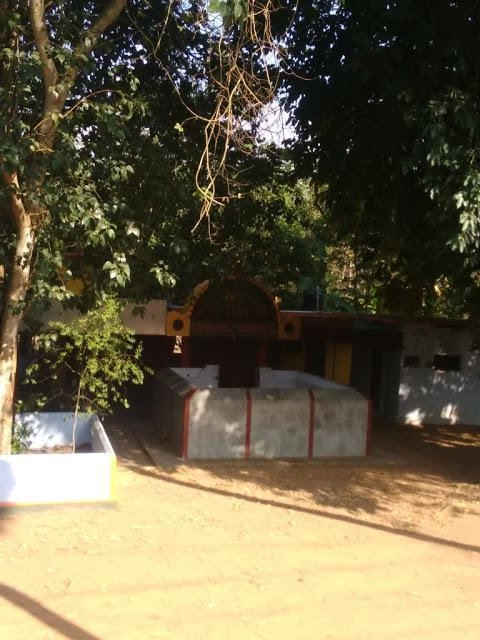
Nestled in the serene southern landscape of Kanyakumari district, the Dharmasastha Temple at Kaithapuram, Manalikarai stands as a timeless beacon of devotion. The temple is dedicated to Lord Dharmasastha, a revered form of Lord Ayyappa, believed to be the embodiment of righteousness (Dharma) and the dispeller of darkness. Unlike the more tumultuous urban shrines, this temple offers a profound atmosphere of tranquility, making it a vital spiritual hub for the local community and pilgrims traversing the southern tip of Bharat.
Phalaśruti: The Boon of Visiting
According to local devotional beliefs and the oral traditions passed down through generations, a pilgrimage to this Swayambhu (self-manifested) shrine offers specific spiritual benefits. Devotees visit to seek relief from Pitra Dosha (ancestral afflictions) and to cleanse accumulated karmic debts. It is widely believed that offering sincere prayers here brings familial harmony, removes obstacles in education and career, and grants the devotee the wisdom to follow the path of Dharma. The sanctity of the location, away from the commercial frenzy, allows for deep introspection and meditation.
Historical Origins & Scriptural Legend
The history of the Dharmasastha Temple is deeply interwoven with the cultural fabric of the former Travancore State. The temple area comes under the Padmanabhapuram division in Kalkulam Taluk, which was historically the administrative heartland of the Travancore dynasty.
The Travancore Legacy
While specific inscriptions regarding the exact century of construction are currently under review by state archaeology, tradition holds that the temple structures in this region were significantly developed and regularized during the reign of the Anizhom Thirunal Marthanda Varma I (18th century). The temple serves as a living testament to the patronage of the Travancore kings, who were ardent devotees of Lord Ayyappa and installed Dharmasastha idols across the southern borders to protect the realm.
📖 Related: Palvannanathar Temple Tirukkazhippalai: History, Darshan Timings & Guide
Scriptural and Local Significance
While the temple is not explicitly detailed in the major Puranas, the Sthala Purana (local legend) is robust. The temple is located in an area formerly known as Manalikkara. After the States Reorganisation Act of 1956, the region was integrated into Kanyakumari district. The locals revere this site as a junction of ancient trade routes where merchants and saints stopped to pay obeisance to Dharmasastha before proceeding toward the southern seashore.
Architectural Marvels
The temple showcases the quintessential Dravidian architectural style, characterized by its pyramid-shaped towers (Vimana) and spacious pillared halls. As noted in the table derived from archival sources, the structure adheres to the principles of Vastu Shastra, oriented to align with the rising sun to harness positive energies.
The sanctum sanctorum (Garbhagriha) houses the Dharmasastha murti, facing east. The outer walls are adorned with intricate stucco work depicting stories from the epics. The temple complex includes:
- The Mukha Mandapa: The main pillared hall where devotees congregate for Satsang and religious discourses.
- The Balithara: A dedicated platform for offerings, essential for the performance of Vedic rituals.
- Naga Shrines: Sub-shrines dedicated to Serpent deities (Nagas), which are integral to the fertility and protective lore of this region in Kanyakumari.
Despite the lack of a UNESCO designation, the temple maintains the pristine heritage standards preserved by the local temple committee and ASI guidelines for state-protected monuments.
Darshan & Ritual Logistics
To ensure a seamless spiritual experience, devotees are advised to review the daily schedule. The rituals here are performed strictly according to the Dravida Veda Agama traditions.
Daily Timings
| Darshan Phase | Timing | Description |
|---|---|---|
| Morning | 05:30 AM – 11:30 AM | Includes Ushakkala Puja, Mid-day Puja, and Deeparadhana. |
| Midday Break | 11:30 AM – 04:30 PM | Temple remains closed for temple maintenance and rest. |
| Evening | 04:30 PM – 08:00 PM | Includes Deeparadhana and Athazha Puja (Last Rites). |
Key Sevas & Online Booking
The temple allows devotees to book special Sevas. While traditional booking is available at the counter, the temple administration is moving towards digitization.
- Abhishekam: Performed daily at 9:00 AM. Devotees can sponsor the Abhishekam which includes milk, sandalwood paste, and turmeric application.
- Archana: Individual prayers (Pooja) recited in the deity’s name. It is recommended to provide the Gotra (lineage) and Nakshatra (birth star) for precise chanting.
- Uruttu Vikaram / Bhagavathi Seva: Specific to the regional customs of Kanyakumari, often performed on new moon days.
📖 Related: Anandeeswarar Temple, Chitherikarai: History, Timings & Guide
Note on Online Booking: For the latest updates on online seva booking, devotees should contact the temple administration directly or visit the official Tamil Nadu HR&CE (Hindu Religious and Charitable Endowments) portal for active listings.
Festival Dates 2026
Assuming the current year is 2026:
- Makara Sankranti / Pongal: January 14, 2026. Special Abhishekam and distribution of Pongal Prasadam.
- Thai Poosam: January 23, 2026. A significant festival for Lord Murugan and Ayyappa devotees in Kanyakumari.
- Vishu: April 14, 2026. Malayalam New Year, celebrated with grandeur due to the region’s historical connection to Travancore.
- Skanda Sashti: October 28 – November 3, 2026 (Dates subject to lunar calendar). The climax is the victory of Lord Murugan over Surapadman.
- Mandala Kalam: Begins in November 2026. Special evening prayers and procession of Lord Ayyappa.
Practical Visitor Guidance
To maintain the sanctity of the temple and ensure safety, specific guidelines must be followed.
Code of Conduct
- Dress Code: Traditional attire is mandatory. Men must wear Dhoti or Pants with Shirt; Women must wear Saree, Half-Saree, or Salwar Kameez. Modern attire (jeans/t-shirts) is strictly prohibited.
- Photography: Photography is strictly prohibited inside the sanctum sanctorum and the inner praharam (circumambulation path). Mobile phones are allowed but must be on silent mode.
- Lockers: There are no automated mobile lockers. Visitors are advised to keep valuables in their vehicles or leave them at home. A cloakroom may be available for essential items upon request.
- Accessibility: The inner sanctum has stairs; however, the outer courtyard is accessible for elderly devotees.
**
Crowd Management
- Best Hours: To avoid the local rush, the morning slot between 7:00 AM and 9:00 AM is ideal. The evening crowd peaks between 6:00 PM and 7:00 PM.
- Seasonal Advice:
- Summer (March–May): Kanyakumari experiences high humidity. Carry water bottles and wear cotton garments. Use the shade of the Mandapam to cool off.
- Monsoon (June–November): Although the architecture is durable, carrying an umbrella is advisable as sudden downpours are common in the region.
Pilgrimage Connectivity
The Dharmasastha Temple is well-connected by road, serving as a gateway to the southern pilgrimage circuit.
How to Reach
- By Air: The nearest airport is Trivandrum International Airport (TRV) in Thiruvananthapuram, Kerala, located approximately 58 Kms away. Taxis and buses are readily available.
- By Rail: The nearest railway junction is Eraniel (ERL) (approx 12 Kms). Kanyakumari Railway Station and Nagercoil Junction are also major hubs nearby.
- By Road: The temple is located about 1.5 Kms from Manalikarai Bus Station. It is accessible via the NH66 (formerly NH 47). Major distances from the temple include:
- Marthandam: 13 Kms
- Padmanabhapuram: 10 Kms
- Nagercoil: 20 Kms
- Kanyakumari: 42 Kms
📖 Related: Venugopala Perumal Temple Palani: History, Darshan Timings & Guide
Nearby Sacred Sites (Circuit Planning)
For a holistic pilgrimage experience, devotees often combine a visit to this temple with:
- Padmanabhapuram Palace: Located just 10 Kms away. Though a palace, it houses ancient temples and is a marvel of woodwork.
- Thiruvattar Adikesava Perumal Temple: Approximately 10 Kms away. A historic Vishnu temple nestled between rivers.
- Kanyakumari Bhagavathy Amman Temple: The ending point of the pilgrimage trail, located 42 Kms away, facing the ocean.
Frequently Asked Questions (FAQ)
1. What is the significance of the name “Dharmasastha”?
Dharmasastha translates to “The Lord of Justice.” This avatar of Lord Ayyappa signifies the cosmic balance of righteousness. Devotees pray to this form to resolve legal disputes and seek moral clarity in life.
2. Is there a VIP darshan entry available?
While there are no formal VIP tickets sold online, elderly devotees and those with physical limitations can request assistance from the temple office (Pandal) near the entrance. The temple priests often facilitate priority access for those with medical necessities.
3. What language is used for rituals in the temple?
Given the location in Kanyakumari (Tamil Nadu) and its historical roots in the Travancore (Kerala) system, the primary rituals are conducted in Malayalam and Tamil. However, Sanskrit mantras are universally used for the core Vedic invocations.
4. Are devotees allowed to carry Prasadam from outside?
No, outside food items are generally discouraged to maintain the purity of the sanctum. Devotees are requested to accept the official temple Prasadam (usually rice pudding or fruit). Exceptions are made for medical necessity with prior permission.
5. What is the best time to visit Manalikarai for a peaceful Darshan?
The best time is during the weekdays (Monday to Thursday) and avoiding the month of January (due to local festivals). Early mornings (6:00 AM) offer the most tranquil environment for meditation and darshan.
**