
Contents
- 1 Definitive Pilgrimage Guide: Sri Kshetra Dharmasthala
Definitive Pilgrimage Guide: Sri Kshetra Dharmasthala
Introduction & Spiritual Essence
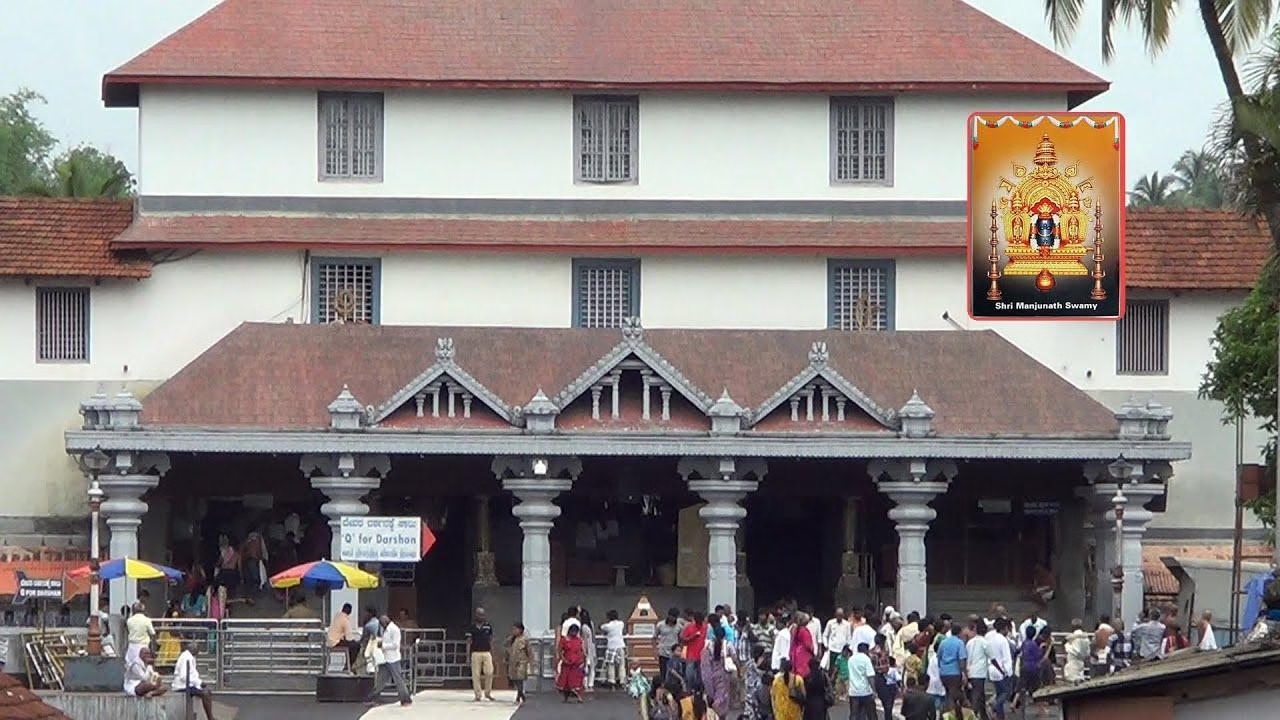
Located in the lush green cradle of Dakshina Kannada, Karnataka, Sri Kshetra Dharmasthala (Kannada: ಶ್ರೀ ಕ್ಷೇತ್ರ ಧರ್ಮಸ್ಥಳ) is more than a temple—it is a living embodiment of Dharma. An 800-year-old religious institution, this unique temple town bridges the spiritual practices of Hinduism and Jainism, serving as a beacon of syncretic harmony.
The Deities:
• Lord Manjunatha (Shiva): The primary deity, a Swayambhu (self-manifested) Shivalinga installed in the sanctum.
• Ammanavaru: The protective deity worshipped in the main shrine.
• The Dharma Daivas: Four guardian deities of Jainism—Kalarahu, Kalarkayi, Kumarasvami, and Kanyakumari—are worshipped alongside the Shivalinga.
Phalaśruti (Spiritual Benefits): Traditionally, devotees visit Dharmasthala to find relief from Navagraha Doshas and to cleanse ancestral karma. The temple is renowned for its concept of Nija Dharma, where devotees seek blessings to uphold righteousness in their daily lives. It is believed that offering sincere prayers here alleviates planetary afflictions and brings mental peace and prosperity.
Historical Origins & Scriptural Legend
The Pergade Dynasty:
The origins of Dharmasthala date back to the 12th century (approx. 1200 C.E.). The temple was established by the Jain Bunt chieftain, Birmanna Pergade, and his wife, Ammu Ballalthi, who resided at Nelliadi Beedu.
The Legend of Dharma Daivas:
According to the Sthala Purana, divine beings known as the Dharma Daivas visited Birmanna Pergade. Pleased by his hospitality and adherence to Dharma, the Daivas appeared in his dream, instructing him to dedicate his house for their worship. The Pergade family subsequently built shrines for the Daivas.
The Arrival of Manjunatha:
Later, at the request of visiting Brahmin priests, the Pergades agreed to install a Shivalinga. Tradition holds that the Dharma Daivas dispatched their vassal, Annappa Swamy, to procure the linga from Kadri Manjunath Temple in Mangalore. The self-manifested linga was successfully installed, and the Manjunatha temple was constructed around it. To this day, the administration is run by the Pergade family, while the rituals are performed by Shivalli Brahmins (who are Vaishnavas), creating a unique spiritual balance.
Architectural Marvels
The architecture of Dharmasthala is a serene blend of traditional South Indian (Dravida) styles with unique local influences. While the temple complex is expansive, the sanctum sanctorum retains an ancient simplicity.
Key Features:
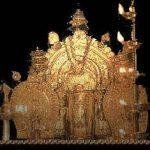
• The Sanctum: The inner sanctum (Garbhagriha) houses the ancient Shivalinga, which is covered with a gold mask (Kavacha) adorned with Rudraksha beads.
• Mandapas: The temple features several pillared halls (Mandapas) that allow for a continuous flow of devotees. The woodwork here is intricate, depicting stories from the Puranas.
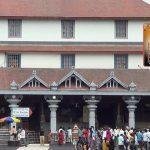
• Gateway Tower (Gopuram): Unlike the towering Gopurams of Tamil Nadu, the entrance here is marked by a majestic yet serene Rajagopuram that welcomes pilgrims into a wide courtyard.
Status: While not a UNESCO site, the temple is a protected heritage monument under the care of the administrative trust, preserving centuries of sculptural history.
Darshan & Ritual Logistics (2026 Update)
The temple follows a strict daily schedule to accommodate the thousands of pilgrims visiting this sacred Kshetra.
Daily Darshan Timings
| Session | Timing | Description |
|---|---|---|
| Morning Darshan | 06:00 AM – 02:00 PM | Includes Suprabhata Seva and Morning Abhishekam. |
| Afternoon Break | 02:00 PM – 04:00 PM | Temple closes for deity rest and rituals. |
| Evening Darshan | 04:00 PM – 09:00 PM | Deeparadhana and evening rituals. |
Note: Timings may vary during festival days. It is advisable to check the official website before travel.
Seva & Booking Details
Devotees can book various Sevas (ritual offerings) online. The most popular are Abhishekam (ritual bathing of the deity) and Archana (recitation of hymns).
Key 2026 Festival Dates:
• Maha Shivaratri: February 26, 2026
• Mahamastakabhisheka: Held every 2 years (Next scheduled likely 2026, dates TBD by the Jain calendar).
• Laksha Deepotsava: November 2026 (Kartika Maasa).
To book online, visit the official Sri Kshetra Dharmasthala website. Select the date, time slot, and preferred Seva.
Photo Gallery
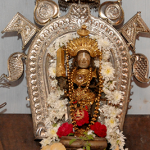
Visuals of the temple complex, rituals, and architecture.
Practical Visitor Guidance
To ensure a peaceful Darshan, please adhere to the following guidelines:
Dress Code & Etiquette
- Attire: Traditional Indian wear (dhoti/veshti for men, sari/long skirts for women) is preferred. Western clothing should be modest (full-length pants and covered shoulders).
- Photography: Photography is strictly prohibited inside the sanctum sanctorum. It is allowed in the outer courtyards, but flash usage is restricted.
- Mobile Phones: Please keep phones on silent. Designated lockers are available near the entrance to store electronic items before entering the inner shrine.
Crowd Management
Best Time to Visit: To avoid heavy crowds, visit between 8:00 AM and 10:00 AM on weekdays. Tuesdays and Fridays are usually more crowded.
Seasonal Advice: The coastal climate of Dakshina Kannada is humid. If visiting in summer (April–May), carry water and an umbrella. Monsoons (June–September) are lush but can cause travel delays.
Pilgrimage Connectivity
How to Reach Dharmasthala
- By Air: The nearest airport is Mangalore International Airport (IXE), approximately 70 km away (1.5–2 hours drive).
- By Rail: The nearest major railway junction is Ujjire (14 km) or Mangalore Central (70 km).
- By Road: Dharmasthala is well-connected by National Highway 73 (NH-73). It is a 4-hour drive from Bengaluru via Hassan and Belur.
Nearby Sacred Sites
Expand your pilgrimage tour by visiting these nearby locations:
1. Manjunatha Temple, Karkala: An ancient Jain heritage site featuring a colossal Gomateshwara statue (approx. 45 km away).
2. Sri Kshetra Karkala: Another significant Jain pilgrimage center.
3. Mangaladevi Temple, Mangalore: Dedicated to Goddess Mangala, located near the coast.
Frequently Asked Questions (FAQ)
1. Is there a VIP Darshan entry available?
Yes, the temple trust offers a “Special Entry” or VIP Darshan ticket for ₹100 (subject to change). This allows pilgrims to bypass the general queue, though waiting time may vary during peak hours.
2. Can non-Hindus enter the temple?
Yes. Unlike many traditional Hindu temples, Dharmasthala is unique because it is administered by a Jain family, and the primary deity is Shiva. It welcomes devotees of all faiths and castes, reflecting the universal nature of Dharma.
3. Are there accommodation facilities available?
The temple trust runs the Dharmasthala Annadan Shala, which offers free meals to all pilgrims. There are also multiple guest houses (Yatrinivas) nearby managed by the trust, ranging from economy to deluxe rooms. Advance booking is recommended.
4. How do I perform Abhishekam if I cannot be present?
Devotees can book Abhishekam Seva online through the official website. The ritual is performed by the priests on behalf of the devotee, and the Prasad (blessed offerings) is dispatched to their registered address.
5. What is the significance of Annappa Swamy?
Annappa Swamy is historically significant as the servant-minister of the Pergades. He is credited with procuring the Shivalinga from Kadri Manjunatha Temple in Mangalore and carrying it to Dharmasthala. A dedicated shrine for Annappa Swamy exists within the complex.
Contact Details
Official Address: Sri Kshetra Dharmasthala, Dakshina Kannada, Dharmasthala, Karnataka 574216
Phone (Reception): +91-8256-277-100 (General Enquiries)
Website: www.bharattemples.com/dharmasthala
Recent Posts

ओ सांवरे तूने ही मुझको संभाला – Lyrics & Meaning
ओ सांवरे तूने ही मुझको संभाला – A Prayer to Shyam Origin & Spiritual Essence Why This Bhajan Resonates Devotees chant this when overwhelmed by life’s storms—the refrain ‘तूने ही मुझको संभाला’ is the soul’s sigh of relief: “You…

कथा ये है महाराज मेरे की – Lyrics & Meaning
कथा ये है महाराज मेरे की छत्रपति संभाजी महाराज – A Prayer to Chhatrapati Sambhaji Maharaj Origin & Spiritual Essence Why This Bhajan Resonates Devotees chant this when their spirit feels tested—its powerful refrain “महाराज मेरे” is a soul’s…

Rigveda Samhita Yathartha Anuvada (ऋग्वेद संहिता यथार्थ अनुवाद) – Complete Set with Anvayartha & Hindi/English Translation
The Rigveda is the oldest surviving scripture of humanity and the foundational text of Sanātana Dharma. For serious students, scholars, UPSC aspirants studying ancient Indian history, Sanskrit learners, and spiritual seekers, a precise and grammatically structured translation is indispensable.…

आना भी अकेला है जाना भी अकेला है – Lyrics & Meaning | BharatTemples
आना भी अकेला है जाना भी अकेला है – A Prayer to the Divine Witness Origin & Spiritual Essence Why This Bhajan Resonates Devotees turn to this bhajan in moments of deep reflection—when life’s attachments begin to ache. The…

माता शेरावाली के द्वार जो भी जाता है – Lyrics & Meaning
माता शेरावाली के द्वार जो भी जाता है – A Prayer to Maa Sherawali Origin & Spiritual Essence Why This Bhajan Resonates Devotees turn to this bhajan in times of fear or uncertainty—its promise that no one leaves Maa’s…

मार लेना सपणी उबार लेणा भवरा – Lyrics & Meaning
मार लेना सपणी उबार लेणा भवरा – A Prayer to the Divine Beloved Origin & Spiritual Essence Why This Bhajan Resonates Devotees chant this in moments of deep vulnerability—its cry of “मार लेना सपणी, उबार लेणा भवरा” is the…

हमें श्याम सुंदर भरोसा तुम्हारा – Lyrics & Meaning
हमें श्याम सुंदर भरोसा तुम्हारा – A Prayer to Shyam Sundar Origin & Spiritual Essence Why This Bhajan Resonates Devotees chant this when feeling alone—its refrain ‘de do sahara’ is the soul’s cry for divine support. Lyrics in Hindi…

Mere Satguru Ne Di Thi Davai Lyrics in Hindi & Meaning
Mere Satguru Ne Di Thi Davai: Invoking the Guru’s Liberating Wisdom This soul-stirring bhajan venerates the Satguru (True Spiritual Master) as the divine physician who dispenses the only remedy for life’s deepest sufferings. Composed by Sant Karmaveer Tufani, it…

Janm Diyo Thari Maa Dukh Dekhiyo Lyrics in Hindi & Meaning
जन्म दियो थारी माँ दुख देखियो (Maa’s Grief Upon Birthing You) This soul-stirring Chetavani Bhajan (admonitory hymn) is addressed to the Divine Mother (Maa) – a call for repentance when children forget their filial duties in the dark age…
Bhadi Sabha Mein Thane Manaun Lyrics in Hindi & Meaning
Bhadi Sabha Mein Thane Manaun: Invoking the Spear-Wielding Mother Mata Bhawani (श्री ज्वाला भवानी), the fiery manifestation of Shakti worshipped as the Protector of Dharma in Her Dhaulagarh sanctum. Origin & Spiritual Essence Composed in Rajasthani folk tradition by…