
Contents
Introduction & Spiritual Essence
In the sacred geography of Kashi (Varanasi), where Lord Shiva reigns supreme as Kashi Vishwanath, there stands a vigilant guardian at the very threshold of sanctity. This is the Dhundhi Vinayak Temple. Unlike other Ganesha temples, this idol is not merely a deity but a powerful sentinel who “seeks” or “scans” (Dhundhi) the devotees, ensuring their purity before they approach the Lord.
Tradition holds that while Lord Shiva was entering Kashi, Ganesha took the form of Dhundhi Vinayak to guard the entrance. It is believed that no devotee can enter the Vishwanath Temple without first offering obeisance here. The primary deity is a Swayambhu (self-manifested) idol of Ganesha, revered for removing obstacles.
Phalaśruti: Why Visit Dhundhi Vinayak?
According to the Skanda Purana (Kashi Khand, Chapter 57), the spiritual benefits of visiting are immense:
- Removal of Obstacles: Daily morning darshan ensures the removal of all life obstacles.
- Ancestral Karma: It is specifically believed to cleanse ancestral karma, helping lineage members prosper.
- Siddhi & Happiness: Merely chanting the name of Dhundhi Vinayak with devotion grants all kinds of worldly happiness and success.
Historical Origins & Scriptural Legend
The history of Dhundhi Vinayak is intertwined with the Kashi Khand of the Skanda Purana. While specific construction dates are ancient and often lost to the mists of time, the temple’s origins are rooted in the divine narrative of Lord Shiva’s grand entry into Kashi.
Scriptural Legend:
After Vinayak (Ganesha) successfully paved the way for his father, Lord Shiva praised his deeds. To ensure the sanctity of Kashi, Ganesha was installed as the “Guardian of the Entry Point.” He is called Dhundhi Vinayak because he remains alert (Dhundh) 24 hours a day, 365 days a year, guarding the path to the Vishwanath Jyotirlinga.
Renovations:
The temple structure has been maintained and renovated over the centuries by devotees and local trusts to preserve its sanctity. While the architecture reflects ancient Hindu styles, the meticulous care of the priests ensures the rituals follow millennia-old traditions.
Architectural Marvels
Located at the entry point of the Annapurna and Vishwanath Temple complex, the architecture of Dhundhi Vinayak is a classic example of the Nagara style, adapted to the dense urban fabric of Varanasi.
Key Features:
- The Mandapa: The temple features a compact but ornate Mandapa (hall) where devotees gather. The pillars are often carved with motifs of nature and divine figures.
- The Shikhara: The towering spire (Shikhara) is distinct yet harmonizes with the surrounding temple skyline of Kashi.
- The Idol: The Murti is a massive, monolithic black stone idol of Ganesha. Unlike typical depictions, this form is often visualized as vigilant and protective.
- Vastu Shastra: The placement is critical; situated at the northern entry of the Vishwanath temple, it acts as a protective Vastu shield for the inner sanctum.
Note: While not a UNESCO site specifically, it falls within the heritage precinct of the Kashi Vishwanath Corridor, protected and conserved by the local administration and ASI guidelines.
Darshan & Ritual Logistics (2026 Guide)
Unlike the main Vishwanath temple which has strict timings, Dhundhi Vinayak is accessible for longer hours due to its open-air nature.
Daily Timings
| Session | Timing | Details |
|---|---|---|
| Morning Darshan | 04:00 AM – 12:00 PM | Best time: 5:00 AM – 7:00 AM |
| Afternoon Break | 12:00 PM – 02:00 PM | Idol cleaning (Minimal access) |
| Evening Darshan | 02:00 PM – 11:00 PM | Extended hours on Tuesdays |
Key Sevas & Online Booking
While you can offer flowers and sweets (Bhog) directly at the temple, specific pujas are conducted by the head priest.
- Abhishekam: Performed with milk, honey, and ghee. Best done on Tuesdays.
- Archana: Recitation of 108 names of Ganesha.
- Online Booking: While Dhundhi Vinayak is an open shrine, integrated bookings for the Kashi Vishwanath Corridor often include facilities nearby. Visit the official Kashi Vishwanath Temple website for any specific ‘Bhog’ offerings.
2026 Festival Calendar (Major Dates)
- Magh Chaturthi: January 2026 (Specific date depends on Lunar Calendar; highly auspicious per Skanda Purana).
- Ganesh Chaturthi: September 2026 (A major celebration with special decorations).
- Every Tuesday: Considered highly auspicious for visiting Dhundhi Vinayak.
Practical Visitor Guidance
As Dhundhi Vinayak is located within the high-security zone of the Kashi Vishwanath Corridor, specific protocols apply.
- Dress Code: Traditional attire is preferred (Dhoti/Kurta for men, Saree/Salwar Kameez for women). Modest clothing is mandatory.
- Mobiles & Photography: Strictly prohibited inside the main sanctum. Use the free Mobile Lockers available at the entry gates of the Corridor.
- Footwear: Remove footwear at the designated stands before entering the complex.
- Crowd Management:
– Best Hours: Early morning (4:00 AM – 6:00 AM) or late night (after 10:00 PM).
– Seasonal Advice: Summers (May-June) are extremely hot; carry water and a head covering. Winters (Dec-Jan) are pleasant but crowded. - Accessibility: The Corridor is fully wheelchair accessible with ramps and elevators.
Pilgrimage Connectivity
How to Reach
Dhundhi Vinayak Temple is located in the heart of Varanasi.
- By Air: Lal Bahadur Shastri International Airport (LBS) is approx. 25 km away. Taxis and E-rickshaws are readily available.
- By Rail: Varanasi Junction (BSB) is the nearest railway station (approx. 5 km). Auto-rickshaws can drop you at Godaulia entry point.
- By Road: The temple is accessible via NH 19 and the Varanasi-Prayagraj highway. Vehicles must be parked at the designated parking lots near the Corridor periphery.
Nearby Sacred Sites
Plan a holistic pilgrimage by visiting these sites within walking distance:
- Kashi Vishwanath Temple: Located immediately after Dhundhi Vinayak.
- Annapurna Devi Temple: Just adjacent to the entry point; dedicated to the Goddess of Food.
- Sankat Mochan Hanuman Temple: Located 2 km away, a major temple dedicated to Lord Hanuman.
Frequently Asked Questions (FAQ)
1. Is there a VIP or special entry for Dhundhi Vinayak?
Since Dhundhi Vinayak is an open-air shrine located in the pathway, there is no specific VIP ticket required for entry. However, access to the entire Kashi Vishwanath Corridor requires a security check. VIP darshan passes are available for the main Vishwanath temple, which includes this path.
2. Can I perform Abhishekam myself?
No, physical entry into the inner sanctum is restricted to the priests. However, you can purchase Abhishekam materials and hand them to the priests, who will perform the ritual on your behalf.
3. What is the significance of offering ‘Durva’ grass?
Ganesha is famously fond of Durva (Arugampul) grass. Offering three blades of Durva grass at Dhundhi Vinayak is believed to multiply prosperity and remove toxins from one’s life energy.
4. Is the temple open 24 hours?
While the idols of Kashi Vishwanath and Vishalakshi are accessible 24 hours (with specific break times), Dhundhi Vinayak being an outdoor shrine along the path sees devotees throughout the day. However, the main physical complex of the Corridor has regulated entry hours, typically opening at 3:00 AM and closing around 11:00 PM.
5. Where can I find official contact details?
For general inquiries regarding the Kashi Vishwanath Corridor and Dhundhi Vinayak, you may contact the Kashi Vishwanath Temple Trust at the official helpline numbers provided at the information desks at the entrance gates.
Recent Posts

माता शेरावाली के द्वार जो भी जाता है – Lyrics & Meaning
माता शेरावाली के द्वार जो भी जाता है – A Prayer to Maa Sherawali Origin & Spiritual Essence Why This Bhajan Resonates Devotees turn to this bhajan in times of fear or uncertainty—its promise that no one leaves Maa’s…

मार लेना सपणी उबार लेणा भवरा – Lyrics & Meaning
मार लेना सपणी उबार लेणा भवरा – A Prayer to the Divine Beloved Origin & Spiritual Essence Why This Bhajan Resonates Devotees chant this in moments of deep vulnerability—its cry of “मार लेना सपणी, उबार लेणा भवरा” is the…

हमें श्याम सुंदर भरोसा तुम्हारा – Lyrics & Meaning
हमें श्याम सुंदर भरोसा तुम्हारा – A Prayer to Shyam Sundar Origin & Spiritual Essence Why This Bhajan Resonates Devotees chant this when feeling alone—its refrain ‘de do sahara’ is the soul’s cry for divine support. Lyrics in Hindi…

Mere Satguru Ne Di Thi Davai Lyrics in Hindi & Meaning
Mere Satguru Ne Di Thi Davai: Invoking the Guru’s Liberating Wisdom This soul-stirring bhajan venerates the Satguru (True Spiritual Master) as the divine physician who dispenses the only remedy for life’s deepest sufferings. Composed by Sant Karmaveer Tufani, it…

Janm Diyo Thari Maa Dukh Dekhiyo Lyrics in Hindi & Meaning
जन्म दियो थारी माँ दुख देखियो (Maa’s Grief Upon Birthing You) This soul-stirring Chetavani Bhajan (admonitory hymn) is addressed to the Divine Mother (Maa) – a call for repentance when children forget their filial duties in the dark age…
Bhadi Sabha Mein Thane Manaun Lyrics in Hindi & Meaning
Bhadi Sabha Mein Thane Manaun: Invoking the Spear-Wielding Mother Mata Bhawani (श्री ज्वाला भवानी), the fiery manifestation of Shakti worshipped as the Protector of Dharma in Her Dhaulagarh sanctum. Origin & Spiritual Essence Composed in Rajasthani folk tradition by…
श्याम सुन्दरवा छोटे छोटे कनुवा Lyrics & Meaning
श्याम सुन्दरवा छोटे छोटे कनुवा (Shyam Sundarva Chhote Chhote Kanuva) is a heartfelt invocation to Lord Krishna in his most enchanting form—Shyam Sundar (the dark, beautiful one). This bhajan is a plea for the divine child Kanha to grace…
Maat Meri Chintapurni Lyrics in Hindi & Meaning
Maat Meri Chintapurni is a heartfelt devotional prayer dedicated to Maa Chintapurni, a form of the Divine Mother. She is revered as the remover of worries and the granter of wishes, especially venerated in the Himalayan region of Himachal…
थारी रे नदियां का ढावा पे खीची राजा Lyrics & Meaning
खीची राजा का अद्भुत युद्ध: एक शौर्य गाथा यह भजन एक पौराणिक या ऐतिहासिक शूरवीर राजा की वीरता का वर्णन करता है, जो प्रायः गुजराती लोक संस्कृति में लोककथाओं का हिस्सा है। इसकी रचना दुर्गेश कटारा ने की है…
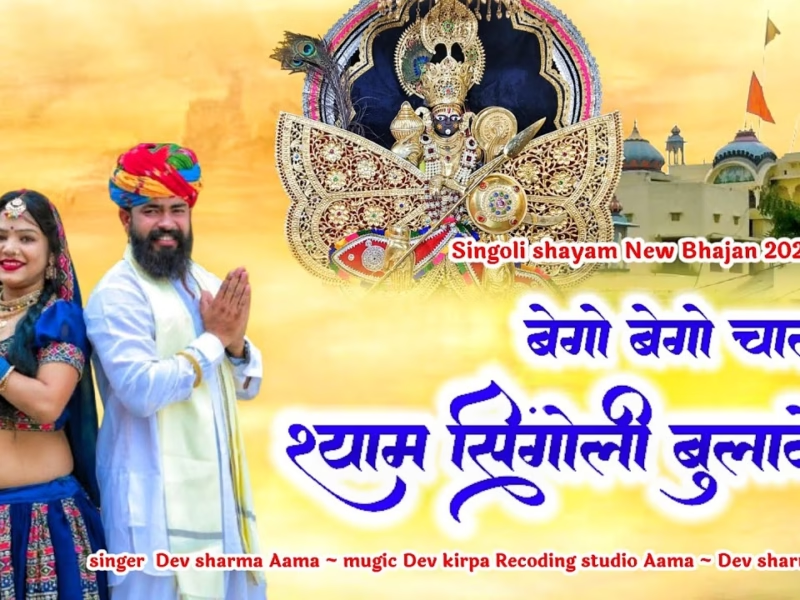
बेगो बेगो चाल श्याम सिंगोली बुलावे रे Lyrics in Hindi & Meaning
Bhajan Title & Deity This bhajan, बेगो बेगो चाल श्याम सिंगोली बुलावे रे, is dedicated to Lord Shyam, a revered form of Lord Krishna. Origin & Spiritual Essence The composer of this bhajan is not specified, but it is…