
Contents
Introduction & Spiritual Essence
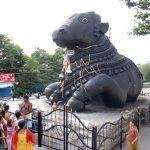
Nestled in the verdant environs of Basavanagudi in South Bengaluru stands Dodda Basavana Gudi, revered as the largest monolithic Nandi statue in the world. Often referred to as the Bull Temple, this sacred site is dedicated to Nandi, the divine bull and vahana (mount) of Lord Shiva. Unlike most Hindu temples where Nandi faces the inner sanctum, here the devotee is granted a direct darshan of the magnificent bull, who is revered not just as a vehicle, but as a devotee of Shiva himself.
Phalaśruti: The Spiritual Benefits
Why do devotees flock to Dodda Basavana Gudi? It is believed that worshiping Nandi here holds the power to remove obstacles from one’s path, particularly those related to agriculture and prosperity. The continuous application of butter (benne) to the idol symbolizes the nourishment of devotees’ lives with abundance. Offering prayers here is said to help overcome delays in marriage, progeny issues, and financial instability. It is a site of immense vibrancy where the ‘roar’ of the Nandi is believed to resonate with the cosmic sound of the universe.
Historical Origins & Scriptural Legend
The history of Dodda Basavana Gudi is inextricably linked to the founding of Bengaluru itself. According to temple records, the temple was constructed in 1537 CE by the visionary chieftain Kempe Gowda I under the patronage of the Vijayanagara Empire. As the city grew from a modest settlement into a bustling hub, this temple served as a spiritual anchor for the new geography.
The Legend of the Monolith
Tradition holds that the monolith for the Nandi idol was sourced from a single boulder excavated from the nearby Bugle Rock, a geological formation believed to be millions of years old. Local folklore suggests that the rock formation itself is a divine gift, providing stability to the land. The temple stands as a testament to the Vijayanagara rulers’ devotion to Shaivism and their patronage of monumental art.
Over the centuries, the temple complex has undergone renovations to preserve its structural integrity, yet the sanctity of the original idol—standing approximately 15 feet tall and 20 feet long—remains preserved in its raw, monolithic glory.
Architectural Marvels
The Dodda Basavana Gudi is a quintessential example of the Vijayanagara architectural style. This style is characterized by robust construction, intricate carvings, and the use of granite.
Key Structural Elements
- The Sanctum (Garbhagriha): The inner shrine houses the colossal Nandi. The idol has turned a deep, glossy black over the centuries due to the repeated application of charcoal oil and butter, creating a unique aesthetic of devotion and time.
- The Mandapa: A pillared hall precedes the sanctum, featuring engraved pillars that depict various mythological scenes.
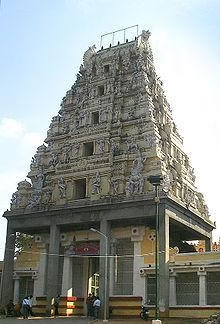
- The Shikhara: The tower (vimana) above the sanctum is a later addition from the early 20th century, adorned with Saivite figures and motifs that rise gracefully towards the sky.
The temple complex is modest in footprint but monumental in spiritual presence, set against the backdrop of the Bugle Rock park, which offers a natural stone seating arrangement for visitors.
Darshan & Ritual Logistics
Daily Timings
The temple follows a traditional daily schedule, opening early to facilitate the morning rituals.
| Session | Timing |
|---|---|
| Morning Darshan | 6:00 AM – 12:00 PM |
| Evening Darshan | 5:30 PM – 9:00 PM |
*Note: Timings are subject to change during festivals and special occasions.
Key Sevas and Offerings
Devotees can participate in several rituals to enhance their spiritual experience:
- Abhishekam: The ritual bathing of the Nandi idol with water, milk, and honey.
- Benne Alankara (Butter Decoration): A unique offering where the entire idol is coated with fresh butter, symbolizing abundance.
- Archana: Recitation of sacred hymns dedicated to Nandi.
2026 Festival Calendar
While the temple is active year-round, specific dates in 2026 are crucial for planning:
- Kadalekaayi Parishe (Groundnut Fair): The most significant event here. In 2026, this falls on November 9th and 10th (Last Monday and Tuesday of the Hindu month of Karthika Maasa).
- Shivaratri: February 26, 2026. Expect special lighting and extended hours.
- Mahashivaratri: Special abhishekams are performed every 2 hours.
Practical Visitor Guidance
Entry Rules & Etiquette
- Dress Code: Modest attire is required. Traditional Indian wear is preferred, but western clothes are acceptable if clean and decent (avoid shorts/tank tops).
- Photography: Photography is permitted in the outer courtyard and park areas. However, it is strictly prohibited inside the sanctum sanctorum.
- Mobile Lockers: As the temple attracts thousands during festivals, it is advisable to carry minimal luggage. There are no official digital lockers, so travel light.
- Accessibility: The temple is accessible via steps. A ramp is available near the entrance, but the inner sanctum area is narrow.
Crowd Management
To avoid the rush, the best time to visit is between 8:00 AM and 10:00 AM on weekdays. Avoid weekends if possible.
Seasonal Advice: Bengaluru can get quite warm in May. The temple park (Bugle Rock) offers shade, but carrying a water bottle is essential. During the monsoon, the stone steps can be slippery; wear rubber-soled footwear.
Pilgrimage Connectivity
How to Reach Dodda Basavana Gudi
- By Air: Kempegowda International Airport (BLR) is approximately 40 km away. A taxi or ride-share (Uber/Ola) takes about 1.5 to 2 hours depending on traffic.
- By Rail: The nearest major railway station is Bengaluru City Junction (SBC) (approx. 6 km). Alternatively, Majestic (Kempegowda Bus Stand) serves as a major transit hub.
- By Road: The temple is located on Bull Temple Road, intersecting with South End Circle. It is well-connected to the inner ring road and NH 48.
Nearby Sacred Sites (Pilgrimage Circuit)
Extend your spiritual journey by visiting these nearby landmarks:
- Iskcon Temple (Rajajinagar): A grand temple dedicated to Krishna, located about 15 minutes away.
- Gayatri Tapovanam: A serene ashram focusing on Vedic rituals, located in Basavanagudi.
- Sri Gavi Gangadhareshwara Temple: A cave temple known for its natural stone formations and solar alignment, just 2 km away.
Photo Gallery


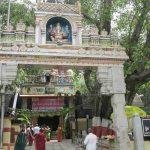
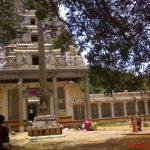

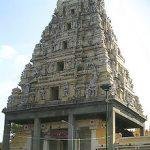
Frequently Asked Questions (FAQ)
Is there a VIP darshan entry at Dodda Basavana Gudi?
No, the temple does not have a formal VIP darshan system. The management encourages a first-come, first-served approach to ensure equality among devotees.
Can we offer groundnuts (Kadalekaayi) other than during the fair?
While the annual fair is the main event, devotees often bring groundnuts as an offering on regular days. However, the ritual distribution is specific to the festival days.
Is there parking available near the temple?
Yes, there is a paid parking lot near the Bugle Rock park entrance. However, during weekends and festivals, parking can be scarce, so public transport is recommended.
What is the entry fee?
Entry to the temple is free for all devotees.
Are there restrooms available?
Basic restroom facilities are available near the temple entrance, managed by the local civic body.
Contact Details
Address: Bull Temple Rd, Basavanagudi, Bengaluru, Karnataka 560004
Phone: (+91) 80 2235 2947 (Please verify via local directory before calling).
Recent Posts

Shri Kaamkoteeshwar Mandir, Varanasi – History & Significance
In the heart of Kashi, the eternal city of Lord Shiva, where the Ganges flows with celestial grace, stands the Shri Kaamkoteeshwar Mandir. This sacred Sannidhi is not merely a temple but a profound spiritual bridge between the Northern…

ओ सांवरे तूने ही मुझको संभाला – Lyrics & Meaning
ओ सांवरे तूने ही मुझको संभाला – A Prayer to Shyam Origin & Spiritual Essence Why This Bhajan Resonates Devotees chant this when overwhelmed by life’s storms—the refrain ‘तूने ही मुझको संभाला’ is the soul’s sigh of relief: “You…

कथा ये है महाराज मेरे की – Lyrics & Meaning
कथा ये है महाराज मेरे की छत्रपति संभाजी महाराज – A Prayer to Chhatrapati Sambhaji Maharaj Origin & Spiritual Essence Why This Bhajan Resonates Devotees chant this when their spirit feels tested—its powerful refrain “महाराज मेरे” is a soul’s…

Rigveda Samhita Yathartha Anuvada (ऋग्वेद संहिता यथार्थ अनुवाद) – Complete Set with Anvayartha & Hindi/English Translation
The Rigveda is the oldest surviving scripture of humanity and the foundational text of Sanātana Dharma. For serious students, scholars, UPSC aspirants studying ancient Indian history, Sanskrit learners, and spiritual seekers, a precise and grammatically structured translation is indispensable.…

आना भी अकेला है जाना भी अकेला है – Lyrics & Meaning | BharatTemples
आना भी अकेला है जाना भी अकेला है – A Prayer to the Divine Witness Origin & Spiritual Essence Why This Bhajan Resonates Devotees turn to this bhajan in moments of deep reflection—when life’s attachments begin to ache. The…

माता शेरावाली के द्वार जो भी जाता है – Lyrics & Meaning
माता शेरावाली के द्वार जो भी जाता है – A Prayer to Maa Sherawali Origin & Spiritual Essence Why This Bhajan Resonates Devotees turn to this bhajan in times of fear or uncertainty—its promise that no one leaves Maa’s…

मार लेना सपणी उबार लेणा भवरा – Lyrics & Meaning
मार लेना सपणी उबार लेणा भवरा – A Prayer to the Divine Beloved Origin & Spiritual Essence Why This Bhajan Resonates Devotees chant this in moments of deep vulnerability—its cry of “मार लेना सपणी, उबार लेणा भवरा” is the…

हमें श्याम सुंदर भरोसा तुम्हारा – Lyrics & Meaning
हमें श्याम सुंदर भरोसा तुम्हारा – A Prayer to Shyam Sundar Origin & Spiritual Essence Why This Bhajan Resonates Devotees chant this when feeling alone—its refrain ‘de do sahara’ is the soul’s cry for divine support. Lyrics in Hindi…

Mere Satguru Ne Di Thi Davai Lyrics in Hindi & Meaning
Mere Satguru Ne Di Thi Davai: Invoking the Guru’s Liberating Wisdom This soul-stirring bhajan venerates the Satguru (True Spiritual Master) as the divine physician who dispenses the only remedy for life’s deepest sufferings. Composed by Sant Karmaveer Tufani, it…

Janm Diyo Thari Maa Dukh Dekhiyo Lyrics in Hindi & Meaning
जन्म दियो थारी माँ दुख देखियो (Maa’s Grief Upon Birthing You) This soul-stirring Chetavani Bhajan (admonitory hymn) is addressed to the Divine Mother (Maa) – a call for repentance when children forget their filial duties in the dark age…