
Contents
- 1 Eri Katha Ramar Temple, Thiruninravur: The Definitive Pilgrimage Guide
Eri Katha Ramar Temple, Thiruninravur: The Definitive Pilgrimage Guide
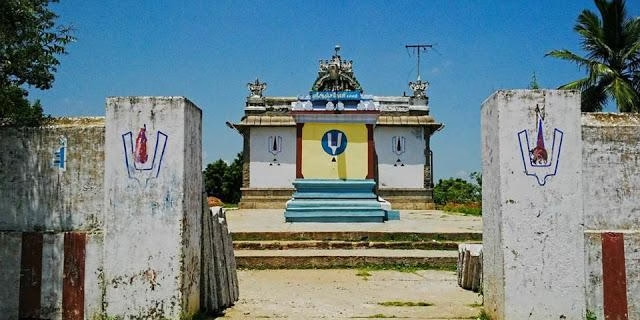
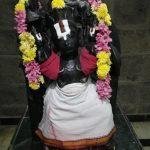
Nestled on the serene banks of the Thiruninravur Lake (Eri) lies a sacred haven dedicated to Lord Rama. The Eri Katha Ramar Temple in Thiruninravur, Thiruvallur district, is a spiritual sanctuary that resonates with the valor of the Ramayana and the grace of the Alwar saints. Unlike the bustling shrines of downtown Chennai, this temple offers a tranquil atmosphere for deep contemplation and devotion.
As the Lead Heritage Architect for BharatTemples.com, I invite you on a journey through time, exploring the architectural splendor and legendary origins of this Dravidian gem.
| Date built: | |
|---|---|
| Deity: | Eri Katha Ramar, Vishnu |
| Architectural style: | Dravidian architecture |
| Major festivals | – |
| Locale: | Thiruninravur |
| District:: | Thiruvallur |
| Address: | Eri Katha Ramar Temple,Thiruninravur – 602 024,Tiruvallur District |
| Phone | +91 78457 85715 / 98408 37689 |
1. Introduction & Spiritual Essence
The Divine Protector of the Dam
The primary deity of this shrine is Eri Katha Ramar, a manifestation of Lord Rama as the savior. In this form, Rama is revered not just as a king or an avatar, but as the divine protector who shields his devotees from the “floods” of worldly suffering and karmic burdens.
Phalaśruti (Spiritual Benefits):
Devotees visit this temple to seek relief from pitru dosha (ancestral afflictions) and to gain stability in life. Just as Lord Rama fortified the lake embankment, worshipping here is believed to fortify one’s life against instability and misfortune. The temple is a haven for those seeking mental peace and the grace of the Preserver aspect of the divine.
2. Historical Origins & Scriptural Legend
The Arrow of Salvation (Sthala Purana)
According to local tradition and temple records, the history of this shrine is deeply intertwined with the natural geography of Thiruninravur. The temple derives its name from the miraculous event where Lord Rama saved the village from a catastrophic flood.
The Legend:
Centuries ago, the bunds of the Varuna Pushkarani (the lake) were on the verge of collapse due to torrential rains. The villagers, terrified of losing their homes and harvests, prayed fervently to Lord Rama. Appearing in a vision, Rama shot a barrage of arrows (Vajrayudham) to create a strong fence, effectively reinforcing the dam and protecting the village. In gratitude, the locals built a shrine for “Eri Katha Ramar” (The Lord who Saved the Lake).
The Connection to Ramanuja
The temple also holds a significant place in the history of the Sri Vaishnava tradition. It is the birthplace of Mudaliyandan, a disciple and nephew of the great philosopher-saint Sri Ramanuja.
Legend holds that Ramanuja’s sister, Nachiyar Ammal, and her husband, Anantha Narayana Dikshitar, prayed at this temple for progeny. Lord Rama appeared to the husband in a dream, promising the birth of a son who was an amsam (fragment) of Rama himself. The child, named Dasarathi, later became known as Mudaliyandan (meaning “the one who stands first”), a key figure in the history of Sri Vaishnavism. This establishes the temple not just as a historical monument, but as a living witness to the origins of a great spiritual lineage.
3. Architectural Marvels
Dravidian Style & Vastu
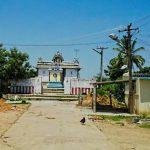
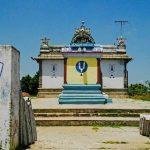
Reflecting the classic Dravidian architectural style, the temple is compact yet rich in iconography. While it lacks the towering *gopurams* of larger temples, it embodies the *Nagara* influence in its *Shikhara* (tower over the sanctum), creating a unique blend typical of the transitional Pallava period.
Sculptural Details
The temple premises feature intricate carvings of the Dasa Avatars of Vishnu. The *Mandapa* (hall) leading to the sanctum is supported by pillars adorned with floral motifs and mythological narratives. The Garbhagriha (sanctum sanctorum) is designed according to Vastu Shastra principles, ensuring that the energy of the lake (water element) flows harmoniously with the fire element of the daily rituals.
4. Darshan & Ritual Logistics
Daily Temple Timings
The temple follows a traditional schedule that aligns with the rhythms of the lake and nature.
| Session | Timings |
|---|---|
| Morning Darshan | 08:30 AM – 11:30 AM |
| Evening Darshan | 05:30 PM – 07:00 PM |
| Special Note | Closed during midday (approx. 11:30 AM – 5:30 PM) |
Key Sevas & Online Booking
While this is a smaller shrine, the following rituals are performed daily. For major festivals, online booking via the Tamil Nadu HR&CE portal may be required.
- Abhishekam: Performed with milk, honey, and sandalwood paste.
- Archana: Recitation of the Ramaraksha Stotram.
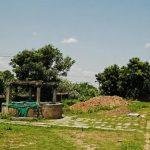
- Theerthavari: A sacred bath in the temple tank, historically celebrated during Panguni Shravanam.
Festival Calendar 2026
Plan your visit around these auspicious dates:
- Rama Navami: April 5, 2026 (Birthday of Lord Rama).
- Panguni Theerthavari: April 12-14, 2026 (Based on the Tamil calendar).
- Brahmotsavam: Occurs annually; dates vary based on the local priest’s almanac (usually between March and May).
5. Practical Visitor Guidance
Etiquette and Rules
- Dress Code: Traditional attire is mandatory. Men should wear dhotis or trousers with a shirt; women should wear sarees, salwars, or churidars.
- Photography: Photography is strictly prohibited inside the inner sanctum (Garbhagriha). You may photograph the exterior architecture and the lake.
- Mobile Phones: Please switch devices to silent mode. While there may not be a formal locker system, devotees are expected to maintain silence.
- Accessibility: The temple has a few steps at the entrance. It is generally wheelchair accessible in the outer corridors, but the sanctum is tight.
Crowd Management
Best Time to Visit:
The ideal time for Darshan is the morning slot between 9:00 AM and 10:00 AM, avoiding the opening rush and the midday closure.
Seasonal Advice:
- May – June: Thiruninravur experiences high humidity. Carry a reusable water bottle and a head cover.
- Monsoon (Oct-Dec): The lake is full and beautiful, but the area can be damp. Wear non-slip footwear.



6. Pilgrimage Connectivity
How to Reach
By Road:
The temple is located 33 km from Chennai International Airport. From Chennai, take the MTH Road (Chennai-Anantapur Road) via Padi and Pattabiram. Upon reaching Thiruninravur, cross the railway overbridge and take a right turn at the second left road to reach the temple.
- Bus Routes: 54A (from Poonamallee), 71E (from Parrys Corner) stop at Thiruninravur Ramar Kovil Bus Stop.
By Rail:
- Nearest Station: Thirunindravur Railway Station (1.5 km away).
- Trains: All EMU services to Arakkonam, Thiruvallur, and Thiruthani halt here.
- Last Mile: Share autos are readily available from the station for ₹20-₹30.
By Air:
- Chennai International Airport (MAA): 33 km (Approx. 1 hour drive via GST Road and NH48).
Nearby Sacred Sites (Pilgrimage Circuit)
Extend your spiritual journey by visiting these nearby landmarks:
- Bhaktavatsala Perumal Temple: Located just a few meters away, this is one of the 108 Divyadesams revered by the Alwars.
- Hridayaleeswarar Temple: An ancient Pallava-era Shiva temple situated opposite the Eri Katha Ramar Temple.
- Thirumazhisai Sri Bhaktavatsala Perumal Temple: Located 15 km away, famous for the dual deities of Lakshmi and Narayani.
7. Frequently Asked Questions (FAQ)
1. What is the history behind the name “Eri Katha Ramar”?
The name translates to “The Lord who Saved the Lake (Eri).” According to legend, Lord Rama miraculously strengthened the bund of the Thiruninravur Lake using his divine arrows to prevent a flood, saving the village from destruction.
2. Is there a VIP darshan entry available?
As a heritage temple managed by the TN HR&CE, there is no commercial VIP darshan system. However, special entry is provided for senior citizens and differently-abled devotees upon request at the temple office.
3. Can I book Seva (Abhishekam) online?
While daily sevas are performed, online booking for specific dates is best checked via the official Tamil Nadu Temples (HR&CE) website. For immediate booking, you may contact the temple trust directly at the numbers provided above.
4. Is Non-Vegetarian food allowed near the temple?
No. Being a strict Vaishnava temple, the surroundings and the temple tank are considered sacred. Devotees are advised to consume only vegetarian food and refrain from alcohol or smoking in the vicinity.
5. What is the significance of the nearby lake?
The lake (Eri) represents the cosmic waters of preservation. Bathing in the tank here (where permitted) or performing ancestor rituals (Tharpanam) on the banks is considered highly meritorious.
This temple is a jewel often overlooked by hurried travelers. Take time to walk the banks of the Eri in the evening; the reflection of the temple structure on the water offers a moment of architectural and spiritual symmetry that defines the Dravidian concept of Prakriti (Nature) and Purusha (Spirit).
Recent Posts

ओ सांवरे तूने ही मुझको संभाला – Lyrics & Meaning
ओ सांवरे तूने ही मुझको संभाला – A Prayer to Shyam Origin & Spiritual Essence Why This Bhajan Resonates Devotees chant this when overwhelmed by life’s storms—the refrain ‘तूने ही मुझको संभाला’ is the soul’s sigh of relief: “You…

कथा ये है महाराज मेरे की – Lyrics & Meaning
कथा ये है महाराज मेरे की छत्रपति संभाजी महाराज – A Prayer to Chhatrapati Sambhaji Maharaj Origin & Spiritual Essence Why This Bhajan Resonates Devotees chant this when their spirit feels tested—its powerful refrain “महाराज मेरे” is a soul’s…

Rigveda Samhita Yathartha Anuvada (ऋग्वेद संहिता यथार्थ अनुवाद) – Complete Set with Anvayartha & Hindi/English Translation
The Rigveda is the oldest surviving scripture of humanity and the foundational text of Sanātana Dharma. For serious students, scholars, UPSC aspirants studying ancient Indian history, Sanskrit learners, and spiritual seekers, a precise and grammatically structured translation is indispensable.…

आना भी अकेला है जाना भी अकेला है – Lyrics & Meaning | BharatTemples
आना भी अकेला है जाना भी अकेला है – A Prayer to the Divine Witness Origin & Spiritual Essence Why This Bhajan Resonates Devotees turn to this bhajan in moments of deep reflection—when life’s attachments begin to ache. The…

माता शेरावाली के द्वार जो भी जाता है – Lyrics & Meaning
माता शेरावाली के द्वार जो भी जाता है – A Prayer to Maa Sherawali Origin & Spiritual Essence Why This Bhajan Resonates Devotees turn to this bhajan in times of fear or uncertainty—its promise that no one leaves Maa’s…

मार लेना सपणी उबार लेणा भवरा – Lyrics & Meaning
मार लेना सपणी उबार लेणा भवरा – A Prayer to the Divine Beloved Origin & Spiritual Essence Why This Bhajan Resonates Devotees chant this in moments of deep vulnerability—its cry of “मार लेना सपणी, उबार लेणा भवरा” is the…

हमें श्याम सुंदर भरोसा तुम्हारा – Lyrics & Meaning
हमें श्याम सुंदर भरोसा तुम्हारा – A Prayer to Shyam Sundar Origin & Spiritual Essence Why This Bhajan Resonates Devotees chant this when feeling alone—its refrain ‘de do sahara’ is the soul’s cry for divine support. Lyrics in Hindi…

Mere Satguru Ne Di Thi Davai Lyrics in Hindi & Meaning
Mere Satguru Ne Di Thi Davai: Invoking the Guru’s Liberating Wisdom This soul-stirring bhajan venerates the Satguru (True Spiritual Master) as the divine physician who dispenses the only remedy for life’s deepest sufferings. Composed by Sant Karmaveer Tufani, it…

Janm Diyo Thari Maa Dukh Dekhiyo Lyrics in Hindi & Meaning
जन्म दियो थारी माँ दुख देखियो (Maa’s Grief Upon Birthing You) This soul-stirring Chetavani Bhajan (admonitory hymn) is addressed to the Divine Mother (Maa) – a call for repentance when children forget their filial duties in the dark age…
Bhadi Sabha Mein Thane Manaun Lyrics in Hindi & Meaning
Bhadi Sabha Mein Thane Manaun: Invoking the Spear-Wielding Mother Mata Bhawani (श्री ज्वाला भवानी), the fiery manifestation of Shakti worshipped as the Protector of Dharma in Her Dhaulagarh sanctum. Origin & Spiritual Essence Composed in Rajasthani folk tradition by…