Gaja Karna Vinayak Temple Varanasi: History, Timings & Darshan Guide
Receive daily temple updates, divine darshan, and morning bhajans directly on WhatsApp.
Contents
- 1 Introduction & Spiritual Essence: The Elephant-Eared Lord of Kashi
- 2 Historical Origins & Scriptural Legend
- 3 Architectural Marvels
- 4 Darshan & Ritual Logistics
- 5 Practical Visitor Guidance
- 6 Pilgrimage Connectivity
- 7 Frequently Asked Questions (FAQ)
Introduction & Spiritual Essence: The Elephant-Eared Lord of Kashi
In the sacred topography of Varanasi (Kashi), every lane echoes with divine vibration. Among the myriad forms of Lord Ganesha worshipped here, the Gaja Karna Vinayak Temple stands as a unique sanctuary. “Gaja Karna” translates to “Elephant-Eared,” a specific form of Ganesha known for bestowing wisdom and removing obstacles with the acute perception of an elephant.
Phalaśruti (Spiritual Benefits): Devotees flock to this temple seeking relief from planetary afflictions, particularly those related to Rahu and Ketu in their horoscopes. It is believed that worshipping Gaja Karna Vinayak here helps in resolving legal disputes, educational hurdles, and ancestral karma blocks. As a Swayambhu (self-manifested) form of energy, the deity in Kashi is considered exceptionally potent for granting longevity and prosperity.
Historical Origins & Scriptural Legend
While specific epigraphic records dating the construction are sparse in public archives, the existence of Gaja Karna Vinayak in Varanasi is deeply rooted in Puranic literature. According to the Shiva Purana, Lord Ganesha was created by Goddess Parvati to guard her privacy. The specific form of Gaja Karna is mentioned in the Matsya Purana as one of the 32 forms of Ganesha, worshipped for gaining vast knowledge.
📖 Related: Durmukh Vinayak Temple, Varanasi: History, Darshan Timings & Guide
Local Legend: Tradition holds that this temple is situated in the Ishaneshwar area of Varanasi. The locality is named after Ishan, a form of Shiva representing the north-east direction. Legend says that Lord Indra, the king of celestial beings, worshipped Shiva here to regain his lost splendor. The Gaja Karna form is intrinsically linked to this energy center, acting as the gatekeeper to the spiritual wisdom hidden within this specific grid of Kashi.
Architectural Marvels
The Gaja Karna Vinayak Temple reflects the classical Nagara style of architecture, which is predominant in North Indian temple construction. While the structure is intimate and modest compared to the grand Kashi Vishwanath complex, it adheres to strict Vastu Shastra principles.
Key Features:
- Shikhara (Spire): The vertical spire above the sanctum (Garbhagriha) represents the ascent of the soul from earth to the divine. It is intricately carved with motifs of nature.
- Mandapa: A pillared hall allows devotees to sit for meditation and witness the aarti. The alignment ensures that the morning sun directly illuminates the deity.
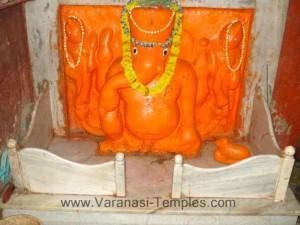
- Murti (Idol): The deity faces east. The Gaja Karna form is depicted with a trunk turned towards the left, holding a modak (sweet), a lotus, and a tusk.
Darshan & Ritual Logistics
Managing spiritual time is essential for a fulfilling visit. Below are the estimated daily timings. Please note: Temple timings may vary slightly during festivals or specific lunar cycles.
| Session | Timing | Activity |
|---|---|---|
| Morning | 05:00 AM – 12:00 PM | Mangala Aarti, Abhishekam |
| Afternoon | 12:00 PM – 04:30 PM | Temple Open for General Darshan |
| Evening | 04:30 PM – 09:00 PM | Bhog Aarti, Shayan Aarti |
Key Sevas & Online Booking
Devotees can book specific rituals. In 2026, the temple administration has streamlined online offerings via the Kashi Vishwanath Temple official portal.
- Abhishekam: Ritual bathing of the deity (milk, honey, curd).
- Archana: Recitation of 108 names of Ganesha.
- Modak Offering: Special offering on Wednesdays.
📖 Related: Dwareshwar Temple Varanasi: History, Darshan Timings & Guide
2026 Festival Calendar Highlights
- Varad Vinayaka Chaturthi: February 6, 2026 (Major celebration for Gaja Karna Vinayak).
- Ganesh Chaturthi: August 27, 2026 (Special Akhand Deepa lighting).
- Magh Mela: January 14 – March 4, 2026 (Expect larger crowds due to riverside events).
Practical Visitor Guidance
To ensure a serene experience, please adhere to the following protocols:
Dress Code: Traditional Indian attire is recommended (dhoti/kurta for men, saree/salwar kameez for women). Avoid shorts and sleeveless tops.
Photography & Mobiles: Photography inside the sanctum is strictly prohibited. Free mobile lockers are available at the entrance security check.
Crowd Management:
- Best Hours: 7:00 AM – 9:00 AM for a peaceful darshan.
- Seasonal Tip: Varanasi can be humid from May to September. Carry a water bottle and wear cotton clothes. The temple floor can get hot during peak summer; footwear with thick soles is advised.
Pilgrimage Connectivity
How to Reach
- Nearest Airport: Lal Bahadur Shastri International Airport (LBS) (approx. 25 km from Kotwalpura).
- Nearest Railway Station: Varanasi Junction (approx. 4 km) or Kashi Vishwanath Corridor Terminal.
- Road Access: Located within the dense lanes of the Old City. The nearest motorable point is Lahurabir. From there, rickshaws are the primary mode of transport (parking is limited).
Nearby Sacred Sites (Pilgrimage Circuit)
Complete your spiritual journey by visiting these nearby temples:
- Aadi Visweshwar Temple: Located near Phool Satti (Flower Market), Bansphatak. This is a Jyotirlinga form of Shiva and houses the Gaja Karna Vinayak idol currently in worship (as per historical records).
- Bharat Mata Mandir: Situated near the Assi Ghat, dedicated to Mother India.
- Kashi Vishwanath Temple: The central hub of spirituality in Varanasi, just a short distance from the Kotwalpura area.
📖 Related: Samhar Bhairav Temple Varanasi: History, Darshan Timings & Guide
Frequently Asked Questions (FAQ)
1. Is the current temple structure the original one?
Historical accounts suggest the original deity was damaged over time. While the specific structure may have undergone renovations, the spiritual energy of the site remains intact. The Aadi Visweshwar Temple currently houses the active Gaja Karna Vinayak idol for daily worship, which visitors should prioritize for darshan.
2. Is there a VIP or Special Entry darshan available?
For the general Gaja Karna Vinayak area within the Kotwalpura lane, there is no formal VIP entry system. However, for the broader Kashi Vishwanath Corridor, VIP passes can be obtained through the official website or local district administration.
3. What is the significance of the “Elephant-Eared” form?
The term “Gaja Karna” signifies a Ganesha who listens with the patience and acuity of an elephant. It is particularly invoked to solve problems that require deep wisdom and long-term perspective, rather than immediate, fleeting fixes.
4. Are there restaurants or food stalls nearby?
The area is famous for street food. Visitors often enjoy local delicacies like Kachori-Sabzi and Jalebi in the nearby Vishwanath Gali. However, for devotees seeking Prasad, offerings are available at the temple counter.
5. Is the temple wheelchair accessible?
Due to its location in the old city with narrow lanes, wheelchair access is challenging. The temple steps may not have ramps. We recommend visiting during early morning hours when crowd density is low for easier movement.