
Contents
- 1 Definitive Pilgrimage Guide: Ganga Maiya Temple, Durg
Definitive Pilgrimage Guide: Ganga Maiya Temple, Durg
Introduction & Spiritual Essence
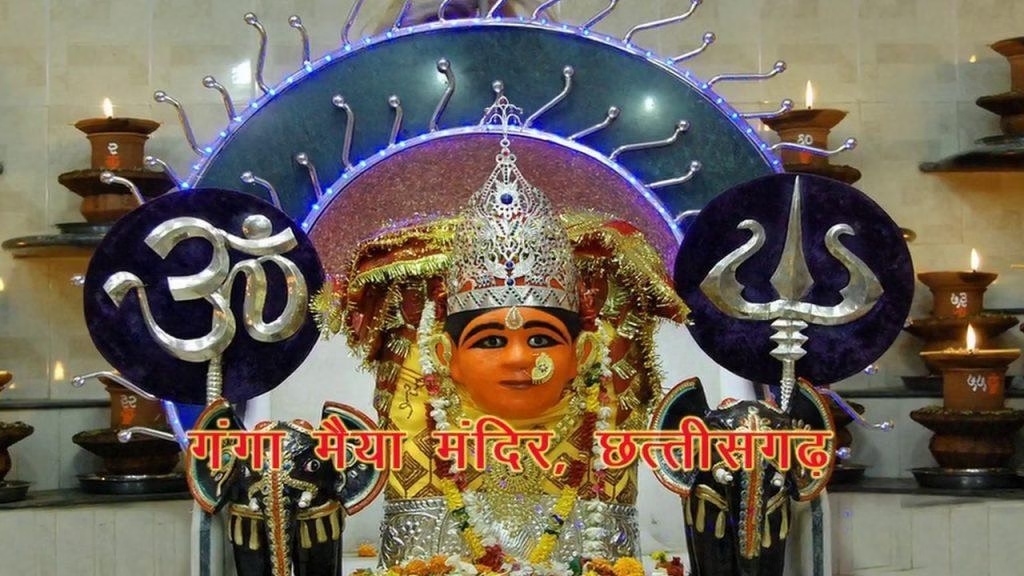
Nestled in the serene town of Jhalmala, near Balod in the Durg district of Chhattisgarh, stands Ganga Maiya Temple, a beacon of Shakti worship and spiritual solace. The temple is dedicated to Maa Ganga, a manifestation of the Divine Mother (Devi), revered here as the granter of liberation (Moksha) and the cleanser of ancestral karma.
Unlike many river-centric temples named after the holy Ganges, this shrine is unique. It is believed to be a self-manifested (Swayambhu) idol where the Divine Mother is present in the form of water itself. The primary deity is not a stone or metal murti, but a perennial water body residing within the sanctum.
Phalaśruti (Spiritual Benefits):
According to local tradition, taking a holy dip in the sacred pond of Ganga Maiya is equivalent to visiting the banks of the Ganges in Varanasi. Devotees flock here specifically to:
- Cleanse Ancestral Karma: Performing rituals for deceased ancestors (Pitru Tarpan) is considered highly auspicious here.
- Relief from Afflictions: It is believed that offering prayers to Maa Ganga here helps resolve prolonged financial and health issues.
- Divine Union: The water element represents the flow of life; meditating here is said to stabilize the mind and emotions.
Historical Origins & Scriptural Legend
While specific dynastic records from the early centuries are sparse in the Durg region, tradition holds that the temple’s roots are deeply embedded in the local tribal and agrarian culture of Chhattisgarh. The temple as it stands today has undergone renovations over the decades, preserving the sanctity of the central water body.
The Legend of Jhalmala:
The local Sthala Purana (regional legend) speaks of a time when the region suffered from severe drought. The villagers prayed fervently to the Goddess. It is said that a divine light appeared near the banks of the local pond, and a miraculous spring of water emerged, never drying up. This water source is the present-day Ganga Maiya.
Scriptural Context:
In the wider Shakta tradition, the Goddess manifests in various forms to establish Dharma. Ganga Maiya represents the purifying aspect of the Divine. While not explicitly mentioned in the major Puranas as a distinct geographical site, the energy (Tejas) of the temple aligns with the principles of Shakti Peethas, where body parts of Sati are believed to have fallen, though here the focus is on the water element of the Divine.
Architectural Marvels
The architecture of Ganga Maiya Temple is a blend of traditional Nagara style influence adapted to the regional aesthetic of Chhattisgarh. The structure is relatively modest compared to the grand temples of Odisha or South India, emphasizing functionality and spiritual accessibility.
Key Features:
- The Sanctum (Garbhagriha): The heart of the temple is the underground chamber where the natural water reservoir resides. The water level is maintained year-round.
- The Mandapa: A spacious pillared hall allows devotees to gather during Bhajans and Kirtans, particularly during Navratri.
- Stone Carvings: The outer walls and pillars feature motifs of traditional folk art, depicting scenes from Hindu mythology and local flora/fauna.
Note: While not designated as a UNESCO site, the temple is a protected monument under the Chhattisgarh State Archaeology Department.
Darshan & Ritual Logistics
Visiting Ganga Maiya requires an understanding of the daily rituals and the annual calendar, which peaks during the Navratri festivals.
Daily Darshan Timings (2026)
Timings are subject to seasonal changes and local temple committee announcements.
| Session | Timings | Activity |
|---|---|---|
| Morning | 06:00 AM – 12:00 PM | Mangala Aarti, Abhishekam, Darshan |
| Afternoon | 12:00 PM – 04:00 PM | Closed for Temple Cleaning / Rest |
| Evening | 04:00 PM – 08:00 PM | Shayan Aarti, Darshan |
Key Sevas & Online Booking
Devotees can book specific Sevas to enhance their pilgrimage experience. As of 2026, the temple administration facilitates online bookings through the official Chhattisgarh Temple Committee portal or specific district websites.
- Abhishekam: Ritual bathing of the deity with water, milk, and honey. Best time: Morning 7:00 AM.
- Archana: Individual name chanting offering. Available throughout open hours.
- Maha Aarti: The grand evening lamp offering. Participating in the Aarti is considered a high spiritual privilege.
2026 Festival Calendar
- Chaitra Navratri: April 6 – April 14, 2026.
- Sharad Navratri: September 22 – September 30, 2026.
- Kartik Purnima: November 5, 2026.
Practical Visitor Guidance
To ensure a smooth and respectful visit, adhere to the following guidelines:
Dress Code & Etiquette
Visitors are expected to dress modestly. Traditional Indian attire is recommended. Leather items (belts, wallets) are traditionally restricted near the water sanctum. Maintain silence in the inner sanctum.
Photography & Mobile Phones
Photography inside the Garbhagriha is strictly prohibited. Lockers are available near the entrance for mobile phones and electronic devices. Use of flash photography outside is allowed but should be done respectfully.
Crowd Management & Best Hours
The temple sees massive footfall during Navratri, with queues extending for hours.
- Best Time to Visit: Early morning (6:00 AM) or late evening (7:00 PM) on weekdays.
- Seasonal Advice: Summers in Durg are harsh; carry a reusable water bottle and a head covering (scarf) to protect against heat. Monsoons can be humid; an umbrella is advisable.
Accessibility
The temple complex has ramps for wheelchair access, though the inner sanctum (lower level) may require assistance. Elders are advised to use the designated seating areas in the Mandapa.
Pilgrimage Connectivity
How to Reach
By Air: The nearest airport is Swami Vivekananda Airport, Raipur (approx. 50 km). Taxis and buses are available from the airport to Balod/Jhalmala via NH 130.
By Rail: The nearest major railway junction is Durg Junction (DURG) (approx. 25 km). From Durg, local auto-rickshaws and buses ply regularly to Jhalmala.
By Road: Jhalmala is well-connected via NH 130 and the Balod-Durg State Highway. Private taxis can be hired from Raipur, Bhilai, or Durg.
Nearby Sacred Sites
Extend your pilgrimage with these nearby spiritual destinations:
- Bhuladevi Temple (Balod): Located just 10 km away, dedicated to Goddess Bhuladevi, set amidst a beautiful forest.
- Durgeshwari Temple (Durg): An ancient temple within the Durg district headquarters, known for its architectural heritage.
- Devarani-Jethani Temple (Bhilai): A unique twin-temple complex showcasing Nagara style architecture.
Frequently Asked Questions (FAQ)
Is there a VIP Darshan entry available?
Yes, the temple committee offers a ‘Special Darshan’ ticket which allows devotees to bypass the general queue. This can be purchased at the temple counter or booked online. A portion of the proceeds goes toward temple maintenance and local charity.
Can we take the holy water home?
Yes, devotees are allowed to collect water from the sacred pond in plastic bottles (usually provided by the temple or sold nearby) for personal use or ritual purposes at home.
What is the history of the Jhalmala area?
Jhalmala is historically significant as an agrarian hub and a spiritual center in the Balod region. The name ‘Jhalmala’ is derived from the local dialect, and the area has been a focal point for Shakta worship for generations.
Are there accommodation facilities nearby?
While the temple does not have its own guesthouse, there are several Dharamshalas and budget hotels in Balod and Durg city, approximately 20-30 minutes from the temple.
Is the temple open year-round?
Yes, Ganga Maiya Temple is open daily except for major unforeseen closures announced by the district administration. It is most vibrant during the two Navratri periods.
Photo Gallery
| Date built: | – |
|---|---|
| Deity: | – |
| Architectural style: | – |
| Major festivals | Navratri |
| Locale: | – |
| District:: | Durg |
| Address: | – |
| Phone | – |
–
How to Reach:
Contact Details
Official Address
Conclusion
Visiting Ganga Maiya Temple in Durg is not merely a travel endeavor but a spiritual journey into the heart of Chhattisgarh’s devotional landscape. Whether you seek the blessings of the Divine Mother, a connection to your ancestors, or simply the peace of a sacred environment, Jhalmala awaits with open arms.
Recent Posts

Shri Kaamkoteeshwar Mandir, Varanasi – History & Significance
In the heart of Kashi, the eternal city of Lord Shiva, where the Ganges flows with celestial grace, stands the Shri Kaamkoteeshwar Mandir. This sacred Sannidhi is not merely a temple but a profound spiritual bridge between the Northern…

ओ सांवरे तूने ही मुझको संभाला – Lyrics & Meaning
ओ सांवरे तूने ही मुझको संभाला – A Prayer to Shyam Origin & Spiritual Essence Why This Bhajan Resonates Devotees chant this when overwhelmed by life’s storms—the refrain ‘तूने ही मुझको संभाला’ is the soul’s sigh of relief: “You…

कथा ये है महाराज मेरे की – Lyrics & Meaning
कथा ये है महाराज मेरे की छत्रपति संभाजी महाराज – A Prayer to Chhatrapati Sambhaji Maharaj Origin & Spiritual Essence Why This Bhajan Resonates Devotees chant this when their spirit feels tested—its powerful refrain “महाराज मेरे” is a soul’s…

Rigveda Samhita Yathartha Anuvada (ऋग्वेद संहिता यथार्थ अनुवाद) – Complete Set with Anvayartha & Hindi/English Translation
The Rigveda is the oldest surviving scripture of humanity and the foundational text of Sanātana Dharma. For serious students, scholars, UPSC aspirants studying ancient Indian history, Sanskrit learners, and spiritual seekers, a precise and grammatically structured translation is indispensable.…

आना भी अकेला है जाना भी अकेला है – Lyrics & Meaning | BharatTemples
आना भी अकेला है जाना भी अकेला है – A Prayer to the Divine Witness Origin & Spiritual Essence Why This Bhajan Resonates Devotees turn to this bhajan in moments of deep reflection—when life’s attachments begin to ache. The…

माता शेरावाली के द्वार जो भी जाता है – Lyrics & Meaning
माता शेरावाली के द्वार जो भी जाता है – A Prayer to Maa Sherawali Origin & Spiritual Essence Why This Bhajan Resonates Devotees turn to this bhajan in times of fear or uncertainty—its promise that no one leaves Maa’s…

मार लेना सपणी उबार लेणा भवरा – Lyrics & Meaning
मार लेना सपणी उबार लेणा भवरा – A Prayer to the Divine Beloved Origin & Spiritual Essence Why This Bhajan Resonates Devotees chant this in moments of deep vulnerability—its cry of “मार लेना सपणी, उबार लेणा भवरा” is the…

हमें श्याम सुंदर भरोसा तुम्हारा – Lyrics & Meaning
हमें श्याम सुंदर भरोसा तुम्हारा – A Prayer to Shyam Sundar Origin & Spiritual Essence Why This Bhajan Resonates Devotees chant this when feeling alone—its refrain ‘de do sahara’ is the soul’s cry for divine support. Lyrics in Hindi…

Mere Satguru Ne Di Thi Davai Lyrics in Hindi & Meaning
Mere Satguru Ne Di Thi Davai: Invoking the Guru’s Liberating Wisdom This soul-stirring bhajan venerates the Satguru (True Spiritual Master) as the divine physician who dispenses the only remedy for life’s deepest sufferings. Composed by Sant Karmaveer Tufani, it…

Janm Diyo Thari Maa Dukh Dekhiyo Lyrics in Hindi & Meaning
जन्म दियो थारी माँ दुख देखियो (Maa’s Grief Upon Birthing You) This soul-stirring Chetavani Bhajan (admonitory hymn) is addressed to the Divine Mother (Maa) – a call for repentance when children forget their filial duties in the dark age…