
Contents
- 1 Introduction & Spiritual Essence
- 2 Historical Origins & Scriptural Legend
- 3 Architectural Marvels
- 4 Darshan & Ritual Logistics
- 5 Practical Visitor Guidance
- 6 Pilgrimage Connectivity
- 7 Photo Gallery
- 8 Frequently Asked Questions (FAQ)
- 8.1 1. Is there a VIP or Special Entry Darshan available?
- 8.2 2. What is the significance of the 800-year-old Shiva Linga?
- 8.3 3. Are there food facilities available at the temple?
- 8.4 4. Is the temple wheelchair accessible?
- 8.5 5. Can I offer a Bilva Patra (Leaves) personally?
- 8.6 6. What is the best day to visit to avoid crowds?
- 9 Address & Contact
- 10 Video Overview
Introduction & Spiritual Essence
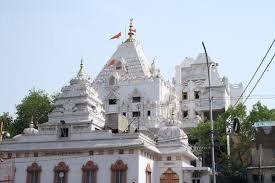
Amidst the bustling, historic lanes of Chandni Chowk stands a spiritual beacon of immense serenity and antiquity: the Gauri Shankar Temple. Dedicated to Lord Shiva, this temple is not merely a structure of stone but a vessel of centuries-old devotion. The sanctum houses a Swayambhu (self-manifested) Shiva Linga, revered by pilgrims seeking liberation from the cycle of birth and rebirth.
Primary Deity: Lord Shiva (as Gauri Shankar, representing the union of Shiva and Parvati).
Form: The presiding deity is an ancient, naturally formed Lingam, approximately 800 years old, covered in silver plating.
Phalaśruti: The Boon of Darshan
Why do devotees flock to this sacred shrine, particularly on Mondays? Tradition holds that offering prayers at the Gauri Shankar Temple washes away Karma and grants specific spiritual benefits:
- Removal of Afflictions: Devotees believe that a sincere darshan here alleviates diseases and planetary afflictions (Graha Dosha).
- Ancestral Liberation: Rituals performed here are said to bring peace to departed ancestors (Shanti).
- Marital Harmony: As Gauri Shankar symbolizes the eternal union of Shiva and Parvati, unmarried devotees pray here for a compatible life partner.
Historical Origins & Scriptural Legend
The history of Gauri Shankar Temple is a blend of documented records and the valor of local folklore.
The Legend of the Soldier-Vow
According to popular local legend, the temple was constructed in the 18th century by a brave Maratha soldier named Appa Gangadhar. During a fierce battle, he was struck by a weapon (often cited as a spear or arrow) near his heart. Lying critically wounded, he vowed to Lord Shiva that if he survived, he would build a temple dedicated to him. Miraculously recovering, he kept his promise and built the shrine that stands today.
Archaeological & Historical Context
While the structure we see today dates back to the late 1700s, the Linga itself is believed to be much older—estimates suggest the Shiva Linga is 800 years old. It is believed to have been recovered from the Yamuna River bed. The temple has undergone several renovations over the centuries, yet it retains its ancient sanctity. The architecture reflects the Mughal-Rajput fusion style typical of Old Delhi’s religious structures from that era.
Architectural Marvels
The Gauri Shankar Temple is a testament to the Nagara style of temple architecture, adapted to the urban landscape of Old Delhi. Unlike the towering Southern Gopurams, this temple features a vertical emphasis through its multi-tiered Shikhara (spire).
- The Shikhara: The temple’s spire is crowned with a golden Kalasha (pot) which glimmers in the sun, visible above the crowded street.
- The Sanctum (Garbhagriha): The inner chamber is dimly lit, creating an atmosphere of mystery and focus. The 800-year-old Linga is adorned in fine silver, featuring carved images of deities.
- Silver Paintings: As noted in the temple lore, the walls are adorned with silver relief panels depicting scenes from the Shiva Purana—including the Samudra Manthan (churning of the ocean) and Shiva consuming the Halahala poison.
- Surrounding Idols: The shrine also houses idols of Parvati, Ganesha, and Kartikeya, completing the divine family.
Darshan & Ritual Logistics
The temple follows a strict routine, managing the high volume of devotees, especially on Mondays and festivals.
Daily Timings
Please note that timings are subject to change during festivals.
| Session | Timings |
|---|---|
| Morning Darshan | 5:00 AM – 12:00 PM |
| Mid-day Closure | 12:00 PM – 4:00 PM |
| Evening Darshan | 4:00 PM – 10:00 PM |
| Special Aarti (Shivratri/Mondays) | 6:00 AM & 7:00 PM |
Key Sevas & Online Booking
The temple is managed by a trust. While much of the daily worship is traditional, specific Sevas can be arranged. For 2026, devotees are encouraged to book specific rituals in advance to avoid queues.
- Abhishekam: Ritual bathing of the Linga with water, milk, honey, and yogurt (usually performed in early morning hours).
- Rudrabhishek: A powerful Vedic ritual involving the chanting of the Shri Rudram mantra.
- Archana: Individual offerings of Bilva leaves and flowers.
Note on Online Booking: While the temple primarily functions on a walk-in basis, the Delhi Tourism Department often collaborates for major festivals. Check the official portal for Mahashivratri and Shrawan Maas bookings.
2026 Festival Calendar
- Mahashivratri: February 26, 2026. The temple remains open 24 hours on this day with continuous chanting.
- Shrawan Mondays (Sawan): July and August 2026. Mondays during this month are exceptionally crowded; early morning visit is recommended.
- Amavasya (New Moon): Special Maha Aarti performed at sunset.
Practical Visitor Guidance
Visiting Old Delhi requires preparation due to the dense crowds and heritage setting.
Dress Code & Etiquette
- Attire: Modest clothing is mandatory. Men should wear shirts and trousers; women should wear sarees, salwar kameez, or long skirts.
- Footwear: Shoes must be removed at the designated stands outside the temple. Tip: Carry your own polythene bag to store your shoes safely.
Photography & Mobiles
- Photography inside the sanctum is strictly prohibited.
- Lockers are not always available; it is best to travel light. Avoid carrying expensive electronics.
Crowd Management & Seasons
- Best Hours: 5:00 AM – 7:00 AM (Peaceful) or 8:00 PM – 9:30 PM (Spiritual ambiance).
- Summer (May-June): Delhi heat is intense. Carry a water bottle (though free water is often distributed by the trust).
- Winter (Dec-Jan): Pleasant weather, but fog may affect travel to Old Delhi.
Pilgrimage Connectivity
How to Reach
The temple is located in the heart of Old Delhi, making it accessible but traffic-congested.
- By Metro (Most Recommended): Take the Yellow Line to Chandni Chowk Metro Station. The temple is a 5-7 minute walk from the station (Gate No. 3 towards Fatehpuri Masjid). Alternatively, take the Red Line to Red Fort station.
- By Rail: The nearest major station is Old Delhi Railway Station (DLI), approximately 2 km away (10-min auto-rickshaw ride).
- By Air: Indira Gandhi International Airport (DEL) is 20 km away. Prepaid taxis or Uber/Ola services are available, but avoid peak traffic hours (9 AM–11 AM).
- By Road: Located on Chandni Chowk Road (NH 148A). Parking is extremely limited; designated parking is available at Maan Singh Palace or Kashmere Gate ISBT.
Nearby Sacred Sites (Pilgrimage Circuit)
Extend your spiritual journey by visiting these nearby landmarks:
- Digambar Jain Temple: Located right next door. Famous for the Bird Hospital and ancient idol of Lord Mahavira.
- Sis Ganj Gurudwara: A short walk away, marking the site where the ninth Sikh Guru, Tegh Bahadur, was martyred.
- Fatehpuri Masjid: A historic 17th-century mosque at the western end of Chandni Chowk.
- Shri Digambar Jain Lal Mandir: The oldest Jain temple in Delhi, known for its red sandstone architecture.
Photo Gallery




Frequently Asked Questions (FAQ)
1. Is there a VIP or Special Entry Darshan available?
Unlike some large temple trusts, Gauri Shankar Temple does not strictly have a paid VIP ticket system. However, devotees with severe mobility issues may seek assistance from the temple priests at the entrance for priority access. The crowd is usually managed in lines, and morning hours offer the quickest darshan.
2. What is the significance of the 800-year-old Shiva Linga?
The Linga is believed to be a Swayambhu (self-originated) idol recovered from the sacred Yamuna River. Ancient Lingas are considered highly charged with spiritual energy (Shakti) and are believed to be wish-fulfilling for sincere devotees.
3. Are there food facilities available at the temple?
While the temple does not have a full-fledged kitchen for general public meals, Prasad (offerings) is distributed after specific Aartis. For a proper meal, the streets of Chandni Chowk offer legendary vegetarian food options (Kucha Paranthe Wali Gali is nearby).
4. Is the temple wheelchair accessible?
Due to its location in an ancient market, wheelchair access is limited. The entrance is at street level, but the inner sanctum has narrow passages and steps. It is advisable to visit with assistance.
5. Can I offer a Bilva Patra (Leaves) personally?
Yes, devotees can bring fresh Bilva leaves (available from vendors outside the temple). However, the priests also provide sanctified offerings if you wish to donate to the trust.
6. What is the best day to visit to avoid crowds?
Weekdays (Tuesday to Thursday) are significantly less crowded than Mondays or weekends. The annual festival of Mahashivratri sees the highest footfall.
Address & Contact
Address: 2573, Chandni Chowk Rd, Katra Lehswan, Chandni Chowk, Delhi, 110006
Contact: 098709 82112
Video Overview
Experience the divine atmosphere of the Gauri Shankar Temple through this visual tour.
Recent Posts

Shri Kaamkoteeshwar Mandir, Varanasi – History & Significance
In the heart of Kashi, the eternal city of Lord Shiva, where the Ganges flows with celestial grace, stands the Shri Kaamkoteeshwar Mandir. This sacred Sannidhi is not merely a temple but a profound spiritual bridge between the Northern…

ओ सांवरे तूने ही मुझको संभाला – Lyrics & Meaning
ओ सांवरे तूने ही मुझको संभाला – A Prayer to Shyam Origin & Spiritual Essence Why This Bhajan Resonates Devotees chant this when overwhelmed by life’s storms—the refrain ‘तूने ही मुझको संभाला’ is the soul’s sigh of relief: “You…

कथा ये है महाराज मेरे की – Lyrics & Meaning
कथा ये है महाराज मेरे की छत्रपति संभाजी महाराज – A Prayer to Chhatrapati Sambhaji Maharaj Origin & Spiritual Essence Why This Bhajan Resonates Devotees chant this when their spirit feels tested—its powerful refrain “महाराज मेरे” is a soul’s…

Rigveda Samhita Yathartha Anuvada (ऋग्वेद संहिता यथार्थ अनुवाद) – Complete Set with Anvayartha & Hindi/English Translation
The Rigveda is the oldest surviving scripture of humanity and the foundational text of Sanātana Dharma. For serious students, scholars, UPSC aspirants studying ancient Indian history, Sanskrit learners, and spiritual seekers, a precise and grammatically structured translation is indispensable.…

आना भी अकेला है जाना भी अकेला है – Lyrics & Meaning | BharatTemples
आना भी अकेला है जाना भी अकेला है – A Prayer to the Divine Witness Origin & Spiritual Essence Why This Bhajan Resonates Devotees turn to this bhajan in moments of deep reflection—when life’s attachments begin to ache. The…

माता शेरावाली के द्वार जो भी जाता है – Lyrics & Meaning
माता शेरावाली के द्वार जो भी जाता है – A Prayer to Maa Sherawali Origin & Spiritual Essence Why This Bhajan Resonates Devotees turn to this bhajan in times of fear or uncertainty—its promise that no one leaves Maa’s…

मार लेना सपणी उबार लेणा भवरा – Lyrics & Meaning
मार लेना सपणी उबार लेणा भवरा – A Prayer to the Divine Beloved Origin & Spiritual Essence Why This Bhajan Resonates Devotees chant this in moments of deep vulnerability—its cry of “मार लेना सपणी, उबार लेणा भवरा” is the…

हमें श्याम सुंदर भरोसा तुम्हारा – Lyrics & Meaning
हमें श्याम सुंदर भरोसा तुम्हारा – A Prayer to Shyam Sundar Origin & Spiritual Essence Why This Bhajan Resonates Devotees chant this when feeling alone—its refrain ‘de do sahara’ is the soul’s cry for divine support. Lyrics in Hindi…

Mere Satguru Ne Di Thi Davai Lyrics in Hindi & Meaning
Mere Satguru Ne Di Thi Davai: Invoking the Guru’s Liberating Wisdom This soul-stirring bhajan venerates the Satguru (True Spiritual Master) as the divine physician who dispenses the only remedy for life’s deepest sufferings. Composed by Sant Karmaveer Tufani, it…

Janm Diyo Thari Maa Dukh Dekhiyo Lyrics in Hindi & Meaning
जन्म दियो थारी माँ दुख देखियो (Maa’s Grief Upon Birthing You) This soul-stirring Chetavani Bhajan (admonitory hymn) is addressed to the Divine Mother (Maa) – a call for repentance when children forget their filial duties in the dark age…