
Contents
By the Lead Heritage Architect & SEO Strategist at BharatTemples.com
Introduction & Spiritual Essence
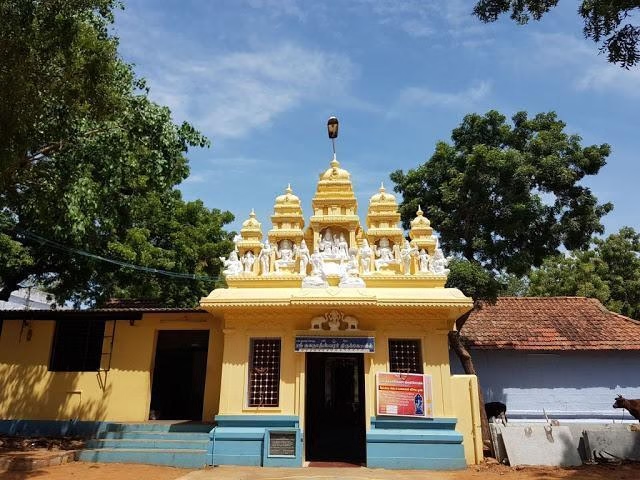
Nestled on the southernmost tip of the Indian peninsula, where the Indian Ocean, Bay of Bengal, and Arabian Sea converge, stands the Guganathaswamy Temple, Kanyakumari. This ancient shrine is a profound spiritual anchor in a region known for its panoramic vistas and vibrant spirituality. While Kanyakumari is globally famous for the Vivekananda Rock Memorial and the Thiruvalluvar Statue, the Guganathaswamy Temple offers a quiet, introspective journey into the classical era of Tamil history.
The Deity (Ishta Devata):
The temple is dedicated to Lord Shiva, worshipped here in the form of Guganathaswamy (The Lord of the Gugas or the Hidden One). Devotees believe that Shiva appears here in a “Swayambhu” (self-manifested) form, radiating a soft, compassionate energy that is distinct from the fierce manifestations found elsewhere.
Phalaśruti (Spiritual Benefits):
According to local tradition and the Skanda Purana, a pilgrimage to Guganathaswamy yields specific boons:
- Resolution of Karmic Debt: It is believed that worshipping here washes away sins accumulated over lifetimes, particularly those related to the Nadi (energy channels).
- Mental Clarity: The proximity to the ocean and the rhythmic chanting of mantras help devotees attain a state of Shanthi (peace) and clarity of thought.
- Ancestral Liberation: Performing rituals here is considered highly auspicious for the salvation (Moksha) of ancestors, especially during the Amasya (New Moon) days.
Historical Origins & Scriptural Legend
The Chola Imprint:
According to temple records and epigraphic evidence, the Guganathaswamy Temple dates back to the late 11th century. It was constructed during the reign of the legendary Emperor Rajaraja Chola I (c. 985–1014 AD) of the Chola dynasty. This period marked the zenith of Chola architecture and naval power, and the temple serves as a stone testament to their southern expansions into the Kanyakumari district.
Epigraphy:
The temple walls bear 16 distinct inscriptions primarily in Tamil and Grantha scripts. These inscriptions offer fascinating insights into the socio-economic conditions of the 11th century, detailing land grants made to the temple by the Chola administration and local chieftains. They reference taxes, agricultural yields, and the maintenance of the temple structure, providing a documentary history that is as valuable as the structure itself.
The Legend of the Guga:
Local folklore adds a mystical layer to the Chola history. Legend holds that the temple was built over a spot where Lord Shiva appeared to bless a devout sage named Guga. Unlike other temples where Shiva is the cosmic destroyer, here he is the “Guganathaswamy“, the protector of the hidden and the humble. The temple’s location—facing the east—is symbolic of the rising sun and the eternal light of consciousness.
Architectural Marvels
The Guganathaswamy Temple is a classic example of the Dravidian style of temple architecture, heavily influenced by the early Chola aesthetic which serves as a bridge to the later, more ornate Nayak styles.
Key Structural Elements:
- The Vastu Orientation: The temple is oriented strictly according to Vastu Shastra, with the Gopuram (gateway tower) facing East to capture the first rays of the sun, a feature often associated with the Brahma Muhurta.
- The Vimana (Shikhara): The sanctum sanctorum (Garbhagriha) is topped by a tiered Vimana that resembles the stupas of the Chola era. It is relatively modest compared to the gigantic gopurams of later periods, exuding an aura of ancient austerity.
- The Mandapa: The Ardha Mandapa (half-hall) and Maha Mandapa (main hall) feature sturdy stone columns. These pillars are adorned with minimal yet precise carvings of dwarfs (Ganas) and floral motifs, indicative of the early Chola craftsmanship.
- Sculptures: While the exterior is weathered by the saline coastal air, the interior sanctum houses beautifully carved idols of Nataraja (Cosmic Dancer) and Nandi (the Bull), both facing the Shiva Lingam.
Note on Heritage Status: While the temple is a protected monument under the Tamil Nadu Hindu Religious and Charitable Endowments (HR&CE) Department, it stands as a silent witness to history, contrasting sharply with the modern bustle of Kanyakumari town.
Darshan & Ritual Logistics
Visitors to the temple are greeted by the scent of incense and the rhythmic ringing of temple bells. The atmosphere is meditative, allowing for an unhurried Darshan (sacred viewing).
Daily Temple Timings (2026 Schedule)
The temple generally remains open for morning and evening sessions. These timings are strictly followed.
| Session | Timing | Activity |
|---|---|---|
| Morning | 06:00 AM – 11:15 AM | Ushathkalam, Kalashabhishekam, Archana |
| Closure | 11:15 AM – 05:00 PM | Affected in all seasons (Rest period) |
| Evening | 05:00 PM – 08:45 PM | Pradoshakalam, Deepa Aradhana, Palliyarai Pooja |
Key Sevas & Online Booking
For devotees wishing to participate in specific rituals, the following sevas are available:
- Abhishekam: Performed to the Shiva Lingam with sacred waters, milk, honey, and sandalwood paste. (Timings: 7:00 AM)
- Archana: Recitation of the 108 names of Shiva. (Available continuously during open hours)
- Rudra Abhishekam: A powerful Vedic ritual for prosperity and health.
Online Booking: Booking for sevas at Guganathaswamy Temple can be done via the Tamil Nadu HR&CE official portal (temple.tamilnadutourism.tn.gov.in). Select “Kanyakumari District” and search for “Guganathaswamy Temple.”
Important 2026 Festivals
- Pradosham: Monthly event (13th day after Full/New Moon). Most significant in 2026 are on May 5th and October 28th.
- Shivaratri: February 26, 2026. The temple remains open throughout the night.
- Arudra Darshanam: Celebrates the cosmic dance of Nataraja (usually January).
- Aadi Amavasya: A highly auspicious day for ancestral rites, occurring around July 24, 2026.
Practical Visitor Guidance
To ensure a smooth pilgrimage experience in the coastal environment of Kanyakumari:
Dress Code: Modest attire is mandatory. Men should wear dhotis or trousers with shirts; women should wear sarees, salwar kameez, or full-length skirts. Avoid shorts and sleeveless tops.
Photography & Electronics: Photography is strictly prohibited inside the Garbhagriha (main sanctum). Mobile phones are allowed in the premises but must be on silent mode. Lockers are generally not available at this specific temple (unlike larger complexes), so it is advisable to travel light.
Crowd Management:
- Best Time to Visit: The morning hours (6:00 AM – 8:00 AM) are the least crowded and offer a cool breeze from the ocean.
- Seasonal Advice: Kanyakumari experiences heavy tourist traffic during December–January. Summers (April–June) are humid; carry a water bottle and an umbrella. Monsoon (October–November) brings sudden showers.
Accessibility: The temple complex is compact. While the main sanctum has a few steps, the surrounding corridors are flat. Wheelchair access to the main hall is possible with assistance.
Pilgrimage Connectivity
How to Reach Guganathaswamy Temple
The temple is centrally located in Kanyakumari town, making it highly accessible.
- By Air: The nearest airport is Trivandrum International Airport (TRV) in Kerala, approximately 102 km away. Taxis and buses are available from the airport to Kanyakumari.
- By Rail: The Kanyakumari Railway Station is the southernmost terminus of Indian Railways. The temple is located only 200 meters from the station (approx. 5-minute walk).
- By Road: Kanyakumari is well connected via National Highways. NH 66 connects it to Mumbai via the west coast, and NH 44 connects it to the rest of Tamil Nadu.
Nearby Sacred Sites (The Kanyakumari Circuit)
Combine your visit to Guganathaswamy Temple with these nearby spiritual destinations:
- Bhagavathi Amman Temple: Located just 1 km away, this is the ancient temple of the virgin goddess Kanyakumari, situated at the exact point where the sea meets the land.
- Thanumalayan Temple (Suchindram): Located 13 km north of Kanyakumari, famous for its musical pillars and giant Nandi statue.
- Mathur Hanging Bridge: While not a temple, this engineering marvel offers a panoramic view of the lush Western Ghats, often visited by pilgrims seeking scenic tranquility.
Frequently Asked Questions (FAQ)
1. Is there a VIP darshan entry at Guganathaswamy Temple?
Unlike larger commercial temples, Guganathaswamy Temple maintains a traditional approach. There is no formal VIP entry ticket system. However, devotees who book specific sevas (like Abhishekam) are given priority access to the sanctum during the ritual time.
2. What is the historical significance of the inscriptions found here?
The 16 inscriptions found on the temple walls are primarily in Tamil and Grantha scripts dating back to the 11th century. They serve as legal documents recording land grants and tax exemptions granted by Chola emperors to the temple, offering a rare glimpse into the medieval economy of Tamil Nadu.
3. Is non-Hindu entry allowed?
As a traditional Hindu place of worship dedicated to Lord Shiva, entry is generally restricted to Hindus only. This rule is strictly enforced within the inner sanctum, though the outer areas may be more accessible to researchers or tourists depending on the current temple committee regulations.
4. Are there accommodation facilities nearby?
Yes. Kanyakumari is a major pilgrimage hub. There are numerous TTDC (Tamil Nadu Tourism Development Corporation) lodges, private hotels, and guest houses within a 1-2 km radius of the temple. Booking in advance is recommended during festival seasons.
5. What is the best way to offer prayers if I have limited time?
Even a 10-minute visit is considered auspicious. Enter the temple, circumambulate the sanctum (Pradakshina) once, offer a simple coconut or bilva leaves to the deity, and sit quietly for a few moments. The presence of the deity is powerful enough to bless a short, sincere visit.
Photo Gallery

How to Reach
Address: Guganathaswamy Temple, Kanyakumari, Tamil Nadu 629702.
Proximity:
- From Nagercoil: 20 km
- From Thiruvananthapuram (Trivandrum): 100 km
- From Madurai: 245 km
Recent Posts

Shri Kaamkoteeshwar Mandir, Varanasi – History & Significance
In the heart of Kashi, the eternal city of Lord Shiva, where the Ganges flows with celestial grace, stands the Shri Kaamkoteeshwar Mandir. This sacred Sannidhi is not merely a temple but a profound spiritual bridge between the Northern…

ओ सांवरे तूने ही मुझको संभाला – Lyrics & Meaning
ओ सांवरे तूने ही मुझको संभाला – A Prayer to Shyam Origin & Spiritual Essence Why This Bhajan Resonates Devotees chant this when overwhelmed by life’s storms—the refrain ‘तूने ही मुझको संभाला’ is the soul’s sigh of relief: “You…

कथा ये है महाराज मेरे की – Lyrics & Meaning
कथा ये है महाराज मेरे की छत्रपति संभाजी महाराज – A Prayer to Chhatrapati Sambhaji Maharaj Origin & Spiritual Essence Why This Bhajan Resonates Devotees chant this when their spirit feels tested—its powerful refrain “महाराज मेरे” is a soul’s…

Rigveda Samhita Yathartha Anuvada (ऋग्वेद संहिता यथार्थ अनुवाद) – Complete Set with Anvayartha & Hindi/English Translation
The Rigveda is the oldest surviving scripture of humanity and the foundational text of Sanātana Dharma. For serious students, scholars, UPSC aspirants studying ancient Indian history, Sanskrit learners, and spiritual seekers, a precise and grammatically structured translation is indispensable.…

आना भी अकेला है जाना भी अकेला है – Lyrics & Meaning | BharatTemples
आना भी अकेला है जाना भी अकेला है – A Prayer to the Divine Witness Origin & Spiritual Essence Why This Bhajan Resonates Devotees turn to this bhajan in moments of deep reflection—when life’s attachments begin to ache. The…

माता शेरावाली के द्वार जो भी जाता है – Lyrics & Meaning
माता शेरावाली के द्वार जो भी जाता है – A Prayer to Maa Sherawali Origin & Spiritual Essence Why This Bhajan Resonates Devotees turn to this bhajan in times of fear or uncertainty—its promise that no one leaves Maa’s…

मार लेना सपणी उबार लेणा भवरा – Lyrics & Meaning
मार लेना सपणी उबार लेणा भवरा – A Prayer to the Divine Beloved Origin & Spiritual Essence Why This Bhajan Resonates Devotees chant this in moments of deep vulnerability—its cry of “मार लेना सपणी, उबार लेणा भवरा” is the…

हमें श्याम सुंदर भरोसा तुम्हारा – Lyrics & Meaning
हमें श्याम सुंदर भरोसा तुम्हारा – A Prayer to Shyam Sundar Origin & Spiritual Essence Why This Bhajan Resonates Devotees chant this when feeling alone—its refrain ‘de do sahara’ is the soul’s cry for divine support. Lyrics in Hindi…

Mere Satguru Ne Di Thi Davai Lyrics in Hindi & Meaning
Mere Satguru Ne Di Thi Davai: Invoking the Guru’s Liberating Wisdom This soul-stirring bhajan venerates the Satguru (True Spiritual Master) as the divine physician who dispenses the only remedy for life’s deepest sufferings. Composed by Sant Karmaveer Tufani, it…

Janm Diyo Thari Maa Dukh Dekhiyo Lyrics in Hindi & Meaning
जन्म दियो थारी माँ दुख देखियो (Maa’s Grief Upon Birthing You) This soul-stirring Chetavani Bhajan (admonitory hymn) is addressed to the Divine Mother (Maa) – a call for repentance when children forget their filial duties in the dark age…