

Contents
| Date built: | – |
|---|---|
| Deity: | Lord Shiva |
| Architectural style: | – |
| Major festivals | – |
| Locale: | – |
| District:: | Haridwar |
| Address: | Near City Control Room, Haridwar, Uttarakhand 249401 |
| Phone | 08054084636 |
Introduction & Spiritual Essence
Har Ki Pauri is not merely a ghat; it is the spiritual axis of Haridwar, a sacred doorway where the celestial Ganges descends from the Himalayas to embrace the plains. The name translates to “Steps of Lord Shiva,” referencing the legend that Lord Vishnu left his footprint on the stone here during the Vedic era. For the devout, this is the Brahmakund, the spot where drops of Amrit (nectar of immortality) fell during the Samudra Manthan.
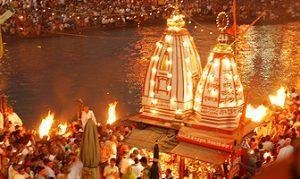
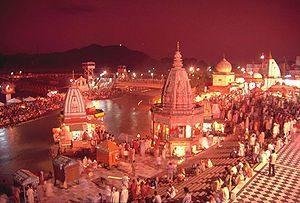
Phalaśruti (Spiritual Benefits): Devotees believe that a dip in the holy waters here washes away sins and purifies the soul. It is especially significant for ancestors; performing Tarpan here is believed to cleanse ancestral karma and liberate departed souls. The evening Ganga Aarti, a synchronized symphony of fire, chants, and bells, offers a direct connection to the divine, making it a must-visit for seekers of spiritual liberation.
Historical Origins & Scriptural Legend
The Legend of Vishnu and Shiva
According to local tradition and Vedic texts, this is the precise location where the Ganges leaves the rugged mountains and enters the plains. Scriptural references suggest that Lord Vishnu appeared here in the Vedic period, leaving his footprint on a rock, which is why it is called “Har Ki Pauri” (Steps of Vishnu, though often associated with Shiva due to the Syamakunda Vishnu established).
Historical Construction
While the site is ancient, the current structure has evolved over centuries. Tradition holds that King Vikramaditya built the ghat in the 1st century BC in memory of his brother, Bharthari, who meditated here. The ghats have undergone significant renovations to accommodate the growing number of pilgrims. In 1938, the ghat was extended by Hargyan Singh Katara, a Zamindar from Agra. A major renovation occurred in 1986, expanding the steps to facilitate safe access during the massive Kumbh Melas.
Architectural Marvels & Vastu
The architecture of Har Ki Pauri is a functional blend of ancient riverfront design and modern utility. While it does not follow the typical Nagara or Dravida temple styles of a towering shrine, it embodies the principles of Vastu Shastra regarding water bodies and energy flow.
- Alignment: The ghat faces East, towards the rising sun, allowing the first rays of sunlight to illuminate the river.
- The Brahmakund: The most sacred section of the ghat is a specific recess where the Aarti is performed. It is designed to trap the spiritual energy of the fire ritual reflected in the water.
- Stone Carvings: The steps feature ancient stone inscriptions and small shrines dedicated to various deities, including the Syamakunda and Narayankunda, which mark the presence of Vishnu.
Darshan & Ritual Logistics
Timing your visit is essential to experience the two distinct phases of the ghat: the morning ritual bath and the evening fire ceremony.
Daily Timings
| Activity | Timings | Notes |
|---|---|---|
| Morning Darshan / Snan | 05:00 AM – 12:00 PM | Best time: Sunrise (approx 6:00 AM) |
| Evening Ganga Aarti | 06:00 PM – 07:00 PM | Year-round; timings shift with sunset |
| Special Pujas | 06:00 AM – 10:00 AM | Requires prior booking |
Key Sevas & Online Booking
To perform specific rituals, you can book services through the official Shri Ganga Sangralaya Pariyojna. The primary Sevas include:
- Abhishekam: Ritual bathing of the Shiva Lingam located on the ghat.
- Pinda Pradhan: Offering rice balls to ancestors (Shraddha).
- Ganga Aarti Participation: While the public Aarti is free, specific spots on the steps are reserved for donors.
How to Book: Visit the official website haridwaronline.com or the Sugam Yatra App to book Pujas and view availability.
2026 Festival Calendar Highlights
Har Ki Pauri is the epicenter of Haridwar’s festivals. Mark your calendar for 2026:
- January 14, 2026 (Makar Sankranti): The start of the Kumbh Mela (Main event). The first Shahi Snan (royal bath) will see millions of pilgrims.
- April 13, 2026 (Vaisakhi): A major harvest festival celebrated with immense fervor and a special Aarti.
- August 15, 2026 (Raksha Bandhan): Another significant bathing day.
- September 5, 2026 (Maha Kumbh Closing): The final Shahi Snan.
Practical Visitor Guidance
Given the spiritual intensity and the crowds, preparation is key to a safe and fulfilling visit.
Dress Code & Etiquette
Modesty is paramount. Traditional Indian attire (Kurta-Pajama, Saree, Salwar Kameez) is recommended. Avoid Western clothing like shorts or tank tops. Shoes must be removed before descending the steps; shoe lockers are available for a nominal fee (approx. ₹10-₹20).
Crowd Management
- Best Hours: 4:00 AM – 7:00 AM (Morning) and 8:00 PM – 10:00 PM (Night) offer a serene experience. Mid-day is highly crowded.
- Photography: Allowed, but strictly prohibited during the Aarti if you are close to the sanctum. Drones are banned over the ghat.
- Accessibility: The ghat has many steps, making it difficult for wheelchair users. However, ramps have been installed on the side approaches, and volunteers (Akhil Bharatiya Akhada Parishad) assist the elderly.
- Hydration: Carry water in May/June when temperatures exceed 40°C.
How to Reach Har Ki Pauri
Har Ki Pauri is located in the heart of Haridwar city.
- By Air: The nearest airport is Jolly Grant Airport, Dehradun (approx. 35 km). Taxis are available.
- By Rail: Haridwar Junction (HW) is well-connected to major cities like Delhi (approx. 4 hours via Shatabdi/Jan Shatabdi).
- By Road: Haridwar is on National Highway 334 (NH 334) and NH 7. Regular bus services connect it to Delhi (210 km), Dehradun (52 km), and Rishikesh (24 km).
Nearby Sacred Sites (Pilgrimage Circuit)
While at Har Ki Pauri, extend your spiritual journey to these nearby sites:
- Mansa Devi Temple: Located on Bilwa Parvat, accessible by rope-way or trek. Dedicated to Goddess Mansa (wishes).
- Chandi Devi Temple: Situated on Neel Parvat, another wish-fulfilling deity shrine.
- Maya Devi Temple: An ancient Shakti Peeth, located just a walkable distance from Har Ki Pauri.
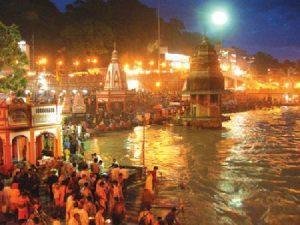
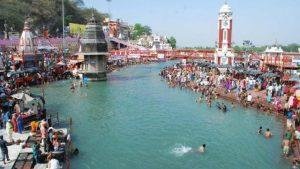
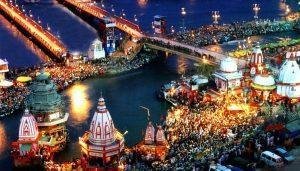
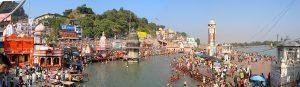
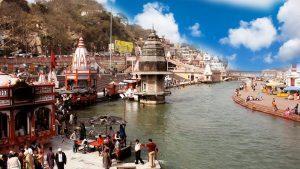
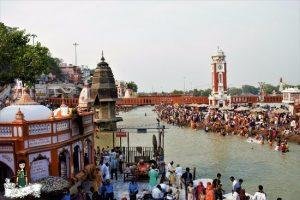
Photo Gallery
Frequently Asked Questions (FAQ)
1. Is there a VIP darshan entry at Har Ki Pauri?
Har Ki Pauri is an open ghat, so there is no VIP entry for the general Aarti. However, special access for the first row during Aarti can be arranged through donations to the Ganga Sabha or by booking specific Pujas.
2. Can I carry my mobile phone during the Aarti?
Yes, but photography and videography are strictly prohibited during the Aarti ritual to maintain sanctity. It is advised to keep phones on silent mode.
3. Are there changing facilities available?
Yes, there are public changing rooms and lockers near the ghat. It is recommended to bring your own towel and change of clothes if you plan to take a dip.
4. Is the water safe for bathing?
The Ganges at Har Ki Pauri is generally clean, especially in the early morning hours. However, those with open wounds should avoid bathing, and it is strictly advised to avoid swallowing the water.
5. What is the significance of the evening Aarti?
The Ganga Aarti is a gratitude ritual. It involves floating Diyas (earthen lamps) on the river. It is believed that the Aarti creates a divine energy field that purifies the atmosphere and blesses the viewers with peace and prosperity.
Contact Details
Address: Near City Control Room, Haridwar, Uttarakhand 249401
Phone: 08054084636 (Haridwar Tourism Office)
Recent Posts

Shri Kaamkoteeshwar Mandir, Varanasi – History & Significance
In the heart of Kashi, the eternal city of Lord Shiva, where the Ganges flows with celestial grace, stands the Shri Kaamkoteeshwar Mandir. This sacred Sannidhi is not merely a temple but a profound spiritual bridge between the Northern…

ओ सांवरे तूने ही मुझको संभाला – Lyrics & Meaning
ओ सांवरे तूने ही मुझको संभाला – A Prayer to Shyam Origin & Spiritual Essence Why This Bhajan Resonates Devotees chant this when overwhelmed by life’s storms—the refrain ‘तूने ही मुझको संभाला’ is the soul’s sigh of relief: “You…

कथा ये है महाराज मेरे की – Lyrics & Meaning
कथा ये है महाराज मेरे की छत्रपति संभाजी महाराज – A Prayer to Chhatrapati Sambhaji Maharaj Origin & Spiritual Essence Why This Bhajan Resonates Devotees chant this when their spirit feels tested—its powerful refrain “महाराज मेरे” is a soul’s…

Rigveda Samhita Yathartha Anuvada (ऋग्वेद संहिता यथार्थ अनुवाद) – Complete Set with Anvayartha & Hindi/English Translation
The Rigveda is the oldest surviving scripture of humanity and the foundational text of Sanātana Dharma. For serious students, scholars, UPSC aspirants studying ancient Indian history, Sanskrit learners, and spiritual seekers, a precise and grammatically structured translation is indispensable.…

आना भी अकेला है जाना भी अकेला है – Lyrics & Meaning | BharatTemples
आना भी अकेला है जाना भी अकेला है – A Prayer to the Divine Witness Origin & Spiritual Essence Why This Bhajan Resonates Devotees turn to this bhajan in moments of deep reflection—when life’s attachments begin to ache. The…

माता शेरावाली के द्वार जो भी जाता है – Lyrics & Meaning
माता शेरावाली के द्वार जो भी जाता है – A Prayer to Maa Sherawali Origin & Spiritual Essence Why This Bhajan Resonates Devotees turn to this bhajan in times of fear or uncertainty—its promise that no one leaves Maa’s…

मार लेना सपणी उबार लेणा भवरा – Lyrics & Meaning
मार लेना सपणी उबार लेणा भवरा – A Prayer to the Divine Beloved Origin & Spiritual Essence Why This Bhajan Resonates Devotees chant this in moments of deep vulnerability—its cry of “मार लेना सपणी, उबार लेणा भवरा” is the…

हमें श्याम सुंदर भरोसा तुम्हारा – Lyrics & Meaning
हमें श्याम सुंदर भरोसा तुम्हारा – A Prayer to Shyam Sundar Origin & Spiritual Essence Why This Bhajan Resonates Devotees chant this when feeling alone—its refrain ‘de do sahara’ is the soul’s cry for divine support. Lyrics in Hindi…

Mere Satguru Ne Di Thi Davai Lyrics in Hindi & Meaning
Mere Satguru Ne Di Thi Davai: Invoking the Guru’s Liberating Wisdom This soul-stirring bhajan venerates the Satguru (True Spiritual Master) as the divine physician who dispenses the only remedy for life’s deepest sufferings. Composed by Sant Karmaveer Tufani, it…

Janm Diyo Thari Maa Dukh Dekhiyo Lyrics in Hindi & Meaning
जन्म दियो थारी माँ दुख देखियो (Maa’s Grief Upon Birthing You) This soul-stirring Chetavani Bhajan (admonitory hymn) is addressed to the Divine Mother (Maa) – a call for repentance when children forget their filial duties in the dark age…