
Contents
- 1 Harishchandreshwar Temple, Varanasi: The Definitive Pilgrimage Guide
Harishchandreshwar Temple, Varanasi: The Definitive Pilgrimage Guide
By The Lead Heritage Architect & SEO Strategist
Welcome to the ancient banks of the Ganga, where the veil between the material and the spiritual thins. We stand at the foot of the Harishchandreshwar Temple, a sacred abode dedicated to Lord Shiva in his most unassuming yet powerful form.
1. Introduction & Spiritual Essence
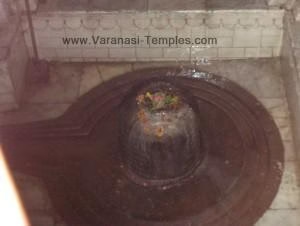
Located in the heart of Kashi (Varanasi), the Harishchandreshwar Temple is not merely a structure of stone; it is a testament to the enduring nature of truth and duty. The presiding deity is a Swayambhu Shiv Ling (a self-manifested lingam), revered as Harishchandreshwar.
The Phalaśruti: Why Devotees Visit
According to the sacred Kashi Khand of the Skanda Purana, Lord Vishnu described the immense spiritual potency of this region to Sage Bindu. The text states that bathing in the Harishchandra Teerth (a sacred tank located nearby) and performing rituals for ancestors purifies the soul of generations.
Devotees visit this temple to:
- Cleanse Ancestral Karma: Performing Shraddha and Tarpan here is believed to liberate ancestors from the cycle of birth and death.
- Seek Truthfulness: Just as King Harishchandra sacrificed his kingdom for the sake of truth, devotees pray for the courage to uphold Satya (truth) in their own lives.
- Overcome Obstacles: The temple is located near Sankata Ghat (associated with Goddess Sankata, the remover of difficulties), making it a powerful spot for removing life’s hurdles.
2. Historical Origins & Scriptural Legend
The history of Harishchandreshwar is intertwined with the epic legends of righteousness.
The Legend of King Harishchandra
A common misconception is that the temple is linked to the Harishchandra Ghat (cremation ground). Tradition holds that King Harishchandra performed his famous penance at the cremation ground closer to Manikarnika Ghat. It was here, during his trials, that he installed a Shiv Ling to seek strength and forgiveness. This Lingam is the deity worshipped today as Harishchandreshwar.
Timeline and Renovation
While specific dates are lost in the mists of antiquity, architectural analysis suggests the current structure has roots in the late medieval period, though the sacred tank (Teerth) dates back to the Puranic era. According to temple records, the temple complex has undergone several renovations under the patronage of local Maharajas and wealthy devotees of Varanasi to preserve its sanctity against the erosion of the Ganga’s bank.
3. Architectural Marvels
The Harishchandreshwar Temple is a brilliant example of the Nagara style of temple architecture, adapted to the riverine landscape of Varanasi.
Structural Elements
The Sanctum (Garbhagriha): The inner sanctum houses the Swayambhu Shiv Ling. Unlike grandiose temples, the entrance to the Garbhagriha is intimate, requiring a bow of the head, symbolizing humility.
The Mandapa (Hall): The temple features a Triratha (three-apsed) plan typical of early Nagara style. The pillars of the Mandapa are carved with intricate motifs of Yalis and floral patterns, though years of worship have softened their edges.
The Shikhara (Spire): The temple spire is not as towering as the Kashi Vishwanath temple but is a Trataka Shikhara (sturdy, fortress-like). It is built of solid stone blocks, designed to withstand the humidity of the riverbank.
Significance of the Tank: A unique Vastu Shastra element is the Harishchandra Kund (tank) located immediately adjacent to the temple. In Vastu, water represents the subconscious mind; placing the tank next to the shrine signifies the merging of the conscious self (the temple) with the subconscious purity (the tank).
[Note: A visual gallery of the intricate carvings and the Sankata Ghat entrance is available in the photo gallery section below.]
4. Darshan & Ritual Logistics
To ensure a seamless spiritual experience, we have compiled the essential logistics for 2026. Please note that timings may vary slightly during festivals.
Daily Timings
| Session | Timing |
|---|---|
| Morning Darshan | 05:00 AM – 12:00 PM |
| Afternoon Break | 12:00 PM – 3:00 PM |
| Evening Darshan | 3:00 PM – 10:00 PM |
| Shayan Aarti | Approx. 10:00 PM |
Key Sevas & 2026 Festivals
Devotees can book specific rituals. For online seva booking, the official Varanasi Temple Board portal is the primary channel.
- Abhishekam: Performed with water, milk, honey, and bel leaves.
- Rudrabhishek: A highly recommended ritual for planetary peace.
- Shraddha/Pind Daan: Strictly performed at the Harishchandra Teerth adjacent to the temple.
Major Festivals in 2026:
- Maha Shivaratri (Feb 26, 2026): The temple remains open 24 hours. Expect heavy crowds; advance registration is required.
- Shravan Month (July – August 2026): Mondays are the busiest. Special Bilva Patra offerings are available.
- Kartik Purnima (Nov 5, 2026): Dev Deepawali celebrations begin here.
5. Practical Visitor Guidance
Varanasi is intense, and this specific temple requires some physical agility. Here is how to prepare.
Rules & Etiquette
- Dress Code: Traditional attire is preferred. Men should wear dhoti/kurta or pants that cover the knees; women should wear sarees or full-length skirts.
- Photography: Strictly prohibited inside the Garbhagriha. You may photograph the exteriors and the Ghat.
- Mobile/Electronics: Lockers are available near the temple entrance on Sankata Ghat. It is advisable to leave phones behind to maintain spiritual focus.
- Accessibility: The temple is accessible via a flight of steps from Sankata Ghat. While the area is manageable, it may be challenging for those with severe mobility issues due to uneven stone paths.
Crowd Management & Seasonal Advice
- Best Hours: The ideal time for a peaceful Darshan is early morning (6:00 AM) or late evening (8:00 PM).
- Summer (May-June): Temperatures soar. Carry a reusable water bottle, a towel, and wear light cotton clothing. The stone steps reflect heat intensely.
- Monsoon (July-Sept): The Ganga banks can be slippery. Wear rubber-soled sandals with good grip.
6. Pilgrimage Connectivity
Reaching the temple is part of the pilgrimage. The journey through the narrow lanes of Varanasi (known as Galis) is an experience in itself.
How to Reach
- By Air: Lal Bahadur Shastri International Airport (VNS) is approx. 25 km away. Taxis and autos are easily available.
- By Rail: Varanasi Junction (BSB) is the nearest major railway station (5 km). Auto-rickshaws are the best mode to reach Chowk.
- Road Access: Located on Chowk – Sankata Ghat Road. Cars cannot enter the final lane. You must walk from the main Chowk market (approx. 10 mins walk) or take a boat directly to Sankata Ghat.
Nearby Sacred Sites (The Kashi Pilgrimage Circuit)
To maximize your spiritual merit, visit these sites within walking distance:
- Maa Sankata Devi Temple: Located right at the entrance of the lane. She is the deity who removes dangers and fears.
- Manikarnika Ghat: The holy cremation ground where Lord Shiva is said to whisper the Mantra of liberation into the ears of the dying.
- Vishwanath Gali: A narrow lane leading to the Kashi Vishwanath Temple, filled with shops selling Bilva leaves and Panchamrit.
7. Frequently Asked Questions (FAQ)
1. Is there a VIP darshan entry at Harishchandreshwar Temple?
No, there is no specific VIP entry at this temple. The temple follows a traditional approach where all devotees stand in a single queue. However, for those unable to stand, an arrangement can be made with the local caretaker priest (Pujari) by offering a donation, though this is subject to crowd levels.
2. Can I perform Pind Daan for my ancestors here?
Yes. The Harishchandra Teerth adjacent to the temple is a prime location for Pind Daan. It is believed that performing these rites here directly benefits the ancestors. It is advisable to hire a knowledgeable Pandit locally for the correct procedure.
3. What is the best way to book Seva online?
While this specific temple is managed locally, most Kashi rituals are now centralized via the Kashi Vishwanath Temple Trust portal. Look for the “Online Puja” section and search for “Harishchandreshwar” or “Sankata Ghat” offerings. If unavailable online, the temple priest on-site can schedule the puja.
4. Is the temple safe for solo female travelers?
Varanasi is generally safe, but the lanes near Sankata Ghat get dark at night. We recommend visiting during daylight hours (8 AM to 6 PM) if visiting alone. Always hire a licensed guide for navigation.
5. What is the entry fee?
There is no entry fee. However, photography permits may have a nominal fee if enforced by the local municipal corporation.
Photo Gallery
Visuals of the temple architecture and river view.
Contact Details
Harishchandreshwar Temple
Location: Ck.7/166, Sankata Ghat, Varanasi, Uttar Pradesh 221001
Note: As per tradition, direct phone lines are not available. Please contact the Varanasi Tourism Board for assistance.
Conclusion
Visiting Harishchandreshwar is a journey back to the origins of dharma. It is not the grandeur of the structure that attracts the devotee, but the gravity of the history it holds. As you walk down the steps of Sankata Ghat, leave your worldly anxieties behind and step into the sanctity of Harishchandreshwar.
Recent Posts

Shri Kaamkoteeshwar Mandir, Varanasi – History & Significance
In the heart of Kashi, the eternal city of Lord Shiva, where the Ganges flows with celestial grace, stands the Shri Kaamkoteeshwar Mandir. This sacred Sannidhi is not merely a temple but a profound spiritual bridge between the Northern…

ओ सांवरे तूने ही मुझको संभाला – Lyrics & Meaning
ओ सांवरे तूने ही मुझको संभाला – A Prayer to Shyam Origin & Spiritual Essence Why This Bhajan Resonates Devotees chant this when overwhelmed by life’s storms—the refrain ‘तूने ही मुझको संभाला’ is the soul’s sigh of relief: “You…

कथा ये है महाराज मेरे की – Lyrics & Meaning
कथा ये है महाराज मेरे की छत्रपति संभाजी महाराज – A Prayer to Chhatrapati Sambhaji Maharaj Origin & Spiritual Essence Why This Bhajan Resonates Devotees chant this when their spirit feels tested—its powerful refrain “महाराज मेरे” is a soul’s…

Rigveda Samhita Yathartha Anuvada (ऋग्वेद संहिता यथार्थ अनुवाद) – Complete Set with Anvayartha & Hindi/English Translation
The Rigveda is the oldest surviving scripture of humanity and the foundational text of Sanātana Dharma. For serious students, scholars, UPSC aspirants studying ancient Indian history, Sanskrit learners, and spiritual seekers, a precise and grammatically structured translation is indispensable.…

आना भी अकेला है जाना भी अकेला है – Lyrics & Meaning | BharatTemples
आना भी अकेला है जाना भी अकेला है – A Prayer to the Divine Witness Origin & Spiritual Essence Why This Bhajan Resonates Devotees turn to this bhajan in moments of deep reflection—when life’s attachments begin to ache. The…

माता शेरावाली के द्वार जो भी जाता है – Lyrics & Meaning
माता शेरावाली के द्वार जो भी जाता है – A Prayer to Maa Sherawali Origin & Spiritual Essence Why This Bhajan Resonates Devotees turn to this bhajan in times of fear or uncertainty—its promise that no one leaves Maa’s…

मार लेना सपणी उबार लेणा भवरा – Lyrics & Meaning
मार लेना सपणी उबार लेणा भवरा – A Prayer to the Divine Beloved Origin & Spiritual Essence Why This Bhajan Resonates Devotees chant this in moments of deep vulnerability—its cry of “मार लेना सपणी, उबार लेणा भवरा” is the…

हमें श्याम सुंदर भरोसा तुम्हारा – Lyrics & Meaning
हमें श्याम सुंदर भरोसा तुम्हारा – A Prayer to Shyam Sundar Origin & Spiritual Essence Why This Bhajan Resonates Devotees chant this when feeling alone—its refrain ‘de do sahara’ is the soul’s cry for divine support. Lyrics in Hindi…

Mere Satguru Ne Di Thi Davai Lyrics in Hindi & Meaning
Mere Satguru Ne Di Thi Davai: Invoking the Guru’s Liberating Wisdom This soul-stirring bhajan venerates the Satguru (True Spiritual Master) as the divine physician who dispenses the only remedy for life’s deepest sufferings. Composed by Sant Karmaveer Tufani, it…

Janm Diyo Thari Maa Dukh Dekhiyo Lyrics in Hindi & Meaning
जन्म दियो थारी माँ दुख देखियो (Maa’s Grief Upon Birthing You) This soul-stirring Chetavani Bhajan (admonitory hymn) is addressed to the Divine Mother (Maa) – a call for repentance when children forget their filial duties in the dark age…