
Contents
Introduction & Spiritual Essence of Hasti Paleshwar
Nestled in the ancient, labyrinthine lanes of Varanasi (Kashi), the Hasti Paleshwar Temple stands as a testament to the deep-seated devotion for Lord Shiva. This sacred shrine is not merely a structure of stone but a potent spiritual abode where the divine grace of Mahadev flows freely. In the context of Kashi, every stone resonates with a specific cosmic frequency, and Hasti Paleshwar is no exception.
Identity of the Deity
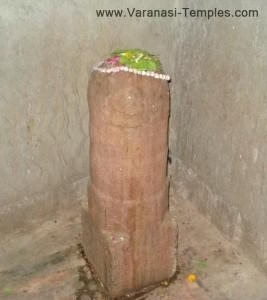
The temple enshrines a Swayambhu (self-manifested) Lingam dedicated to Lord Shiva, worshipped here as Hasti Paleshwar. The name holds profound Sanskrit roots: “Hasti” translates to “Elephant,” and “Paleshwar” implies “Lord who grants protection and liberation.”
Phalaśruti: The Boon of Liberation
According to the sacred Kashi Khand of the Skanda Purana, worshipping the Hasti Paleshwar Lingam carries immense spiritual merit. The scripture states that devotees who perform abhishekam and offer prayers here attain the virtue of having worshipped an elephant, an animal considered highly auspicious and associated with wisdom and royalty.
Why do devotees visit? It is believed that a sincere darshan of Hasti Paleshwar helps in:
- Removing Graha Dosha (planetary afflictions), particularly those affecting wealth and status.
- Cleansing ancestral karma, ensuring peace for forefathers.
- Granting the devotee the strength and stability of an elephant in navigating life’s obstacles.
Historical Origins & Scriptural Legend
The Kashi Khand Revelation
The primary historical and scriptural reference to Hasti Paleshwar is found in the Kashi Khand, Chapter 97. The legend describes Lord Shiva narrating the glory of Kashi to Goddess Parvati. He describes a specific region in Kashi where various sacred Teerths (ponds) and Koops (wells) exist. In this divine geography, the Lingam known as Hasti Paleshwar is established.
Tradition holds that Lord Shiva stated, “He who worships the Hasti Paleshwar Lingam with the devotion of an elephant—that is, with steadfastness and unshakeable focus—attains the highest goal of life.”
Etymology and Local Folklore
While specific dynastic construction records for this particular sanctum are scarce (common for Swayambhu Lingams in Varanasi), the architectural ethos points to the medieval period of Kashi’s history, likely expanded during the Maratha and Shukla dynasties’ patronage of Kashi temples. Locals recount that the temple is situated in the Daranagar locality, historically known for its dense population and spiritual activity.
Architectural Marvels
While Varanasi is predominantly known for the Nagara style, the Hasti Paleshwar Temple exemplifies the vernacular temple architecture of the sacred city. It is not a towering monument but an intimate, internalized spiritual space typical of the ‘Kashi Style’.
Structure and Vastu
- Sanctum Sanctorum (Garbhagriha): The inner sanctum houses the Swayambhu Lingam. The entrance is low, requiring devotees to bow their heads as an act of humility (Namaskar) before entering.
- Shikhara (Spire): The temple features a typical regional spire, adorned with amalaka and kalasha motifs, symbolizing the ascent of the soul.
- Proximity to Mrityunjay Mahadev: Architecturally and spiritually, Hasti Paleshwar is integrated into the complex of Mrityunjay Mahadev. This grouping is a common feature in Kashi, where smaller shrines form a spiritual constellation around a major deity.
Darshan & Ritual Logistics
Visiting Hasti Paleshwar is a journey into the heart of Kashi’s living heritage. Below are the logistical details for your visit.
Daily Timings
As this is a traditional temple in the old city, timings are aligned with the daily cycle of temple worship.
| Session | Timing | Activity |
|---|---|---|
| Morning | 05:00 AM – 12:00 PM | Mangala Darshan, Abhishekam |
| Afternoon | 12:00 PM – 04:00 PM | Rest Period (Sanctum Closed) |
| Evening | 04:00 PM – 09:00 PM | Shayan Darshan, Aarti |
Sevas and Offerings
Devotees can perform various Sevas to seek the blessings of Hasti Paleshwar:
- Rudrabhishekam: The most potent Vedic ritual for purification.
- Maha Rudra: Performed on auspicious Mondays and Pradosh.
- Chandika Path: For specific wishes and obstacles removal.
Online Seva Booking: While the specific portal for Hasti Paleshwar is managed locally, many temples in Varanasi utilize the Kashi Vishwanath Temple Trust portal or local WhatsApp-based bookings. It is advised to contact the temple priest directly for confirmed availability.
Festival Dates 2026
- Maha Shivaratri: February 26, 2026 (Special night-long jagran).
- Sawan Somwar (Mondays): July 14, 21, 28, and August 4, 2026 (Heavy footfall expected).
- Kartik Purnima: November 4, 2026 (Deep Daan ceremony).
Practical Visitor Guidance
Code of Conduct
As Hasti Paleshwar is located in the residential area of Daranagar:
- Dress Code: Traditional attire is highly recommended. Men should wear Dhoti/Kurta; women should wear Saree or Salwar Kameez. Modesty is paramount.
- Photography: Strictly prohibited inside the sanctum sanctorum. Mobile photography in the outer courtyard is permitted but should be respectful.
- Footwear: Shoes must be removed at the designated stand outside the temple complex.
Crowd Management & Best Times
The temple is in a densely populated area. The lanes are narrow.
- Best Time to Visit: Early morning (5:30 AM – 7:00 AM) or late evening (7:00 PM – 8:30 PM) to avoid local market crowds.
- Seasonal Advice: Summers (May-June) in Varanasi are scorching; carry a water bottle and cover your head. Winters (Dec-Jan) are foggy; carry warm layers.
Pilgrimage Connectivity
How to Reach
The temple is located in the heart of Varanasi (221001).
- By Air: Lal Bahadur Shastri International Airport (VNS) is approx. 30 km away. Taxis and auto-rickshaws are readily available.
- By Rail: Varanasi Junction (BSB) is the main railway station, approximately 5-6 km from Daranagar.
- By Road: The temple is accessible via Bisheshwarganj/GPO road. Auto-rickshaws are the preferred mode of transport for the last mile due to narrow lanes.
Nearby Sacred Sites (The Pilgrimage Circuit)
Since you are in Kashi, combine your visit with these nearby shrines:
- Mrityunjay Mahadev Temple: Located in the immediate premises (essential for longevity).
- Kashi Vishwanath Temple (Main): The abode of Lord Vishwanath, located about 20 minutes by vehicle.
- Sankat Mochan Hanuman Temple: The liberator from troubles, situated on the banks of the Assi Ghat.
Frequently Asked Questions
1. Is there a VIP Darshan entry at Hasti Paleshwar Temple?
Given the temple’s location in a residential area, it is a smaller shrine compared to the main Vishwanath Temple. VIP darshan facilities are generally not applicable here; however, early morning visits ensure a peaceful darshan without waiting.
2. Is photography allowed inside the temple?
Photography is strictly prohibited inside the inner sanctum where the Lingam is enshrined. It is permissible in the outer courtyards, provided it does not disturb other devotees or local residents.
3. What is the significance of the name “Hasti”?
Hasti refers to an Elephant. In Hindu iconography, the elephant represents wisdom, strength, and royal dignity. Worshipping Hasti Paleshwar is believed to grant the devotee these qualities and remove the “Karmic debt” associated with sins in past lives.
4. Are there accommodation facilities nearby?
Yes, Daranagar and the surrounding areas (near Dashashwamedh Ghat) offer numerous guesthouses and Dharamshalas. For luxury stays, hotels near the Cantonment area or Sarnath are recommended.
The best approach is to take an auto-rickshaw to the nearest drop-off point (Bisheshwarganj or GPO) and then walk the remaining distance. Walking allows you to experience the authentic atmosphere of the Kashi lanes.
Recent Posts

Shri Kaamkoteeshwar Mandir, Varanasi – History & Significance
In the heart of Kashi, the eternal city of Lord Shiva, where the Ganges flows with celestial grace, stands the Shri Kaamkoteeshwar Mandir. This sacred Sannidhi is not merely a temple but a profound spiritual bridge between the Northern…

ओ सांवरे तूने ही मुझको संभाला – Lyrics & Meaning
ओ सांवरे तूने ही मुझको संभाला – A Prayer to Shyam Origin & Spiritual Essence Why This Bhajan Resonates Devotees chant this when overwhelmed by life’s storms—the refrain ‘तूने ही मुझको संभाला’ is the soul’s sigh of relief: “You…

कथा ये है महाराज मेरे की – Lyrics & Meaning
कथा ये है महाराज मेरे की छत्रपति संभाजी महाराज – A Prayer to Chhatrapati Sambhaji Maharaj Origin & Spiritual Essence Why This Bhajan Resonates Devotees chant this when their spirit feels tested—its powerful refrain “महाराज मेरे” is a soul’s…

Rigveda Samhita Yathartha Anuvada (ऋग्वेद संहिता यथार्थ अनुवाद) – Complete Set with Anvayartha & Hindi/English Translation
The Rigveda is the oldest surviving scripture of humanity and the foundational text of Sanātana Dharma. For serious students, scholars, UPSC aspirants studying ancient Indian history, Sanskrit learners, and spiritual seekers, a precise and grammatically structured translation is indispensable.…

आना भी अकेला है जाना भी अकेला है – Lyrics & Meaning | BharatTemples
आना भी अकेला है जाना भी अकेला है – A Prayer to the Divine Witness Origin & Spiritual Essence Why This Bhajan Resonates Devotees turn to this bhajan in moments of deep reflection—when life’s attachments begin to ache. The…

माता शेरावाली के द्वार जो भी जाता है – Lyrics & Meaning
माता शेरावाली के द्वार जो भी जाता है – A Prayer to Maa Sherawali Origin & Spiritual Essence Why This Bhajan Resonates Devotees turn to this bhajan in times of fear or uncertainty—its promise that no one leaves Maa’s…

मार लेना सपणी उबार लेणा भवरा – Lyrics & Meaning
मार लेना सपणी उबार लेणा भवरा – A Prayer to the Divine Beloved Origin & Spiritual Essence Why This Bhajan Resonates Devotees chant this in moments of deep vulnerability—its cry of “मार लेना सपणी, उबार लेणा भवरा” is the…

हमें श्याम सुंदर भरोसा तुम्हारा – Lyrics & Meaning
हमें श्याम सुंदर भरोसा तुम्हारा – A Prayer to Shyam Sundar Origin & Spiritual Essence Why This Bhajan Resonates Devotees chant this when feeling alone—its refrain ‘de do sahara’ is the soul’s cry for divine support. Lyrics in Hindi…

Mere Satguru Ne Di Thi Davai Lyrics in Hindi & Meaning
Mere Satguru Ne Di Thi Davai: Invoking the Guru’s Liberating Wisdom This soul-stirring bhajan venerates the Satguru (True Spiritual Master) as the divine physician who dispenses the only remedy for life’s deepest sufferings. Composed by Sant Karmaveer Tufani, it…

Janm Diyo Thari Maa Dukh Dekhiyo Lyrics in Hindi & Meaning
जन्म दियो थारी माँ दुख देखियो (Maa’s Grief Upon Birthing You) This soul-stirring Chetavani Bhajan (admonitory hymn) is addressed to the Divine Mother (Maa) – a call for repentance when children forget their filial duties in the dark age…