
Contents
- 1 Introduction & Spiritual Essence: The Antargrihi of Kashi
- 2 Historical Origins & Scriptural Legend
- 3 Architectural Marvels
- 4 Darshan & Ritual Logistics (2026 Guide)
- 5 Practical Visitor Guidance
- 6 Pilgrimage Connectivity
- 7 Frequently Asked Questions (FAQ)
- 7.1 1. Is there a VIP darshan entry at Hatkeshwar Temple?
- 7.2 2. Can I offer milk directly to the Shiva Lingam?
- 7.3 3. What is the best time to visit Varanasi for a spiritual tour?
- 7.4 4. Is the temple accessible for elderly devotees?
- 7.5 5. Where can I stay nearby?
- 7.6 6. Is non-vegetarian food allowed near the temple?
Introduction & Spiritual Essence: The Antargrihi of Kashi
Standing as a sentinel of ancient faith within the sacred labyrinth of Varanasi, the Hatkeshwar Temple is a profound spiritual destination dedicated to Lord Shiva. Known locally as the Antargrihi (Innermost Sanctuary), this temple is not merely a structure of stone but a living pulse in the body of Kashi. The primary deity, Hatkeshwar, is a form of Lord Shiva worshipped as the “Lord of the Hair” or “Lord of the Plait”—a reference to his matted locks holding the celestial Ganga. For the devotee, a visit here is not just a ritual; it is a step toward Mukti (liberation).
Phalaśruti (Spiritual Benefit): According to the sacred Kashi Khand of the Skanda Purana, specific benefits are granted to those who worship here. The text states that a devotee who performs the Antargrihi Yatra, which includes worship at Hatkeshwar, attains Mukti in Kashi. This specific boon—liberation from the cycle of birth and death—is why this temple remains a non-negotiable stop for pilgrims seeking to cleanse ancestral karma and attain spiritual liberation.
Historical Origins & Scriptural Legend
While the exact construction date of the original shrine is lost to the mists of time—much like the eternal nature of Kashi itself—the spiritual architecture of the temple is firmly rooted in the Kashi Khand, Chapter 100. Tradition holds that the temple existed long before modern records began, likely rebuilt and renovated by devout patrons over centuries. The architecture suggests a history spanning several hundred years, sitting within the dense lanes near Raja Darwaja.
The Legend of Hatkeshwar:
According to local oral traditions and scriptural inference, Hatkeshwar is the manifestation of Lord Shiva protecting the Brahma Sthana (the cosmic center) of the inner city. The name itself connects to the Sanskrit word Hata (hair), signifying the location where the Ganges is believed to flow through Shiva’s matted locks before cascading down to earth. The Sthala Purana suggests that worshipping this specific form of Shiva grants the devotee control over their indriyas (senses) and leads to the ultimate truth.
Architectural Marvels
The Hatkeshwar Temple is a quintessential example of the Nagara style of temple architecture, adapted to the unique spatial constraints of the old city. Unlike the sprawling complexes of South India, this temple rises vertically, emphasizing the Shikhara (towering spire) that points directly to the heavens.
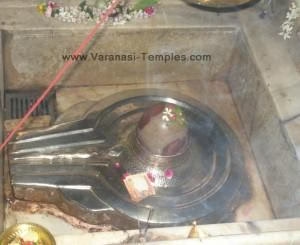
- The Sanctum (Garbhagriha): The inner sanctum houses the Swayambhu (self-manifested) lingam of Lord Hatkeshwar. The atmosphere inside is dimly lit, ancient, and intensely charged with devotion.
- Vastu Shastra: The temple layout follows strict Vastu principles, ensuring a free flow of energy. The entrance leads through a small Mandapa (hall) supported by pillars adorned with intricate carvings of deities.
- Sculptural Details: Though modest in scale compared to grand royal temples, the carvings on the outer walls and pillars depict scenes from Shiva mythology. The stones bear the patina of centuries of oil application and touch by devotees.
While not officially listed by the ASI as a protected monument, its value is preserved by the community and the Varanasi Heritage Trust as a vital link to the city’s ancient urban fabric.
Darshan & Ritual Logistics (2026 Guide)
To facilitate a smooth pilgrimage experience, here are the current darshan timings and key seva offerings available at the temple. Note that as of 2026, many ancient temples in Varanasi have digitized their offerings for global devotees.
Daily Darshan Timings
| Session | Timing |
|---|---|
| Morning (Mangala Aarti) | 05:00 AM – 10:00 AM |
| Midday Break | 10:00 AM – 4:00 PM (Grill Gate Darshan) |
| Evening (Shayan Aarti) | 4:00 PM – 8:30 PM |
*Note: The main doors are open from 7:00 AM to 10:00 AM. During other hours, devotees can have Darshan through the grill gate.
Key Sevas & Online Booking
Devotees can book standard Abhishekam and Archana services through the official Varanasi Temple Trust portal or upon arrival at the Seva Kendra.
- Abhishekam (Ritual Bathing): Performed daily between 6:00 AM and 8:00 AM. Items (milk, honey, ghee) provided at the counter.
- Archana (Chanting): Can be performed by the in-house priest or the devotee personally.
- Rudra Abhishek: A special ritual performed on Mondays and during Pradosh Kaal.
2026 Major Festival Dates
- Maha Shivaratri: February 26, 2026 (Continuous night-long darshan).
- Pradosh Vrat: Monthly (Check Panchang for exact dates; 11th of every month).
- Somvar Vrat: Every Monday (Special morning rush; arrive by 4:30 AM).
- Maha Gauri Puja: September 5, 2026.
Practical Visitor Guidance
Visiting the old city of Varanasi requires preparation. The Hatkeshwar Temple is located deep inside the narrow lanes, making vehicle access difficult.
- Dress Code: Traditional attire is recommended. Men should wear dhoti/kurta or pants covering the knees; women should wear sarees or full-length dresses. Sleeveless tops are discouraged inside the sanctum.
- Photography: Strictly prohibited inside the Garbhagriha (sanctum sanctorum). Photography in the outer mandapa is at the discretion of the temple priests.
- Lockers: There are no digital lockers at this specific ancient shrine. It is advisable to carry minimal items and avoid electronics. Use the coin-operated lockers available near major entry points of the old city (like Dashashwamedh Gate).
- Crowd Management:
- Best Hours: 4:30 AM (for morning opening) or 7:00 PM (after evening aarti) to avoid peak crowds.
- Seasonal Advice: In May and June, temperatures exceed 40°C. Carry a water bottle and an umbrella. Monsoons (July-August) make the stone steps slippery; wear rubber-soled footwear with good grip.
Pilgrimage Connectivity
The temple is located in the heart of Varanasi’s spiritual center.
How to Reach Hatkeshwar Temple
- Nearest Airport: Lal Bahadur Shastri International Airport (LBS), Varanasi (approx. 25 km). Take a taxi to Raja Darwaja (approx. 50 mins).
- Nearest Railway Station: Varanasi Junction (approx. 5 km) or Kashi Vishwanath Temple (KVT) Cantt Station (approx. 4 km).
- Road Access: From the main ghat road, navigate to Raja Darwaja. The temple is approximately 150 yards inside toward Harha Sarai.
- Parking: No vehicle entry is allowed inside the temple lane. Use designated parking lots at Godaulia or Dashashwamedh Ghat and proceed on foot or by cycle rickshaw.
Nearby Sacred Sites (Pilgrimage Circuit)
- Bharat Mata Temple (1.5 km): Dedicated to Mother India, housing a marble relief map of undivided India.
- Durga Temple (Monkey Temple) (1.2 km): A vibrant red-painted Nagara style temple dedicated to Goddess Durga.
- Sankat Mochan Hanuman Temple (2 km): Located on the banks of the Assi River, known for the “Sankat Mochan Hanuman Temple Langar.”
| Date built: | Unknown (Ancient) |
|---|---|
| Deity: | Hatkeshwar (Lord Shiva) |
| Architectural style: | Nagara (North Indian) |
| Major festivals | Maha Shivaratri, Pradosh |
| Locale: | Varanasi, Uttar Pradesh |
| District: | Varanasi |
| Address: | Harha Sarai, near Tulsi Market, Varanasi, UP |
| Phone | Available at Temple Office |
Frequently Asked Questions (FAQ)
1. Is there a VIP darshan entry at Hatkeshwar Temple?
No, Hatkeshwar is an ancient temple with a modest structure. There is no designated VIP entry. All devotees are treated equally, and darshan is generally quick unless during major festivals like Shivaratri.
2. Can I offer milk directly to the Shiva Lingam?
Yes, you can purchase milk from the stalls outside the temple. However, it is recommended to offer it through the designated temple priest to ensure it is distributed for Prasad and used appropriately in the ritual.
3. What is the best time to visit Varanasi for a spiritual tour?
The best time is between October and March. The weather is pleasant, and several festivals (including Dev Deepawali in November) take place. Avoid peak summer (May-June) unless you are prepared for extreme heat.
4. Is the temple accessible for elderly devotees?
The temple is located in narrow lanes with stairs. While the main darshan is accessible, the approach requires walking on uneven paths. Wheelchairs cannot be used inside the old city lanes. We recommend carrying elderly devotees up the stairs if necessary.
5. Where can I stay nearby?
There are numerous Dharamshalas and budget hotels near Dashashwamedh Ghat and Godaulia. For premium stays, hotels near Assi Ghat offer a quieter experience while remaining close to the old city.
6. Is non-vegetarian food allowed near the temple?
Varanasi is a strict vegetarian city. Non-vegetarian food and alcohol are banned within the entire municipal area. Devotees should respect local customs and consume only vegetarian food.
Recent Posts

ओ सांवरे तूने ही मुझको संभाला – Lyrics & Meaning
ओ सांवरे तूने ही मुझको संभाला – A Prayer to Shyam Origin & Spiritual Essence Why This Bhajan Resonates Devotees chant this when overwhelmed by life’s storms—the refrain ‘तूने ही मुझको संभाला’ is the soul’s sigh of relief: “You…

कथा ये है महाराज मेरे की – Lyrics & Meaning
कथा ये है महाराज मेरे की छत्रपति संभाजी महाराज – A Prayer to Chhatrapati Sambhaji Maharaj Origin & Spiritual Essence Why This Bhajan Resonates Devotees chant this when their spirit feels tested—its powerful refrain “महाराज मेरे” is a soul’s…

Rigveda Samhita Yathartha Anuvada (ऋग्वेद संहिता यथार्थ अनुवाद) – Complete Set with Anvayartha & Hindi/English Translation
The Rigveda is the oldest surviving scripture of humanity and the foundational text of Sanātana Dharma. For serious students, scholars, UPSC aspirants studying ancient Indian history, Sanskrit learners, and spiritual seekers, a precise and grammatically structured translation is indispensable.…

आना भी अकेला है जाना भी अकेला है – Lyrics & Meaning | BharatTemples
आना भी अकेला है जाना भी अकेला है – A Prayer to the Divine Witness Origin & Spiritual Essence Why This Bhajan Resonates Devotees turn to this bhajan in moments of deep reflection—when life’s attachments begin to ache. The…

माता शेरावाली के द्वार जो भी जाता है – Lyrics & Meaning
माता शेरावाली के द्वार जो भी जाता है – A Prayer to Maa Sherawali Origin & Spiritual Essence Why This Bhajan Resonates Devotees turn to this bhajan in times of fear or uncertainty—its promise that no one leaves Maa’s…

मार लेना सपणी उबार लेणा भवरा – Lyrics & Meaning
मार लेना सपणी उबार लेणा भवरा – A Prayer to the Divine Beloved Origin & Spiritual Essence Why This Bhajan Resonates Devotees chant this in moments of deep vulnerability—its cry of “मार लेना सपणी, उबार लेणा भवरा” is the…

हमें श्याम सुंदर भरोसा तुम्हारा – Lyrics & Meaning
हमें श्याम सुंदर भरोसा तुम्हारा – A Prayer to Shyam Sundar Origin & Spiritual Essence Why This Bhajan Resonates Devotees chant this when feeling alone—its refrain ‘de do sahara’ is the soul’s cry for divine support. Lyrics in Hindi…

Mere Satguru Ne Di Thi Davai Lyrics in Hindi & Meaning
Mere Satguru Ne Di Thi Davai: Invoking the Guru’s Liberating Wisdom This soul-stirring bhajan venerates the Satguru (True Spiritual Master) as the divine physician who dispenses the only remedy for life’s deepest sufferings. Composed by Sant Karmaveer Tufani, it…

Janm Diyo Thari Maa Dukh Dekhiyo Lyrics in Hindi & Meaning
जन्म दियो थारी माँ दुख देखियो (Maa’s Grief Upon Birthing You) This soul-stirring Chetavani Bhajan (admonitory hymn) is addressed to the Divine Mother (Maa) – a call for repentance when children forget their filial duties in the dark age…
Bhadi Sabha Mein Thane Manaun Lyrics in Hindi & Meaning
Bhadi Sabha Mein Thane Manaun: Invoking the Spear-Wielding Mother Mata Bhawani (श्री ज्वाला भवानी), the fiery manifestation of Shakti worshipped as the Protector of Dharma in Her Dhaulagarh sanctum. Origin & Spiritual Essence Composed in Rajasthani folk tradition by…