
Contents
Introduction & Spiritual Essence
Nestled in the spiritual suburb of Thirumazhisai, a prime locale in the Thiruvallur district, the Ilangali Amman Temple stands as a beacon of divine energy and ancient tradition. Dedicated primarily to Goddess Kali (also worshipped as Elangeshwari or Ilangali Amman), this sacred shrine is revered by devotees seeking protection from negative influences and the removal of obstacles.
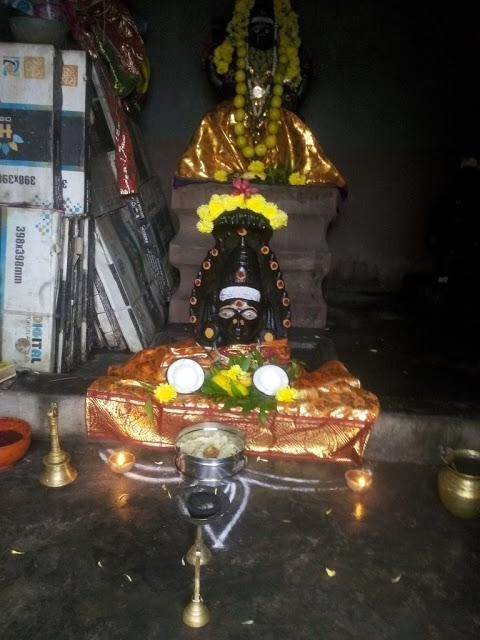
The presiding deity is a Swayambhu (self-manifested) Murti, radiating a fierce yet benevolent aura. Unlike standard idols, this form is believed to have emerged from the earth, imbued with immense spiritual power. The temple is particularly significant for devotees performing rites for ancestral karma cleansing and seeking justice in legal or property disputes.
Phalaśruti: Why Visit?
Tradition holds that a pilgrimage to Ilangali Amman brings specific spiritual benefits (Phalaśruti):
- Protection from Evil: The Goddess is believed to neutralize negative energies and the evil eye (Nazar).
- Resolution of Disputes: Devotees visit to seek resolution in prolonged legal battles and conflicts.
- Ancestral Peace: Performing specific rituals here helps in liberating ancestors from Pitra Dosha.
Historical Origins & Scriptural Legend
While the exact date of the initial construction is not explicitly recorded in modern records, local historians trace the temple’s origins back several centuries, likely established during the later Vijayanagara period or by local chieftains who were ardent devotees of the Mother Goddess. The temple has undergone several renovations, preserving its ancient sanctity while improving structural integrity.
The Legend of Thirumazhisai
According to temple records and oral history, the land of Thirumazhisai is associated with the Sthala Purana involving the Dasavatharam of Lord Vishnu. It is believed that the divine serpent Adisesha covered the ground here, and the soil has the potency to absorb negative vibrations.
Legend states that Goddess Kali appeared here to annihilate a powerful demon threatening the peace of the sages and locals. Her fierce form, holding the trident and vanquishing evil, is preserved in the Moolavar (primary idol). The name “Ilangali” is derived from the Tamil word Ilanga, signifying beauty and grace, despite the fierce form, indicating the Goddess’s dual nature of destruction and nurturing.
Architectural Marvels
The Ilangali Amman Temple is a classic example of Dravidian Architecture, characterized by its pyramid-shaped Gopurams and intricate carvings.
- Sanctum Sanctorum (Garbhagriha): The inner sanctum houses the Swayambhu idol of Goddess Ilangali Amman, facing east. The idol is carved from black granite, depicting the Goddess with four arms holding weapons, seated on a lion base.
- Prakaram (Corridor): The circumambulatory path is spacious, allowing devotees to perform Pradakshina. The outer walls feature sculptures depicting various forms of Devi and scenes from Hindu mythology.
- Mandapas: The temple features a pillared Mandapa (hall) used for conducting Utsavams (festivals) and housing the Vahana (vehicle) icons of the deity.
While this temple is not an ASI-protected monument or UNESCO heritage site, it is maintained by the Hindu Religious and Charitable Endowments (HR&CE) Department of Tamil Nadu, ensuring the architectural heritage is preserved for future generations.
Darshan & Ritual Logistics
To facilitate a smooth pilgrimage experience, devotees should plan their visit according to the temple’s schedule. Note that timings may vary during festival seasons.
Daily Timings
| Session | Timing |
|---|---|
| Morning | 06:00 AM – 12:00 PM |
| Evening | 04:00 PM – 08:00 PM |
Key Sevas & Online Booking
Devotees can participate in various rituals to seek the blessings of Ilangali Amman. While walk-ins are accepted for standard darshan, specific Sevas often require prior booking.
- Abhishekam: Ritual bathing of the deity with sacred substances (milk, honey, turmeric). Performed daily between 7:00 AM and 8:00 AM.
- Archana: Recitation of the Goddess’s holy names. Can be performed anytime during temple hours.
- Special Poojas: Includes Rudra Abhishekam and Chandi Homam, typically performed on full moon days and Fridays.
Booking Note: For online seva booking, devotees are advised to visit the official Tamil Nadu HR&CE portal or the specific counter at the temple entrance.
2026 Major Festivals
Plan your visit around these auspicious dates:
- Navaratri: October 2 – October 11, 2026. The temple is decorated with lights and special Alankarams are displayed.
- Deepavali: October 20, 2026. Special Diya lighting and early morning darshan.
- Pongal (Thai Pongal): January 14, 2026. A harvest offering of sweet rice to the deity.
Practical Visitor Guidance
Ensuring a respectful and comfortable visit requires preparation.
- Dress Code: Traditional attire is mandatory. Men should wear Dhotis or trousers with shirts; women should wear Sarees, Salwar Kameez, or full-length skirts. Avoid shorts and sleeveless tops.
- Photography & Mobiles: Photography is generally restricted inside the sanctum. Mobile phones are permitted but must be silenced. Lockers may be available at the entrance for a nominal fee.
- Accessibility: The temple has ramps for wheelchair access to the first prakaram, though the inner sanctum has steps.
Crowd Management Strategy
Thirumazhisai is a bustling suburb, but the temple sees peak crowds on Tuesdays, Fridays, and festival days.
- Best Hours: The most peaceful darshan is usually between 8:00 AM and 10:00 AM on weekdays.
- Seasonal Advice: During the summer months (April–May), carry water and an umbrella, as the queues can extend outdoors.
Pilgrimage Connectivity
Thirumazhisai is a major junction on the western corridor of Chennai.
How to Reach
- By Road: Located on the Poonamallee–Thiruvallur–Tirupati Highway. It is approximately 26 km from Chennai Central Railway Station and 24 km from Chennai Airport. Buses ply frequently from Parrys, Koyambedu, and T. Nagar.
- By Rail: The nearest railway stations are Pattabiram (11 km) and Avadi (16 km).
- By Air: Chennai International Airport is the nearest airport, approximately 24 km away.
Nearby Sacred Sites (Pilgrimage Circuit)
Extend your spiritual journey by visiting these nearby temples, all within a 2-5 km radius:
- Jagannatha Perumal Temple: Located 2 km away, dedicated to Lord Vishnu.
- Othandeeswarar Temple: A Shiva temple located 1.5 km from Ilangali Amman.
- Veetrirundha Perumal Temple: Dedicated to Lord Vishnu in a reclining posture, 1 km away.
Frequently Asked Questions (FAQ)
1. Is there a VIP darshan entry available?
Yes, the temple offers a special entry darshan for senior citizens and physically challenged devotees. VIP darshan is typically facilitated during non-peak hours upon request at the administration counter.
2. What is the significance of the name ‘Ilangali’?
The name combines ‘Ilanga’ (beautiful/graceful) and ‘Ali’ (a form of Kali). It signifies the Goddess’s benevolent aspect despite her fierce form, symbolizing that she destroys evil to protect the good.
3. Are non-Hindus allowed inside?
Like most Hindu temples in Tamil Nadu, entry is generally restricted to those who follow Hinduism. However, it is best to check with the temple administration for specific guidelines.
4. Is there a dress code for children?
Children are exempt from strict dress codes but should be dressed modestly. For boys above 10 years, a Dhoti or shirt/trouser combination is recommended.
5. Where can I park my vehicle?
The temple has a dedicated two-wheeler parking area. For four-wheelers, paid parking is available nearby at the Thirumazhisai bus stand complex, especially during weekends.




Recent Posts

Shri Kaamkoteeshwar Mandir, Varanasi – History & Significance
In the heart of Kashi, the eternal city of Lord Shiva, where the Ganges flows with celestial grace, stands the Shri Kaamkoteeshwar Mandir. This sacred Sannidhi is not merely a temple but a profound spiritual bridge between the Northern…

ओ सांवरे तूने ही मुझको संभाला – Lyrics & Meaning
ओ सांवरे तूने ही मुझको संभाला – A Prayer to Shyam Origin & Spiritual Essence Why This Bhajan Resonates Devotees chant this when overwhelmed by life’s storms—the refrain ‘तूने ही मुझको संभाला’ is the soul’s sigh of relief: “You…

कथा ये है महाराज मेरे की – Lyrics & Meaning
कथा ये है महाराज मेरे की छत्रपति संभाजी महाराज – A Prayer to Chhatrapati Sambhaji Maharaj Origin & Spiritual Essence Why This Bhajan Resonates Devotees chant this when their spirit feels tested—its powerful refrain “महाराज मेरे” is a soul’s…

Rigveda Samhita Yathartha Anuvada (ऋग्वेद संहिता यथार्थ अनुवाद) – Complete Set with Anvayartha & Hindi/English Translation
The Rigveda is the oldest surviving scripture of humanity and the foundational text of Sanātana Dharma. For serious students, scholars, UPSC aspirants studying ancient Indian history, Sanskrit learners, and spiritual seekers, a precise and grammatically structured translation is indispensable.…

आना भी अकेला है जाना भी अकेला है – Lyrics & Meaning | BharatTemples
आना भी अकेला है जाना भी अकेला है – A Prayer to the Divine Witness Origin & Spiritual Essence Why This Bhajan Resonates Devotees turn to this bhajan in moments of deep reflection—when life’s attachments begin to ache. The…

माता शेरावाली के द्वार जो भी जाता है – Lyrics & Meaning
माता शेरावाली के द्वार जो भी जाता है – A Prayer to Maa Sherawali Origin & Spiritual Essence Why This Bhajan Resonates Devotees turn to this bhajan in times of fear or uncertainty—its promise that no one leaves Maa’s…

मार लेना सपणी उबार लेणा भवरा – Lyrics & Meaning
मार लेना सपणी उबार लेणा भवरा – A Prayer to the Divine Beloved Origin & Spiritual Essence Why This Bhajan Resonates Devotees chant this in moments of deep vulnerability—its cry of “मार लेना सपणी, उबार लेणा भवरा” is the…

हमें श्याम सुंदर भरोसा तुम्हारा – Lyrics & Meaning
हमें श्याम सुंदर भरोसा तुम्हारा – A Prayer to Shyam Sundar Origin & Spiritual Essence Why This Bhajan Resonates Devotees chant this when feeling alone—its refrain ‘de do sahara’ is the soul’s cry for divine support. Lyrics in Hindi…

Mere Satguru Ne Di Thi Davai Lyrics in Hindi & Meaning
Mere Satguru Ne Di Thi Davai: Invoking the Guru’s Liberating Wisdom This soul-stirring bhajan venerates the Satguru (True Spiritual Master) as the divine physician who dispenses the only remedy for life’s deepest sufferings. Composed by Sant Karmaveer Tufani, it…

Janm Diyo Thari Maa Dukh Dekhiyo Lyrics in Hindi & Meaning
जन्म दियो थारी माँ दुख देखियो (Maa’s Grief Upon Birthing You) This soul-stirring Chetavani Bhajan (admonitory hymn) is addressed to the Divine Mother (Maa) – a call for repentance when children forget their filial duties in the dark age…