
Contents
Introduction & Spiritual Essence: The Home of the Divine Couple
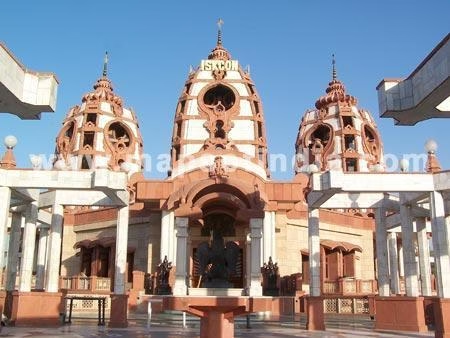
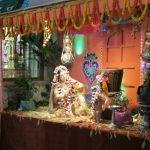
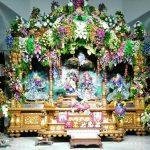
Rising majestically atop the Hare Krishna Hills, the ISKCON Temple Delhi, formally known as the Sri Sri Radha Parthasarathi Mandir, stands as a beacon of spiritual solace amidst the bustling urban landscape of New Delhi. Conceived by the vision of A.C. Bhaktivedanta Swami Prabhupada, the temple serves as a central hub for the Gaudiya Vaishnavism tradition. The presiding deity here is Sri Sri Radha Parthasarathi, a form of Lord Krishna (Parthasarathi being his charioteer role in the Mahabharata) accompanied by his divine consort, Radharani.
The spiritual essence of this shrine is encapsulated in the practice of Bhakti Yoga—the yoga of devotion. Unlike many ancient temples that focus on specific boons, the primary Phalaśruti (benefit) of visiting ISKCON Delhi is the purification of the heart and the awakening of divine consciousness. Devotees flock here not merely for material fulfillment but to experience Bhakti-rasa (the transcendental taste of devotion), cleansing lifetimes of karma through the chanting of the Hare Krishna maha-mantra and participating in the daily seva of the deities.
Historical Origins & Scriptural Legend
The Modern Legacy
While the ISKCON movement traces its roots to the 16th-century saint Chaitanya Mahaprabhu, the establishment of the Delhi temple is a significant modern milestone. The temple was inaugurated in 1998. According to temple records, the project was driven by the desire to offer a spiritual sanctuary to the capital’s residents and international visitors. The acquisition of the land at Hare Krishna Hills marked a pivotal moment in making Vedic culture accessible in a metropolitan hub.
The Legend of Radha Parthasarathi
The deity form is unique and steeped in Sthala Purana. The name Parthasarathi refers to Krishna’s role as the charioteer for Arjuna (son of Pritha) on the battlefield of Kurukshetra. While the form is associated with the Mahabharata, the ISKCON tradition emphasizes the philosophical synthesis of Karma Yoga (duty) and Bhakti Yoga (devotion). Tradition holds that by worshipping Radha Parthasarathi, devotees receive the guidance necessary to navigate the “battlefield” of modern material life with spiritual equanimity.
Architectural Marvels: A Fusion of Tradition and Modernity
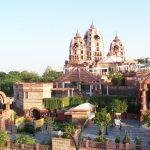
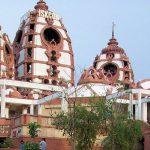
The ISKCON Temple Delhi is a masterpiece of Post-Modern Nagara architecture, blending traditional Vedic aesthetics with contemporary structural engineering. Designed by the renowned architect Achyut Kanvinde in 1993, the complex was completed as a pro-bono project dedicated to the followers of Srila Prabhupada.
Structural Design & Elements
- The Shikhara (Spire): The temple features a soaring central spire that rises above the city skyline, reminiscent of ancient North Indian temples but constructed using modern concrete and glass reinforcement.
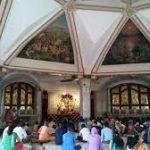
- Mandapa & Halls: The interior is vast, divided into four broad sections. The main Mandapa is adorned with intricate marble flooring and houses the altar where the deities reside. The temple complex includes extensive rooms for priests, administrative halls, and seminar facilities.
- Iconography: The exterior walls are decorated with detailed sculptures depicting scenes from the Ramayana and Mahabharata, rendered in a style that is both educational for the modern viewer and devotional in intent.
Darshan & Ritual Logistics
To facilitate a seamless spiritual experience, the temple has structured daily timings for Darshan (viewing the deity) and Seva (service). Please note that timings may vary slightly during festivals.
Daily Timings (2026 Schedule)
| Session | Timings | Details |
|---|---|---|
| Morning Darshan | 4:30 AM – 1:00 PM | Includes Mangala Arati (4:30 AM) and Darshan Arati. |
| Afternoon Break | 1:00 PM – 4:30 PM | Deities rest (resting period). |
| Evening Darshan | 4:30 PM – 9:00 PM | Includes Sandhya Arati and Pushpanjali. |
| Temple Closes | 9:00 PM | – |
Seva Services & Online Booking
Devotees can book various Sevas online via the official ISKCON Delhi website. Key services include:
- Abhishekam: Ritual bathing of the deities (usually performed in the morning hours).
- Archana: Personalized offerings of prayers and flowers.
- Brahmana Bhojanam: Serving sanctified meals to Brahmins/priests.
Major Festivals in 2026
ISkCON Delhi is famous for its grand festivals. Key dates for 2026 include:
- Janmashtami: August 14-15, 2026 (Grand midnight celebrations).
- Ratha Yatra (Car Festival): July 2026 (Dates vary by lunar calendar; usually coincides with Gurupurnima).
- Gaura Purnima: March 13, 2026 (Appearance day of Chaitanya Mahaprabhu).
- Govardhan Puja: November 2026 (Annakut offering).
Practical Visitor Guidance
Visiting the temple is a sensory delight, but preparation ensures a peaceful experience.
Dress Code & Etiquette
Modest attire is required. Men are advised to wear long trousers and shirts; women are requested to wear sarees, salwar kameez, or skirts that cover the legs. Shorts and sleeveless tops are not permitted. Leather items (belts, wallets) are restricted as per temple regulations.
Crowd Management & Best Hours
- Early Morning: 4:30 AM – 7:00 AM is ideal for a quiet, meditative darshan.
- Weekends: Saturdays and Sundays see high footfall; weekday mornings are less crowded.
- Seasonal Advice: Delhi summers (May-June) can be harsh; carry a water bottle and expect outdoor queuing. The temple is air-conditioned.
Facilities
The temple provides mobile lockers at the entrance for electronic devices and prohibited items. The complex is wheelchair accessible, with ramps and elevators connecting the basement and ground levels.
Pilgrimage Connectivity
The temple is strategically located in South Delhi, making it highly accessible.
How to Reach
- Nearest Metro: Nehru Place Station (Violet Line). The temple is a 5-minute walk from the station via the elevated walkway.
- Nearest Airport: Indira Gandhi International Airport (DEL). Approx 25-30 mins drive via NH-48 (Delhi-Gurgaon Expressway).
- Railway Station: New Delhi Railway Station is 12 km away. Best reached via the Metro (Yellow Line interchange to Violet Line at Kalkaji Mandir).
- By Road: Located on Mathura Road (near Pragati Maidan/Lothian Cemetery), accessible via NH-19 (Old Mathura Road).
Nearby Sacred Sites
Extend your pilgrimage to these nearby spiritual centers:
- Kalkaji Mandir: Located just 1.5 km away, this ancient temple dedicated to Goddess Kali is one of Delhi’s oldest shrines.
- Baha’i Lotus Temple: A 10-minute drive from ISkCON, known for its flower-like architecture and silence.
- Yogmaya Temple: Situated in Qutub Minar complex, dedicated to the sister of Lord Krishna (approx 6 km).
Photo Gallery
Frequently Asked Questions (FAQ)
1. Is there a VIP Darshan entry available?
Yes, ISKCON Delhi offers a “Special Darshan” pass, often included with specific Seva donations (like Archana or Abhishekam). This allows devotees to bypass the general queue during peak hours.
2. Can I book online Seva from outside India?
Absolutely. The official ISKCON Delhi website supports international payments. You can book Sevas for family members visiting the temple, and the priests will perform the rituals on your behalf. Photos/videos are usually shared via email.
3. Is the ISKCON Temple Delhi open on all days?
Yes, the temple is open 365 days a year. However, the museum and administrative offices may have different hours. Festivals like Janmashtami are celebrated with grandeur and attract huge crowds.
4. Are there vegetarian restaurants inside the temple complex?
Yes, the temple houses the Govinda’s restaurant in the basement, serving strictly satvik (pure vegetarian and onion-garlic free) meals. It is highly recommended for pilgrims.
5. What are the security guidelines?
Due to high security in Delhi, visitors are subject to metal detector checks. Large bags, luggage, and sharp objects are prohibited inside the temple sanctum.
Recent Posts

ओ सांवरे तूने ही मुझको संभाला – Lyrics & Meaning
ओ सांवरे तूने ही मुझको संभाला – A Prayer to Shyam Origin & Spiritual Essence Why This Bhajan Resonates Devotees chant this when overwhelmed by life’s storms—the refrain ‘तूने ही मुझको संभाला’ is the soul’s sigh of relief: “You…

कथा ये है महाराज मेरे की – Lyrics & Meaning
कथा ये है महाराज मेरे की छत्रपति संभाजी महाराज – A Prayer to Chhatrapati Sambhaji Maharaj Origin & Spiritual Essence Why This Bhajan Resonates Devotees chant this when their spirit feels tested—its powerful refrain “महाराज मेरे” is a soul’s…

Rigveda Samhita Yathartha Anuvada (ऋग्वेद संहिता यथार्थ अनुवाद) – Complete Set with Anvayartha & Hindi/English Translation
The Rigveda is the oldest surviving scripture of humanity and the foundational text of Sanātana Dharma. For serious students, scholars, UPSC aspirants studying ancient Indian history, Sanskrit learners, and spiritual seekers, a precise and grammatically structured translation is indispensable.…

आना भी अकेला है जाना भी अकेला है – Lyrics & Meaning | BharatTemples
आना भी अकेला है जाना भी अकेला है – A Prayer to the Divine Witness Origin & Spiritual Essence Why This Bhajan Resonates Devotees turn to this bhajan in moments of deep reflection—when life’s attachments begin to ache. The…

माता शेरावाली के द्वार जो भी जाता है – Lyrics & Meaning
माता शेरावाली के द्वार जो भी जाता है – A Prayer to Maa Sherawali Origin & Spiritual Essence Why This Bhajan Resonates Devotees turn to this bhajan in times of fear or uncertainty—its promise that no one leaves Maa’s…

मार लेना सपणी उबार लेणा भवरा – Lyrics & Meaning
मार लेना सपणी उबार लेणा भवरा – A Prayer to the Divine Beloved Origin & Spiritual Essence Why This Bhajan Resonates Devotees chant this in moments of deep vulnerability—its cry of “मार लेना सपणी, उबार लेणा भवरा” is the…

हमें श्याम सुंदर भरोसा तुम्हारा – Lyrics & Meaning
हमें श्याम सुंदर भरोसा तुम्हारा – A Prayer to Shyam Sundar Origin & Spiritual Essence Why This Bhajan Resonates Devotees chant this when feeling alone—its refrain ‘de do sahara’ is the soul’s cry for divine support. Lyrics in Hindi…

Mere Satguru Ne Di Thi Davai Lyrics in Hindi & Meaning
Mere Satguru Ne Di Thi Davai: Invoking the Guru’s Liberating Wisdom This soul-stirring bhajan venerates the Satguru (True Spiritual Master) as the divine physician who dispenses the only remedy for life’s deepest sufferings. Composed by Sant Karmaveer Tufani, it…

Janm Diyo Thari Maa Dukh Dekhiyo Lyrics in Hindi & Meaning
जन्म दियो थारी माँ दुख देखियो (Maa’s Grief Upon Birthing You) This soul-stirring Chetavani Bhajan (admonitory hymn) is addressed to the Divine Mother (Maa) – a call for repentance when children forget their filial duties in the dark age…
Bhadi Sabha Mein Thane Manaun Lyrics in Hindi & Meaning
Bhadi Sabha Mein Thane Manaun: Invoking the Spear-Wielding Mother Mata Bhawani (श्री ज्वाला भवानी), the fiery manifestation of Shakti worshipped as the Protector of Dharma in Her Dhaulagarh sanctum. Origin & Spiritual Essence Composed in Rajasthani folk tradition by…