Jagannath Temple Puri: History, Timings & Complete Guide
Receive daily temple updates, divine darshan, and morning bhajans directly on WhatsApp.
Contents
- 1 The Sacred Abode of Lord Jagannath: A Definitive Pilgrimage Guide to Puri
The Sacred Abode of Lord Jagannath: A Definitive Pilgrimage Guide to Puri
Introduction & Spiritual Essence
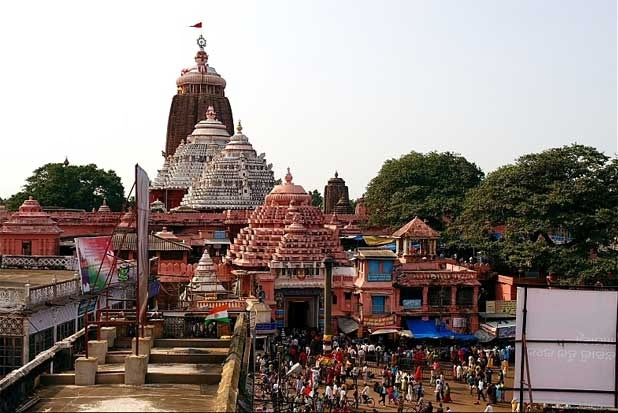
Nestled on the eastern coast of India along the shores of the Bay of Bengal, the Shree Jagannath Temple in Puri stands as one of the holiest sites in the Char Dham pilgrimage circuit. Dedicated to Lord Jagannath—a manifestation of Lord Vishnu, specifically Krishna—this temple is the spiritual heartbeat of Odisha. Unlike the static stone or metal idols found in most Hindu temples, the Murti (deity) of Jagannath is a Swayambhu (self-manifested) form carved from sacred wood, holding profound esoteric significance.
Deity & Form: Lord Jagannath is depicted with large, circular eyes, representing his all-seeing nature. He is flanked by his elder brother, Lord Balabhadra (Balarama), and his sister, Devi Subhadra. Together, they represent the cosmic trinity of creation, preservation, and destruction. The deity holds a Sudarshana Chakra (discus), Shankha (conch), Gada (mace), and Padma (lotus), symbolizing the four pillars of righteousness (Dharma), wealth (Artha), pleasure (Kama), and liberation (Moksha).
Phalaśruti: Why Devotees Visit
Pilgrims flock to the Shree Mandira to attain spiritual liberation and cleanse ancestral karma. According to the Skanda Purana, a visit to Puri washes away sins accumulated over lifetimes. Specific benefits include:
- Cleansing Ancestral Karma: Performing rituals for ancestors here grants them Moksha.
- Fulfillment of Wishes: The Maha Prasad (consecrated food) distributed here, known as Mahaprasad, is believed to possess healing properties.
- Protection: Lord Jagannath is considered the Kshetra Palaka (protector of the land), ensuring safety and prosperity for devotees.
📖 Related: Dutikeswar Mahadev Temple, Nayagarh
Historical Origins & Scriptural Legend
The history of the Jagannath Temple is a tapestry of myth and documented chronology.
Scriptural Legend & Sthala Purana
According to the Brahma Purana and Skanda Purana, the origin traces back to King Indradyumna, a pious Malava king. The legend states that Lord Vishnu appeared in the king’s dream, instructing him to worship Lord Neela Madhaba, a form of the deity hidden in a dense forest by a tribal chief named Viswavasu. The king’s priest, Vidyapati, cleverly tracked the cave by dropping mustard seeds on the forest path. Upon finding the deity, Indradyumna sought to install it in a temple. Divine intervention instructed him to use the divine wood from the seashore to carve the idols of Jagannath, Balabhadra, and Subhadra. Tradition holds that the wooden deity is ceremoniously replaced every 12 or 19 years (during the Nabakalebara ritual) to retain its spiritual energy.
Architectural History
The temple complex was rebuilt from the 10th century onwards. The foundation was laid by King Anantavarman Chodaganga Deva, the first ruler of the Eastern Ganga Dynasty, in the 12th century. According to temple records, the current structural form was completed around 1161 CE. The temple has faced multiple invasions and restorations, notably by the King of Gajapati, Purushottama Deva.
Architectural Marvels
The temple is a masterpiece of Kalinga Architecture, characterized by its distinct Dravidian and Nagara fusion style. It is a living monument of engineering and Vastu Shastra.
The Shikhara and Vastu Elements
The temple complex is enclosed by a high fortified wall (approx. 200 meters square) known as the Kurma Bedha (Tortoise Boundary). The main sanctum rises to a height of 65 meters. The Shikhara (spire) is crowned by the Neelachakra, an eight-spoked wheel representing the wheel of time and the Sudarshana Chakra.
Key Structures
- Singhadwara (Lion’s Gate): The main entrance guarded by two ferocious stone lions. Entering through this gate, one must ascend 22 steps (known as Baisi Pahacha), symbolizing the removal of the 22 material afflictions.
- Muktimandapa: The central porch where devotees perform rituals.
- Roof of the Sanctum: Plated with gold, adding to the divine aura.
- Sculptures: The outer walls are adorned with intricate friezes depicting deities, mythical beasts, and floral motifs in green chlorite stone.
📖 Related: Panchalingeshwar Temple, Balasore: History, Darshan Timings & Complete Pilgrimage Guide
Darshan & Ritual Logistics
The rituals in the Jagannath Temple follow strict Agama and Veda traditions. The temple priests follow a unique tradition of not allowing non-Hindus inside the sanctum.
Daily Timings
Note: Timings are subject to change during festivals. Current date considered is 2026.
| Darshan Type | Morning | Evening |
|---|---|---|
| Mangala Alati (Ritual Wake-up) | 4:00 AM | – |
| Tirtha Alati (Public Darshan Start) | 7:00 AM | 7:00 PM |
| Sandhya Alati (Closing Ritual) | – | 9:30 PM |
Key Sevas & 2026 Festivals
Devotees can offer specific Sevas. Note that the highest level of offerings are Abhishekam (ritual bathing) and Archana (offerings of flowers/fruits).
- Online Seva Booking: Visit the official website of the Shree Jagannath Temple Administration (SJTA) to book Seva Puja and Rashi offerings. Online booking usually opens 30 days prior to the date.
- Ratha Yatra (Car Festival) 2026: Scheduled for July 25, 2026. This is the most auspicious day, where the deities travel to the Gundicha Temple in massive wooden chariots.
- Nabakalebara: While the 2025 festival has recently concluded, preparations for the next cycle will span the coming years. This ritual involves the replacement of the deities’ wooden bodies.
- Snana Yatra: Celebrated on the full moon of June/July (Bathing Festival).
Practical Visitor Guidance
Visiting the Jagannath Temple requires adherence to strict spiritual protocols.
- Dress Code: Traditional attire is mandatory. Men must wear Dhoti and Panjabi (or Kurta-Pajama); women must wear Saree or Salwar Kameez. Western attire is strictly prohibited.
- Photography: Photography is strictly prohibited inside the main temple complex and the inner sanctum.
- Mobiles & Electronics: Bags and mobile phones are not allowed inside. Utilize the mobile lockers available at the entry gates (Singhadwara or Kalpana Gate) for a nominal fee.
- Accessibility: The temple has 22 steps at the entrance. Ramps are available, but navigating the inner sanctum can be difficult for wheelchair users due to the heritage nature of the structure.
- Crowd Management:
- Best Hours: 9:00 AM to 11:00 AM or after 4:00 PM to avoid long queues.
- Seasonal Advice: Puri experiences high humidity. Carry water, but do not bring plastic bottles inside (strict ban). Use earthen pots sold by vendors (Khotta) for water inside.
📖 Related: Manibhadresvara Temple II History & Darshan Timings | Bhubaneswar Guide
Pilgrimage Connectivity
How to Reach
- By Air: The nearest airport is Biju Patnaik International Airport in Bhubaneswar (approx. 60 km). Taxis and buses are readily available.
- By Rail: Puri Railway Station (PURI) is a terminal station, well-connected to major cities like Delhi, Mumbai, Kolkata, and Hyderabad via express trains.
- By Road: Puri is connected via National Highway 316 (part of the Golden Quadrilateral connectivity). Regular bus services operate from Bhubaneswar (approx. 2 hours) and Cuttack.
Nearby Sacred Sites
To complete your pilgrimage circuit, visit these sites within Puri:
- Gundicha Temple: The abode of Lord Jagannath during the Ratha Yatra (7 km from the main temple).
- Mausi Maa Temple (Alarnatha Temple): Located at Brahmagiri, visited by devotees during the Anavasara period (when the deities are away from public view).
- Swargadwar: The cremation ground on the beach, believed to be the gateway to heaven. It is also a site for Tarpan (offering to ancestors).
1493276785-rotates-shareiq-520-1493118625-322225-jpg-destreviewimages-720×512-1493276775-cropped
208028184Puri_Jagannath_Temple_Main
sri_jagannath_temple_0, Jagannath Temple, Puri, Odisha
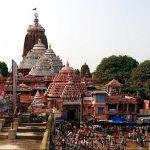
b-jagannath-temple (1), Jagannath Temple, Puri, Odisha
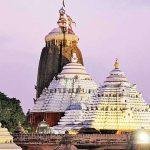
691107-665942-puri-temple-temple (1)
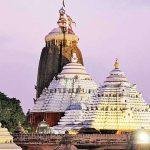
691107-665942-puri-temple-temple, Jagannath Temple, Puri, Odisha
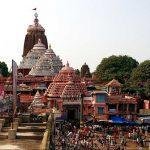
b-jagannath-temple, Jagannath Temple, Puri, Odisha
Frequently Asked Questions (FAQs)
Is there a VIP darshan entry?
Yes, the temple administration offers a ‘Paid Darshan’ facility (often called VIP Darshan) at the temple entry point. However, this does not guarantee immediate access during peak festival times like Ratha Yatra. For special privileges, one must book through the official SJTA portal.
Can non-Hindus enter the Jagannath Temple?
No. The Shree Jagannath Temple allows entry strictly to Hindus of all castes and sects, but non-Hindus are not permitted inside the complex, consistent with ancient temple traditions.
What is the significance of the Neelachakra?
The Neelachakra (Blue Wheel) atop the temple is made of eight alloys (Ashtadhatu). It represents the Sudarshana Chakra of Lord Vishnu. The flag atop the Chhata changes direction four times a day, defying the wind rules.
Is outside food allowed inside?
No. Outside food is strictly prohibited. However, devotees must consume the Mahaprasad (traditional food cooked inside the temple kitchen) which is served at the Ananda Bazaar (Temple Food Market).
How do I perform rituals for my ancestors here?
Specific rituals for ancestors (Pinddaan) can be performed at the Swargadwar beach or authorized counters inside the temple. It is advisable to book a priest (Panda) through the official temple administration for authenticated rituals.