
Contents
- 1 Jain Cave Temple Complex, Yanaimalai: A Definitive Pilgrimage Guide
- 1.1 Historical Origins & Scriptural Legend
- 1.2 Architectural Marvels
- 1.3 Photo Gallery
- 1.4 Darshan & Ritual Logistics
- 1.5 Practical Visitor Guidance
- 1.6 Pilgrimage Connectivity
- 1.7 Frequently Asked Questions (FAQ)
- 1.7.1 1. Is there a VIP darshan entry at Yanaimalai?
- 1.7.2 2. What is the significance of the “Narasinga Asthram” mentioned here?
- 1.7.3 3. Is this temple related to the Jain Tirthankaras?
- 1.7.4 4. Can we perform Yagnas or Homams at the hill?
- 1.7.5 5. Are there food facilities available on the hill?
- 1.7.6 6. Is night climbing allowed?
Jain Cave Temple Complex, Yanaimalai: A Definitive Pilgrimage Guide
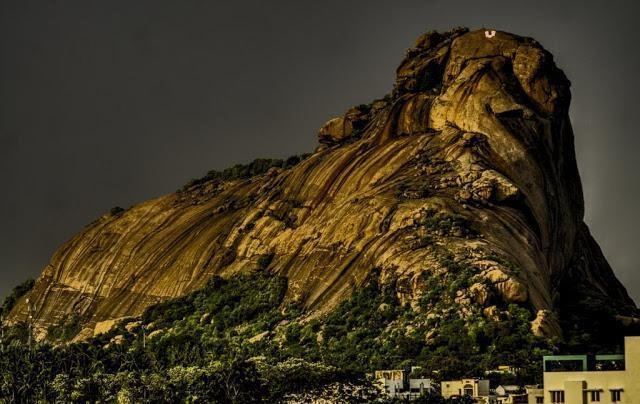
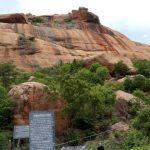
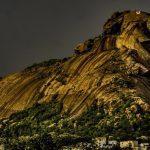
Welcome to the sacred granite slopes of Yanaimalai, an ancient protected monument in Madurai, Tamil Nadu. Known historically as Mulladi (Sanskrit: Vajram), this elephant-shaped hill houses the revered Jain Cave Temple Complex. Unlike typical temple complexes, Yanaimalai is a landscape sanctified by centuries of Jain, Shaivite, and Vaishnavite devotion coexisting in harmony. This guide serves as a spiritual map for pilgrims and heritage enthusiasts traversing the year 2026.
Introduction & Spiritual Essence
The primary spiritual essence of Yanaimalai is rooted in its history as a Tapovana (forest of penance) for Jain monks during the early Pandya era. While the hill features multiple faiths, the Jain Cave Temple Complex and the Narasinga Asthram form the core of its theological narrative.
Phalaśruti: The Benefits of Visiting
Devotees and historians visit Yanaimalai for distinct reasons:
- Cleansing of Past Karma: According to Tamil Jain tradition, meditating in these caves (Tapas) washes away karmic debts accumulated over lifetimes.
- Unity in Divinity: Witnessing the coexistence of Jain Tirthankaras and the Saiva “Narasinga Asthram” offers devotees a unique perspective on religious tolerance and universal truth.
- Protection: As per local legends (Thiruvilayadal), the hill represents a divine intervention that protected the region from destruction.
Historical Origins & Scriptural Legend
The Legend of Narasinga Asthram
According to the Thiruvilayadal Purana (chronicled by Perumbatta Puliyur Nambi and Paranjothi Munivar), Yanaimalai’s origin is tied to a mythical battle. Tradition holds that a Chola king, unable to defeat the Pandya ruler, sought the aid of the Jains. Through mystical powers, the Jains created a colossal elephant to destroy Madurai. In desperation, the Pandya king prayed to Lord Shiva. In response, Shiva released the Narasinga Asthram (an arrow imbued with the power of the eight-syllable mantra Namo Narayana). The arrow struck the attacking elephant, petrifying it instantly into a granite hill—now known as Yanaimalai (Elephant Hill).
Timeline & Epigraphy
The hill is a stratified historical archive dating back to the Sangam Age (approx. 1st century A.D.).
- Early Pandya Era: The caves were carved as monasteries for Jain monks. Tamil-Brahmi inscriptions found near the summit provide evidence of Jain presence here.
- Vijayanagara & Nayak Period: Later inscriptions indicate patronage from these dynasties, adding layers of history to the existing caves.
- Saiva Literature: Saint Tirugnanasambandar, one of the Nayanmars, sang of Yanaimalai as the dwelling place of Jains, highlighting the spiritual significance of the site even in Shaivite canon.
Architectural Marvels
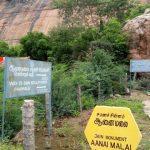
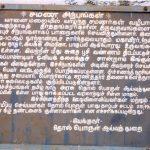
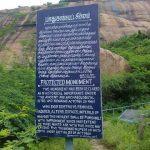
Yanaimalai is a masterclass in rock-cut architecture and is a protected monument under the Department of Archaeology, Tamil Nadu. While the primary style aligns with Dravidian rock-cut traditions, the complex is a mosaic of faiths.
Key Features
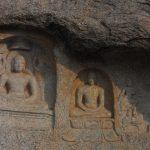
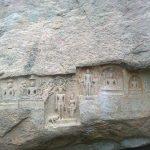
- The Jain Caverns: These are the earliest excavations. They consist of two main caves adorned with carvings of Tirthankaras (including Mahavira and Parshvanatha) and Yakshi figures. The ceilings feature geometric patterns and floral motifs typical of Jain art.
- Yanai (Elephant) Sculpture: Located near the base, this is a remnant of the legendary stone elephant from the Thiruvilayadal lore.
- Narasinga Yoga Narasimha Perumal Temple: Situated atop the hill, this Vaishnavite temple is dedicated to the Narasimha avatar. The temple architecture here follows the standard Agamic standards with a Shikhara (tower) and Mandapa (hall).
- Ladan Cave Temple: A Shaivite shrine located within the hill complex.
ASI & UNESCO Status
While not currently a UNESCO World Heritage Site, Yanaimalai is a State Protected Monument (Archaeology Department, Tamil Nadu). The site is critical for studying the transition of architectural styles from early Jain rock-cut forms to later Dravidian temple structures.
Photo Gallery

Darshan & Ritual Logistics
Since Yanaimalai is a heritage site rather than a traditional temple with a fixed deity, there is no standard “Daily Pooja” schedule enforced by the state. However, the Narasinga Yoga Narasimha Perumal Temple on the hill follows a regular schedule maintained by local temple custodians.
Daily Timings (Narasinga Perumal Temple)
| Session | Timings |
|---|---|
| Morning Darshan | 08:00 AM – 11:30 AM |
| Afternoon Closure | 12:00 PM – 04:30 PM |
| Evening Darshan | 04:30 PM – 07:00 PM |
Sevas & Offerings
- Abhishekam: Performed on the first Sunday of every Tamil month.
- Archana: Available at the base of the hill near the Narasinga Perumal shrine.
- Online Booking: As of 2026, specific online booking for Yanaimalai is managed through the Tamil Nadu Tourism and Archaeology Department portal for heritage entry. For temple-specific Sevas (Narasinga Perumal), inquiries should be made directly at the hill office.
2026 Festival Calendar
- Navaratri (September/October 2026): Special decorations at the Narasinga Perumal temple.
- Narasimha Jayanthi (April 2026): The most significant annual festival for the hill deity.
- Thai Pongal (January 15, 2026): Heritage walks organized by the Archaeology Department.
Practical Visitor Guidance
Rules & Etiquette
- Dress Code: Strict modesty is required. Traditional Indian attire (dhoti/saree) is recommended. Shorts and sleeveless shirts are discouraged as this is a protected archaeological site.
- Photography: Allowed. Yanaimalai is a photographer’s delight. However, drones require special permission from the Tamil Nadu Archaeology Department.
- Mobile Lockers: There are no digital lockers on site. Visitors are advised to travel light. Valuables can be stored at shops near the Othakadai bus stop.
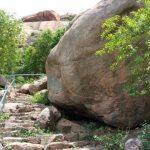
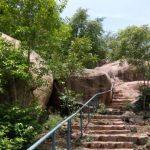
- Accessibility: The climb involves uneven rock-cut steps. It is not wheelchair accessible. Sturdy footwear is mandatory.
Crowd Management & Seasons
- Best Hours: Sunrise (6:00 AM – 8:00 AM) offers the coolest temperatures and minimal crowd.
- Summer (April – June): Madurai temperatures exceed 40°C. Carry at least 1 liter of water per person. The granite reflects heat intensely.
- Monsoon (November – December): The hill becomes slippery; climbing is hazardous during heavy rains.
Pilgrimage Connectivity
How to Reach
By Air:
The nearest airport is Madurai International Airport (IXM), approximately 22 km away. Taxis are available directly to Yanaimalai.
By Rail:
The primary railhead is Madurai Junction (MDU), located about 12 km from the site.
By Road:
Yanaimalai is situated on the Madurai-Melur Road.
– NH/Route: From Madurai, take NH38 or the state highway connecting to Melur.
– Bus: Buses to Othakadai (via Mattuthavani Bus Terminus) run every 10 minutes. From Othakadai, it is a 2km walk or a short auto-rickshaw ride to the hill base.
Nearby Sacred Sites (The Pilgrimage Circuit)
Combine your visit to Yanaimalai with these nearby spiritual destinations:
- Thirumohur Kala Megha Perumal Temple (6 km): A historic Vaishnavite temple associated with the Thirumangai Alvar.
- Meenakshi Amman Temple (11 km): The heart of Madurai spirituality.
- Kallazhagar Temple (Azhar Kovil): Located roughly 20 km away, this is another key Vaishnavite shrine.
Frequently Asked Questions (FAQ)
1. Is there a VIP darshan entry at Yanaimalai?
Since Yanaimalai is a protected archaeological monument with a temple atop, there is no formal “VIP entry” fee. However, locals can often access the hill earlier. For the Narasinga Perumal temple, devotees can request special darshan through the temple trust.
2. What is the significance of the “Narasinga Asthram” mentioned here?
The Narasinga Asthram refers to an eight-syllable mantra (Namo Narayana). Legend states that Lord Shiva utilized this divine weapon to convert a demon elephant into the granite hill we see today.
Yes. The complex features rock-cut caves dedicated to Jain Tirthankaras. While the hill now houses a Vaishnavite temple at the summit, the lower caves are dedicated to Jainism.
4. Can we perform Yagnas or Homams at the hill?
Organizing large-scale homams or fire rituals requires prior written permission from the Department of Archaeology, Tamil Nadu, as the hill is a protected site vulnerable to fire hazards.
5. Are there food facilities available on the hill?
There are no restaurants or canteens atop Yanaimalai. Pilgrims are advised to eat in Othakadai or Madurai before ascending.
6. Is night climbing allowed?
No, climbing Yanaimalai is strictly prohibited after sunset (usually 6:00 PM) due to safety reasons and preservation of the monument.
Recent Posts

ओ सांवरे तूने ही मुझको संभाला – Lyrics & Meaning
ओ सांवरे तूने ही मुझको संभाला – A Prayer to Shyam Origin & Spiritual Essence Why This Bhajan Resonates Devotees chant this when overwhelmed by life’s storms—the refrain ‘तूने ही मुझको संभाला’ is the soul’s sigh of relief: “You…

कथा ये है महाराज मेरे की – Lyrics & Meaning
कथा ये है महाराज मेरे की छत्रपति संभाजी महाराज – A Prayer to Chhatrapati Sambhaji Maharaj Origin & Spiritual Essence Why This Bhajan Resonates Devotees chant this when their spirit feels tested—its powerful refrain “महाराज मेरे” is a soul’s…

Rigveda Samhita Yathartha Anuvada (ऋग्वेद संहिता यथार्थ अनुवाद) – Complete Set with Anvayartha & Hindi/English Translation
The Rigveda is the oldest surviving scripture of humanity and the foundational text of Sanātana Dharma. For serious students, scholars, UPSC aspirants studying ancient Indian history, Sanskrit learners, and spiritual seekers, a precise and grammatically structured translation is indispensable.…

आना भी अकेला है जाना भी अकेला है – Lyrics & Meaning | BharatTemples
आना भी अकेला है जाना भी अकेला है – A Prayer to the Divine Witness Origin & Spiritual Essence Why This Bhajan Resonates Devotees turn to this bhajan in moments of deep reflection—when life’s attachments begin to ache. The…

माता शेरावाली के द्वार जो भी जाता है – Lyrics & Meaning
माता शेरावाली के द्वार जो भी जाता है – A Prayer to Maa Sherawali Origin & Spiritual Essence Why This Bhajan Resonates Devotees turn to this bhajan in times of fear or uncertainty—its promise that no one leaves Maa’s…

मार लेना सपणी उबार लेणा भवरा – Lyrics & Meaning
मार लेना सपणी उबार लेणा भवरा – A Prayer to the Divine Beloved Origin & Spiritual Essence Why This Bhajan Resonates Devotees chant this in moments of deep vulnerability—its cry of “मार लेना सपणी, उबार लेणा भवरा” is the…

हमें श्याम सुंदर भरोसा तुम्हारा – Lyrics & Meaning
हमें श्याम सुंदर भरोसा तुम्हारा – A Prayer to Shyam Sundar Origin & Spiritual Essence Why This Bhajan Resonates Devotees chant this when feeling alone—its refrain ‘de do sahara’ is the soul’s cry for divine support. Lyrics in Hindi…

Mere Satguru Ne Di Thi Davai Lyrics in Hindi & Meaning
Mere Satguru Ne Di Thi Davai: Invoking the Guru’s Liberating Wisdom This soul-stirring bhajan venerates the Satguru (True Spiritual Master) as the divine physician who dispenses the only remedy for life’s deepest sufferings. Composed by Sant Karmaveer Tufani, it…

Janm Diyo Thari Maa Dukh Dekhiyo Lyrics in Hindi & Meaning
जन्म दियो थारी माँ दुख देखियो (Maa’s Grief Upon Birthing You) This soul-stirring Chetavani Bhajan (admonitory hymn) is addressed to the Divine Mother (Maa) – a call for repentance when children forget their filial duties in the dark age…

Bhadi Sabha Mein Thane Manaun Lyrics in Hindi & Meaning
Bhadi Sabha Mein Thane Manaun: Invoking the Spear-Wielding Mother Mata Bhawani (श्री ज्वाला भवानी), the fiery manifestation of Shakti worshipped as the Protector of Dharma in Her Dhaulagarh sanctum. Origin & Spiritual Essence Composed in Rajasthani folk tradition by…