
Contents
- 1 The Definitive Pilgrimage Guide: Jambukeshwar Temple, Varanasi
- 1.1 Introduction & Spiritual Essence
- 1.2 Historical Origins & Scriptural Legend
- 1.3 Architectural Marvels
- 1.4 Darshan & Ritual Logistics
- 1.5 Practical Visitor Guidance
- 1.6 Pilgrimage Connectivity
- 1.7 Frequently Asked Questions (FAQs)
- 1.8 Architecture
- 1.9 Legend / Local stories
- 1.10 Photo Gallery
- 1.11 How to Reach:
- 1.12 Contact Details
The Definitive Pilgrimage Guide: Jambukeshwar Temple, Varanasi
By Lead Heritage Architect, bharattemples.com
Introduction & Spiritual Essence
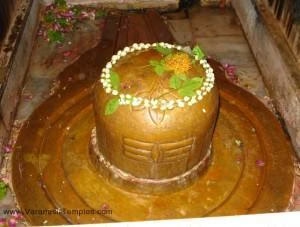
In the spiritual geography of Kashi (Varanasi), every stone resonates with the cosmic rhythm of Lord Shiva. Among the revered shrines that form the spiritual backbone of this ancient city stands the Jambukeshwar Temple. Dedicated to Lord Shiva in the form of a Swayambhu (self-manifested) Lingam, this temple is a beacon of liberation and ancestral peace.
According to the sacred Kashi Khand of the Skanda Purana, the spiritual energy here is potent. Devotees visit this shrine not merely for sight, but for Moksha (liberation). The primary Phalaśruti (benefit) of worshipping at this temple is the cleansing of ancestral karma. It is believed that sincere devotion to Jambukeshwar absolves the devotee and their lineage of accumulated sins, ensuring a peaceful transition to the afterlife and a blessed rebirth.
Historical Origins & Scriptural Legend
The history of Jambukeshwar Temple is woven into the fabric of the Kashi Khand. While specific dynasty records are often lost in the mists of time, the spiritual lineage is unbroken.
The Legend:
According to the Kashi Khand, Goddess Parvati once desired to understand the significance of the various Teerths (sacred ponds) and the deities surrounding them. Lord Shiva, pleased with her curiosity, began describing the divine geography of Kashi. In this celestial discourse, he revealed the presence of the Jambukeshwar Ling.
Scriptural Authority:
Tradition holds that this is one of the most potent Shiva Lingas in the region. As stated in the Kashi Khand: “A devotee who sincerely worships this Ling is freed of all his sins and will certainly reach heaven after his death.” While the temple has undergone renovations over the centuries to preserve its sanctity, the central deity remains the eternal witness to the prayers of millions.
Architectural Marvels
While the Jambukeshwar Temple exemplifies the principles of Hindu Temple architecture found throughout Varanasi, its charm lies in its intimate and ancient layout. The architecture is designed to draw the devotee’s focus inward toward the sanctum sanctorum.
- The Sanctum (Garbhagriha): The inner chamber houses the Swayambhu Lingam, the focal point of divine energy. The low ceiling and dim lighting create an atmosphere of deep meditation.
- Regional Style: The temple follows the Nagara style of architecture, characterized by beehive-shaped shikharas (towers), though adapted to the dense urban fabric of Varanasi.
- Stone Carvings: The temple premises feature intricate carvings of various manifestations of Lord Shiva, Ganesha, and nature spirits, preserving the artistic heritage of North Indian temple sculpture.
- Sacred Premises: The temple is uniquely located within the premises of the Bara Ganesh Temple complex at K-58/101. This integration of shrines highlights the syncretic nature of Kashi’s faith, where Ganesha (remover of obstacles) guards the path to Shiva (the ultimate reality).
Darshan & Ritual Logistics
To ensure a fulfilling spiritual experience, devotees should adhere to the daily schedule of rituals. The timings below are based on standard Varanasi temple schedules, adjusted for the 2026 calendar.
Daily Darshan Timings
| Session | Timing | Activity |
|---|---|---|
| Morning | 05:00 AM – 12:00 PM | Mangala Darshan & Abhishekam |
| Afternoon | 12:00 PM – 04:00 PM | Midday Pooja (Temple remains open) |
| Evening | 04:00 PM – 09:00 PM | Shayan Aarti & Darshan |
Note: Timings may vary slightly during festivals. It is advisable to arrive 30 minutes before Aarti.
Key Sevas & Online Booking
Devotees can book specific rituals to enhance their pilgrimage. While the Jambukeshwar Temple is part of the larger temple ecosystem of Varanasi, most bookings are managed through the Kashi Vishwanath Temple Trust or local priests.
- Abhishekam (Ritual Bathing): Performed with milk, honey, and ghee. Best time: 6:00 AM.
- Rudrabhishek: A powerful Vedic ritual for prosperity and peace.
- Archana: Recitation of names (Namavali) for personal and family well-being.
- Online Booking: Devotees are encouraged to check the official Kashi Vishwanath Temple App or the UP Tourism portal for specific slots for Jambukeshwar and surrounding shrines in 2026.
2026 Festival Calendar (Major Shiva Festivals)
- Maha Shivaratri: February 26, 2026 (Grand night-long vigil and special Abhishekam).
- Shravan Month: July 14 – August 12, 2026 (Mondays are particularly auspicious for Shiva Darshan).
- Kartik Purnima: November 15, 2026 (Deep Daan and special Aarti).
Practical Visitor Guidance
Visiting a shrine in the heart of Varanasi requires preparation. Here is what you need to know:
- Dress Code: Traditional attire is recommended. Men should wear dhoti/kurta or full-length trousers; women should wear saree or modest salwar kameez. Avoid shorts or sleeveless tops.
- Photography: Strictly prohibited inside the sanctum sanctorum. Photography in the outer courtyards is allowed only if not disruptive to prayers.
- Mobile & Lockers: Electronic devices are permitted but must be on silent mode. While Jambukeshwar is a smaller shrine, mobile lockers are available at the nearby Bara Ganesh Temple complex and the Kashi Vishwanath Corridor security checkpoints.
- Accessibility: The temple is located in a dense lane. While the inner sanctum has a few steps, the surrounding areas are accessible via rickshaws.
- Crowd Management: The best hours for a peaceful Darshan are early morning (5:00 AM – 7:00 AM) and late evening (after 8:00 PM). During summer (May), carry a water bottle and cover your head.
Pilgrimage Connectivity
How to Reach
The Jambukeshwar Temple is situated in the K-58/101 locality of Varanasi.
- Nearest Airport: Lal Bahadur Shastri International Airport (LBS), Varanasi (Approx. 25 km).
- Nearest Railway Station: Varanasi Junction (BSB) (Approx. 6 km) or Kashi Station (Approx. 4 km).
- Local Transport: From the railway station or the Kashi Vishwanath Corridor, hire an auto-rickshaw to Lohatia. From Lohatia, the temple is a short walk away through the narrow, vibrant lanes of Varanasi.
Nearby Sacred Sites
Extend your pilgrimage to these nearby shrines to complete your spiritual circuit:
- Bara Ganesh Temple: Located in the same complex, housing a massive Ganesha idol.
- Shri Kashi Vishwanath Temple (Jyotirlinga): The primary destination of Kashi (approx. 15 min walk).
- Sankat Mochan Hanuman Temple: Dedicated to Lord Hanuman, known for relieving troubles (approx. 3 km).
Frequently Asked Questions (FAQs)
1. Is there a VIP Darshan entry at Jambukeshwar Temple?
As Jambukeshwar is a smaller shrine within the Bara Ganesh complex, there is no formal VIP entry system like at the main Vishwanath Temple. However, visiting during off-peak hours ensures a swift darshan.
2. What is the significance of the name “Jambukeshwar”?
The name derives from “Jambu” (Elephant) and “Ishwar” (Lord). While traditionally associated with Lord Shiva in the form of a Lingam, the location within the Bara Ganesh (Elephant God) complex reinforces the connection to Ganesha and Shiva together.
3. Can I perform Rudrabhishek at this temple?
Yes, Rudrabhishek can be performed. It is recommended to coordinate with the local head priest (Pujari) of the Bara Ganesh complex a day in advance to arrange for materials and the auspicious time.
4. Is the temple open year-round?
Yes, the temple remains open year-round. However, during heavy monsoons (July-August), the narrow lanes may get waterlogged, so check local weather conditions.
5. Where can I find the official contact details?
Specific contact numbers for the Jambukeshwar shrine are rarely publicly listed. However, general inquiries for temples in the Kashi Vishwanath Corridor area can be directed to the Kashi Vishwanath Temple Trust Office or the UP Tourism helpline.
| Date built: | – |
|---|---|
| Deity: | Jambukeshwar |
| Architectural style: | Hindu Temple architecture |
| Major festivals | – |
| Locale: | Varanasi |
| District:: | Varanasi |
| Address: | – |
| Phone | – |
Goddess Parvaty wanted to know from Lord Shiva the importance of various Teerths (Sacred Ponds) and the deities around them. Lord Shiva was very much pleased to describe these to her.
Kashi Khand mentions, among other Lings, one Jambukeshwar Ling. A devotee who sincerely worships this Ling is freed of all his sins and will certainly reach heaven after his death.
Architecture
Legend / Local stories
Photo Gallery
How to Reach:
Jambukeshwar is located in the premises of Bara Ganesh temple at K-58/101. Devotees can travel upto Lohatia by auto rickshaw or cycle rickshaw and reach this temple by foot.
Contact Details
Official Address
Recent Posts

ओ सांवरे तूने ही मुझको संभाला – Lyrics & Meaning
ओ सांवरे तूने ही मुझको संभाला – A Prayer to Shyam Origin & Spiritual Essence Why This Bhajan Resonates Devotees chant this when overwhelmed by life’s storms—the refrain ‘तूने ही मुझको संभाला’ is the soul’s sigh of relief: “You…

कथा ये है महाराज मेरे की – Lyrics & Meaning
कथा ये है महाराज मेरे की छत्रपति संभाजी महाराज – A Prayer to Chhatrapati Sambhaji Maharaj Origin & Spiritual Essence Why This Bhajan Resonates Devotees chant this when their spirit feels tested—its powerful refrain “महाराज मेरे” is a soul’s…

Rigveda Samhita Yathartha Anuvada (ऋग्वेद संहिता यथार्थ अनुवाद) – Complete Set with Anvayartha & Hindi/English Translation
The Rigveda is the oldest surviving scripture of humanity and the foundational text of Sanātana Dharma. For serious students, scholars, UPSC aspirants studying ancient Indian history, Sanskrit learners, and spiritual seekers, a precise and grammatically structured translation is indispensable.…

आना भी अकेला है जाना भी अकेला है – Lyrics & Meaning | BharatTemples
आना भी अकेला है जाना भी अकेला है – A Prayer to the Divine Witness Origin & Spiritual Essence Why This Bhajan Resonates Devotees turn to this bhajan in moments of deep reflection—when life’s attachments begin to ache. The…

माता शेरावाली के द्वार जो भी जाता है – Lyrics & Meaning
माता शेरावाली के द्वार जो भी जाता है – A Prayer to Maa Sherawali Origin & Spiritual Essence Why This Bhajan Resonates Devotees turn to this bhajan in times of fear or uncertainty—its promise that no one leaves Maa’s…

मार लेना सपणी उबार लेणा भवरा – Lyrics & Meaning
मार लेना सपणी उबार लेणा भवरा – A Prayer to the Divine Beloved Origin & Spiritual Essence Why This Bhajan Resonates Devotees chant this in moments of deep vulnerability—its cry of “मार लेना सपणी, उबार लेणा भवरा” is the…

हमें श्याम सुंदर भरोसा तुम्हारा – Lyrics & Meaning
हमें श्याम सुंदर भरोसा तुम्हारा – A Prayer to Shyam Sundar Origin & Spiritual Essence Why This Bhajan Resonates Devotees chant this when feeling alone—its refrain ‘de do sahara’ is the soul’s cry for divine support. Lyrics in Hindi…

Mere Satguru Ne Di Thi Davai Lyrics in Hindi & Meaning
Mere Satguru Ne Di Thi Davai: Invoking the Guru’s Liberating Wisdom This soul-stirring bhajan venerates the Satguru (True Spiritual Master) as the divine physician who dispenses the only remedy for life’s deepest sufferings. Composed by Sant Karmaveer Tufani, it…

Janm Diyo Thari Maa Dukh Dekhiyo Lyrics in Hindi & Meaning
जन्म दियो थारी माँ दुख देखियो (Maa’s Grief Upon Birthing You) This soul-stirring Chetavani Bhajan (admonitory hymn) is addressed to the Divine Mother (Maa) – a call for repentance when children forget their filial duties in the dark age…
Bhadi Sabha Mein Thane Manaun Lyrics in Hindi & Meaning
Bhadi Sabha Mein Thane Manaun: Invoking the Spear-Wielding Mother Mata Bhawani (श्री ज्वाला भवानी), the fiery manifestation of Shakti worshipped as the Protector of Dharma in Her Dhaulagarh sanctum. Origin & Spiritual Essence Composed in Rajasthani folk tradition by…