
Contents
Introduction & Spiritual Essence
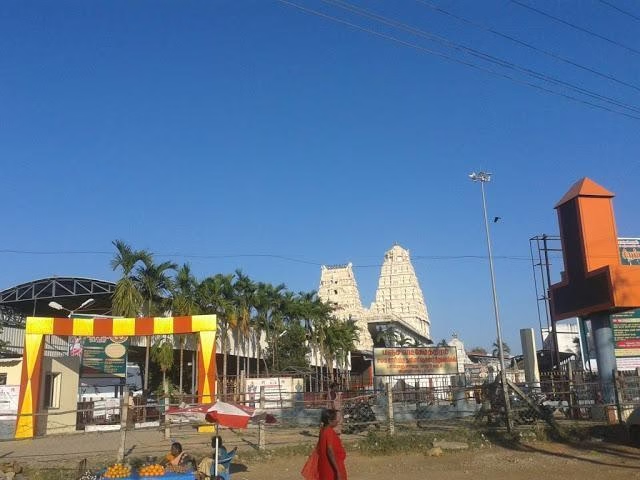
Nestled in the sacred groves of Panchavati, the Jayamangala Panchamukha Anjaneya Swamy Temple stands as a colossal testament to devotion and architectural grandeur. Dedicated to Lord Hanuman, also revered as Anjaneya or Panchamukha Anjaneya, this temple houses the world’s second-largest monolithic idol of the Monkey God.
Phalaśruti: The Spiritual Benefits
Devotees visit this Kshetram not merely for wishes, but for spiritual liberation. The five-faced form of Hanuman represents the five elements (Pancha Bhutas) and offers protection from all directions. Specific benefits include:
- Cleansing Ancestral Karma: Performing rituals here is believed to alleviate Pitru Dosha (ancestral curses).
- Planetary Alignment: Offering Ulundu Vadais (black gram doughnuts) appeases Lord Saneeswaran (Saturn), Rahu, and Ketu, shielding devotees from their malefic effects.
- Victory in Life: As Panchamukha, the Lord grants courage and removes obstacles (Vighnas) from professional and personal paths.
Historical Origins & Scriptural Legend
Modern Origins, Ancient Legacy
While the Sthala Purana (local legend) anchors this site in the timeless forest of Panchavati from the Ramayana, the present-day temple structure is a modern marvel. According to temple records, the vision originated in 1999. Parama Sri Ramani Anna, a trustee deeply associated with the renowned Nanganallur Anjaneya temple in Chennai, was invited to the land by Mr. Santhanam Iyengar. Upon stepping onto the soil, Ramani Anna felt the divine presence of Hanuman and received the calling to construct a temple on the 12-acre plot.
The Timeline of Consecration
Work commenced on June 24, 1999. The central Murti (idol) was installed on June 11, 2003, and the temple reached its spiritual zenith with the Maha Kumbabhishekam (Grand Consecration) on January 31, 2007. The temple is managed by the Panchamukha Sri Jayamurthi Seva Trust.
Architectural Marvels
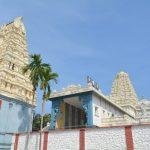
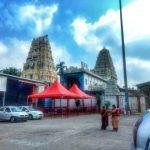
The temple is a stunning example of Dravidian Architecture, characterized by towering Gopurams and intricate sculptural work.
The Colossal Idol
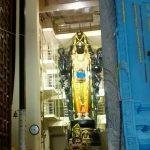
The centerpiece is the 15-foot monolithic idol of Panchamukha Anjaneya. Unlike standard statues, this is carved from a single block of stone. The five faces are arranged in a specific configuration:
- Main Face: Faces East (Granting Ishta Siddhi).
- Narasimha Face: Faces South (Granting Abhishta).
- Garuda Face: Faces West (Granting Sakala Soubhagyam).
- Varaha Face: Faces North (Granting Dhana Prapti).
- Hayagriva Face: Faces Upward (Granting Sarva Vidya Jaya Prapti).
Sanctum Layout
The temple complex is built on a vast scale with distinct Mandapas (halls) for rituals and meditation. While the outer structure reflects the Dravidian style, the inner sanctum orientation follows Vastu principles to maximize the flow of positive energy. The sprawling 12-acre campus allows for a serene circumambulation (Pradakshina) around the main shrine.
Darshan & Ritual Logistics
To ensure a seamless spiritual experience, the temple follows a strict schedule. Below are the daily timings and key rituals.
Daily Timings
| Session | Timing |
|---|---|
| Morning Darshan | 08:00 AM – 12:00 PM |
| Afternoon Break | 12:00 PM – 04:00 PM (Closed) |
| Evening Darshan | 04:00 PM – 09:00 PM |
Key Sevas (Rituals)
- Abhishekam: Performed with milk, honey, and sandalwood paste. Highly recommended on Tuesdays and Fridays.
- Archana: Recitation of Hanuman Chalisa or specific Mantras.
- Vadamalai (Garland of Vadais): The signature offering of the temple. Devotees offer Ulundu Vadais which are later distributed to the poor.
2026 Festival Calendar & Online Seva Booking
Assuming the current year is 2026, devotees should mark these dates for special Poojas. While daily Sevas can often be booked via the temple trust, major festival bookings usually require advance notice.
- January 2026: Maha Shivaratri (Irumbai Maha Kaleswarar Temple connection).
- May 2026: Hanuman Jayanthi (Grand Abhishekam throughout the day).
- December 2026: Vaikunta Ekadasi (Major crowd; special darshan tickets required).
Note: To book online sevas, visit the official Panchamukha Sri Jayamurthi Seva Trust website or contact the office numbers listed in the “Connectivity” section.
Practical Visitor Guidance
Dress Code & Etiquette
Visitors are required to wear modest traditional attire. Men should wear dhotis or trousers with shirts, and women should wear sarees, salwar kameez, or long skirts. Avoid shorts and sleeveless tops.
Photography & Mobile Phones
Photography is generally restricted inside the inner sanctum to maintain the sanctity of the Garbhagriha. It is advisable to deposit mobile phones in the free lockers provided near the entrance before proceeding for Darshan.
Crowd Management
The temple is heavily crowded on Saturdays (associated with Lord Saneeswaran) and during festival days.
- Best Time to Visit: Weekday mornings (Tuesday is considered auspicious for Hanuman).
- Seasonal Advice: During the summer months (April–June), temperatures in Villupuram district can exceed 38°C. Carry water bottles and wear head coverings.
Pilgrimage Connectivity
How to Reach
The temple is strategically located on the NH 32 (Chennai-Nagapattinam Highway), making it easily accessible.
- Nearest Airport: Pondicherry Airport (9 km). Chennai International Airport is 136 km away.
- Nearest Railway Station: Puducherry Railway Station (13 km) or Tindivanam (30 km).
- By Road: Local buses from Pondicherry to Tindivanam pass directly by the temple entrance.
Nearby Sacred Sites
Expand your pilgrimage circuit by visiting these nearby holy abodes:
- Irumbai Maha Kaleswarar Temple: A Padal Petra Sthalam (27 km) dedicated to Lord Shiva, located in the nearby village.
- Moratandi Prathiyangara Devi Temple: Located approximately 6 km away, dedicated to the fierce form of Goddess Durga.
- Auroville: Just 8 km away, offering a spiritual contrast with the Matrimandir for silent meditation.
Frequently Asked Questions (FAQ)
1. Is there a VIP Darshan entry available?
Yes, the temple offers special entry darshan tickets. These can usually be purchased directly at the ticket counter near the entrance. During major festivals like Hanuman Jayanthi, it is advisable to book these in advance through the Trust office.
2. What is the significance of offering Vadais to Hanuman here?
Black gram (Ulundu) has cooling properties. It is believed to pacify the fierce form of Panchamukha Anjaneya, making him benevolent towards devotees. Additionally, since black gram is associated with Lord Saneeswaran, offering it helps mitigate the negative effects of Saturn and shadow planets.
3. Are there accommodation facilities nearby?
While the temple itself does not have guesthouses, Puducherry (12 km) offers a wide range of hotels, guest houses, and Aurobindo Ashram accommodations catering to all budgets.
4. What is the best day to visit for specific planetary remedies?
Saturday is the most potent day for performing rituals related to Saneeswaran and Panchamukha Anjaneya. Devotees seeking relief from chronic illnesses or struggles are advised to visit for six consecutive Saturdays.
5. Is the temple accessible for senior citizens?
Yes, the temple complex has paved pathways. However, the inner sanctum involves steps. The temple authorities are generally helpful in facilitating a Darshan for those with mobility issues upon request.
Contact Details
Panchamuga Anjaneya Temple Trust
Address: Panchavati, Vanur Taluk, Villupuram District – 605 111
Phone: +91 413 2678823 / +91 413 2671232
Mobile: +91 94425 02446 / +91 98947 95562
Recent Posts

Shri Kaamkoteeshwar Mandir, Varanasi – History & Significance
In the heart of Kashi, the eternal city of Lord Shiva, where the Ganges flows with celestial grace, stands the Shri Kaamkoteeshwar Mandir. This sacred Sannidhi is not merely a temple but a profound spiritual bridge between the Northern…

ओ सांवरे तूने ही मुझको संभाला – Lyrics & Meaning
ओ सांवरे तूने ही मुझको संभाला – A Prayer to Shyam Origin & Spiritual Essence Why This Bhajan Resonates Devotees chant this when overwhelmed by life’s storms—the refrain ‘तूने ही मुझको संभाला’ is the soul’s sigh of relief: “You…

कथा ये है महाराज मेरे की – Lyrics & Meaning
कथा ये है महाराज मेरे की छत्रपति संभाजी महाराज – A Prayer to Chhatrapati Sambhaji Maharaj Origin & Spiritual Essence Why This Bhajan Resonates Devotees chant this when their spirit feels tested—its powerful refrain “महाराज मेरे” is a soul’s…

Rigveda Samhita Yathartha Anuvada (ऋग्वेद संहिता यथार्थ अनुवाद) – Complete Set with Anvayartha & Hindi/English Translation
The Rigveda is the oldest surviving scripture of humanity and the foundational text of Sanātana Dharma. For serious students, scholars, UPSC aspirants studying ancient Indian history, Sanskrit learners, and spiritual seekers, a precise and grammatically structured translation is indispensable.…

आना भी अकेला है जाना भी अकेला है – Lyrics & Meaning | BharatTemples
आना भी अकेला है जाना भी अकेला है – A Prayer to the Divine Witness Origin & Spiritual Essence Why This Bhajan Resonates Devotees turn to this bhajan in moments of deep reflection—when life’s attachments begin to ache. The…

माता शेरावाली के द्वार जो भी जाता है – Lyrics & Meaning
माता शेरावाली के द्वार जो भी जाता है – A Prayer to Maa Sherawali Origin & Spiritual Essence Why This Bhajan Resonates Devotees turn to this bhajan in times of fear or uncertainty—its promise that no one leaves Maa’s…

मार लेना सपणी उबार लेणा भवरा – Lyrics & Meaning
मार लेना सपणी उबार लेणा भवरा – A Prayer to the Divine Beloved Origin & Spiritual Essence Why This Bhajan Resonates Devotees chant this in moments of deep vulnerability—its cry of “मार लेना सपणी, उबार लेणा भवरा” is the…

हमें श्याम सुंदर भरोसा तुम्हारा – Lyrics & Meaning
हमें श्याम सुंदर भरोसा तुम्हारा – A Prayer to Shyam Sundar Origin & Spiritual Essence Why This Bhajan Resonates Devotees chant this when feeling alone—its refrain ‘de do sahara’ is the soul’s cry for divine support. Lyrics in Hindi…

Mere Satguru Ne Di Thi Davai Lyrics in Hindi & Meaning
Mere Satguru Ne Di Thi Davai: Invoking the Guru’s Liberating Wisdom This soul-stirring bhajan venerates the Satguru (True Spiritual Master) as the divine physician who dispenses the only remedy for life’s deepest sufferings. Composed by Sant Karmaveer Tufani, it…

Janm Diyo Thari Maa Dukh Dekhiyo Lyrics in Hindi & Meaning
जन्म दियो थारी माँ दुख देखियो (Maa’s Grief Upon Birthing You) This soul-stirring Chetavani Bhajan (admonitory hymn) is addressed to the Divine Mother (Maa) – a call for repentance when children forget their filial duties in the dark age…