
Contents
By Lead Heritage Architect, BharatTemples.com
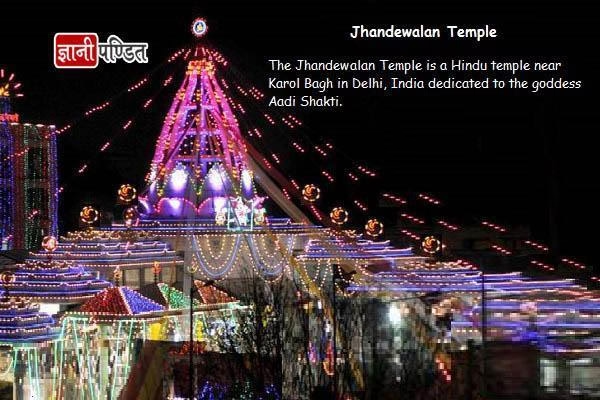
In the heart of New Delhi, amidst the urban sprawl of Karol Bagh and Jhandewalan, stands a gateway to the primal feminine energy—Jhandewalan Temple. Officially known as Shri Jhandewalan Devi Mandir, this site is not merely a place of worship but a powerful center of Kundalini Shakti.
As we navigate the spiritual landscape of 2026, this definitive guide offers architectural insight and practical logistics for devotees seeking the blessings of Maa Aadi Shakti.
1. Introduction & Spiritual Essence
The Deity: Maa Aadi Shakti
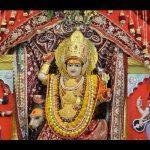
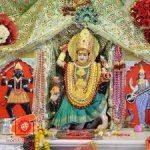
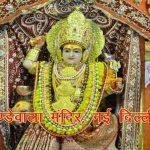
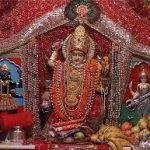
The presiding deity of the temple is Maa Aadi Shakti (The Primeval Goddess), an avatar of Goddess Durga. The idol is unique; it is a Murti (image) depicting the Goddess with four arms holding various weapons, symbolizing the destruction of evil.
Why Devotees Visit: The Phalaśruti
According to temple records and devotee testimonials, visiting Jhandewalan Temple offers specific spiritual benefits:
- Kundalini Awakening: The temple is situated at a potent energy point, ideal for seekers of spiritual power.
- Resolution of Rahu-Ketu Doshas: Worship here is believed to mitigate astrological afflictions related to the shadow planets.
- Physical & Mental Healing: Devotees report a sense of profound peace and relief from chronic ailments.
- Ancestral Cleansing: Performing Shradh or Tarpan here aids in cleansing ancestral karma.
2. Historical Origins & Scriptural Legend
Discovery of the Idol
The temple’s history is rooted in a divine revelation. In the early 20th century, the site was a barren patch of land. Badri Bhagat, a devout local resident and grand son of Diwan Lala Nanak Chand, was a priest at the neighboring Pataudi Palace. Legend holds that Goddess Aadi Shakti appeared in his dreams, instructing him that her ancient idol lay buried beneath the earth.
In 1925, following the divine guidance, excavations were carried out. The original Swayambhu (self-manifested) idol was unearthed, and the temple was constructed on this sacred spot.
The Origin of the Name
The name “Jhandewalan” translates to “Place of Flags.” During the reign of Mughal Emperor Shah Jahan, the area was covered in forests where soldiers planted Jhandas (prayer flags). The fluttering flags atop trees eventually gave the area—and subsequently the temple—its unique name.
3. Architectural Marvels
While the current structure is a modern construction, the architectural ethos blends traditional Nagara style elements with contemporary Indian temple design.
- The Sanctum Sanctorum (Garbhagriha): The original idol is preserved at ground level. A flight of stairs leads devotees down to the sanctum, creating a subterranean atmosphere reminiscent of ancient caves.
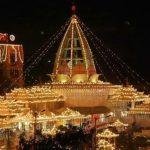
- The Spire (Shikhara): The temple features a towering Shikhara adorned with intricate carvings and gold plating, visible from the metro line.
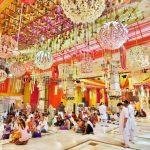
- Interior Aesthetics: The inner walls are painted in vibrant hues of red and gold, colors traditionally associated with power and auspiciousness. The ceiling features murals depicting scenes from the Devi Mahatmya.
4. Darshan & Ritual Logistics
Daily Timings
Timings are subject to change during festivals.
| Session | Timings |
|---|---|
| Morning Darshan | 5:00 AM – 12:00 PM |
| Afternoon Break | 12:00 PM – 4:00 PM |
| Evening Darshan | 4:00 PM – 10:00 PM |
| Aarti (Mangala & Sandhya) | 6:00 AM & 7:00 PM |
Key Sevas & Online Booking
For devotees unable to visit physically, the temple trust facilitates remote participation.
- Abhishekam: Ritual bathing of the deity (Sundays and Tuesdays recommended).
- Chandi Path: Recitation of the Durga Saptashati.
- Online Booking: Devotees can book specific sevas via the temple’s official portal (search: “Jhandewalan Temple online seva booking”) or through authorized apps like BookMyPuja.
2026 Major Festival Dates
- Chaitra Navratri: March 30 – April 7, 2026
- Shardiya Navratri: September 22 – October 1, 2026 (Peak attendance expected)
- Maha Ashtami: October 1, 2026 (Special Havan)
- Kundalini Jagran: Held on the first Saturday of every month.
5. Practical Visitor Guidance
Code of Conduct & Essentials
- Dress Code: Traditional Indian attire is preferred. Please avoid shorts or sleeveless tops.
- Photography: Strictly prohibited inside the Garbhagriha. Photography is permitted in the outer courtyards.
- Mobile Lockers: Electronic items and leather goods must be deposited at the free counter near the entrance.
- Accessibility: The sanctum requires descending stairs, which may be challenging for those with mobility issues. A separate accessible entrance is available on the eastern side.
Crowd Management & Seasonal Advice
- Best Hours: Weekday mornings (6:00 AM – 8:00 AM) offer the most serene darshan.
- Summer (May-June): Delhi temperatures soar. Carry a reusable water bottle; free water coolers are available.
- Monsoon (July-September): Humidity is high; light cotton clothing is advised.
6. Pilgrimage Connectivity
How to Reach
- By Metro: The most convenient route is the Jhandewalan Metro Station (Blue Line). Take Exit 3, and the temple is a 2-minute walk across the footbridge.
- By Rail: Nearest major station is New Delhi Railway Station (approx. 5 km). Auto-rickshaws are readily available.
- By Road: Located on DB Gupta Road (Block E, Jhandewalan Extension). Accessible via NH-8 (now NH-48) or NH-12.
- Parking: Limited paid parking is available at the Metro station complex.
Nearby Sacred Sites
Enhance your pilgrimage with these nearby visits:
- Laxmi Narayan Temple (Birla Mandir): Located 3 km away, dedicated to Lord Vishnu and Goddess Lakshmi.
- Gaffar Market & Karol Bagh: While commercial, it houses several ancient shrines and offers a glimpse of Delhi’s spiritual diversity.
- Shri Hanuman Mandir (Jhandewalan): A historic Hanuman temple located just 500 meters from the Jhandewalan complex.
7. Frequently Asked Questions
Is there a VIP darshan entry?
Yes. The temple trust offers a “Priority Darshan” pass for a nominal fee (approx. ₹100-₹200) during non-peak hours. This can be purchased at the counter on arrival. During Navratri, VIP passes are not available; darshan is general queue based.
Can I carry my own Prasad?
While you can carry simple offerings like fruits or flowers, the temple advises purchasing Prasad from the official counter inside the complex to ensure hygiene and sanctity.
What is the significance of the underground sanctum?
The descent into the sanctum symbolizes the journey inward—towards the Antahkarana (inner consciousness). It represents going back to the roots where the primal energy resides.
Is the temple open on all days?
The temple is open 365 days a year, except for a brief closure on Holi and Diwali days (morning hours only).
How do I contact the temple administration?
You can reach the Jhandewalan Temple Trust at 011-23545810 or visit the administration office on the first floor of the temple complex.
Photo Gallery
Recent Posts

Shri Kaamkoteeshwar Mandir, Varanasi – History & Significance
In the heart of Kashi, the eternal city of Lord Shiva, where the Ganges flows with celestial grace, stands the Shri Kaamkoteeshwar Mandir. This sacred Sannidhi is not merely a temple but a profound spiritual bridge between the Northern…

ओ सांवरे तूने ही मुझको संभाला – Lyrics & Meaning
ओ सांवरे तूने ही मुझको संभाला – A Prayer to Shyam Origin & Spiritual Essence Why This Bhajan Resonates Devotees chant this when overwhelmed by life’s storms—the refrain ‘तूने ही मुझको संभाला’ is the soul’s sigh of relief: “You…

कथा ये है महाराज मेरे की – Lyrics & Meaning
कथा ये है महाराज मेरे की छत्रपति संभाजी महाराज – A Prayer to Chhatrapati Sambhaji Maharaj Origin & Spiritual Essence Why This Bhajan Resonates Devotees chant this when their spirit feels tested—its powerful refrain “महाराज मेरे” is a soul’s…

Rigveda Samhita Yathartha Anuvada (ऋग्वेद संहिता यथार्थ अनुवाद) – Complete Set with Anvayartha & Hindi/English Translation
The Rigveda is the oldest surviving scripture of humanity and the foundational text of Sanātana Dharma. For serious students, scholars, UPSC aspirants studying ancient Indian history, Sanskrit learners, and spiritual seekers, a precise and grammatically structured translation is indispensable.…

आना भी अकेला है जाना भी अकेला है – Lyrics & Meaning | BharatTemples
आना भी अकेला है जाना भी अकेला है – A Prayer to the Divine Witness Origin & Spiritual Essence Why This Bhajan Resonates Devotees turn to this bhajan in moments of deep reflection—when life’s attachments begin to ache. The…

माता शेरावाली के द्वार जो भी जाता है – Lyrics & Meaning
माता शेरावाली के द्वार जो भी जाता है – A Prayer to Maa Sherawali Origin & Spiritual Essence Why This Bhajan Resonates Devotees turn to this bhajan in times of fear or uncertainty—its promise that no one leaves Maa’s…

मार लेना सपणी उबार लेणा भवरा – Lyrics & Meaning
मार लेना सपणी उबार लेणा भवरा – A Prayer to the Divine Beloved Origin & Spiritual Essence Why This Bhajan Resonates Devotees chant this in moments of deep vulnerability—its cry of “मार लेना सपणी, उबार लेणा भवरा” is the…

हमें श्याम सुंदर भरोसा तुम्हारा – Lyrics & Meaning
हमें श्याम सुंदर भरोसा तुम्हारा – A Prayer to Shyam Sundar Origin & Spiritual Essence Why This Bhajan Resonates Devotees chant this when feeling alone—its refrain ‘de do sahara’ is the soul’s cry for divine support. Lyrics in Hindi…

Mere Satguru Ne Di Thi Davai Lyrics in Hindi & Meaning
Mere Satguru Ne Di Thi Davai: Invoking the Guru’s Liberating Wisdom This soul-stirring bhajan venerates the Satguru (True Spiritual Master) as the divine physician who dispenses the only remedy for life’s deepest sufferings. Composed by Sant Karmaveer Tufani, it…

Janm Diyo Thari Maa Dukh Dekhiyo Lyrics in Hindi & Meaning
जन्म दियो थारी माँ दुख देखियो (Maa’s Grief Upon Birthing You) This soul-stirring Chetavani Bhajan (admonitory hymn) is addressed to the Divine Mother (Maa) – a call for repentance when children forget their filial duties in the dark age…