Jwara Hareshwar Temple Varanasi: History, Darshan Timings & Complete Guide
Receive daily temple updates, divine darshan, and morning bhajans directly on WhatsApp.
Contents
- 1 Jwara Hareshwar Temple, Varanasi: The Definitive Pilgrimage Guide
Jwara Hareshwar Temple, Varanasi: The Definitive Pilgrimage Guide
| Date built: | – |
|---|---|
| Deity: | Jwara Hareshwar |
| Architectural style: | Hindu Temple architecture |
| Major festivals | – |
| Locale: | Varanasi |
| District:: | Varanasi |
| Address: | – |
| Phone | – |
On a request by Goddess Parvati, Lord Shiva narrated the various deities/Shiv Lings/Teerths (Sacred Ponds) spread over the expanse of Kashi. (Kashi Khand, Chapter 97).
Towards the east of Gopreksheshwar, devotees can find Jwara Hareshwar Ling (referred to as Vijwarar in Kashi Khand). Devotees who are running high fever get rid of their ailment by worshipping Jwara Hareshwar.
One point needs to be mentioned here. When Kashi Khand was conceived and even after a long time when it was actually written, medical science had not at all made any progress. Any fever was considered to be serious because in those days, people used to follow strict regimen of exercise, diet, fasting etc. Most of the people were healthy and with the human body’s immune system taking care of any external attack, only a few people used to fall sick. If at all they fell sick, it was much beyond mild ailment.
In the present day environs, with medical advancement and diagnostic and pathological facilities available, people may not attach much importance to mild fevers etc.
Introduction & Spiritual Essence: The Healer of Kashi
Hidden within the labyrinthine lanes of Jaitpura in Varanasi lies the Jwara Hareshwar Temple, a sacred Shakti Peetha-like shrine dedicated to Lord Shiva in his form as the conqueror of fever. Known locally as the Jwarahar Mahadev or Jwarahareshwar, this ancient Jwara Hareshwar Temple in Varanasi stands as a testament to unwavering faith.
📖 Related: Modak Priya Vinayak Temple Varanasi: History, Darshan Timings & Guide
Phalaśruti: The Fruits of Darshan
According to the sacred Kashi Khand (Chapter 97) of the Skanda Purana, this temple is the ultimate refuge for those suffering from physical ailments, particularly fever.
- Cleansing Karmic Ailments: Devotees believe that worshipped with sincere devotion, the Linga absorbs negative energies causing physical illness.
- Relief from Chronic Fever: It is traditionally believed that offering Jalabhishekam (water ablution) to Jwara Hareshwar provides relief from persistent fever that defies medication.
- Protection from Plague & Epidemics: Historically, Kashi was prone to epidemics like cholera and plague. Locals have visited this shrine for generations to seek divine immunity.
Historical Origins & Scriptural Legend
The Kashi Khand Connection
The primary scriptural reference for this temple is the Kashi Khand, a detailed section of the Skanda Purana. When Goddess Parvati asked Lord Shiva to reveal the spiritual geography of Kashi, he described numerous Shiva Lingas. One of these was Vijwarar, the ancient name for Jwara Hareshwar.
Geographical Anomaly & History
Scriptures mention the Linga as being situated to the east of Gopreksheshwar (near Lal Ghat). However, the present temple in Jaitpura lies to the west. Tradition holds that during centuries of invasions and temple destruction, the original Swayambhu (self-manifested) Linga was moved to safer grounds, preserving the deity’s sanctity. While there is a conflicting address in Patani Tola, extensive research by Pandit Kedarnath Vyas confirms the Jaitpura location as the authentic site.
Architecture
The architecture of the Jwara Hareshwar Temple is a classic example of the Nagara style adapted for Kashi’s narrow urban fabric. Unlike sprawling complexes, this shrine rises vertically.
Structural Highlights
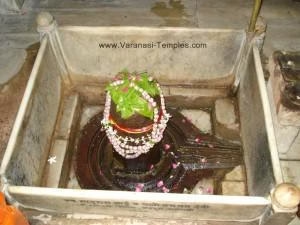
- The Sanctum (Garbhagriha): The inner shrine houses the Jwara Hareshwar Linga. The Linga is self-manifested (Swayambhu) and is surrounded by a Yoni Pitha adorned with serpent carvings.
- Shikhara: The temple tower features a tiered Amalaka (disk-like stone) crown, typical of North Indian temple architecture, symbolizing the Meru (cosmic mountain).
- Mandapa: A small pillared hall allows devotees to gather for evening aartis, though the space is intimate due to the surrounding residential structures.
📖 Related: Durg Vinayak Temple, Varanasi: History, Darshan Timings & Guide 2026
Photo Gallery
Jwara-Hareshwar2-300×225, Jwara Hareshwar Temple, Varanasi
Darshan & Ritual Logistics
To ensure a smooth pilgrimage experience, devotees should note the daily schedule and specific Sevas. The atmosphere is most charged during the early morning and late evening hours.
Daily Timings (2026 Schedule)
Assuming the current year is 2026, the following timetables are in effect. Please note that temple timings in Kashi may vary slightly based on local festivals and the solar calendar.
| Session | Timing | Activity |
|---|---|---|
| Morning | 05:00 AM – 12:00 PM | Mangala Aarti & General Darshan |
| Afternoon | 12:00 PM – 04:00 PM | Mid-day Closure (Priest Rest) |
| Evening | 04:00 PM – 09:00 PM | Sandhya Aarti & Shringar |
Key Sevas & Online Booking
- Abhishekam: The most potent ritual here is the Jalabhishekam (pouring water) or Dugdhabhishekam (milk offering). This is believed to cool the Linga and the devotee’s body.
- Archana: Mrityunjaya Jaap is specifically performed for health and longevity.
- Online Booking: While smaller shrines like Jwara Hareshwar often operate on a traditional basis, the larger Kashi Vishwanath Trust (if affiliated) or third-party portals like Banke Bihari Seva or MakeMyTrip (for puja bookings) may offer specific slots. It is advisable to book Abhishekam at least 48 hours in advance.
Major Festivals in 2026
- Shivratri (Feb 26, 2026): A night of non-stop chanting and special havan (fire ritual).
- Pradosh Vrat: Specifically the Ravi Pradosh (Sunday evening Pradosh) is highly auspicious for health recovery.
- Monsoon Shivratri (July 2026): Known as Kanjarka Sankranti, special herbal offerings are made to the deity.
Practical Visitor Guidance
Dress Code & Etiquette
As a traditional shrine, modesty is required. Men should wear Dhoti or Kurta-Pajama; women should wear Saree or Salwar Kameez covering shoulders and knees. Avoid leather items.
Crowd Management
- Best Time to Visit: Early morning (5:30 AM – 7:00 AM) is ideal for a peaceful Darshan. Avoid weekends and Pradosh evenings if you dislike crowds.
- Seasonal Advice: Varanasi summers (April-June) are scorching. Carry water and a hand fan. Winters (Dec-Jan) are foggy; layers are recommended.
- Mobile & Lockers: Photography may be restricted inside the inner sanctum. Since the temple is small, it is best to keep phones on silent. Public lockers are not available, so travel light.
📖 Related: Nakshatreswar Temple History & Darshan Timings: Varanasi Temple Guide
Connectivity & Location
How to Reach Jwara Hareshwar Temple
The temple is located at J.6/85, Jaitpura, Varanasi.
- By Rickshaw: From Varanasi Cantt (Railway Station) or Kashi Vishwanath Temple, hire an auto-rickshaw to Jaitpura Police Station. The temple is a short walk from there.
- Landmark: It is on the way to the famous Skanda Mata Temple in Jaitpura.
Nearby Sacred Sites (Pilgrimage Circuit)
Plan your visit to include these nearby shrines:
- Skanda Mata Temple (Jaitpura): Located very close to Jwara Hareshwar, dedicated to the mother of Lord Kartikeya.
- Gopreksheshwar Temple (Lal Ghat): The scriptural reference point mentioned in Kashi Khand, located near the ghats.
- Kashi Vishwanath Corridor: About 2-3 km away, the main spiritual hub of Varanasi.
Contact Details
Official Address
Frequently Asked Questions (FAQ)
1. Is there a VIP darshan entry available?
Due to the temple’s location in a narrow lane, there are no separate VIP gates. However, hiring a Pandit for special Abhishekam allows you to enter during specific ritual times, avoiding general crowd peaks.
2. Can I visit the temple if I have a fever?
Yes. In fact, the temple is specifically visited by those suffering from illness. It is recommended to cover your head and take rest in the Mandapa after offering prayers. However, if you have a contagious fever, consult a doctor first for medical safety.
3. Is there parking available nearby?
Parking is not available directly at the temple due to the narrow lanes of Jaitpura. Visitors are advised to take an auto-rickshaw or taxi up to Jaitpura Police Station and walk the remaining 100 meters.
4. What is the significance of the name ‘Jwara Hareshwar’?
Jwara means fever, and Hareshwar is a form of Lord Shiva. Thus, the name translates to “The Lord who removes Fever.” The deity is considered the remover of ailments and the provider of relief.
5. Are there accommodation options nearby?
While Jaitpura has some local guesthouses, most pilgrims prefer staying near the Kashi Vishwanath Corridor or Dashashwamedh Ghat, where more hotels and Dharamshalas are available, and commute via rickshaw.