
Contents
- 1 Kaaraneeswarar Temple, Mylapore: A Definitive Pilgrimage Guide
Kaaraneeswarar Temple, Mylapore: A Definitive Pilgrimage Guide
Welcome to the sacred precincts of Kaaraneeswarar Temple, a timeless spiritual haven nestled in the heart of Mylapore, Chennai. As the Lead Heritage Architect and SEO Strategist for BharatTemples.com, I present this comprehensive guide to one of South India’s most revered Shiva shrines. This guide is crafted for the modern devotee, balancing deep scriptural wisdom with practical logistics for your 2026 pilgrimage.
Introduction & Spiritual Essence
At the center of this ancient temple stands the Presiding Deity, Kaaraneeswarar (Lord Shiva), worshipped as the Karana Eswara—the Supreme Cause of the universe. Unlike typical manifestations, this Swayambhu (self-manifested) Linga represents the Causality Principle. Beside him resides the Mother Goddess, Porkodi Amman (also known as Sorna Lalithambigai), radiating benevolent grace.
Devotees flock here not merely for sightseeing, but for profound spiritual rectification. Phalaśruti (the fruits of listening to or visiting this temple) includes:
- Cleansing Ancestral Karma: Rituals here are believed to alleviate Pitru Dosha (ancestral afflictions).
- Family Harmony: Worship of Sri Kaaraneeswarar and Mother Porkodi blesses devotees with a happy family life and resolves interpersonal conflicts.
- Health & Vitality: The temple is renowned for curing chronic diseases. The lighting of specific oil lamps is traditionally associated with physical and mental healing.
Historical Origins & Scriptural Legend
Construction Era: While the precise date of construction is obscured by the mists of time, the temple dates back to the 12th Century. It is a testament to the architectural patronage of the local chieftains who ruled the Coromandel Coast during the Later Chola and Pandya periods.
Scriptural & Oral Legends:
- The Brahmin Sage: Legend holds that a young Brahmin in Mylapore performed intense penance here. Realizing Shiva as the Karana (Cause) of creation, protection, and destruction, he established the Linga and named it Kaaraneeswarar.
- Sage Vasishta: According to temple records and oral tradition, the revered Sage Vasishta worshipped Lord Kaaraneeswarar at this very spot to seek blessings for universal welfare.
- Sapta Sthana Shiva Temple: Kaaraneeswarar Temple is the first of the seven primary Shiva temples (Sapta Sthana Shiva Temples) in Mylapore, each representing a vital aspect of Lord Shiva’s cosmic form.
Architectural Marvels
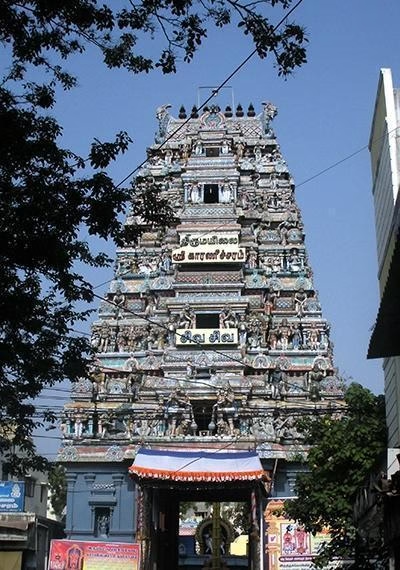
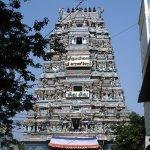
The temple is a classic example of Dravidian Architecture, characterized by its towering Gopurams (gateway towers) and intricate stonework. Unlike the curvilinear Nagara style of the North, the Dravidian style features stepped pyramidal structures culminating in a Kalasha (finial).
Key Structural Elements:
- Shikhara (Rajagopuram): The main entrance tower soars skyward, signaling the transition from the mundane to the divine.
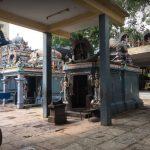
- Mandapas: The temple features spacious Mandapas (halls) with stone pillars. These are designed according to Vastu Shastra, ensuring energy flow aligns with the cosmic directions.
- Sculptures: The pillars depict scenes from Hindu mythology and celestial dancers (Apsaras). The sanctum is designed to allow natural light to illuminate the deity at specific times of the year.
- Preservation: The temple is protected and maintained by the Hindu Religious and Charitable Endowments (HR&CE) Department of Tamil Nadu.
Darshan & Ritual Logistics
To ensure a seamless spiritual experience, devotees should familiarize themselves with the daily schedule and available Sevas (ritual services). Note that schedules may vary slightly during festival seasons.
Daily Temple Timings
| Session | Timing |
|---|---|
| Morning Darshan | 06:30 AM – 11:00 AM |
| Afternoon Break | 11:00 AM – 04:30 PM |
| Evening Darshan | 04:30 PM – 08:30 PM |
Key Sevas and Offerings
1. Abhishekam (Ritual Bathing): The bathing of the deity with sacred substances (milk, honey, sandalwood paste) is performed daily. It is highly recommended to witness the Abhishekam during the morning hours.
2. Archana (Recitation of Names): Personal prayers can be offered through Archana. Devotees are encouraged to light lamps using a specific mixture to maximize spiritual benefits.
3. The Oil Lamp Ritual: A unique practice here involves mixing Coconut oil, Sesame oil (Gingelly), and Castor oil in equal parts. Lighting lamps in multiples of six (6, 12, 18…) is believed to usher in prosperity and health.
4. Pradakshinam (Circling the Temple): Walking around the sanctum is considered vital for absorbing the temple’s energy fields.
Online Seva Booking (2026 Update)
For devotees unable to visit physically or wishing to book specific rituals in advance, the HR&CE Tamil Nadu portal facilitates online bookings. Please visit the official Tamil Nadu Temples website and search for “Kaaraneeswarar Temple, Mylapore” to book Abhishekam or Archana slots.
2026 Major Festival Calendar
- Arudra Darshanam: January 2026 (Date TBD) – Celebrating Lord Nataraja; a significant event for Shiva temples.
- Maha Shivaratri: February 26, 2026 – The grandest night of Shiva. Special all-night Vigils and Pujas are conducted.
- Aadi Perukku: July 2026 – A Tamil festival dedicated to water bodies, celebrated with great fervor near the temple tank.
- Navaratri: September – October 2026 – Dedicated to Mother Porkodi Amman, featuring Golu displays and daily homams.
Practical Visitor Guidance
Respect for the sanctity of the temple is paramount. Please adhere to the following guidelines to ensure a smooth experience for yourself and fellow devotees.
- Dress Code: Traditional Indian attire is recommended. Men should wear dhotis or trousers with shirts; women should wear sarees, salwar kameez, or modest long dresses. Avoid shorts and sleeveless tops.
- Photography & Mobiles: Photography inside the sanctum sanctorum is strictly prohibited. Silence your mobile phones inside the temple premises. Most temples provide lockers for electronic devices.
- Crowd Management:
- Best Time to Visit: Early mornings (6:30 AM – 8:00 AM) on weekdays offer a tranquil darshan.
- Weekends: Expect higher footfall, particularly on Fridays.
- Seasonal Advice: During the summer months (April–May), carry a water bottle and a towel. The stone floors can be extremely hot during midday.
- Accessibility: The temple ground level is accessible, though assistive devices may be required for older pilgrims navigating the mandapa thresholds.
Pilgrimage Connectivity
How to Reach Kaaraneeswarar Temple
Location: Bazaar Road, Thyagarajapuram, Mylapore, Chennai – 600004.
By Road:
Mylapore is centrally located and well-connected to the Chennai MTC bus network. The temple is approximately 1 km from the Mylapore Bus Stop (Royapettah High Road). Major routes include:
- Route 1/1A: Thiruvottriyur to Thiruvanmiyur (via Mylapore).
- Route 21: Mandaveli to Broadway.
- Nearest Terminus: Koyambedu CBT is about 10 km away.
By Rail:
- Nearest Suburban Station: Thirumayilai (Mylapore) (approx. 1 km). It lies on the Chennai Beach – Velachery MRTS line.
- Major Railway Hubs: Chennai Central (9 km) and Egmore (6 km).
By Air:
- Chennai International Airport (MAA): Located approximately 17 km away (approx. 45 mins by cab).
Nearby Sacred Sites
Enhance your pilgrimage by visiting the other Sapta Sthana temples and landmarks in Mylapore:
- Kapaleeshwarar Temple: Located just 500 meters away, this is the most famous Shiva temple in Mylapore, dedicated to Lord Marundeeswarar.
- Sri Parthasarathy Temple (Triplicane): A short drive (2 km) to the north, this is one of the 108 Divya Desams dedicated to Lord Krishna.
- Santhome Cathedral Basilica: A significant Christian pilgrimage site built over the tomb of St. Thomas, located 2 km south.
Frequently Asked Questions (FAQ)
1. Is there a VIP darshan entry available?
Yes, the temple management facilitates Special Darshan tickets for a nominal fee, allowing devotees to bypass regular queues, especially during peak festival times. These can be purchased at the temple counter.
2. What is the significance of the name ‘Kaaraneeswarar’?
The name is derived from the Sanskrit word Karana, meaning ‘Cause’ or ‘Reason’. It signifies Shiva as the ultimate cause of the universe’s creation, preservation, and destruction.
3. Can I perform rituals for ancestors (Pitru Tarpan) here?
Yes, while the temple is primarily focused on Shiva and Parvati, specific homams (fire rituals) can be arranged to honor ancestors and resolve Pitru Dosha. It is advisable to consult the temple priest (Gurukkal) in advance.
4. Is the temple open on all days?
Generally, yes. However, it is closed during specific hours for ritual cleansing and maintenance. It is recommended to call the temple office (+91 44 24985112) before planning your visit.
5. Are there accommodation facilities nearby?
Mylapore offers numerous options. While the temple does not have an attached guesthouse, there are several lodges and hotels in the Kutchery Road and Royapettah High Road areas catering to pilgrims.
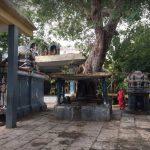
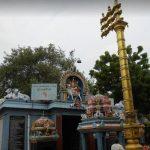
Photo Gallery
Recent Posts

ओ सांवरे तूने ही मुझको संभाला – Lyrics & Meaning
ओ सांवरे तूने ही मुझको संभाला – A Prayer to Shyam Origin & Spiritual Essence Why This Bhajan Resonates Devotees chant this when overwhelmed by life’s storms—the refrain ‘तूने ही मुझको संभाला’ is the soul’s sigh of relief: “You…

कथा ये है महाराज मेरे की – Lyrics & Meaning
कथा ये है महाराज मेरे की छत्रपति संभाजी महाराज – A Prayer to Chhatrapati Sambhaji Maharaj Origin & Spiritual Essence Why This Bhajan Resonates Devotees chant this when their spirit feels tested—its powerful refrain “महाराज मेरे” is a soul’s…

Rigveda Samhita Yathartha Anuvada (ऋग्वेद संहिता यथार्थ अनुवाद) – Complete Set with Anvayartha & Hindi/English Translation
The Rigveda is the oldest surviving scripture of humanity and the foundational text of Sanātana Dharma. For serious students, scholars, UPSC aspirants studying ancient Indian history, Sanskrit learners, and spiritual seekers, a precise and grammatically structured translation is indispensable.…

आना भी अकेला है जाना भी अकेला है – Lyrics & Meaning | BharatTemples
आना भी अकेला है जाना भी अकेला है – A Prayer to the Divine Witness Origin & Spiritual Essence Why This Bhajan Resonates Devotees turn to this bhajan in moments of deep reflection—when life’s attachments begin to ache. The…

माता शेरावाली के द्वार जो भी जाता है – Lyrics & Meaning
माता शेरावाली के द्वार जो भी जाता है – A Prayer to Maa Sherawali Origin & Spiritual Essence Why This Bhajan Resonates Devotees turn to this bhajan in times of fear or uncertainty—its promise that no one leaves Maa’s…

मार लेना सपणी उबार लेणा भवरा – Lyrics & Meaning
मार लेना सपणी उबार लेणा भवरा – A Prayer to the Divine Beloved Origin & Spiritual Essence Why This Bhajan Resonates Devotees chant this in moments of deep vulnerability—its cry of “मार लेना सपणी, उबार लेणा भवरा” is the…

हमें श्याम सुंदर भरोसा तुम्हारा – Lyrics & Meaning
हमें श्याम सुंदर भरोसा तुम्हारा – A Prayer to Shyam Sundar Origin & Spiritual Essence Why This Bhajan Resonates Devotees chant this when feeling alone—its refrain ‘de do sahara’ is the soul’s cry for divine support. Lyrics in Hindi…

Mere Satguru Ne Di Thi Davai Lyrics in Hindi & Meaning
Mere Satguru Ne Di Thi Davai: Invoking the Guru’s Liberating Wisdom This soul-stirring bhajan venerates the Satguru (True Spiritual Master) as the divine physician who dispenses the only remedy for life’s deepest sufferings. Composed by Sant Karmaveer Tufani, it…

Janm Diyo Thari Maa Dukh Dekhiyo Lyrics in Hindi & Meaning
जन्म दियो थारी माँ दुख देखियो (Maa’s Grief Upon Birthing You) This soul-stirring Chetavani Bhajan (admonitory hymn) is addressed to the Divine Mother (Maa) – a call for repentance when children forget their filial duties in the dark age…
Bhadi Sabha Mein Thane Manaun Lyrics in Hindi & Meaning
Bhadi Sabha Mein Thane Manaun: Invoking the Spear-Wielding Mother Mata Bhawani (श्री ज्वाला भवानी), the fiery manifestation of Shakti worshipped as the Protector of Dharma in Her Dhaulagarh sanctum. Origin & Spiritual Essence Composed in Rajasthani folk tradition by…