Kadakeswarar Temple, Kanchipuram: History, Timings & Complete Guide
Receive daily temple updates, divine darshan, and morning bhajans directly on WhatsApp.
Contents
- 1 Introduction & Spiritual Essence
- 2 Historical Origins & Scriptural Legend
- 3 Architectural Marvels
- 4 Darshan & Ritual Logistics
- 5 Practical Visitor Guidance
- 6 Pilgrimage Connectivity
- 7 Frequently Asked Questions (FAQ)
- 8 Photo Gallery
- 9 Contact Details
Introduction & Spiritual Essence
Nestled in the ancient spiritual landscape of Kanchipuram, the Kadakeswarar Temple stands as a testament to divine grace and architectural heritage. This sacred shrine is dedicated to Lord Shiva, worshipped here as Kadakeswarar (also known as Kadagattaleswarar). The presiding deity is a Swayambhu Lingam (self-manifested), representing the timeless form of Shiva without human intervention.
The temple holds a unique spiritual essence deeply connected to the feminine divine. The consort, Goddess Kamakshi (the Ambaal), is revered here in the form of a crab (Kadaga). According to theological significance, the Goddess assumed this form to worship Lord Shiva, symbolizing resilience and the ability to navigate the cycles of life and karma.
Phalaśruti: The Benefits of Visiting
Devotees flock to Kadakeswarar Temple seeking specific blessings:
- Karmic Cleansing: It is believed that worshipping here helps in cleansing negative ancestral karma, offering liberation to forefathers.
- Relief from Doshas: Those afflicted with Naga Dosha (serpent afflictions) or planetary imbalances find solace here.
- Resolution of Conflicts: The temple is known as a place to resolve legal disputes and interpersonal conflicts.
Historical Origins & Scriptural Legend
While the exact date of construction remains elusive in official records, the temple bears the unmistakable signatures of the Pallava Dynasty (7th–9th century CE), who were the great patrons of art and religion in Kanchipuram. Subsequent renovations were likely undertaken during the Chola and Vijayanagara periods, contributing to the current structural layout.
📖 Related: Bhadra Kali Amman Temple Vattavilai: History, Darshan Timings & Guide
The Legend of the Crab
According to local oral tradition and the Sthala Purana, the Goddess Kamakshi performed intense penance to win the heart of Lord Shiva. To test her devotion, Shiva appeared as a divine light deep within a forest. The Goddess, in her fervor, took the form of a crab (Kadaga) to dig through the earth and reach the Lord’s energy. Pleased by her devotion, Shiva manifested as the Kadakeswarar Lingam for her eternal worship.
Interestingly, the Sarabeswarar shrine here is also prominent. Legend states that Lord Shiva took the Sarabha form (a mythical beast) to pacify the wrath of Narasimha (Lord Vishnu’s avatar), establishing this temple as a site of syncretic harmony.
Architectural Marvels
The Kadakeswarar Temple is a classic example of the Dravidian style of architecture. Though modest in size compared to the sprawling Ekambareswarar or Varadaraja Perumal temples, it is rich in intricate details and Vastu Shastra alignments.
Key Features
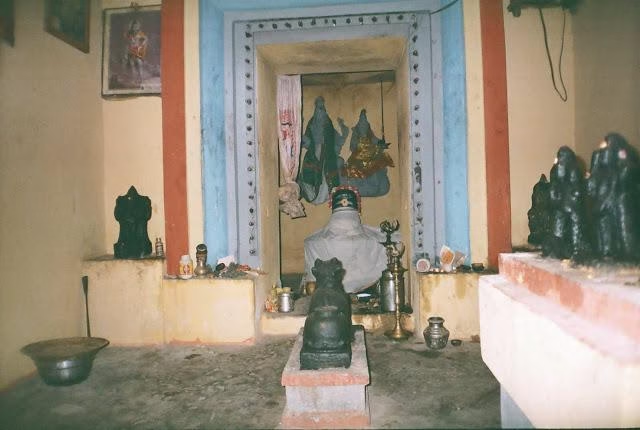
- The Sanctum (Garbhagriha): The main sanctum houses the Swayambhu Lingam, which is slightly tilted towards the west. Uniquely, one can find the sculptural depictions of Shiva and Parvathi behind the Lingam, a rare architectural feature.
- Shikhara: The Vimana (tower above the sanctum) exhibits early Pallava architectural elements with tiered projections.
- Sub-Shrines: The temple complex includes dedicated niches for Sarabeswarar, Surya, and Brahma. The Nandi Mandapa is positioned directly facing the main deity, adhering to strict Agamic standards.
- Artistic Details: The walls feature bas-reliefs depicting various forms of Shiva and scenes from Hindu mythology, carved with the precision characteristic of Kanchipuram artisans.
Darshan & Ritual Logistics
To ensure a seamless spiritual experience, devotees should note the daily schedules and seva offerings. The temple follows traditional Agamic rituals.
Daily Timings
| Session | Timing |
|---|---|
| Morning Darshan | 6:00 AM – 11:00 AM |
| Afternoon Closure | 11:00 AM – 4:30 PM |
| Evening Darshan | 4:30 PM – 8:00 PM |
Key Sevas & Online Booking
While online booking systems for smaller heritage temples are often managed by local trusts, major rituals can be arranged via the Kanchipuram Devaswom Board or in-person at the temple office.
- Abhishekam: Performed daily at 7:00 AM and 6:00 PM. Abhishekam is done with milk, honey, sandalwood paste, and sacred ashes (Vibhuti).
- Archana: Continuous chanting of names (e.g., Kadakeswarar Ashtottaram) is available throughout the day.
- Sarabeswarar Special Pooja: Highly recommended for those seeking protection from negative energies.
📖 Related: Arupadi Veedu Temple Palani: History, Timings & Complete Guide
2026 Festival Calendar
- Arudra Darshanam: January (Highlighting the cosmic dance of Nataraja).
- Mahashivratri: February/March (The most significant festival with special night-long pujas).
- Aadi Perukku: July/August (Celebrated with the banks of the temple tank).
- Navaratri: September/October (Special decorations for Goddess Kamakshi).
Practical Visitor Guidance
Respecting the sanctity of the temple ensures a fulfilling visit for everyone.
Etiquette & Rules
- Dress Code: Traditional attire is mandatory. Men should wear dhotis or trousers with shirts; women should wear sarees, salwars, or churidars. Avoid shorts and sleeveless tops.
- Photography: Photography inside the sanctum sanctorum is strictly prohibited. You may take photos of the outer corridors and gopurams.
- Mobile Lockers: While the temple is small, luggage and electronic devices are generally not allowed inside. It is advisable to keep them in your vehicle or use the cloakroom facilities if available at nearby larger temples.
- Accessibility: The temple has stone steps and uneven flooring typical of ancient structures. It may be challenging for those with mobility issues; assistance is recommended.
Crowd Management & Seasonal Advice
- Best Time to Visit: Early mornings (6:00 AM – 7:30 AM) are peaceful and ideal for darshan.
- Peak Hours: Avoid Sundays and public holidays between 10:00 AM and 12:00 PM.
- Seasonal Tips:
- Summer (May–June): Kanchipuram gets hot; carry a water bottle and an umbrella.
- Monsoon (Oct–Nov): Carry a raincoat; the stone floors can become slippery.
Pilgrimage Connectivity
How to Reach
Location: The temple is located in the heart of Kanchipuram town, on the route connecting the Pachai Vannar Temple to the Kamatchi Amman Temple.
- By Air: The nearest airport is Chennai International Airport (MAA), approximately 75 km away. Taxis and buses are readily available to Kanchipuram.
- By Rail: Kanchipuram Railway Station is the nearest railhead, well-connected to Chennai and Chengalpattu.
- By Road: Kanchipuram is accessible via NH 48 (Chennai-Bangalore Highway) and NH 175 (connecting to Vellore and Tirupati). Regular buses ply from Chennai’s CMBT and Tambaram.
📖 Related: Veera Anjaneyar Temple Mylapore: History, Timings & Darshan Guide
Nearby Sacred Sites (Pilgrimage Circuit)
Plan a holistic tour of Kanchipuram by visiting these nearby temples:
- Kamatchi Amman Temple: Just a short walk from Kadakeswarar, this is one of the most powerful Shakthi Peethams in India.
- Ekambareswarar Temple: Located 2 km away, this is one of the Pancha Bhoota Stalas (representing the element of Earth).
- Kailasanathar Temple: The oldest structural temple in Kanchipuram (8th Century), built by the Pallavas.
Frequently Asked Questions (FAQ)
1. Is there a VIP darshan entry at Kadakeswarar Temple?
Due to the temple’s compact size and heritage nature, there is no separate VIP entry. Darshan is generally quick unless there is a specific festival or ritual in progress.
2. What is the significance of the crab symbol here?
The crab (Kadaga) represents the form assumed by Goddess Kamakshi during her penance to win Lord Shiva. Devotees believe worshipping here helps overcome stubborn obstacles, much like a crab moves sideways but eventually reaches its goal.
3. Can we perform last rites or rituals for ancestors here?
While the main deity is Shiva, the temple’s energy is conducive to ancestral peace. However, for elaborate Tharpanam rituals, the nearby Ekambareswarar temple or the Kamashi Amman temple banks are more equipped.
4. Is the temple open year-round?
Yes, the temple remains open year-round. However, timings may be extended during major festivals like Mahashivratri and Aadi Perukku.
5. Is there parking available?
Since the temple is located on a town road, dedicated parking is limited. Visitors are advised to park in designated public lots near the Kanchipuram bus stand and walk or take a local auto-rickshaw to the temple.
Photo Gallery
Annapurna Mahotsav at the BAPS Swminarayan Temple, Nagupr
Architecture of BAPS Swminarayan Temple, Nagpur
Contact Details
Kadakeswarar Temple Trust
Location: Near Kamatchi Amman Temple, Kanchipuram, Tamil Nadu.
Phone: +91-44-XXXX-XXXX (Please contact the Kanchipuram Devaswom Board for the latest official number).