
Contents
Introduction & Spiritual Essence
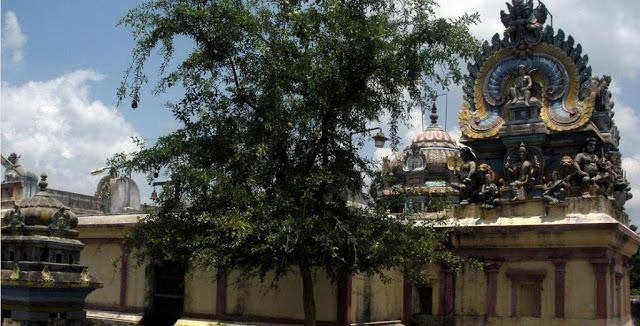
The Kailasanathar Temple, Egattur, Thiruvallur, stands as a timeless beacon of Shaivism in Tamil Nadu. Dedicated primarily to Lord Shiva, here revered as Kailasanathar (The Lord of Mount Kailash), the temple offers a spiritual sanctuary away from the urban clamor. The sanctum houses the Swayambhu (self-manifested) Lingam, a form believed to have arisen naturally from the earth, radiating immense cosmic energy.
The presiding deity is complemented by the Mother Goddess Kamatchiamman (a form of Parvati), who faces south, completing the divine duality. According to religious beliefs, worshipping here helps in cleansing ancestral karma and alleviating planetary afflictions caused by Rahu and Ketu. The temple is revered for bringing peace to the minds of devotees and bestowing the spiritual merit (Phalaśruti) of a pilgrimage to Mount Kailash itself.
Historical Origins & Scriptural Legend
While the exact century of construction is not explicitly recorded in mainstream inscriptions, local lore and architectural analysis suggest the temple dates back over 500 years. It was likely constructed during the later Vijayanagara era or the Nayak period, known for their patronage of Shaivite temples.
Scriptural Legend: Tradition holds that this site was once a dense forest known as “Ega Vanam.” Legend dictates that a devout sage performed intense penance here to please Lord Shiva. Pleased by the devotion, Shiva manifested as a Lingam under a Vilvam tree (Bael tree). This self-manifested form became known as Kailasanathar. The “Sthala Purana” further states that the Sun God (Surya) worshipped this Lingam to regain his lost luster, making the temple particularly potent for those seeking vitality.
Architectural Marvels
The temple is a quintessential example of Dravidian architecture. Unlike the towering spires of North Indian temples, this structure emphasizes horizontal expansion and intricate sculptural detailing.
- The Sanctum (Garbhagriha): The east-facing sanctum is approached through a modest Mandapa. The Shikhara (tower) above the sanctum follows the Dravidian tiered style, though it is more subdued compared to grand Chola-era temples.
- Vastu Shastra: The temple strictly adheres to Vastu principles, with the main entrance in the south and the deity facing east, ensuring the flow of positive energy aligns with the rising sun.
- Sculptures: The pillars of the Mandapa feature carvings of deities including Nrithya Ganesa (dancing Ganesha) and Dakshina Moorthy (Shiva as a teacher). The walls house shrines for the Navagrahas (nine planets), allowing devotees to perform specific rituals for planetary peace.
Darshan & Ritual Logistics
Visitors can engage in various sevas (services) to deepen their spiritual experience. The priests (Archakars) perform daily rituals maintaining strict Agamic traditions.
Daily Temple Timings
Timings are subject to change during festivals. It is advisable to call ahead before planning your visit.
| Session | Timings |
|---|---|
| Morning Darshan | 06:00 AM – 12:00 PM |
| Afternoon Break | 12:00 PM – 04:00 PM |
| Evening Darshan | 04:00 PM – 08:00 PM |
Key Sevas & Online Booking
While this is a historic temple, seva bookings are often managed by local trusts. Major sevas include:
- Abhishekam: Ritual bathing of the Lingam (usually performed with milk, honey, and coconut water).
- Archana: Chanting of names accompanied by the offering of flowers.
- Navagraha Homam: A specialized fire ritual for planetary alignment.
Note on Online Booking: For smaller heritage temples like Kailasanathar Egattur, online bookings are not always centralized. Devotees are advised to contact the temple trust directly or visit the Thiruvallur District Administration portal for any digital service updates.
2026 Major Festival Dates
- Pradosham: 1st Jan, 16th Jan, 31st Jan, 15th Feb, 2nd Mar, 16th Mar, 31st Mar, 15th Apr, 30th Apr, 15th May, 30th May, 14th Jun, 29th Jun, 13th Jul, 28th Jul, 12th Aug, 27th Aug, 10th Sep, 26th Sep, 11th Oct, 25th Oct, 9th Nov, 24th Nov, 9th Dec, 23rd Dec.
- Maha Shivaratri: February 26, 2026 (Grand celebration expected).
- Arudra Darshanam: January 7, 2026.
- Aadi Perukku: July 27, 2026.
- Deepavali: October 21, 2026.
- Pongal/Makara Sankranti: January 14, 2026.
Practical Visitor Guidance
To ensure a serene experience for all pilgrims, please adhere to the following guidelines:
Dress Code & Etiquette
As a mark of respect, devotees should wear traditional attire. Men should wear dhotis or formal pants with shirts, and women should wear sarees, salwar kameez, or long skirts. Avoid shorts and sleeveless tops.
Photography & Mobiles
Photography inside the main sanctum (Garbhagriha) is strictly prohibited. Mobile phones should be switched to silent mode. While there may not be a formal locker system, it is recommended to travel light.
Crowd Management
Best Hours to Visit: Early mornings (6:00 AM – 8:00 AM) on weekdays offer the most peaceful darshan. Weekends and festival days can see moderate crowds.
Seasonal Advice: Summers (April–June) in Thiruvallur can be harsh; carry a water bottle and an umbrella. The monsoon (November–December) offers pleasant weather, though rains may occasionally affect travel.
Pilgrimage Connectivity
How to Reach
The Kailasanathar Temple is located in Egattur, easily accessible from Chennai and Thiruvallur.
- By Air: Chennai International Airport (MAA) is approximately 45 km away.
- By Rail: The nearest railway station is Egattur Railway Station (approx. 1 km). Alternatively, Thiruvallur Railway Station is 6 km away.
- By Road: The temple is situated just off the Chennai–Thiruvallur road. It is about 49 km from Chennai Central via NH 115 (Chennai–Ponnur Highway) and connecting state roads. Buses are frequently available from Thiruvallur Bus Stand.
Nearby Sacred Sites (Pilgrimage Circuit)
Extend your spiritual journey by visiting these nearby temples:
- Hyderabad Raghavendra Swamy Mutt (Thiruvallur): Located just 7 km away, this is a major center for the Dvaita philosopher Sri Raghavendra Swamy.
- Karikili Vinayagar Temple: Approximately 15 km away, famous for the relief of Lord Ganesha on a rock.
- Sholinghur Narasimha Swamy Temple: About 35 km from Egattur, a hilltop temple dedicated to Lord Narasimha.
Frequently Asked Questions (FAQ)
1. What is the historical significance of Kailasanathar Temple Egattur?
The temple is believed to be over 500 years old and follows the Dravidian architectural style. It is a site of immense local religious importance, particularly for performing rites for ancestors and planetary peace.
2. Is there a VIP darshan entry available?
As a heritage temple managed by local trustees, there is usually no formal online VIP darshan system like in Tirupati. However, special access can be arranged by speaking directly with the temple priests or the trust managing the temple during non-peak hours.
3. Is there a facility for online seva booking?
Currently, dedicated online seva booking for Kailasanathar Temple Egattur is not widely available. Devotees typically perform sevas by purchasing tickets at the temple counter upon arrival.
The temple houses a dedicated Navagraha shrine. Worshipping here is believed to mitigate the malefic effects of planets in one’s horoscope, particularly Rahu and Ketu, which are associated with karmic obstacles.
5. What are the accommodation options nearby?
While basic lodging is available in Thiruvallur town (6 km), devotees often prefer staying in Chennai (45 km) or Tirupati (80 km) for better hotel amenities. Day trips from Chennai are very common and convenient.
Recent Posts

ओ सांवरे तूने ही मुझको संभाला – Lyrics & Meaning
ओ सांवरे तूने ही मुझको संभाला – A Prayer to Shyam Origin & Spiritual Essence Why This Bhajan Resonates Devotees chant this when overwhelmed by life’s storms—the refrain ‘तूने ही मुझको संभाला’ is the soul’s sigh of relief: “You…

कथा ये है महाराज मेरे की – Lyrics & Meaning
कथा ये है महाराज मेरे की छत्रपति संभाजी महाराज – A Prayer to Chhatrapati Sambhaji Maharaj Origin & Spiritual Essence Why This Bhajan Resonates Devotees chant this when their spirit feels tested—its powerful refrain “महाराज मेरे” is a soul’s…

Rigveda Samhita Yathartha Anuvada (ऋग्वेद संहिता यथार्थ अनुवाद) – Complete Set with Anvayartha & Hindi/English Translation
The Rigveda is the oldest surviving scripture of humanity and the foundational text of Sanātana Dharma. For serious students, scholars, UPSC aspirants studying ancient Indian history, Sanskrit learners, and spiritual seekers, a precise and grammatically structured translation is indispensable.…

आना भी अकेला है जाना भी अकेला है – Lyrics & Meaning | BharatTemples
आना भी अकेला है जाना भी अकेला है – A Prayer to the Divine Witness Origin & Spiritual Essence Why This Bhajan Resonates Devotees turn to this bhajan in moments of deep reflection—when life’s attachments begin to ache. The…

माता शेरावाली के द्वार जो भी जाता है – Lyrics & Meaning
माता शेरावाली के द्वार जो भी जाता है – A Prayer to Maa Sherawali Origin & Spiritual Essence Why This Bhajan Resonates Devotees turn to this bhajan in times of fear or uncertainty—its promise that no one leaves Maa’s…

मार लेना सपणी उबार लेणा भवरा – Lyrics & Meaning
मार लेना सपणी उबार लेणा भवरा – A Prayer to the Divine Beloved Origin & Spiritual Essence Why This Bhajan Resonates Devotees chant this in moments of deep vulnerability—its cry of “मार लेना सपणी, उबार लेणा भवरा” is the…

हमें श्याम सुंदर भरोसा तुम्हारा – Lyrics & Meaning
हमें श्याम सुंदर भरोसा तुम्हारा – A Prayer to Shyam Sundar Origin & Spiritual Essence Why This Bhajan Resonates Devotees chant this when feeling alone—its refrain ‘de do sahara’ is the soul’s cry for divine support. Lyrics in Hindi…

Mere Satguru Ne Di Thi Davai Lyrics in Hindi & Meaning
Mere Satguru Ne Di Thi Davai: Invoking the Guru’s Liberating Wisdom This soul-stirring bhajan venerates the Satguru (True Spiritual Master) as the divine physician who dispenses the only remedy for life’s deepest sufferings. Composed by Sant Karmaveer Tufani, it…

Janm Diyo Thari Maa Dukh Dekhiyo Lyrics in Hindi & Meaning
जन्म दियो थारी माँ दुख देखियो (Maa’s Grief Upon Birthing You) This soul-stirring Chetavani Bhajan (admonitory hymn) is addressed to the Divine Mother (Maa) – a call for repentance when children forget their filial duties in the dark age…
Bhadi Sabha Mein Thane Manaun Lyrics in Hindi & Meaning
Bhadi Sabha Mein Thane Manaun: Invoking the Spear-Wielding Mother Mata Bhawani (श्री ज्वाला भवानी), the fiery manifestation of Shakti worshipped as the Protector of Dharma in Her Dhaulagarh sanctum. Origin & Spiritual Essence Composed in Rajasthani folk tradition by…