
Contents
Introduction & Spiritual Essence
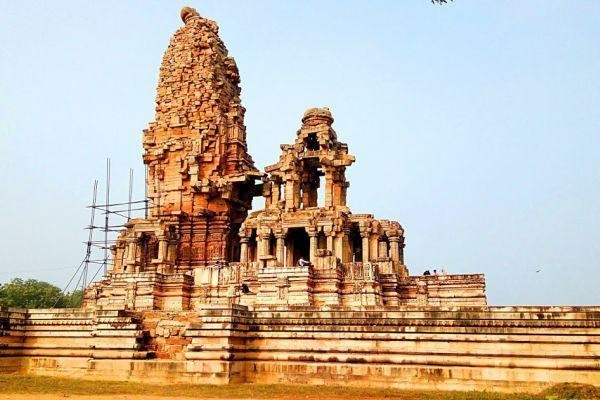
In the heart of Morena district, Madhya Pradesh, stands the magnificent Kakanmath Temple—a silent testament to unwavering faith and architectural brilliance. Dedicated to Lord Shiva, this 11th-century structure is more than just a ruin; it is a living spiritual complex where ancient traditions continue to thrive.
Deity and Form
The primary deity here is Lord Shiva in the form of a Shivalinga. Unlike modern temples, the sanctum sanctorum houses a traditional Swayambhu (self-manifested) form of the deity, radiating immense spiritual energy. The temple is often locally referred to as the “Kakanmadh” or “Kanak (Gold) Maṭha (Shrine),” hinting at its glorious past.
Phalaśruti: The Spiritual Benefits
Devotees flock to Kakanmath Temple seeking blessings for:
- Ancestral Cleansing: It is believed that offering prayers here helps cleanse ancestral karma, bringing peace to departed souls.
- Overcoming Obstacles: Devotion to Lord Shiva at this site is said to remove obstacles in professional and personal life.
- Spiritual Energy: The temple’s specific Vastu alignment creates a potent spiritual atmosphere conducive to meditation.
Historical Origins & Scriptural Legend
The history of Kakanmath Temple is a blend of archaeological evidence and local folklore, tracing back to the 11th century.
Builders and Builders
According to temple records and inscriptions, the temple was commissioned by the Kachchhapaghata ruler Kirttiraja between 1015 and 1035 CE. This inference is drawn from a significant inscription found at the Sas-Bahu Temple in Gwalior, which mentions Kirttiraja building an extraordinary temple for Parvati’s lord (Shiva) at Siṁhapānīya (modern-day Sihoniya).
Sthala Purana and Renovations
Tradition holds that the name “Kakanmath” derives from a folk legend involving Queen Kakanavati (or Kakanade), the wife of King Surajpala. However, scriptural evidence suggests the name might originate from Kanak (Gold) and Maṭha (Shrine), signifying its past opulence.
The temple complex has witnessed significant changes over the centuries. A Sanskrit pillar inscription dated 1393-94 CE records the renovation of the Mahadeva temple by Durgaprasada. The ruins we see today are believed to be the result of natural calamities, specifically earthquakes that damaged the outer walls and spire, leaving the core sanctum intact.
Architectural Marvels
Kakanmath Temple is a masterpiece of Nagara style architecture, echoing the intricate craftsmanship of the medieval era. It stands approximately 30 meters high, dominating the skyline of Sihoniya.
Structural Layout
The temple rests on an ornate base (Pitha) and is structured in three distinct parts:
- Sanctum Sanctorum (Garbhagriha): Houses the Shivalinga and features a circumambulatory path (Pradakshina) with three transepts.
- Gudha-Mandapa: A pillared hall with lateral transepts. It features four clusters of pillars, with each cluster containing four pillars.
- Mukha-Mandapa: The entrance hall supported by pillars aligned with the Gudha-Mandapa.
Notable Sculptures and Features
While the temple is in ruins, the remaining Shikhara (tower) is a visual marvel. Originally, the entrance featured two massive lion statues, which are now preserved at the Archaeological Museum in Gwalior. Many other sculptures from the site have also been moved to Gwalior for preservation, though the temple retains a significant amount of intricate carvings on its outer walls and balconies.
ASI Status: While not a UNESCO World Heritage Site, the temple is a protected monument under the Archaeological Survey of India (ASI), preserving its historical integrity.
Darshan & Ritual Logistics
Despite being an archaeological site, the temple remains an active center of worship. Below are the general operational hours. Please note that timings may vary slightly during festivals.
Daily Timings
| Session | Timing |
|---|---|
| Morning Darshan | 6:00 AM – 12:00 PM |
| Evening Darshan | 4:00 PM – 8:00 PM |
Key Sevas and Booking
Devotees can participate in daily rituals. While online booking for this specific ASI monument is limited compared to major pilgrimage centers, local priests facilitate on-site offerings.
- Abhishekam: Ritual bathing of the Shivalinga (usually performed during morning hours).
- Archana: Chanting of hymns and offering of flowers/fruits.
- Rudrabhishek: A special Vedic ritual recommended for Tuesdays and Fridays.
2026 Festival Dates
Key festivals at Kakanmath Temple are celebrated with great fervor. Mark your calendars for:
- Maha Shivaratri: February 26, 2026 (Extended timings and special night-long vigils).
- Sawan Mondays (Shravan Maas): July 14 – August 11, 2026 (Peak pilgrimage season).
- Mahashivratri: February 26, 2026.
- Kartik Purnima: November 5, 2026.
Practical Visitor Guidance
To ensure a respectful and smooth visit, please adhere to the following guidelines.
Dress Code and Etiquette
As this is an active Hindu temple, visitors are expected to dress modestly. Traditional attire is preferred, though western modest clothing is acceptable. Footwear must be removed before entering the temple complex.
Photography and Security
- Photography: Allowed in the outer complex. Strictly prohibited inside the main sanctum.
- Mobile Lockers: There is no official high-tech locker system, but a cloakroom is usually available for bags and shoes. It is advisable to carry minimal belongings.
- Accessibility: The temple involves climbing stairs. Wheelchair access is currently limited due to the monument’s ancient structure.
Crowd Management
- Best Hours to Visit: Early morning (6:00 AM – 8:00 AM) or late evening (after 6:00 PM) to avoid peak crowds.
- Seasonal Advice: Summers (April–June) in Morena can be scorching. Carry a water bottle and sun protection. The monsoon season (July–September) offers a lush backdrop but requires caution on the stairs.
Pilgrimage Connectivity
Located in the Chambal region, the temple is well-connected via road, though rail and air links require a final road journey.
How to Reach
- Nearest Airport: Gwalior Airport (Rajmata Vijaya Raje Scindia Airport) is approximately 40 km away. It connects to major metros like Delhi and Mumbai.
- Nearest Railway Station: Morena Railway Station (approx. 20 km) is the closest railhead. Gwalior Junction (approx. 45 km) offers better connectivity.
- By Road: The temple is located in Sihoniya. From Morena, take the State Highway 2 towards Sihoniya. It is roughly a 30-minute drive.
Nearby Sacred Sites (Pilgrimage Circuit)
Extend your spiritual journey by visiting these nearby landmarks:
- Sas-Bahu Temple (Gwalior): A stunning 11th-century temple complex known for its intricate carvings.
- Chausath Yogini Temple (Morena): One of the oldest surviving Yogini temples in India, offering a panoramic view of the surrounding area.
- Mitawali (Padavali): A circular temple complex often cited as an inspiration for the design of the Indian Parliament.
Frequently Asked Questions (FAQ)
Is there a VIP darshan entry?
As Kakanmath Temple is managed by the ASI and local trustees, there is no formal VIP entry like large corporate temples. However, elderly citizens and differently-abled visitors are usually given priority access.
What is the entry fee?
There is a nominal entry fee for Indian citizens (usually around ₹20-₹30), and a higher fee for foreign tourists, as per ASI guidelines. Tickets can be purchased at the counter.
Are there hotels nearby?
Accommodation options are available in Morena city (approx. 20 km) and Gwalior (approx. 45 km). Sihoniya has limited lodging, so it is recommended to stay in Gwalior for better amenities.
Can we perform last rites here?
Kakanmath is primarily a Shiva temple for worship, not a cremation ground. However, specific Vedic rituals for ancestors can be performed by local priests.
Is the temple open year-round?
Yes, the temple is open year-round, but it may close temporarily during extreme weather or specific local festivals.
Recent Posts

ओ सांवरे तूने ही मुझको संभाला – Lyrics & Meaning
ओ सांवरे तूने ही मुझको संभाला – A Prayer to Shyam Origin & Spiritual Essence Why This Bhajan Resonates Devotees chant this when overwhelmed by life’s storms—the refrain ‘तूने ही मुझको संभाला’ is the soul’s sigh of relief: “You…

कथा ये है महाराज मेरे की – Lyrics & Meaning
कथा ये है महाराज मेरे की छत्रपति संभाजी महाराज – A Prayer to Chhatrapati Sambhaji Maharaj Origin & Spiritual Essence Why This Bhajan Resonates Devotees chant this when their spirit feels tested—its powerful refrain “महाराज मेरे” is a soul’s…

Rigveda Samhita Yathartha Anuvada (ऋग्वेद संहिता यथार्थ अनुवाद) – Complete Set with Anvayartha & Hindi/English Translation
The Rigveda is the oldest surviving scripture of humanity and the foundational text of Sanātana Dharma. For serious students, scholars, UPSC aspirants studying ancient Indian history, Sanskrit learners, and spiritual seekers, a precise and grammatically structured translation is indispensable.…

आना भी अकेला है जाना भी अकेला है – Lyrics & Meaning | BharatTemples
आना भी अकेला है जाना भी अकेला है – A Prayer to the Divine Witness Origin & Spiritual Essence Why This Bhajan Resonates Devotees turn to this bhajan in moments of deep reflection—when life’s attachments begin to ache. The…

माता शेरावाली के द्वार जो भी जाता है – Lyrics & Meaning
माता शेरावाली के द्वार जो भी जाता है – A Prayer to Maa Sherawali Origin & Spiritual Essence Why This Bhajan Resonates Devotees turn to this bhajan in times of fear or uncertainty—its promise that no one leaves Maa’s…

मार लेना सपणी उबार लेणा भवरा – Lyrics & Meaning
मार लेना सपणी उबार लेणा भवरा – A Prayer to the Divine Beloved Origin & Spiritual Essence Why This Bhajan Resonates Devotees chant this in moments of deep vulnerability—its cry of “मार लेना सपणी, उबार लेणा भवरा” is the…

हमें श्याम सुंदर भरोसा तुम्हारा – Lyrics & Meaning
हमें श्याम सुंदर भरोसा तुम्हारा – A Prayer to Shyam Sundar Origin & Spiritual Essence Why This Bhajan Resonates Devotees chant this when feeling alone—its refrain ‘de do sahara’ is the soul’s cry for divine support. Lyrics in Hindi…

Mere Satguru Ne Di Thi Davai Lyrics in Hindi & Meaning
Mere Satguru Ne Di Thi Davai: Invoking the Guru’s Liberating Wisdom This soul-stirring bhajan venerates the Satguru (True Spiritual Master) as the divine physician who dispenses the only remedy for life’s deepest sufferings. Composed by Sant Karmaveer Tufani, it…

Janm Diyo Thari Maa Dukh Dekhiyo Lyrics in Hindi & Meaning
जन्म दियो थारी माँ दुख देखियो (Maa’s Grief Upon Birthing You) This soul-stirring Chetavani Bhajan (admonitory hymn) is addressed to the Divine Mother (Maa) – a call for repentance when children forget their filial duties in the dark age…
Bhadi Sabha Mein Thane Manaun Lyrics in Hindi & Meaning
Bhadi Sabha Mein Thane Manaun: Invoking the Spear-Wielding Mother Mata Bhawani (श्री ज्वाला भवानी), the fiery manifestation of Shakti worshipped as the Protector of Dharma in Her Dhaulagarh sanctum. Origin & Spiritual Essence Composed in Rajasthani folk tradition by…