
Contents
Introduction & Spiritual Essence
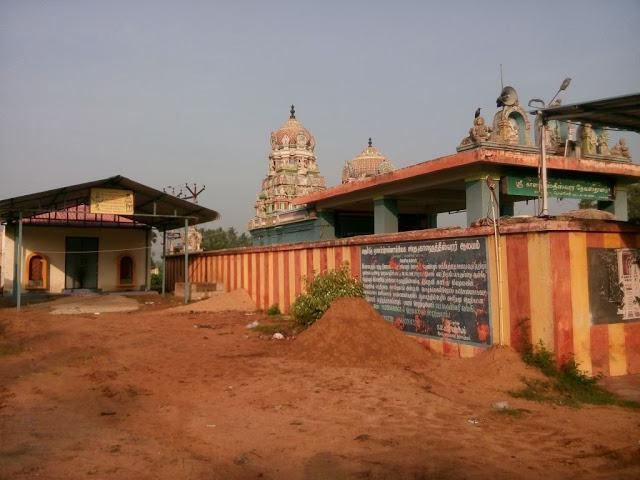
Kalahasteeswarar Temple, Sayanavaram, Thiruvallur
Nestled in the serene village of Sayanavaram in the Thiruvallur district, the Kalahasteeswarar Temple stands as a beacon of spiritual solace for devotees seeking relief from planetary afflictions. While distinct from the famed Tirupati Kalahasti temple, this shrine holds its own profound sanctity and is revered by locals and pilgrims alike. The temple is dedicated to Lord Shiva, worshipped here as Kalahasteeswarar (the Lord who resembles the wind element or Kalahasti).
The presiding deity is a Swayambhu Lingam (self-manifested), representing the earth element. His consort, Gnana Prasunambal (Goddess Parvati), blesses devotees from her shrine. This temple is specifically designated as a Dosha Parihara Sthalam—a powerful site for the remedial worship of Rahu and Ketu Dosham. In Vedic astrology, Rahu and Ketu are shadow planets responsible for karmic imbalances and ancestral issues; performing rituals here is believed to cleanse these afflictions.
Phalaśruti: The Benefits of Visiting
According to devotional tradition, regular worship at this temple offers specific boons (Phalaśruti):
- Remedial Relief: Specialized Pariharas (rituals) for those suffering from Sarpa Dosha or Rahu-Ketu afflictions.
- Intelligence & Clarity: As the Goddess is named Gnana Prasunambal (Mother who showers wisdom), students and professionals visit to gain mental clarity.
- Ancestral Peace: Performing Tharpanam or Abhishekam here is believed to cleanse ancestral karma and grant peace to departed souls.
Historical Origins & Scriptural Legend
Origins and Patronage
The precise construction date of the original structure remains unrecorded in modern archives, but the architecture suggests a lineage dating back to the medieval periods of Tamil Nadu, likely patronized by local chieftains under the influence of the Vijayanagara era. Tradition holds that the temple has been a site of worship for centuries, maintaining its sanctity despite the passage of time. Unlike massive imperial temples, this shrine retains a rustic, ancient charm characteristic of village shrines preserved through generations.
Scriptural Significance: The Sthala Purana
The temple draws its spiritual potency from the Sthala Purana associated with the Kalahasti tradition. Legend narrates the story of a Weaver (representing Maya) and a Spider (Antheev). While the famed Kalahasti temple involves a spider and a snake, the Sayanavaram lore adapts this narrative to signify the battle between the Sattva (spider/light) and Tamo (darkness/inertia) qualities.
The Swayambhu Lingam here is said to have been discovered by sage Patanjali (the author of Yoga Sutras) and sage Vyaghrapada (tiger-footed sage), who worshipped Lord Shiva in this region to attain spiritual liberation. The name “Sayanavaram” itself is rooted in the concept of “Sayanam” (rest), suggesting that Lord Vishnu rests here in proximity to Shiva, forming a unique Shiva-Vishnu sanctuary.
Architectural Marvels
Dravidian Style & Vastu Harmony
Based on the Dravidian architecture evident in the temple layout, the shrine is oriented according to Vastu Shastra principles. The entrance Gopuram (gateway tower) is modest, allowing visitors to enter directly into the sanctum, emphasizing a personal, intimate connection with the deity rather than a grandiose procession.
Sanctum & Sculptures
- The Shikhara: The Vimana (tower over the sanctum) is designed to direct energy downwards, converging on the Garbhagriha.
- Mandapas: The Artha Mandapa (portico) features carved pillars depicting deities from the Hindu pantheon. While this is a smaller temple, the stonework reflects the artistic sensibilities of Tamil temple builders.
- Temple Tank: Adjacent to the temple is a traditional temple tank, essential for ritual purification before Darshan. According to temple records, the tank was historically used by locals for major festivals.
Note: As a regional heritage site, this temple is a prime candidate for future conservation efforts by the Hindu Religious and Charitable Endowments (HR&CE) Department of Tamil Nadu.
Darshan & Ritual Logistics
Devotees visiting Sayanavaram should note that the temple operates on a village schedule, distinct from 24-hour mega-temples. Below are the expected operational timings for 2026.
| Session | Timings | Notes |
|---|---|---|
| Morning Darshan | 6:00 AM – 12:00 PM | Ushathkalam (early morning) & Kalasanthi |
| Afternoon Closure | 12:00 PM – 4:00 PM | Deity rest period (Adiyanthram) |
| Evening Darshan | 4:00 PM – 8:00 PM | Sayarakshai |
Key Sevas & Online Booking
Assumed Seva List: While online booking may not be fully integrated for this specific regional shrine, the following rituals are standard:
- Rahu-Ketu Shanti Homam: A specialized fire ritual to negate planetary ill-effects.
- Abhishekam: Ritual bathing of the Lingam (milk, honey, sandalwood).
- Archana: Recitation of names.
- Deepa Aradhana: Lamp offering.
How to Book: For major festivals, it is advisable to contact the local temple administration or check the Tamil Nadu HR&CE official portal. For Maha Shivarathri 2026 (falling in March), special passes are expected to be issued for the Sayanavaram Gramam (village) festival.
Practical Visitor Guidance
Dress Code & Etiquette
As a traditional Tamil Nadu temple, modest attire is mandatory. Men should wear Dhoti or Panchakacham (formal veshti), and Women should wear Saree, Salwar Kameez, or traditional half-saree. Western attire (shorts/trousers) is generally discouraged unless covered by a dhoti/saree wrap.
Crowd Management & Best Hours
- Best Time: Early mornings (6:30 AM – 7:30 AM) offer the most peaceful darshan.
- Seasonal Advice: Summers in Thiruvallur (April–June) can be intense; carry a water bottle and an umbrella. The temple grounds offer minimal shade.
- Photography: Generally prohibited inside the Garbhagriha (sanctum). Photography in the outer prakaram (corridor) may be allowed with permission, but it is respectful to avoid it during rituals.
Pilgrimage Connectivity
How to Reach
The temple is strategically located in Sayanavaram Village, easily accessible from Chennai and Tiruvallur.
- By Road: Located approximately 3.5 Kms from Ponneri and 2.5 Kms from Ponneri Bus Depot. It is situated right next to the Sayanavaram Bus Stop. Travelers coming from Chennai can take the NH16 (Chennai-Kolkata Highway) and divert at Ponneri.
- By Rail: The nearest railway station is Ponneri Railway Station (approx. 4 Kms). From there, local auto-rickshaws are readily available.
- By Air: Chennai International Airport is the nearest airport, located approximately 53 Kms away.
- Distance Reference: 34 Kms from Chennai (North) and 50 Kms from Tiruvallur town.
Nearby Sacred Sites
To maximize your pilgrimage, consider visiting these nearby temples within the Thiruvallur district:
- Arulmigu Prasanna Venkateswara Temple (Tirumazhisai): Located on the outskirts of Chennai, known for its unique Dravidian architecture.
- Thiruvallur Veeraraghava Swamy Temple: The major district temple of Lord Vishnu, located about 48 Kms away.
- Uthira Merur (Uthiramerur): Famous for the ancient Kailasanathar Temple featuring beautiful stone carvings and chariot streets.
Frequently Asked Questions (FAQ)
1. Is this temple equivalent to the Sri Kalahasti Temple?
While not a replica, this temple holds similar spiritual potency for local devotees. It is often referred to as a smaller, rural counterpart of the famed Kalahasti temple, specifically revered for its Rahu Ketu Dosha Pariharam.
2. Is there a VIP Darshan entry?
Given the scale of this temple, there are no specific VIP tickets like in mega-temples. However, devotees performing special Sevas (like Abhishekam) usually get priority entry during their scheduled time slots.
3. Are there accommodation facilities near the temple?
The temple complex is a village shrine and does not have attached guest houses. The nearest accommodation is available in Ponneri or Chennai. For overnight stays, Tiruvallur town offers more hotel options.
4. What is the significance of the Temple Tank?
The temple tank serves as a Theertham (holy water). It is customary to dip one’s feet in the tank or perform ablutions before entering the sanctum to purify the body and mind.
5. Can rituals be performed for ancestors here?
Yes, as a Parihara Sthalam, the temple is ideal for performing Tharpanam (offerings to ancestors), especially during the Amavasya (New Moon) days and Maha Shivarathri.
Photo Gallery
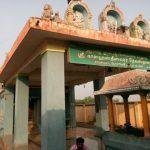
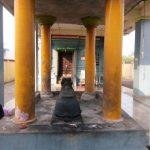
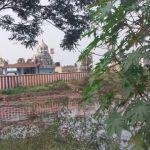
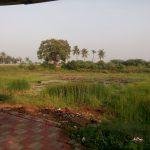
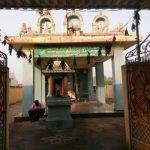
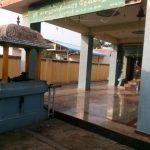
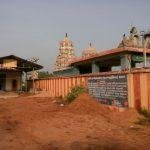
How to Reach:
Kalahasteeswarar Temple is a Hindu Temple dedicated to Lord Shiva located at Sayanaavaram Village near Ponneri in Thiruvallur District of Tamilnadu. This is a small temple with temple tank adjacent to it. This Temple is Dosha Parihara Sthalam for Rahu Ketu Dosham. Maha Shivarathri is the most famous festival celebrated here. This temple is equivalent to Sri Kalahasti. The Temple is situated adjacent to Sayanavaram Bus Stop. The Temple is located at about 3.5 Kms from Ponneri, 2.5 Kms from Ponneri Bus Depot, 4 Kms from Ponneri Railway Station, 4 Kms from Thatchoor, 50 Kms from Tiruvallur, 34 Kms from Chennai and 53 Kms from Chennai International Airport.
Contact Details
Official Address: Kalahasteeswarar Temple, Sayanavaram, Thiruvallur District, Tamil Nadu.
Note: For specific queries or seva bookings, visitors are encouraged to contact the local temple administrator or the HR&CE office in Tiruvallur.
Recent Posts

ओ सांवरे तूने ही मुझको संभाला – Lyrics & Meaning
ओ सांवरे तूने ही मुझको संभाला – A Prayer to Shyam Origin & Spiritual Essence Why This Bhajan Resonates Devotees chant this when overwhelmed by life’s storms—the refrain ‘तूने ही मुझको संभाला’ is the soul’s sigh of relief: “You…

कथा ये है महाराज मेरे की – Lyrics & Meaning
कथा ये है महाराज मेरे की छत्रपति संभाजी महाराज – A Prayer to Chhatrapati Sambhaji Maharaj Origin & Spiritual Essence Why This Bhajan Resonates Devotees chant this when their spirit feels tested—its powerful refrain “महाराज मेरे” is a soul’s…

Rigveda Samhita Yathartha Anuvada (ऋग्वेद संहिता यथार्थ अनुवाद) – Complete Set with Anvayartha & Hindi/English Translation
The Rigveda is the oldest surviving scripture of humanity and the foundational text of Sanātana Dharma. For serious students, scholars, UPSC aspirants studying ancient Indian history, Sanskrit learners, and spiritual seekers, a precise and grammatically structured translation is indispensable.…

आना भी अकेला है जाना भी अकेला है – Lyrics & Meaning | BharatTemples
आना भी अकेला है जाना भी अकेला है – A Prayer to the Divine Witness Origin & Spiritual Essence Why This Bhajan Resonates Devotees turn to this bhajan in moments of deep reflection—when life’s attachments begin to ache. The…

माता शेरावाली के द्वार जो भी जाता है – Lyrics & Meaning
माता शेरावाली के द्वार जो भी जाता है – A Prayer to Maa Sherawali Origin & Spiritual Essence Why This Bhajan Resonates Devotees turn to this bhajan in times of fear or uncertainty—its promise that no one leaves Maa’s…

मार लेना सपणी उबार लेणा भवरा – Lyrics & Meaning
मार लेना सपणी उबार लेणा भवरा – A Prayer to the Divine Beloved Origin & Spiritual Essence Why This Bhajan Resonates Devotees chant this in moments of deep vulnerability—its cry of “मार लेना सपणी, उबार लेणा भवरा” is the…

हमें श्याम सुंदर भरोसा तुम्हारा – Lyrics & Meaning
हमें श्याम सुंदर भरोसा तुम्हारा – A Prayer to Shyam Sundar Origin & Spiritual Essence Why This Bhajan Resonates Devotees chant this when feeling alone—its refrain ‘de do sahara’ is the soul’s cry for divine support. Lyrics in Hindi…

Mere Satguru Ne Di Thi Davai Lyrics in Hindi & Meaning
Mere Satguru Ne Di Thi Davai: Invoking the Guru’s Liberating Wisdom This soul-stirring bhajan venerates the Satguru (True Spiritual Master) as the divine physician who dispenses the only remedy for life’s deepest sufferings. Composed by Sant Karmaveer Tufani, it…

Janm Diyo Thari Maa Dukh Dekhiyo Lyrics in Hindi & Meaning
जन्म दियो थारी माँ दुख देखियो (Maa’s Grief Upon Birthing You) This soul-stirring Chetavani Bhajan (admonitory hymn) is addressed to the Divine Mother (Maa) – a call for repentance when children forget their filial duties in the dark age…
Bhadi Sabha Mein Thane Manaun Lyrics in Hindi & Meaning
Bhadi Sabha Mein Thane Manaun: Invoking the Spear-Wielding Mother Mata Bhawani (श्री ज्वाला भवानी), the fiery manifestation of Shakti worshipped as the Protector of Dharma in Her Dhaulagarh sanctum. Origin & Spiritual Essence Composed in Rajasthani folk tradition by…